

Guangxi is the China I show people when they say the country is all concrete. Within a single week you can float past limestone peaks on a misty river, climb terraced rice mountains with Zhuang villagers, stand at the lip of a waterfall that straddles an international border, and still end your trip with your toes in the South China Sea. This Guangxi 7 day itinerary strings those together in a logical north-to-south run that I have driven and trained twice. It is ambitious but doable, and every leg is connected by frequent, cheap transport.
The shape of the route: fly into Guilin, work south through Yangshuo and the Longji terraces, swing west to Detian waterfall, then drop to Nanning and finish on the beaches of Beihai. That is the Guangxi itinerary one week travellers ask me for most, and it balances icon sights with a genuine border-region edge.
Day 1 — Arrive in Guilin
Land at Guilin Liangjiang airport, 40 minutes from the city. Settle near the riverside (Seven Star or Elephant Trunk Hill area) and walk the Two Rivers and Four Lakes ring at dusk — the sunlit pagodas lit on the water are the softest possible introduction. Eat dinner at a Guilin rice-noodle shop (a mixian bowl is 8–12 RMB / $1.50); order “braised” style with extra peanuts. Read the Guilin Yangshuo travel guide for hotel zones before you book.
Day 2 — The Li River to Yangshuo
This is the heart of the trip. Take the four-star Li River cruise from Guilin to Yangshuo — a 4-hour boat past the peaks that are on the 20-yuan note. Book the 9:30 sailing; tickets run 210–360 RMB ($29–50) depending on deck. Disembark in Yangshuo and rent an e-bike (40 RMB / $5.50 a day) to reach the Yulong River for a bamboo raft float (100–150 RMB / $14–21). Sleep in Yangshuo town or, better, the quieter village of Gaotian. West Street at night is a circus of bars; I prefer a riverside guesthouse and an early night.
Day 3 — Yangshuo countryside and karst climbs
Spend the day on two wheels: the Ten-Mile Gallery, Moon Hill, and the Xianggong Mountain viewpoint (the classic Li River bend). Rock climbers flock here — Yangshuo has some of Asia’s best beginner limestone. If you would rather drift, a private driver loops the valley for 300 RMB ($42). Overnight again in Yangshuo.
Day 4 — Longji rice terraces, then south
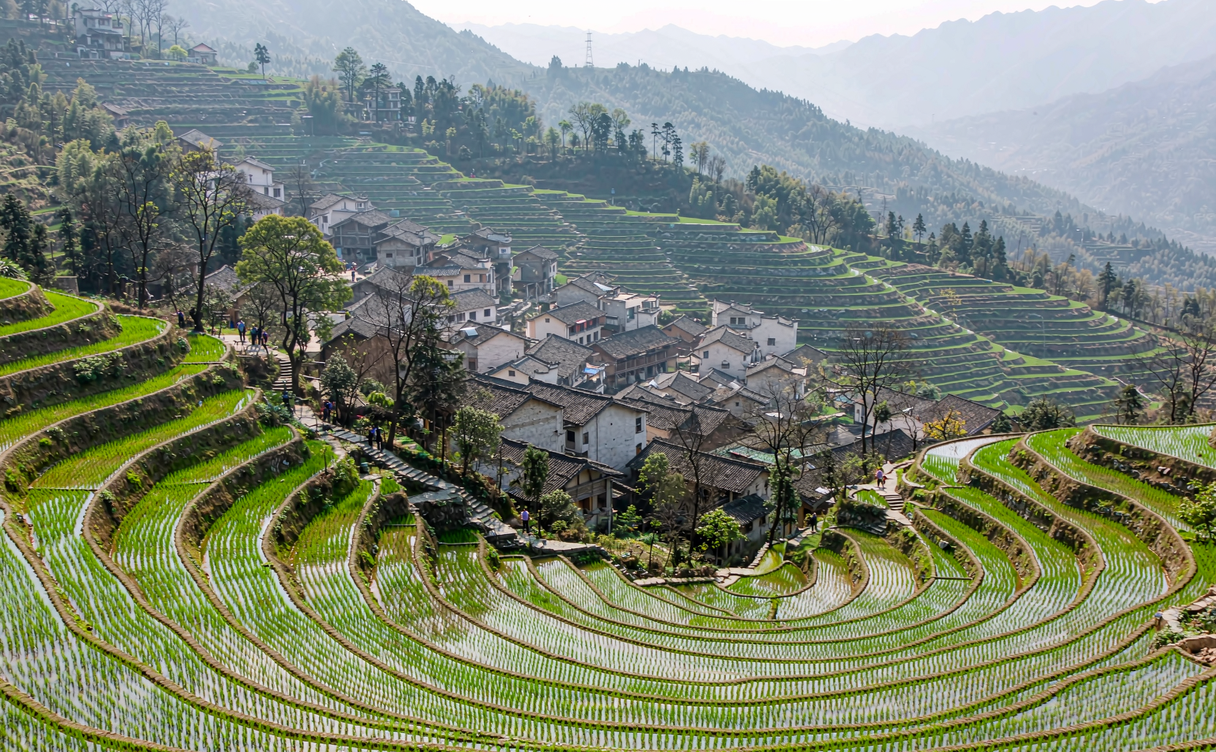
Morning transfer north to the Longji rice terraces (2.5 hours, 60–90 RMB / $8–13 by bus). Hike the Jinkeng Red Yao terraces or the Ping’an Zhuang terraces — the latter is the postcard with the “Seven Stars with Moon” view. Stay overnight in a terrace guesthouse; the sunrise over the layered water-filled fields is the kind of image that sells the whole trip. April–May (water-filled terraces) and late September (golden harvest) are the peaks.
Day 5 — Detian waterfall, then Nanning
This is the leg most itineraries skip and the one I most recommend. From Longji, transfer to the Detian waterfall guide area near the Vietnam border (4–5 hours by road via Chongzuo). Detian is the largest cross-border waterfall in Asia, a tiered curtain shared with Vietnam’s Ban Gioc. A bamboo raft takes you to the base for 30 RMB ($4). It is remote, so I suggest an organised transfer or driver. By evening, push on to Nanning (2 hours) — the provincial capital and your rail hub to the coast. A Guangxi itinerary with Detian waterfall is longer on paper but far richer than the standard Guilin–Yangshuo loop.
Day 6 — Nanning, then the train to Beihai
Spend a slow morning in Nanning: the Qingxiu Mountain park and the foreigner-friendly food streets of Zhongshan Road (late-night snails, grilled oysters, sweet soy-milk). Then take the high-speed train south to Beihai (1.5 hours, 55–75 RMB / $8–10). Check into the Beihai travel guide old town near Beihai Silver Beach; the UNESCO-listed South China Karst context explains the geology behind the peaks you have been photographing all week. Walk the restored Portuguese-era streets of Beihai Old Town at sunset.
Day 7 — Beihai beaches and home
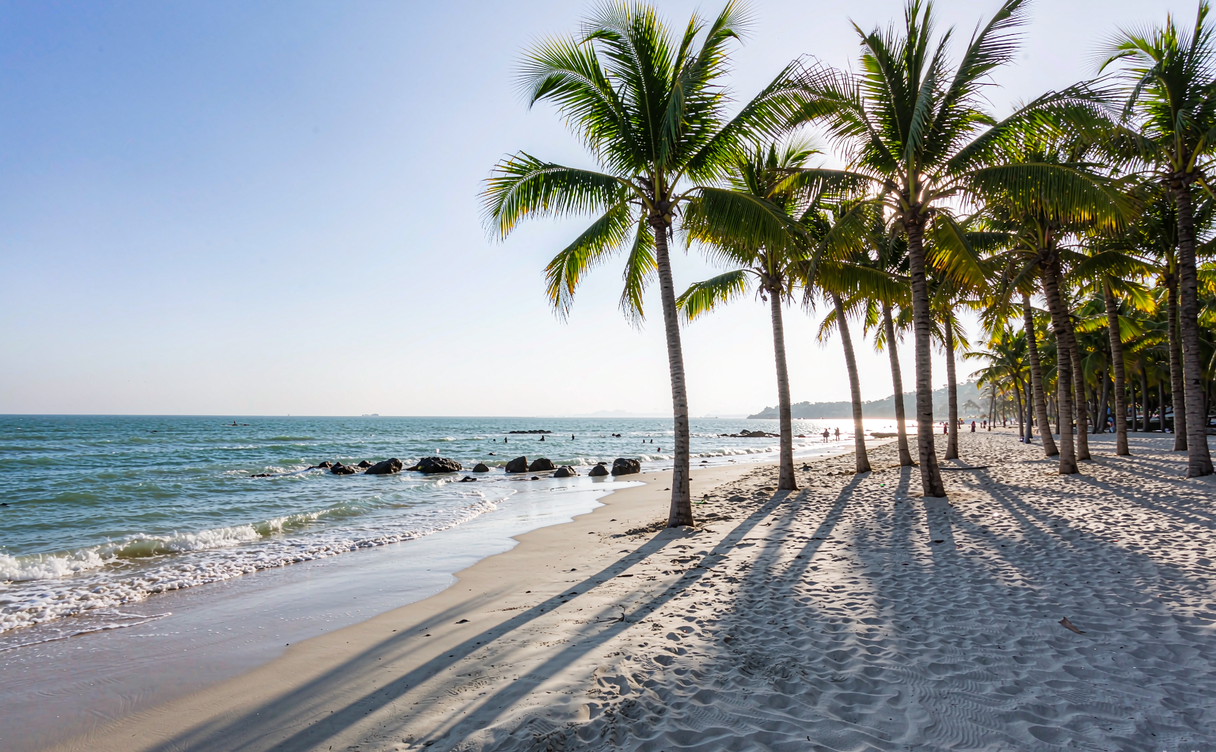
Beihai Silver Beach is wide, pale, and calm — swim, eat seafood (a lobster and clams dinner for two runs 150–250 RMB / $21–35), and if time allows, ferry to Weizhou Island for volcanic cliffs and quieter sand (book the 80-minute ferry ahead, 150 RMB / $21 round trip). Fly out of Beihai airport, or train back to Nanning for onward connections.
Guangxi trains between cities
Understanding Guangxi trains between cities saves you money and hours. The spine is the high-speed network: Guilin–Nanning (2.5–3 hrs), Nanning–Beihai (1.5 hrs), Guilin–Yangshuo (0.5 hr, the train itself is scenic). Book on Ctrip or 12306; second-class seats are comfortable and cheap. The terraces and Detian are the only legs without rail, so budget for buses or a private driver there.
Best time for a Guangxi itinerary
The best time for a Guangxi itinerary is April–May (green terraces, full rivers, fewer crowds) and September–October (golden harvest, cool, clear). Avoid the July–August peak heat and the National Day week in early October, when Yangshuo and Beihai jam. Winter is mild and empty but the terraces are bare and the Li River lower.
What to eat along the route
Guangxi’s food is a highlight you should plan around. In Guilin and Yangshuo, the rice-noodle breakfast is non-negotiable, and Yangshuo’s beer fish (pijiu yu) is a local specialty worth the tourist-price splurge. Around the Longji terraces, Zhuang and Yao villagers serve sticky purple rice, free-range chicken, and river moss stir-fried with garlic — simple, smoky, and far better than the city version. Near Detian, the border towns serve Vietnamese-influenced rolls and sour soups; try the grilled corn sold from roadside baskets. Beihai is the seafood climax: the seafood markets let you pick your crab or prawns and have a restaurant cook them for a small fee, and a lobster-and-clams dinner for two rarely tops 250 RMB ($35). For a deeper dive on the provincial capital and its food scene, the Nanning travel guide rounds out the route.
Costs and practical notes
A realistic 7-day budget per person, mid-range: transport 1,200 RMB ($168), hotels 2,100–2,800 RMB ($294–392), food 700 RMB ($98), tickets 600 RMB ($84) — roughly 4,600–5,300 RMB ($644–742) excluding flights. Pack layers (mountain mornings are cool), good walking shoes for terrace hikes, and mosquito repellent for the border region. One logistics note: the Detian and Longji legs have no rail, so budget either for a private driver (around 400–600 RMB / $56–84 per day) or a patient bus transfer — it is the one part of this otherwise train-friendly route that needs advance thought.
For a deeper dive on the provincial capital and its food scene, the Nanning travel guide rounds out the route.
My take
This loop works because it moves from the famous to the forgotten: everyone does Guilin–Yangshuo, almost nobody adds Detian and Beihai, and that is exactly why the second half feels like a discovery. Give it the full week and you leave Guangxi with both the postcard and the secret.