

Fengdu Ghost City is one of the strangest half-days you can spend in China — a hillside warren of temples dedicated to the Chinese underworld, where demons judge the souls of the dead and a bridge tests the virtuous. On our last trip we came ashore from a Yangtze cruise and climbed Ming Mountain to find carved demons, a “Nothing-to-be-Done” bridge, and a view over the river that has barely changed in a thousand years. This Fengdu Ghost City guide tells you how to get there, what it costs, and why it is more fun than its morbid name suggests, and how to fold it into a Chongqing-based trip.
Most visitors meet Fengdu as a Fengdu shore excursion Yangtze cruise stop between Chongqing and Yichang, but it is perfectly doable independently from the Chongqing travel guide base — and you’ll avoid the cruise-ship crowds if you time it right. The temples sit on Ming Mountain on the north bank, and the short climb rewards you with both folklore and a wide river panorama.
Getting there
The practical route for how to get to Fengdu from Chongqing is by high-speed train: Chongqing North to Fengdu station takes about 1 hour (¥40–60), with departures through the morning. From the station, a bus or taxi covers the 10 km to the old town ferry pier; then a short boat or the new bridge road reaches the Ming Mountain foot. Note that the original Fengdu old town was partly relocated for the dam, but the Ghost City temples on Ming Mountain remain in place and are the real attraction. The Yangtze River cruise guide explains the standard 3- or 4-night upstream itinerary that includes the stop, useful if you would rather arrive by water than by rail. Book train tickets a few days ahead on weekends, when Chongqing day-trippers fill the carriages.
Tickets
Fengdu Ghost City tickets run about ¥90–120 for foreign visitors including the cable car up the mountain (worth it — the climb is steep and hot). Chinese ID holders again get a local discount. Combination tickets with the river ferry are sold at the pier. Buy at the official window; touts near the station offer “cheaper” deals that rarely deliver, and we’ve sent travelers here who arrived without cash for the cable car top-up and had to walk — carry small bills. The site opens around 8 am and the first hour is the best for photographs before the tour groups climb.
Ming Mountain temples
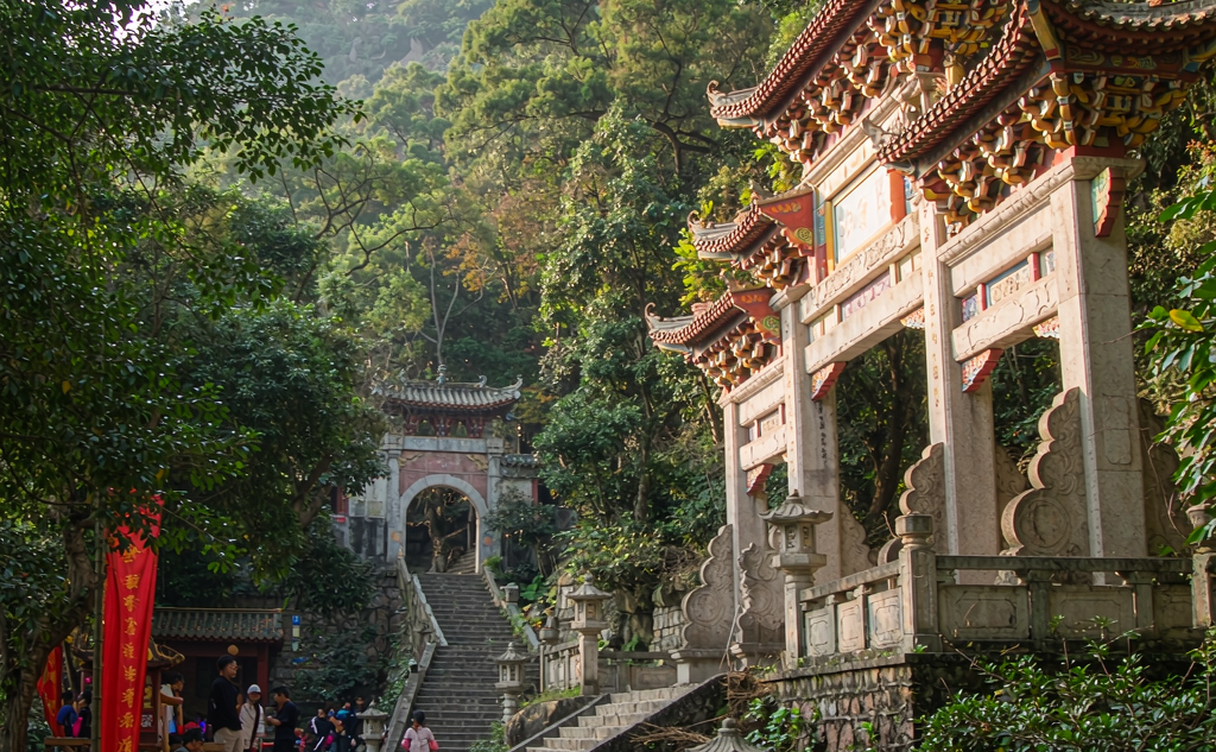
The Ming Mountain temples Fengdu are the core: a cluster of halls and courts where the Taoist-Buddhist folklore of the afterlife plays out in sculpture. You pass the Gate of Hell, the Hall of the Jade Emperor’s judge, and the famous “Bridge of Helplessness” (also called the Nothing-to-be-Done Bridge), which the virtuous cross safely while the wicked, legend says, fall through. The giant statue of the ghost king and rows of painted demon murals make great photos, and the path winds past arched gates carved with warnings about earthly sins. Allow 2–3 hours for the climb and the halls. A guide (¥80–120) brings the symbolism alive; without one, the China temple stay guide background on Chinese temple layout helps you read the spaces, since the logic of gates, courtyards, and principal hall repeats here in underworld dress.
Best time to visit
The best time to visit Fengdu Ghost City is spring (March–May) and autumn (September–November), when the climb is comfortable and the river is high and blue. Summer is sweltering and the mountain offers little shade, so go at opening and carry water; winter is cold but quiet, with mist on the water that suits the eerie mood. Aim for a weekday morning — if a cruise ship is in port, the lower path gets jammed by midday and the bridge photo becomes a group shot.
The underworld path, explained
To enjoy Fengdu you do not need to be religious, but knowing the story turns a climb into a narrative. The route is laid out as a soul’s journey after death. You enter through the Gate of Hell, guarded by demons who check your record, then pass the Hall of the Jade Emperor’s judge, where your good and bad deeds are weighed. The climax is the Bridge of Helplessness — a narrow arched span over a dry ravine — which the virtuous cross safely while, legend holds, the wicked slip and fall to be devoured below. Locals still dare each other to cross it without looking down, and the giggling is part of the fun. Beyond the bridge sits the giant ghost-king statue, a calm, almost friendly figure who presides over the whole court. The symbolism draws on a mix of Taoist, Buddhist, and folk belief that solidified around Fengdu during the Tang and Song dynasties, and the carved murals along the path spell out each station in brightly painted detail. We recommend reading a few panels before you climb so the demon faces start to make sense; without context they are just wonderfully strange masks.
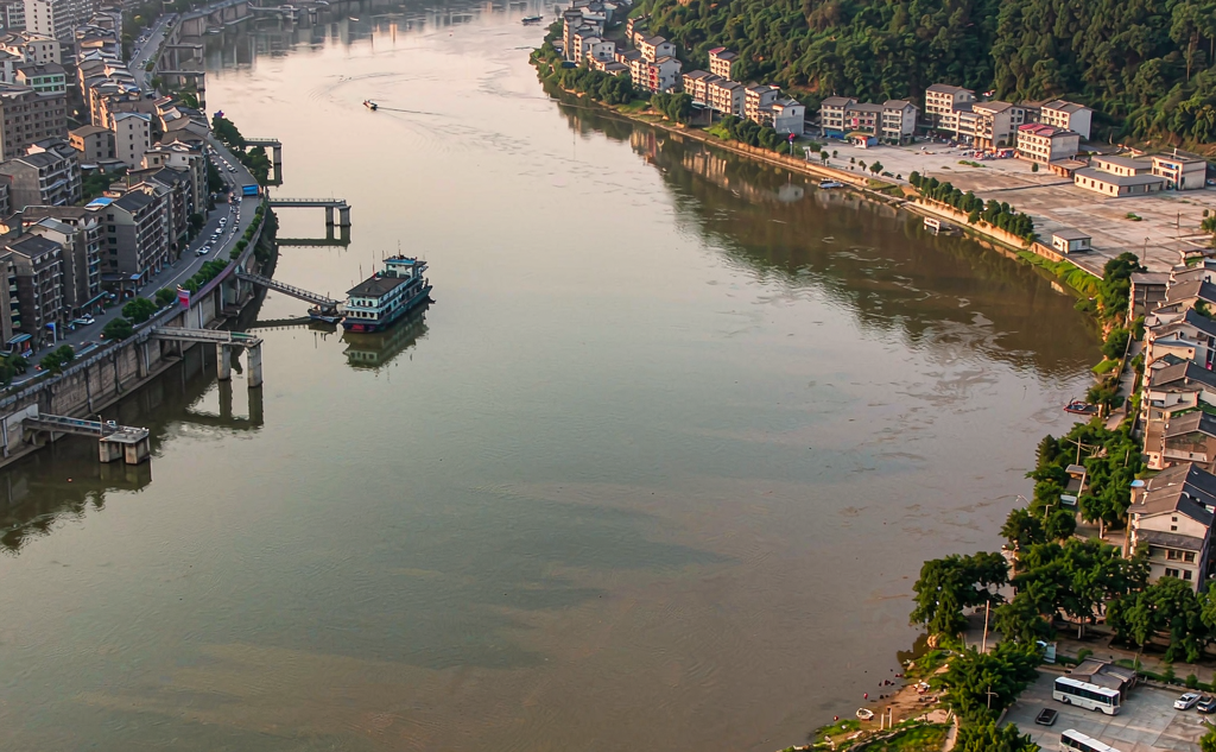
After you descend, the old town near the pier is worth a slow wander. The relocated streets keep a few Qing-era facades and a clutch of noodle shops where a bowl of Chongqing-style xiaomian costs ¥12–18 and comes freighted with chili oil and pickled greens. We make a point of eating here rather than on the train, because the town’s cookery is the everyday counterpart to the theatrical temples above — same region, same love of heat, no demons required. If the river is high, sit on the embankment and watch the cruise ships ease past; from water level the Ming Mountain temples look even more improbable, clinging to the ridge like a stage set for a folktale.
Make a day of it
If you are basing in Chongqing, pair the trip with the city’s own sights: the riverside stacks of Chongqing Hongyadong, the Ming-era lanes of Chongqing Ciqikou old town, and the Buddhist sculpture at Chongqing Dazu rock carvings a couple of hours west. We did all four across a long weekend and it was one of our best trips in the region — the ghost-city theatrics, the mountain statues, and the city’s vertical streets made a satisfying contrast, and the train connections were painless.
Practical notes
- Train tickets sell out on weekends; book ahead via the 12306 app or a hotel concierge.
- Wear grippy shoes; the stone steps are worn and can be slippery after rain.
- The site is religious as well as theatrical — keep a respectful tone in the halls.
- Budget ¥150–200 per person all-in for train, ticket, and lunch in town.
- Combine the morning at Fengdu with an afternoon back in Chongqing’s old town for a full day.
- The cable car runs until about 5 pm but the upper halls close earlier in winter, so start before 9 am in the cold months to see everything without rushing the demons.
For the folklore and history, the Wikipedia entry on Fengdu Ghost City is a readable starting point that explains the Tang-dynasty origins of the underworld cult.