

Most travelers who fly into Beijing never make it past the Forbidden City and the nearby Ming Tombs. I almost did the same. On my third trip to China I was settled into a Beijing hotel, scrolling through a list of possible day trips, when a friend from Hebei messaged: “Skip the crowds at the Ming Tombs. Go east to Zunhua. The Qing emperors are buried in the hills and you’ll have the Spirit Way to yourself.” That message became this Eastern Qing Tombs guide — the write-up I wish I had read before I went, practical and honest about what the site actually gives you.
The Eastern Qing Tombs, known in Chinese as Qing Dongling, lie roughly 125 km east of central Beijing in the foothills of the Changrui mountain range, straddling the Xima River in what is now Zunhua county, Hebei province. The grounds cover about 80 square kilometres of pine forest, stone causeways, and walled tomb complexes. Five Qing emperors, fifteen empresses and imperial consorts, and 136 members of the imperial family rest here. Among them are Shunzhi, the boy emperor who took the throne when the Manchus entered Beijing; Qianlong, who reigned for sixty years; and the Empress Dowager Cixi, the most powerful and most reviled woman in modern Chinese history. UNESCO lists the complex as part of the Imperial Tombs of the Ming and Qing Dynasties, and you feel that pedigree the moment you walk beneath the first marble archway.
Why the tombs are worth the journey
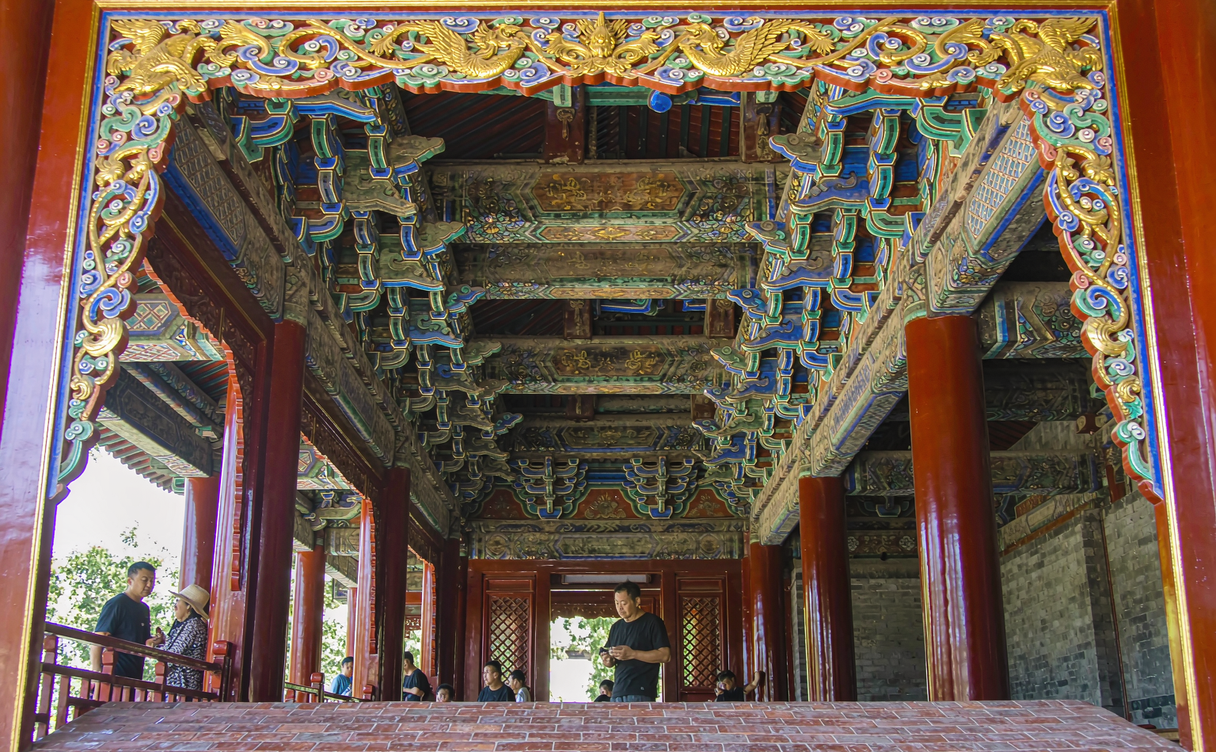
I arrived braced for a single mausoleum and left having walked through four of them. The scale is the surprise. Unlike the compact Ming Tombs near Beijing, the Eastern Qing Tombs are strung across a wide valley, and the walking between them is half the pleasure: cypress-shaded lanes, carved stone bridges over the river, and almost no tour groups. On a weekday in May I saw perhaps forty other visitors across the entire site. If you have already followed our Beijing Ming Tombs guide and want the quieter, grander sibling, this is the obvious next step.
Getting there: an Eastern Qing Tombs day trip from Beijing
The standard Eastern Qing Tombs day trip from Beijing is straightforward to plan on your own. I took the high-speed train from Beijing South railway station to Tangshan (about 50 minutes, ¥75 / $11), then a Didi or taxi for the remaining 70 km to the tomb entrance near Zunhua (around ¥180 / $26, 90 minutes depending on traffic). The train runs roughly every hour from 7 a.m., and the first departure gets you to the gates by mid-morning.
A second option is a private car straight from Beijing. Drivers at the airport and major hotels quote ¥600–800 ($85–115) for a round trip with several hours of waiting time. I did this on my second visit and it removed all the transfers — worth it if you are traveling with older family or in winter when taxis are scarce. I would not rely on public buses; the connections are slow and the signage outside Beijing is uneven for non-Chinese speakers.
If you would rather base yourself in the nearest city, our Tangshan travel guide details hotels and the surrounding mountain resorts. But for the tombs themselves, staying in Zunhua town — only fifteen minutes from the entrance — spares you a daily commute and lets you catch the 8:30 opening.
Eastern Qing Tombs tickets Zunhua: what you actually pay
Eastern Qing Tombs tickets Zunhua are sold as a single through-pass rather than per-tomb. As of 2026 the combined ticket covering the principal complexes — Xiaoling (Shunzhi, the founding tomb), Jingling, Yuling, Dingling, and the Cixi tomb at Dingdongling — costs about ¥108 ($15) in peak season (April to October) and ¥80 in the winter off-season. A park shuttle bus, which I strongly recommend, is another ¥30 ($4) and loops between the parking area, the Spirit Way, and each tomb. Walking the full circuit is possible but long; the distance from the entrance to Yuling alone is over two kilometres of uneven stone.
Children under 1.2 metres and seniors over 70 with valid ID enter free. You can buy at the window or on the official WeChat mini-program. Foreign cards are not always accepted at the gate, so carry some cash or set up Alipay beforehand. There is no need to book ahead except on the big holiday weeks.
Inside the tombs: the Yuling tomb of Qianlong
The Yuling tomb of Qianlong is the headline sight and the main reason many visitors come. Qianlong ruled for sixty years and lived to 87, and his burial chamber is the only one at the Eastern Qing Tombs open to its full nine-dragon marble depth. You descend a cool, dim stone staircase into a vault where every wall and ceiling panel is carved with Tibetan Buddhist sutras in relief and touched with gold — scholars count roughly 30,000 engraved characters, still sharp after more than 250 years. The air is still and cold even in August. Photography is forbidden inside, which only deepens the hush. I sat on the stone step at the threshold for ten minutes and let the scale of it settle.
The Empress Dowager Cixi tomb carvings
Then there is the Empress Dowager Cixi tomb carvings, housed at Dingdongling. Cixi was history’s great rule-breaker. She had the original emperor’s tomb rebuilt for herself and demanded relief carvings that flouted every sumptuary law of the dynasty. Look up at the white marble balustrades and you will see phoenixes — her symbol — placed above the dragons reserved for the emperor. No other tomb at the site dares this inversion. The chamber itself is smaller than Qianlong’s but far more ornamented, with lotus ceilings and dragon-phoenix door panels. The contrast between Qianlong’s restrained devotion and Cixi’s defiant grandeur tells you the whole arc of the late Qing in a single glance.
Best time to visit the Eastern Qing Tombs
The best time to visit Eastern Qing Tombs is late April to mid-May, when the apricot and peach orchards that ring Zunhua burst into blossom and the valley smells of flowers, or late September to mid-October, when the cypress hills turn amber and the light goes long and golden. Summer is lush and green but hot and humid, with afternoon thunderstorms. Winter is brutally cold yet strangely beautiful after snow, with the ¥80 off-season ticket and near-empty paths. The one period to avoid is the National Day week in early October, when domestic tour buses fill the parking lots.
Where to eat and stay in Zunhua
Zunhua is a working county town, not a resort, and that is part of its charm. I ate memorably on chestnut-fed pork — Zunhua is one of China’s great chestnut-producing regions — along with hand-pulled noodles and a local dish of Qianxi chestnut chicken braised with scallions. A filling dinner for two runs ¥80–120 ($11–17) at a streetside restaurant. Breakfast is congee, fried dough sticks, and soy milk from the morning market near the bus station.
For an overnight, the Beijing first-time travel guide is helpful if you are sleeping in the capital, but in Zunhua itself a clean business hotel such as the Zunhua Guolong or a Jinjiang Inn costs ¥220–300 ($31–42) a night and includes breakfast. Book ahead on the Chinese platforms; international sites list few of these properties.
If imperial history is your through-line, pair this visit with the Forbidden City guide tickets — the tombs are simply where those emperors ended up. And for the wider context of why these sites are protected, our China UNESCO world heritage guide explains the listing system and how to sequence several such sites in one trip.
Insider tips I learned the hard way
- Wear real shoes. The stone paths from the Spirit Way to Yuling are two kilometres of uneven, sometimes slippery paving. My sneakers coped; my friend’s sandals did not.
- Arrive at the 8:30 opening. The light on the glazed yellow-tile roofs is best before ten, and you beat the few tour groups that do come.
- Carry water and a snack. There is a small shop near the entrance but almost nothing inside the park, and the walking is longer than it looks.
- Extend the day to the Great Wall. If you have a private driver, the Jinshanling Great Wall guide sits about two hours southwest and makes a superb second stop, especially at sunset.
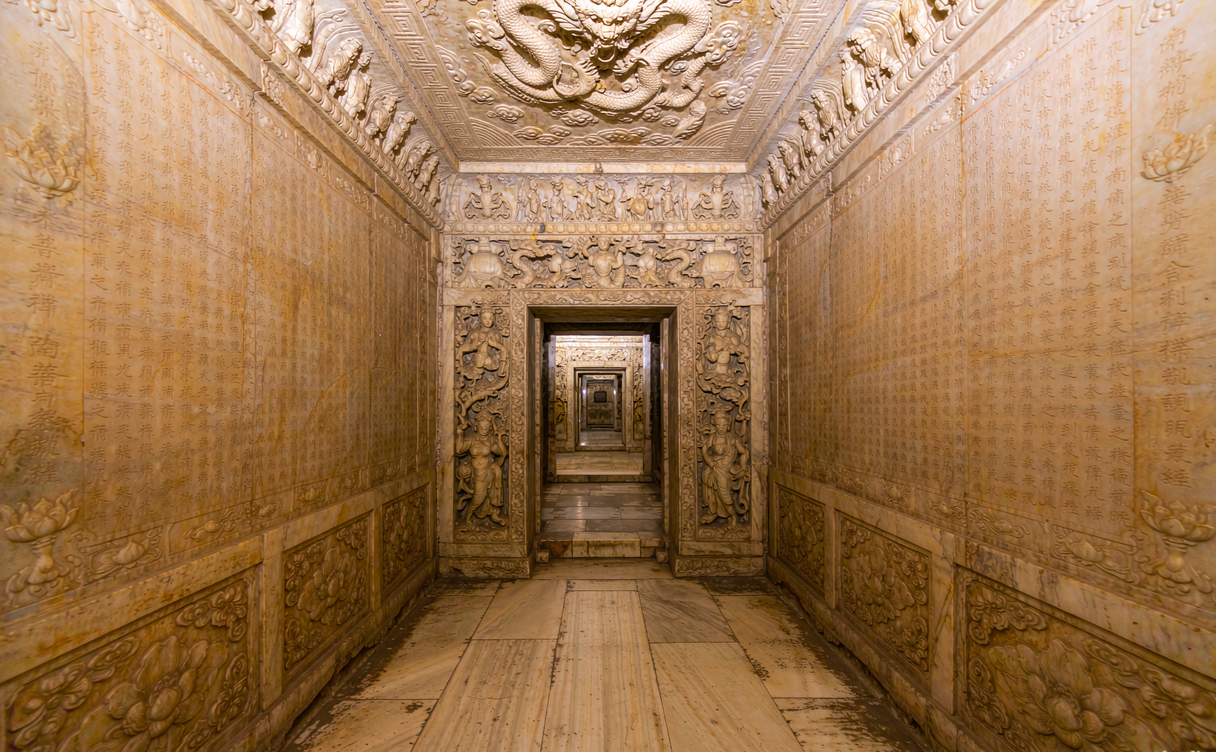
The Eastern Qing Tombs will not trend on your feed, and that is exactly the point. Stand alone in Qianlong’s sutra vault or read the phoenixes set above the dragons and you are touching the dynasty’s full story — its faith, its ambition, and one grandmother who rewrote every rule. This is imperial China told in stone, an easy and genuinely rewarding escape from Beijing’s crowds, and a day I still think about when I plan trips back.