

The first time I stood on the Great Wall, it was at Badaling, shoulder-to-shoulder with three hundred other people photographing the same tower. Impressive, but it felt like a museum at peak hours. Two years later a Chinese friend sent me to Jinshanling, two hours northeast of Beijing. I arrived at 7 a.m. as mist lifted off the ridgeline, and for the first forty minutes I saw no other tourist. That is the difference Jinshanling makes, and why I steer serious travelers there instead of the postcard sections.
Jinshanling is one of the best-preserved yet least-crowded stretches of the Great Wall within easy reach of Beijing. More than that, it is the launch point for what I consider the single best day-hike on the entire wall: the rugged, partially restored trail from Jinshanling east toward Simatai. This guide is built from my own walks there across three different seasons, and it covers exactly how to get there, what it costs, when to go, and how to do the hike without regretting your shoe choice by noon.
Why Jinshanling and Not Badaling?
I am not anti-Badaling. It is restored, accessible, and genuinely handy if you have limited mobility or a tight schedule. But if you have read my comparison of mutianyu-vs-badaling-great-wall, you already know the trade-off: the more restored a section is, the more people it draws. Jinshanling sits in a sweet spot. About half of it has been carefully rebuilt; the eastern half toward Simatai is left “wild,” meaning broken battlements, missing steps, and watchtowers you have to scramble into on all fours.
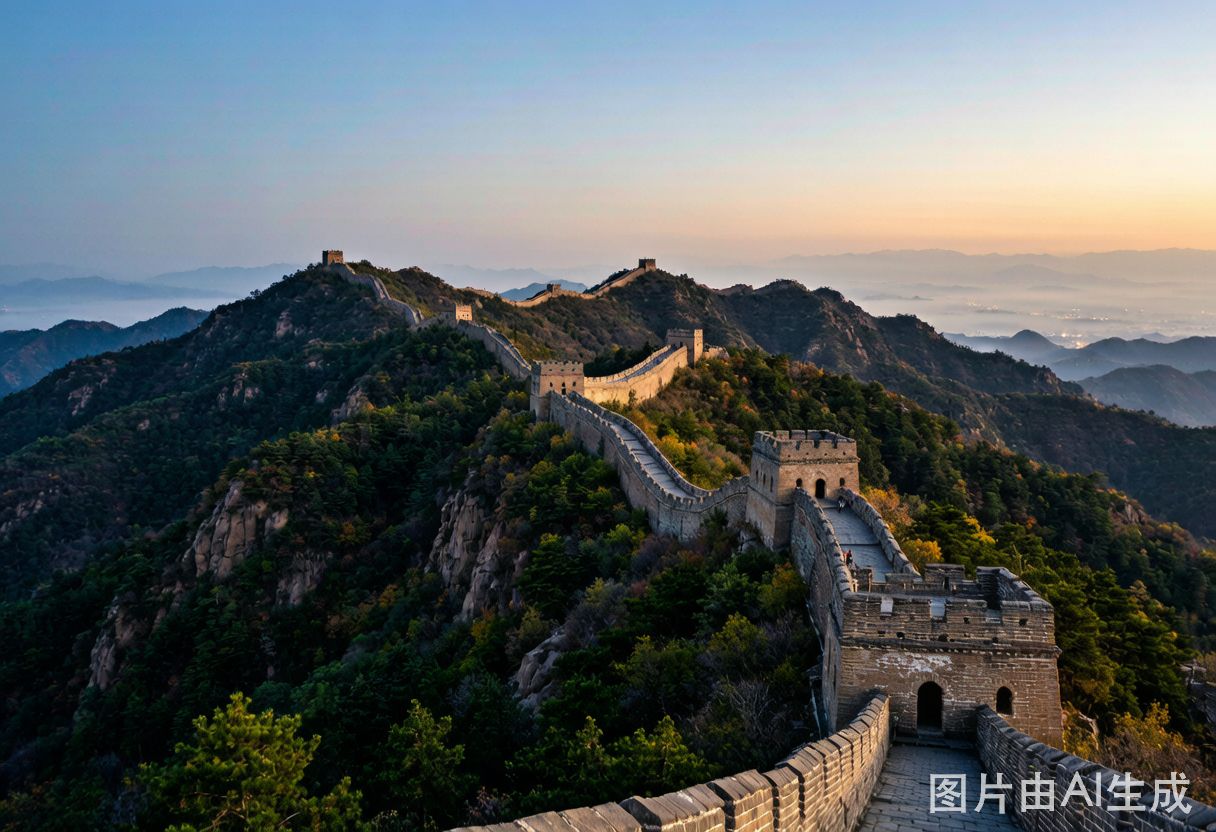
What you get for the effort is the wall as it was meant to be experienced: a stone dragon draped over a continuous mountain ridge, with no souvenir stalls, no cable car music, and no crowd-control ropes. On a clear day you can see the wall snake over a dozen peaks before it disappears into haze. For photographers, it is the obvious choice, and I have written a whole piece on the best-photo-spots-great-wall-sunrise if you want specific vantage points and timing.
Getting There from Beijing
Jinshanling is roughly 130 kilometers northeast of central Beijing, in Hebei province, near the border with Miyun district. There is no subway that reaches it, so you have three realistic options.
1. Private driver or Didi (easiest). A round-trip private car from Beijing runs about 600–900 RMB for the day, including waiting time while you hike. If there are three or four of you, this is the best value and the most flexible. I usually negotiate the price the night before through the hotel concierge.
2. Public bus (cheapest). In peak season there is a tourist shuttle that leaves from Wangjing West or Dongzhimen, but the schedule is unreliable and Beijing’s weekend traffic can double your travel time. Budget 3.5–4 hours each way if you go this route.
3. Train plus taxi. Take the high-speed line toward Chengde, get off at the nearest stop, then a taxi for the final 30 minutes. This is the option I recommend if you are comfortable with apps; combine it with my great-wall-beijing-day-trip plan for a tighter one-day loop.
My honest advice: unless you are on a strict backpacker budget, pay for the car. The hike itself is the highlight, and you do not want to spend half your day on a crowded bus and arrive too tired to enjoy the ridge.
The Hike: Jinshanling to Simatai
This is the part people ask me about most, so let me be precise. The full traverse from the Jinshanling entrance to the Simatai entrance is about 10 kilometers and takes most fit walkers 4 to 6 hours, depending on how many towers you stop at. You do not have to do the whole thing. The eastern third, from Jinshanling toward Simatai, is the wild section, and it is the reason you came.
You start at the Jinshanling ticket gate and climb to the first tower. From there the path is a mix of solid restored flagstones and rough, crumbling original wall. The wild stretch is not dangerous if you watch your footing, but there are sections where the parapet has fallen away and the drop on the outside is real. I wear trail runners with good grip, not sandals, and I keep both hands free.
A practical note: the Jinshanling-to-Simatai through-route was, for years, officially closed at the Simatai end because Simatai restricted access. As of recent seasons, the eastern portion has reopened in phases, but the rules change. Check locally the day before. If the full traverse is closed, you can still hike the Jinshanling wild section out and back, which is roughly 6 kilometers and 3 hours, and honestly still worth the trip.
Best Viewpoints Along the Way
After a dozen towers, they start to blur, but a few stand out. The “Flat Tower” (Yaping Lou) gives you the first big panorama and is a good breakfast stop. The cluster around “Black Tower” and “Tower of Small Jinshan” is where the wall crests a sharp ridge and you get that classic postcard curve. If you go early, this is where the light is best.
The highest point on the Jinshanling side is near Wangjing Lou, and on a clear morning you can supposedly see Beijing’s skyline 150 kilometers away, though I have only ever caught it on the crispest autumn days. For sunrise specifically, position yourself one or two towers west of the main entrance about twenty minutes before first light; the wall fills with a low gold that no filter improves on.
Best Season to Go
I have hiked Jinshanling in late spring, early autumn, and the dead of winter, and my ranking is clear. Autumn (September to early November) is the winner. The air is dry and clear, the summer crowds have gone, and the hills turn red and gold, which makes the grey stone pop in photos. Temperatures sit around 15–22°C, perfect for a long walk.
Spring (April to May) is my second choice: green slopes, mild weather, but more haze and the occasional sandstorm wind from the north. Winter is brutal but magical: if you catch fresh snow, the wall is a black-and-white ink painting, and you may have it entirely to yourself. Just know that the wind on the ridge cuts through every layer you own, and some facilities close.
Summer is the one I avoid. It is hot, humid, and the ridgeline has zero shade, so heat exhaustion is a real risk between 11 a.m. and 3 p.m. If you must go in summer, start at first light and be off the high ridge by noon. For a broader look at timing across the city, my guide to the best-time-to-visit-beijing covers the same windows in more detail.
Costs: What You’ll Actually Spend
Let me give you real numbers from my last trip, not brochure prices.
- Entrance ticket: 65 RMB in peak season, sometimes 55 RMB off-season. Students and seniors get a discount with ID.
- Cable car (one way): about 40–50 RMB if you want to skip the first climb. I take it down, not up, to save my knees.
- Round-trip private car from Beijing: 600–900 RMB, split by your group.
- Food and water on site: bring your own. A bottle of water at the entrance is 5 RMB; halfway along the wild section there is nothing, so carry at least 1.5 liters per person in summer.
All in, a solo traveler doing it independently can do the day for under 200 RMB plus transport; a couple in a private car will land closer to 1,000 RMB total. Either way it is better value than packaged bus tours to the restored sections.
What to Bring
This is where first-timers get caught out, because the wall looks gentle in photos and is not. Pack like this:
- Sturdy closed shoes with grip. The wild section is loose stone and broken steps.
- At least 1.5 liters of water per person in warm months; less in winter but still something.
- A real snack or lunch. There is nowhere to buy food once you are on the ridge.
- Sun protection: hat, sunglasses, sunscreen. The ridge has no shade.
- A light jacket even in spring and autumn; the wind at the top is colder than the car park suggests.
- Fully charged phone and a power bank. Signal is patchy, and you will want photos plus maps.
- Cash in small notes. QR payments work at the entrance, but do not assume it everywhere.
Practical Tips from Someone Who’s Done It
A few things I wish I had known on my first visit. Start early. The entrance opens around 7 a.m., and the first two hours are the only ones with that solitary, lost-in-time feeling. Go midweek if you can; weekends draw domestic tour groups by late morning.
Do not attempt the wild section in rain or right after it. The stone gets slick and broken steps become a genuine fall hazard. If you are hiking with kids, keep them on the restored western half and skip the scramble sections. Tell someone your plan and expected return time, because phone signal fades on the eastern ridge.
And give yourself buffer time. The hike always takes longer than the map promises, because you will stop every few towers to stare at the view. That is the point.
For a wider plan that slots this hike into a Beijing stay, my beijing-3-day-itinerary builds Jinshanling into day two, and if you need a base near the action, the where-to-stay-in-beijing guide breaks down the districts by convenience.
Jinshanling is not the easiest Great Wall to reach, and it is not the most comfortable. It is, without question, the one I tell people they will remember. Come early, wear the right shoes, carry your own water, and let the wall do the rest.
The Great Wall at Jinshanling is part of the UNESCO World Heritage Site “The Great Wall,” inscribed in 1987. For the official description and conservation status, see the UNESCO World Heritage Centre listing.