

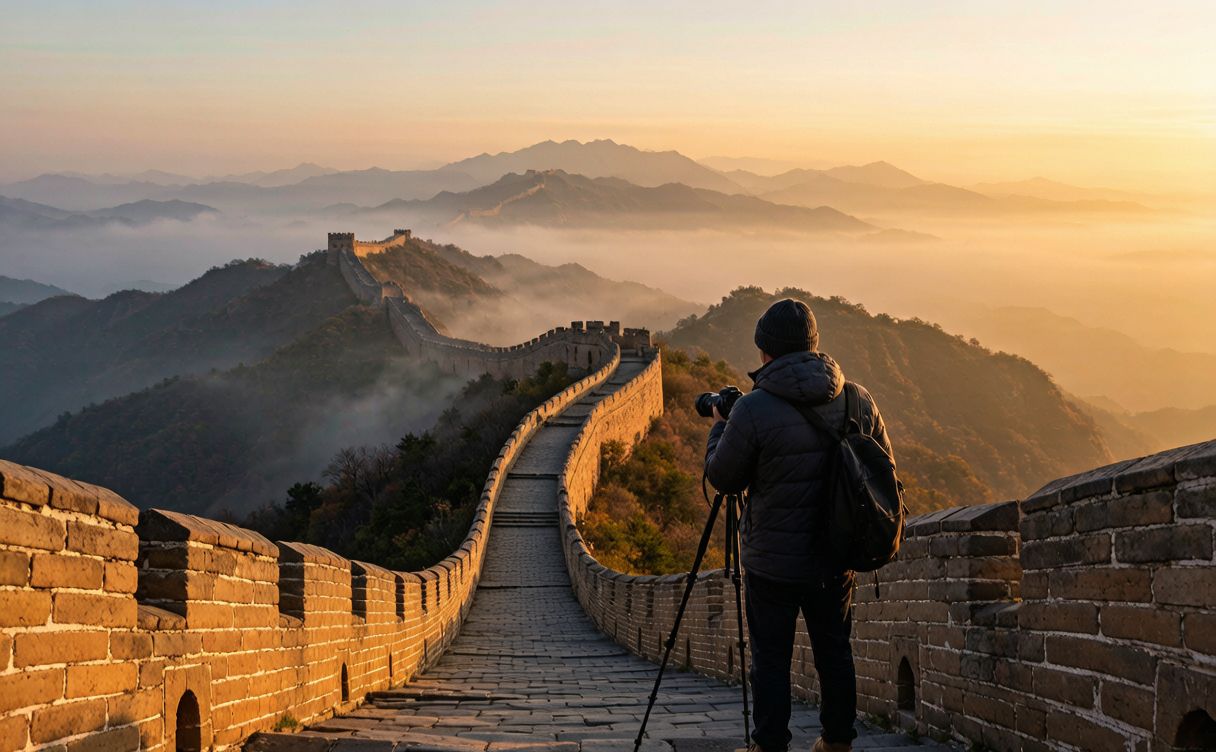
I still remember the first time I stood on a watchtower at 4:50 a.m. with frost on the battlements and my camera fogging from the cold. Then the sky cracked open behind the mountains, and the wall below me turned from grey to gold in about ninety seconds. That is the magic every photographer chases. If you are hunting for the best photo spots Great Wall sunrise, this guide is for you: I will walk you through the four sections I have actually shot at dawn, the camera settings that work, how to reach each one from Beijing before first light, and the permits and weather windows that make or break the morning.
Why Sunrise on the Wall Is Worth the Alarm
Most visitors arrive at the Great Wall around ten in the morning, when the tour buses roll in and the light is flat. Show up before the gates open and you get the wall to yourself, the air is still, and the low sun rakes across the ridges to carve long shadows. Great Wall photography lives or dies on that side-light. At sunrise the watchtowers throw dramatic silhouettes, the valleys fill with mist, and you can shoot in every direction without a single selfie stick in frame. It is harder work, but the files are worth ten midday snapshots.
The Top Spots, Ranked by What You Can Photograph
Not every restored section opens early, and not every wild stretch is safe in the dark. These four are the places I keep coming back to because they combine legal access, a decent vantage point, and a reliable eastern horizon.
Mutianyu — Easiest Beautiful Sunrise
Mutianyu is the closest “pretty” option if you want a low-stress morning. The cable car usually does not run at dawn, so you hike up from the car park, which takes about forty minutes in the dark with a headlamp. Once on the wall, the dense watchtowers and the restored parapets make a clean, postcard composition. For a Mutianyu sunrise, position yourself on the east-facing slope (towers 14–17) so the sun rises just to your left and lights the wall as it snakes over the next ridge. It gets busy by nine, so shoot your hero frames before 6:30 in summer.
If you want the full logistics worked out, my Beijing first-time travel guide covers transport passes and which districts to base yourself in.
Jinshanling — The Wide-Angle Dream
Jinshanling is where serious Great Wall photographers go. It is semi-restored, far less crowded than Mutianyu, and the wall runs over a series of rolling peaks that look spectacular when fog sits in the valleys. The eastern section near the East Five-Eye Tower gives you a clear shot of the sun cresting the hills. For Jinshanling camera settings, I shoot aperture f/8–f/11, ISO 100, and bracket three exposures (–2, 0, +2) because the contrast between bright sky and shadowed wall is brutal at dawn. A sturdy tripod is non-negotiable; the wind up there will blur a handheld shot.
Simatai — The Night-Access Wildcard
Simatai is unusual because it sits beside the Gubei Water Town, which means you can actually stay the night right at the foot of the wall and walk up before opening. The section is steep and partially wild, so stick to the lit or guided route. The reward is a dramatic, broken wall against a pastel sky, with the water town’s lanterns still glowing below you. It is the most atmospheric of the four, though also the most physically demanding in the dark.
Huanghuacheng — Water Meets Wall
Huanghuacheng is the section where the wall dips into a reservoir, and at sunrise the reflection doubles your composition. Fewer tourists know about it, so you often have long stretches alone. Climb to the high point above the lake before light and you can frame the sun rising over water with the wall curving away on both sides. Bring microfibre cloths; the lakeside humidity fogs lenses fast. On my last visit a family of locals was doing tai chi on the dam at first light, and including them in a wide frame gave the shot a sense of place that the empty wall alone never could.
Gear and Settings That Actually Work
You do not need a pro body, but you do need the right support. A wide-to-standard zoom (16–35mm or 24–70mm) covers most frames; a longer lens (70–200mm) is lovely for compressing ridge after ridge of wall. Always carry a tripod, a headlamp (red mode saves your night vision), spare batteries (cold drains them), and lens cloths.
My dawn recipe: shoot RAW, ISO 100, aperture around f/9 for depth, and use exposure bracketing so you can recover both the bright sky and the dark wall in post. Turn off image stabilization on the tripod, use a two-second timer or remote, and shoot a few frames of each scene because the light changes by the second. If you want context on costs before you invest in a trip, see my China travel budget per day breakdown.
Getting There Before Dawn (From Beijing)
This is the part most guides gloss over. Public buses do not run at 3 a.m., so for a sunrise shoot you either hire a driver, join a small photo tour, or stay near the wall the night before.
- Mutianyu: About 1.5–2 hours from central Beijing by car. Leave the city by 3:00 a.m. to be on the wall by first light in summer.
- Jinshanling: Roughly 2.5 hours northeast. Many photographers book a guesthouse in the nearby village and walk in at 4:00 a.m.
- Simatai: Stay in Gubei Water Town; the wall is minutes from your room.
- Huanghuacheng: About 1.5 hours north. Quieter roads, but still drive in the dark.
Pair this with a wider plan using the things to do in Beijing list so your early start does not eat the rest of your trip.
Permits and Opening Hours
Restored sections like Mutianyu and Jinshanling open around 7:30–8:00 a.m. in peak season, which is after the best light. The legal trick is to arrange a pre-opening permit or an official photography slot through the management office, or to stay inside a resort that holds wall-access rights (Simatai/Gubei is the classic example). Never assume you can just climb a closed gate — the wardens are awake before you are, and fines are real. Always confirm current hours when you book, because they shift with season and holidays.
Weather and Season
Clear skies sound ideal, but a thin high cloud layer often gives the best colour because it catches the alpenglow. Autumn (September–November) is my favourite: crisp air, low humidity, and reliable eastern horizons. Spring brings haze; summer brings storms that can wipe out the show; winter is brutally cold but offers the cleanest, most dramatic light if you can handle frozen fingers. Check the hourly forecast the night before and have a backup section in mind.
Composition Tips From the Wall
A few habits have saved more shots than any gadget. First, arrive early enough to scout in the blue hour so you are not fumbling in the dark when the colour peaks. Second, use the wall itself as a leading line — stand on a tower and let the parapet pull the eye toward the sun. Third, include a human figure or a watchtower for scale; the wall looks small without it. Fourth, turn around — the western sky often lights up pink a minute after the sun clears the ridge, and most people miss it because they are facing east. Fifth, shoot in the blue hour before the sun appears; the wall in cool shadow with a warm band on the horizon is a frame most tourists never capture. Finally, do not pack up the instant the sun is up. The first twenty minutes of daylight, when the mist starts to lift off the valleys, often produce the cleanest ridge-layering shots of the whole morning.
The Bottom Line
Chasing the best photo spots Great Wall sunrise is really about preparation: pick a section that opens early or lets you stay close, pack a tripod and warm layers, and set that alarm without mercy. The light lasts minutes, but the files last forever. Build the rest of your route with my Beijing 3-day itinerary so the early mornings slot neatly around the city sights.
One More Thing Before You Go
If this is your first time in the city, do not overthink the logistics. Beijing is friendly to early risers, and a sunrise on the wall is the kind of memory that justifies the whole flight.
Timing Your Visit
The season you choose changes everything about your dawn shoot.
The Great Wall is a UNESCO World Heritage Site, and you can read the official designation and conservation notes on the UNESCO World Heritage Centre listing.
Written by Karl — last updated July 2026. Karl has spent three years helping foreign visitors plan low-stress trips across China.