

Why Weishan Earned a Place on Our Yunnan Routes
Most travelers who come to Yunnan never leave the Dali–Lijiang corridor, and I get it — those towns are spectacular. But on our last trip through the province we built a slow loop that started in Dali and swung south to Weishan, in Yunnan, China, and it turned out to be the quietest, most genuinely lived-in old town we visited all month. This Weishan travel guide is built from that trip and from the travelers we’ve since sent here who wanted a Dali alternative without the tour-bus soundtrack.
Weishan’s big claim to fame is being the cradle of the Nanzhao Kingdom, the 8th-century polity that shaped much of Yunnan’s early history. The old town still follows a Ming-dynasty grid, with grey-tile roofs, narrow lanes, and a working morning market where the local Yi and Hui communities do their shopping. Nothing here feels like a museum piece; people actually live, cook, and trade among the old walls.
How to Get to Weishan from Dali
The single most common question I get is how to get to Weishan from Dali, because almost everyone arrives via Dali. The good news: it is easy and cheap. A high-speed train runs from Dali Station to Weishan Station in about 25–35 minutes, with second-class tickets around ¥18–28 CNY. Trains leave roughly every hour through the day, and buying at the station counter or via a Chinese rail app is straightforward. If you miss the train, direct buses leave Dali’s Xiaguan bus station for Weishan county town and take about 1.5–2 hours for ¥25–35 CNY.
From Weishan Station it is a 10–15 minute taxi (¥15–25 CNY) or a local bus (¥2 CNY) into the old town. If you are driving a rented car, the expressway link makes the Dali–Weishan drive about 60–80 km and 1 to 1.5 hours. We usually tell self-drivers to pair this with a stop at Dali’s old town and Erhai lakeshore so the transfer day doubles as sightseeing.
For a wider Yunnan plan, our Shaxi ancient town guide sits well north of here and pairs naturally on a longer loop, while the Cangshan Mountain guide covers the ridge that frames Dali to the west.
Walking the Weishan Ancient Town Yunnan Streets
The heart of any visit is a slow walk through Weishan ancient town Yunnan. The grid is small enough to cover on foot in two hours, but I advise half a day so you can duck into courtyards. Start at the Star-Picking Tower (Xingxingge), the raised gate in the center of town, then follow the four main axes outward. The architecture is intact Ming and Qing, with carved doorways, shaded wells, and timbered courtyards you can peek into.
The Nanzhao Museum, set in a restored compound, gives the historical backbone — it explains how local Yi chieftains built the kingdom that once rivaled Tang dynasty power to the north. Admission is free, and although the English signage is patchy, the models and maps do the work. For context on the broader kingdom before you go, the Wikipedia entry on Nanzhao is a solid pre-read.
A short walk north of the old town brings you to the foot of Weibao Mountain, the other headline of this guide. I like to time the town walk for late afternoon, when the low sun lights the tile roofs and the market is winding down into dinner prep.
Weibao Mountain Taoist Temples
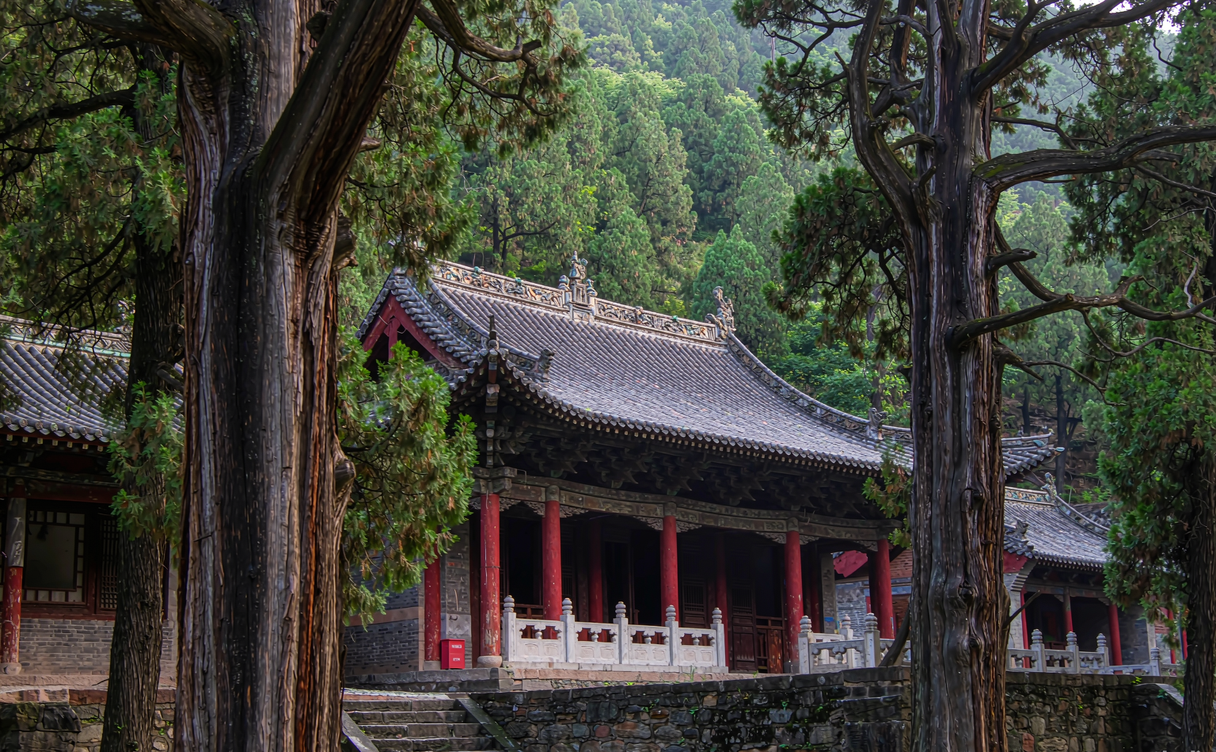
Weibao Mountain (Weibaoshan) rises just south of the town and is sacred in both Taoist and Yi folk tradition. The mountain road climbs through pine forest to a cluster of temples, the most important being the Changchun Cave and the Wenchang Palace, plus the Yi ancestral shrine at the summit where the Nanzhao founders are honored. Entrance to the mountain scenic area is about ¥60–80 CNY, and a shuttle bus from the lower car park saves a steep 4 km climb for ¥20 CNY round trip.
I’ve sent travelers here who were tired of yet another Buddhist hall, and the Taoist quiet of the Weibao Mountain Taoist temples lands differently — incense smoke, mountain mist, and almost no crowds except around the lunar festival dates. The walk between temples takes 2–3 hours at a relaxed pace. Wear decent shoes; the stone paths are slick after rain, and the summit shrine involves a final flight of steps that gets the heart going at this mild altitude.
Weishan Snacks and Rice Noodles
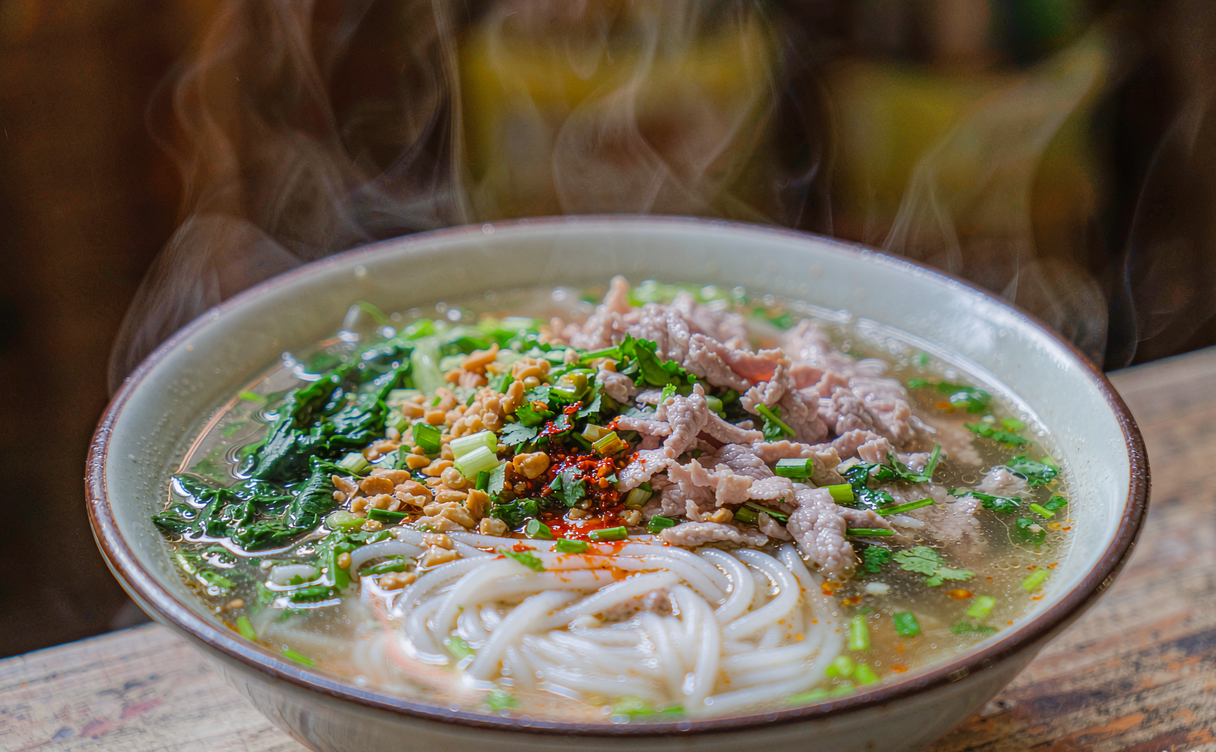
Food is where Weishan quietly beats bigger towns. Weishan snacks and rice noodles deserve their own paragraph. The local specialty is “weiba rou” (braised pork belly with a sweet-soy glaze) and the cake-like “ernei” pastries, but the everyday hero is the rice-noodle bowl. A street-side “mixian” here runs ¥8–15 CNY and comes with a richer, darker broth than the Dali version, often topped with a spoon of chili-crisp oil.
The morning market off the east gate is the place to eat: steamed baba bread, fried pea-flour cakes (¥3–5 CNY), and sour-plum drinks in summer. We always tell clients to arrive before 9 a.m. for the full spread, because the best stalls pack up by late morning. If you want to understand the regional plate, our ethnic minorities food guide for China explains the Hui and Yi influences you taste here — the halal mutton skewers from the Hui side of town are genuinely good.
Yi and Hui Culture You Can Actually Meet
What separates Weishan from a staged heritage park is the living mix of people. The Yi community around the mountain keeps ancestral rites at the summit shrine, and you may catch rehearsals for the torch festival in summer. The Hui neighborhoods run the halal kitchens and the leather workshops near the west gate. I’ve had travelers invited to watch a courtyard drum performance simply by lingering and smiling — that kind of access is rare on a packaged route.
If you are collecting old towns, our best ancient towns in China guide ranks Weishan honestly against the famous names, and the Yunnan Three Pagodas in Dali is an easy add-on on your transfer day.
Where to Stay and For How Long
Weishan is best as an overnight, not a day trip. Guesthouses inside the old town run ¥150–300 CNY for a clean double with courtyard charm; a couple of restored manor houses charge ¥400–600 CNY and are worth it for the timber architecture and quiet. I book the courtyard ones in winter because they hold heat better than the modern boxes on the outskirts.
Two nights lets you do the town, the mountain, and a slow market morning without rushing. Three nights works if you want to use Weishan as a base and day-trip toward the nearby villages by hired car (¥200–300 CNY per day).
Best Time to Visit Weishan
The best time to visit Weishan is spring (March–May) and autumn (September–November). Spring brings mild temperatures around 15–24°C and the mountain greens up; autumn is dry, clear, and good for photography. Summer is warm and can be rainy, while winter is cold but peaceful with almost no tourists.
I steer first-timers to late March or mid-October. Avoid the week-long National Day holiday in early October if you want empty lanes — the town fills with domestic road-trippers then, and guesthouse prices jump 30–50%.
A Sample 2-Day Plan
Day 1: Train from Dali (30 min), check in, walk the old town grid and Nanzhao Museum, dinner on rice noodles. Day 2: Morning market, taxi to Weibao Mountain, temples and summit shrine (3–4 h), back to town for lunch, train to Dali or onward.
Practical Tips
Carry some cash; a few temples and market stalls do not take foreign cards. The old town is flat and easy on the legs. Altitude is low (around 1,700 m), so no acclimatization is needed — a relief after higher Yunnan stops like Shangri-La. Wear layers even in spring, because mountain evenings drop fast.
When planning your trip, you can compare hotels, flights, and trains on Trip.com.