

I spent three nights inside the walls of Pingyao in October 2025, sleeping in a converted courtyard residence that was older than the country I flew in from. The bed was a kang-style platform softened with a mattress, the courtyard filled with the smell of smoked chili from the neighbor’s kitchen, and the rate was RMB 320 a night including a pot of jasmine tea on arrival. This China ancient town stays guide comes from that trip and from nights in Fenghuang and Hongcun, and it tells you what a night inside an old town actually costs, what the noise and heating are like, and how to book without surprises.
What you are really booking
When I say where to stay ancient town China, I mean a room inside the old walls or the heritage core — a timber courtyard inn (客栈, kezhan) or a stone village guesthouse — not a chain hotel five minutes by car outside the gate. The appeal is obvious: you step out at 7 a.m. before the day-trippers arrive and have the lanes to yourself. The trade-off is real. These buildings are old, so walls are thin, plumbing is sometimes shared, and heating in winter is a coal or electric unit that may or may not keep up. A China heritage stay is a atmosphere purchase first and a comfort purchase second.
I have now done seven such nights, and the rule I follow is simple: pay a little more for a renovated inn with good reviews mentioning “quiet” and “warm,” because the cheap ones cut exactly those corners. Our China homestay guide covers the family-run side of this, including how to read hosts who mostly speak Chinese.
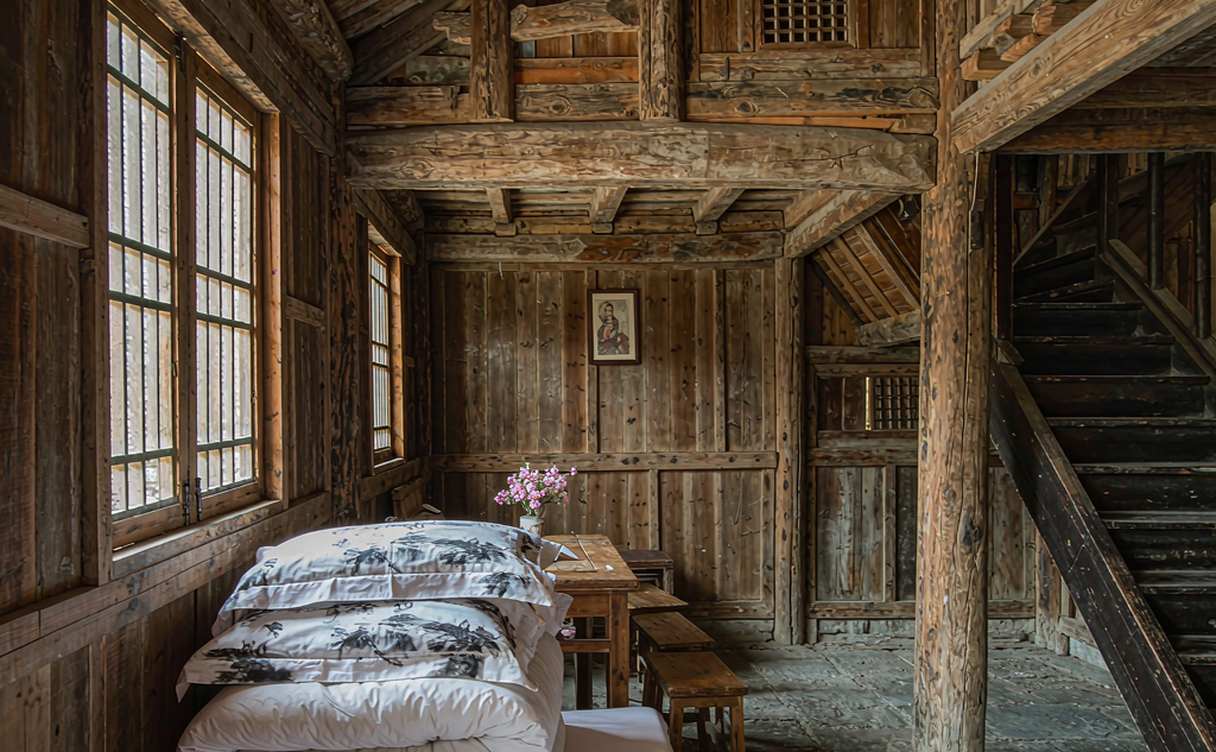
Pingyao lodging inside the walls
Pingyao is the cleanest example of a walled Ming-Qing town, and staying inside the walls is non-negotiable if you want the morning magic. I booked a renovated courtyard kezhan off Mingqing Street for RMB 320 a night; fancier courtyard suites with heated floors ran RMB 600 to 900, and the bare-bones ones started at RMB 180 but shared a toilet down the hall. The town’s layout and history are outlined on Pingyao at Wikipedia, and the Pingyao ancient town guide walks you through the sights you can reach on foot from your inn. Nights were cool in October (about 10°C), and my inn’s electric heater did the job; in January you will want the heated-floor rooms or you will wake up with frost on the window.
Fenghuang hotels by the river
Fenghuang in western Hunan is built along a river, and the Fenghuang hotels worth booking sit on stilts over the water. I paid RMB 280 for a riverside room with a balcony in late September; the same room doubles to RMB 500 on a weekend. The catch is noise: the riverside bars play music until midnight, and the wooden buildings transmit every footstep. Ask for a room on the upper floor and away from the main bridge if you want sleep. The Fenghuang ancient town guide maps which stretch of river is liveliest versus calmest, and I wish I had read it before picking my first (too-loud) room.
Hongcun and the village guesthouse
Hongcun in Anhui is a developed World Heritage village, and a China old town hotel here means a room in a renovated Hui-style house with a horse-head wall and a tiny carved window. I stayed one April night for RMB 360, woke to mist over the half-moon pond, and ate breakfast noodles at a grandmother’s stall for RMB 12. The Hongcun ancient village guide explains the ticket system (the village charges an entry fee even for overnight guests, about RMB 104, refundable against some inns), so factor that in. Spring was mild (18°C days, 9°C nights) and the unheated room was fine with the provided quilt.
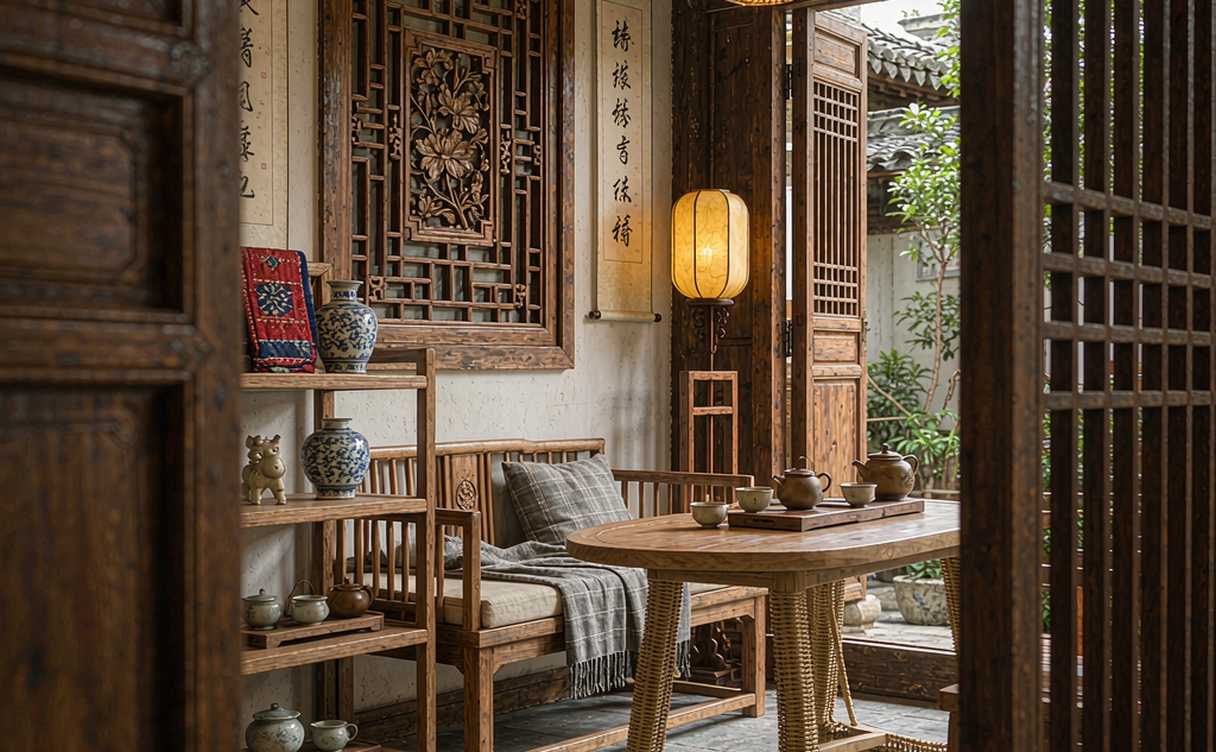
Prices, noise, and the season factor
Expect RMB 180 to 350 for a basic old-town room, RMB 350 to 700 for a renovated courtyard or riverside suite, and RMB 700 to 1,200 for a top heritage property in peak season. Spring (April to May) and autumn (September to October) are best for both weather and manageable crowds; summer is hot and sticky in the south (Fenghuang hit 33°C when I visited), and winter is empty and cold with the cheapest rates. Booking midweek saves 20 to 40 percent over Friday and Saturday. Our best ancient towns in China ranks the towns by walkability and overnight quality if you want to choose where to base.
How to pick the right old town for a night
Not every ancient town rewards an overnight. The ones that do have three traits: a wall or core you can walk entirely on foot, inns old enough to feel authentic but renovated enough to sleep well, and a morning that belongs to residents before the day-trippers arrive. Pingyao and Fenghuang pass easily; smaller villages like Hongcun pass if you like quiet over nightlife. I avoid towns whose “old” area is mostly rebuilt shops with a chain hotel behind it, because the China heritage stay feeling vanishes the moment you step outside. Match the town to your tolerance for noise and cold: Fenghuang for atmosphere and riverside bars, Pingyao for history and calm courtyards, Hongcun for mist and photographers. One night per town is enough to feel it without the thin walls wearing you down.
Booking and foreigner-proofing
Foreign travelers sometimes hit the “no foreigners” restriction at budget inns that lack the license to register guests, so book a verified listing and confirm by message that foreigners are accepted. I carry my passport for the mandatory registration and have never been turned away from a mid-range courtyard inn. Our China hotel booking guide for foreigners lists the platforms and the ID steps, and it saved me one awkward conversation in Pingyao where the front desk initially hesitated.
What to eat near your inn
Old towns reward walk-out-the-door dining. In Pingyao I ate wan tuo (a savory jelly) for RMB 10, beef noodles for RMB 18, and bought sesame cakes for RMB 4 to nibble in the courtyard. In Fenghuang the riverside breakfast of rice noodles was RMB 12, and in Hongcun the grandmother’s noodles were the best bite of the three nights. None of these inns had a real restaurant worth the price; eat at the lanes instead. A China heritage stay is enhanced by these cheap, local, steps-from-bed meals more than by any hotel breakfast buffet.
Is an old-town night worth it
For me, yes, every time. A China ancient town stays night costs about the same as a bland chain hotel but gives you a lane, a courtyard, and a dawn that belongs to you alone. Keep it to one or two nights per town so the thin walls do not wear you down, and let the early morning be the reward. The inconvenience is real, but the memory of an empty Pingyao street at sunrise is worth a shared toilet.