

I slept in a canvas tent in the Tengger Desert in September 2025, and at 2 a.m. the sky was so dense with stars that I could read the camp’s safety rules by the light of the Milky Way. The night temperature dropped to about 8°C, the camp provided a thick quilt and a small heater, and the price was RMB 480 including a lamb skewer dinner. This China desert camp stays guide is built from that night and two others in Ningxia and Inner Mongolia, and it tells you what a desert night costs, what kind of camp to pick, and how not to freeze or get lost.
What a desert camp actually is
When I say desert camps China, I mean tented or yurt camps set up inside the dunes, not hotels on the edge of town with a desert view. They range from a bare nomad-style yurt with a shared pit toilet (RMB 120 to 200) to a proper Gobi glamping dome with a real bed, private bathroom, and heating (RMB 600 to 1,500). The middle tier around RMB 350 to 700 is the sweet spot for most travelers: a solid bed, a hot meal, and a guide who knows the dunes. A China stargazing stay is the whole point — these camps sit far from city light, and the night sky is the main attraction after the sunset.
I have now camped in three deserts, and the difference between a good camp and a bad one is almost always the same: does the operator control the site, and do they winterize the bedding. Our China glamping and camping guide explains the gear and booking logic for sleeping outdoors in China, and the desert is its most dramatic chapter.
Tengger Desert, Ningxia
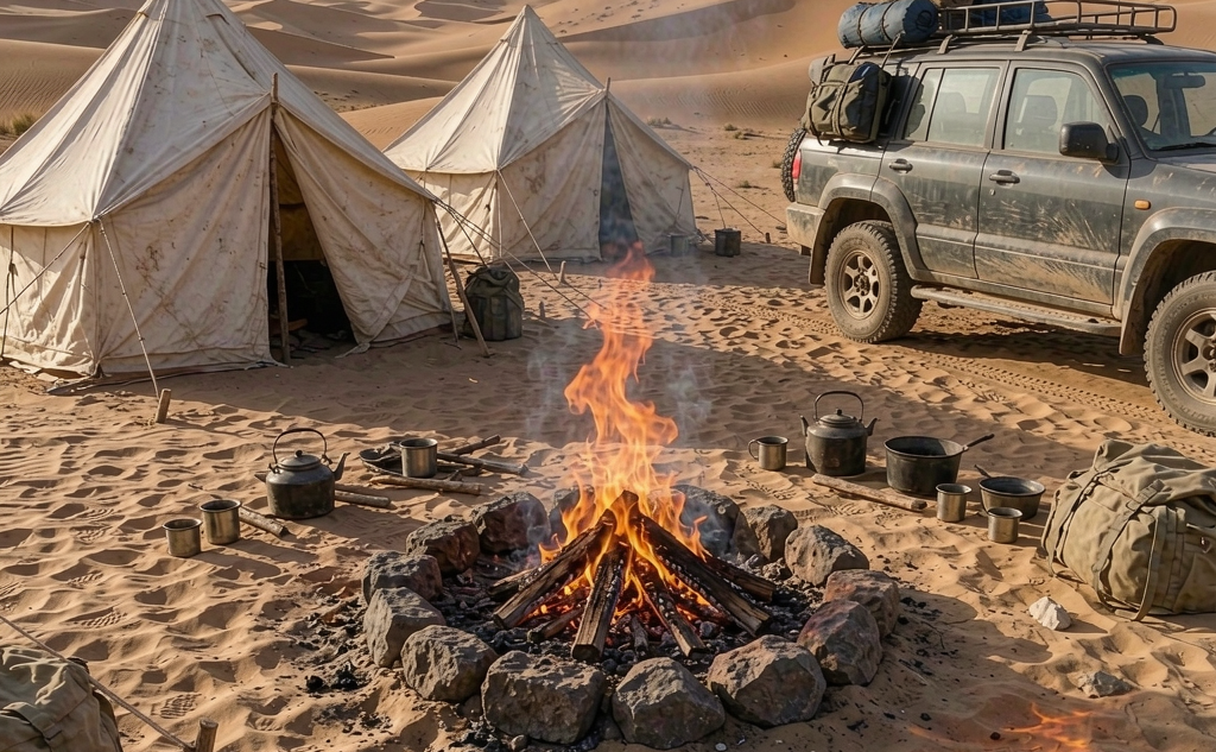
The Tengger is the easiest desert to reach from a city, since it sits near Zhongwei and connects to the Shapotou tourism zone. I booked through the Tengger Desert guide route and paid RMB 480 for a tent with dinner, or RMB 880 for a furnished yurt with a private heater. Days are hot in September (around 26°C) and nights cool fast, so the camps run small bonfires and sell roasted sweet potatoes for RMB 10. The nearby Shapotou desert guide covers the cable car and camel rides if you want activities before you sleep, and I did both on the same afternoon before retiring to the tent.
Badain Jaran and the singing dunes
For a wilder China silk road lodging experience, the Badain Jaran Desert in Inner Mongolia has camps near the world’s tallest stationary dunes and a famous “singing” sand. These camps are remote — you ride in by 4×4 for about an hour from the nearest town — and prices run RMB 600 to 1,200 because everything is hauled in. I did not stay overnight here (permits and logistics are stricter), but the day camps I visited served butter tea and noodles for RMB 45. The scale is the draw: dunes over 300 meters high with tiny lakes between them. The Badain Jaran Desert guide has the access detail if you want to attempt the overnight version.
Kubuqi and the family camps
The Kubuqi Desert near Ordos in Inner Mongolia is the closest dune field to Beijing by rail, and its camps lean family-friendly: yurts with bunk beds, a central dining ger, and a short camel loop. I paid RMB 360 for a yurt in early October, when the day was a mild 20°C and the night fell to 6°C. The Kubuqi Desert guide lists the camp clusters and the evening bonfire shows, which are touristy but fun if you travel with kids. A China desert hotel in the nearby town of Xiangshawan costs more (RMB 1,000 to 2,000) but gives you a roof and a pool if you cannot face the cold.
Tent, yurt, or dome: which to book
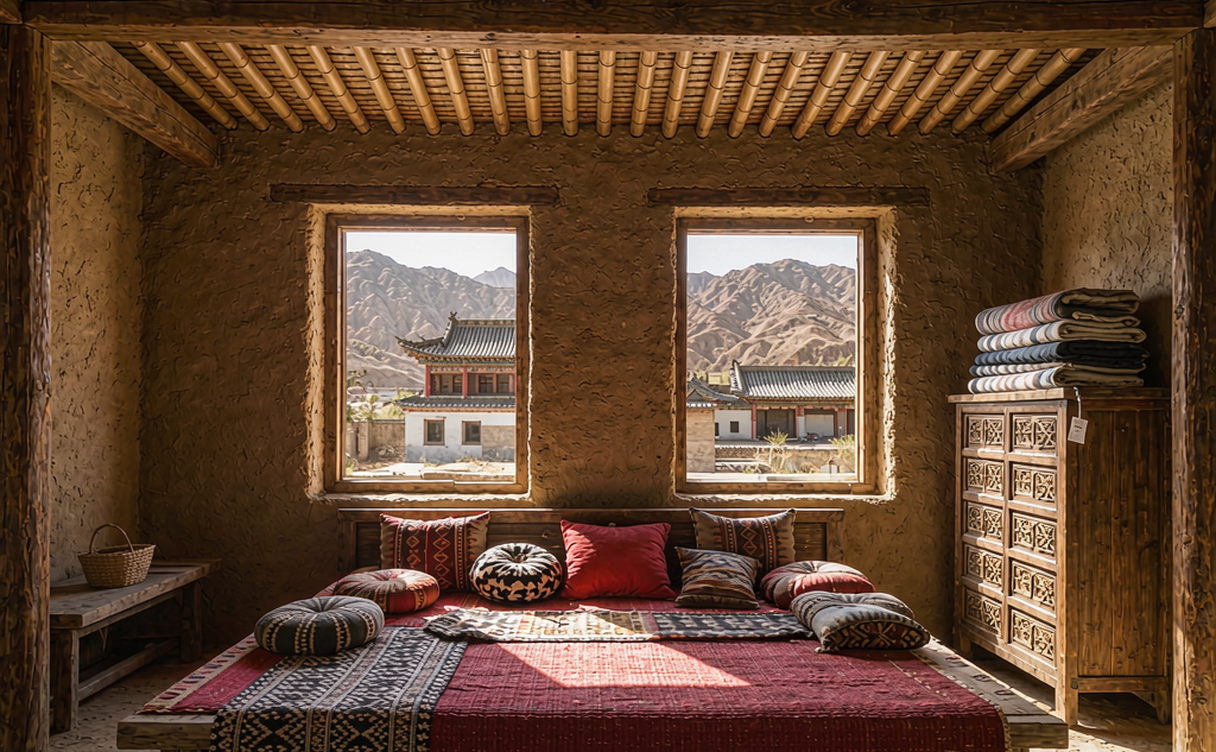
The three camp types suit different travelers. A yurt (ger) is the most cultural and the warmest by design — the felt walls hold heat better than canvas, so I pick yurts when the night forecast drops below 10°C, and they ran RMB 360 to 700 in the camps I visited. A canvas tent is lighter and cheaper (RMB 200 to 450) but loses heat fast, so it suits warm September nights and travelers who do not mind a chill. The new Gobi glamping domes are the comfort play: a real bed, a private bathroom, and a diesel heater, at RMB 800 to 1,500, and they are worth it if you are celebrating or hate roughing it. I tried all three and would book a yurt for value, a dome for a special night, and a tent only in warm months. The camps almost always let you upgrade on arrival if a dome is empty, so ask at check-in rather than paying top rate online.
Prices, seasons, and packing
Expect RMB 120 to 200 for a basic yurt, RMB 350 to 700 for a comfortable tent or furnished yurt, and RMB 1,000 to 2,000 for a luxury desert hotel nearby. The best window is May to June and September to early October; summer (July to August) is brutally hot, often above 35°C by day, and winter drops below -15°C at night, when only the heated domes operate. Pack a warm layer even in September, a headlamp, lip balm, and more water than you think — the dry air dehydrated me faster than any city. The Gobi’s climate and extent are outlined on Gobi Desert at Wikipedia if you want the regional picture before booking.
Safety and booking notes
Desert camps are generally safe, but the rules matter more than in a city. Tell the operator your plan, stay inside the marked camp area after dark, and never walk into the dunes alone at night — the terrain is disorienting without a moon. Our China travel safety tips cover heat, dehydration, and getting lost in remote areas, and I reread the dehydration section before every dune trip. Book through your hotel in the gateway town or a verified platform; freelance “come camp with me” offers at the dunes edge are the ones to avoid.
Food and the campfire evening
Most camps include a dinner of lamb skewers (RMB 8 to 12 each), flatbread, and a vegetable stir-fry, with unlimited brick tea. The better camps roast a whole lamb for groups at RMB 880 to 1,200, split across a booking of six or more. I ate skewers and flatbread for about RMB 60 and counted the bonfire chat with the herders as the second-best part after the stars. Breakfast is usually congee and eggs for RMB 20 to 30 if not included.
Is a desert camp worth it
For me, absolutely. A China desert camp stays night costs less than a city hotel room of the same comfort and gives you a sky you cannot buy anywhere else. Keep it to one or two nights, pair it with the gateway town’s sights, and let the silence do the rest. The Gobi glamping trend means camps are better run than they were five years ago, so this is a good moment to try sleeping under the stars.