

I came to Tianjin Italian Style Town on a cold February afternoon in 2025, fresh off the high-speed line from Beijing, because I wanted to walk a piece of China’s foreign-concession history without the crowds of the capital. It is strange and lovely: a tight grid of ochre and cream villas, fountains, and café terraces that would not look out of place in Lombardy, dropped into the flat north of China where the Hai River bends. This Tianjin Italian Style Town guide is built from a two-day stay, the metro rides I actually took, and the prices I paid in RMB, and it is written for travelers who like their history with a good espresso and a quiet bench.
How to reach Italian Style Town
The district sits in Hebei District, just east of the old city core, along the Hai River. The easiest approach is Metro Line 2 to Jianguodao (建国道) station, which is a five-minute walk to the central piazza; I paid nothing for the subway beyond the RMB 2 to 5 single fares that Tianjin charges for short hops. Our China metro and subway guide explains how to buy a Tianjin transit card and read the English-friendly maps, and it saved me a confusing first morning. From Tianjin Railway Station it is a 10-minute taxi (RMB 10 to 15) if you arrive by train, or a 40-minute ride from Binhai airport for about RMB 80 by DiDi.
If you are basing in the city, the Tianjin travel guide has the wider rail and hotel picture; I stayed near the station and rode the metro in each evening. The area is flat and walkable, and I never needed a car, which is the right way to do a Tianjin colonial street neighborhood where the pleasure is in the wandering rather than the destination.
What the district actually is
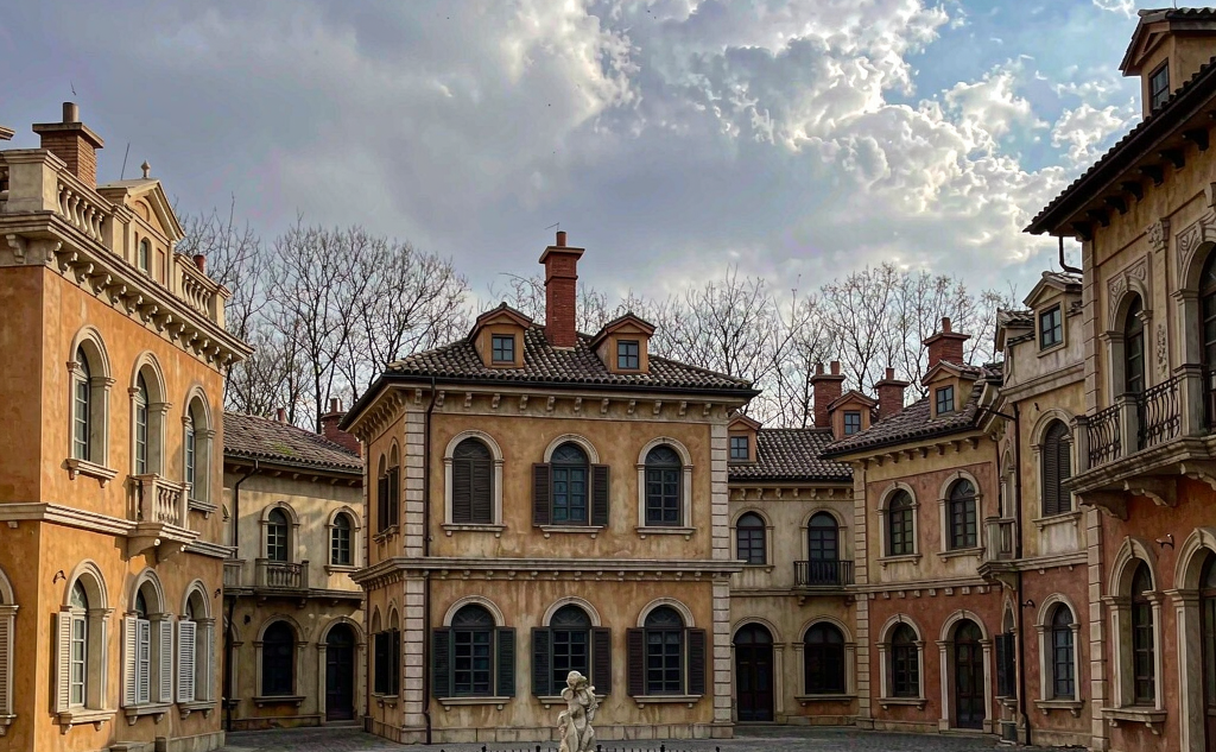
This was the former Italian concession, one of nine foreign zones carved out along the Hai River after 1860, and it is the only intact Italian-style concession district anywhere in the world outside Italy. The grid was planned by Italian architects, and the buildings have been restored over the last two decades into restaurants, boutique hotels, and small museums. I found the Marco Polo Square (马可波罗广场) fountain the natural center, ringed by the most photogenic facades. For the wider story of the other concessions, the Tianjin Five Great Avenues guide covers the British and other zones a short metro ride south, and I paired the two for a full day of architecture.
It is easy to over-romanticize; this is a restored, partly commercialized quarter, not a living Italian community. But as a Tianjin Italy district it is genuine in its bones, and the streets are clean, safe, and calm compared with the busy modern center a kilometer west. The Hai River, which the concession was built to face, still defines the edge of the quarter.
Things to do in Italian Town
The free joy here is simply walking. I spent a slow morning photographing the stucco balconies and reading the small plaques that name each villa’s original use. Paid stops include the former Italian barracks and a couple of small exhibition halls with old photographs of concession life; entry ran RMB 20 to 30 each in 2025. A short riverfront promenade at the district’s edge gives you the Hai River and the modern skyline across the water, and that contrast is the photo everyone takes. For things to do Italian Town gave me more than expected: a poetry museum, a few craft shops, and weekend buskers near the fountain.
Across the river rises the Tianjin Eye Ferris Wheel, the giant wheel built over the bridge, which I reached by a 15-minute walk north along the bank; a spin cost RMB 70 and gave a fine dusk view back over the villas. I came back to the quarter at night too, because the lighting on the cream walls is warmer after dark and the crowds thin. Our China nightlife and bar guide notes where the city’s late scene clusters, but here the evening mood is gentle wine bars rather than clubs, which suited me after a full day of walking.
Food, coffee, and the evening mood
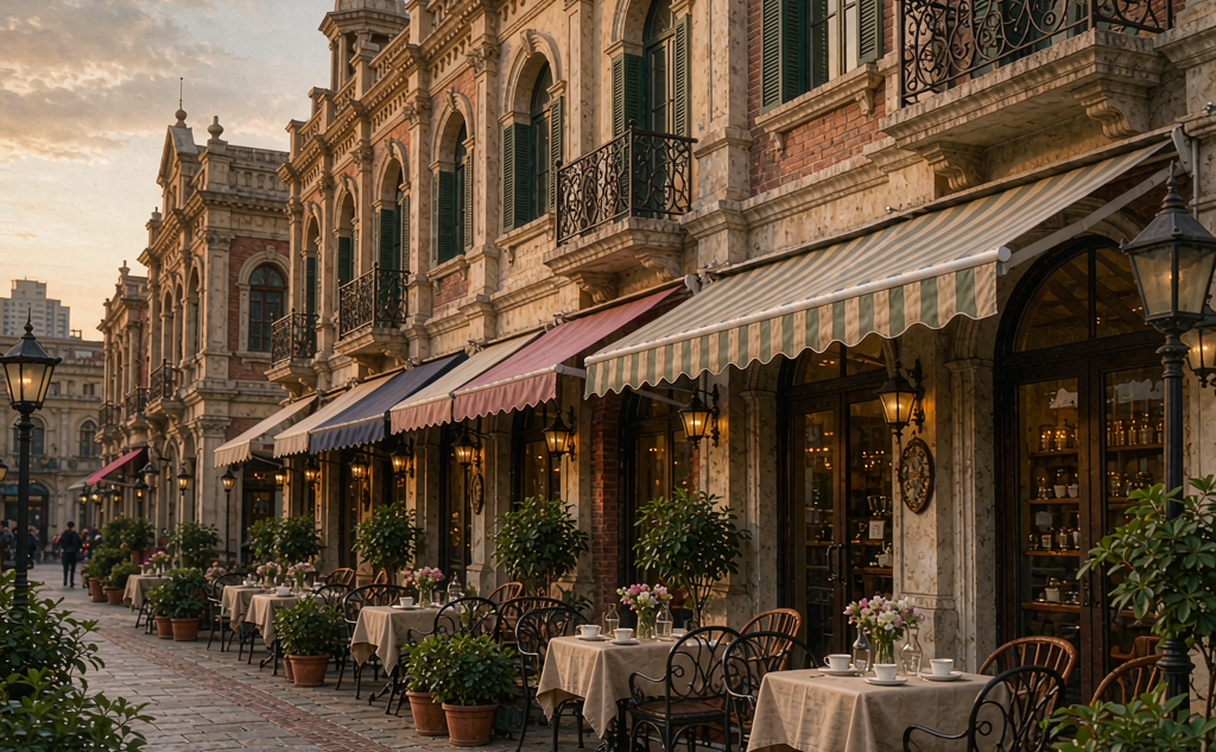
The restaurants lean Italian-friendly and tourist-comfortable, which is a relief after days of guessing menus elsewhere. I paid RMB 68 to 120 for a pasta and a glass of house red at a terrace café, and RMB 35 for a proper espresso and tiramisu breakfast. It is not cheap by Tianjin standards, but the setting carries the price. For the wider local table, the Tianjin food guide lists the Jianbing and Goubuli dumplings you should try outside the quarter, because inside the walls you are paying for the view as much as the plate.
The Tianjin nightlife here is low-key and starts early: by 9 p.m. the terraces were mellow rather than loud, and a stroll with a takeaway gelato was the perfect close. If you want the full background on the nine concessions and how this pocket of Italy came to sit in North China, see Tianjin on Wikipedia before you go.
A practical visiting plan
How to visit Italian Town is mostly a question of timing. I treated it as a half-day plus an evening: late morning for the museums and photos when the light is flat and the tour groups have not arrived, then dinner and a second walk after dark. Weekends get busy by midday, so a weekday visit was far calmer. The quarter is free to enter; only the small museums charge, and two of those were enough for me.
I spent about RMB 250 in the quarter across a dinner, a coffee, and one museum ticket, not counting the hotel. Pair it with the Five Great Avenues and the Eye and you have a relaxed Tianjin day that costs less than a single big-city attraction ticket elsewhere. The whole concession area is compact, so wear comfortable shoes and let the fountain be your meeting point when your phone loses signal among the thick walls.
Who it suits, and who should skip it
I would send Italian Style Town to travelers who like architecture, slow coffee, and a tidy slice of history more than to adrenaline seekers. It is stroller-friendly, flat, and safe after dark, which makes it a good family or older-traveler stop. If you want gritty local markets and real-deal street food, the quarter will feel tame, and you should balance it with the city’s working neighborhoods. As a Tianjin Italy district it is a curated experience, and that is exactly its charm when you accept it on those terms.
Tianjin Italian Style Town will not change how you see China, but it will give you one of the most pleasant half-days of any northern city, and a story about the time you drank espresso on a Mediterranean piazza that happened to be in Hebei. I left wondering why more foreign visitors skip Tianjin entirely, and I have quietly put it on my list of easy Beijing day-trips to repeat when the capital crowds wear me down.