

I still remember the first time I stepped off the high-speed train in Tianjin, luggage in hand, with no real plan beyond one thing on my list: the Tianjin Eye. A Ferris wheel sitting on a bridge, spinning slowly above a river, lit up like a giant ring of fireflies at night — it sounded too strange to be true. So I made my way there on a cool spring evening, and by the time my capsule reached the top, I understood why this odd, beautiful structure has become the symbol of the city. If you are a foreign visitor trying to fit Tianjin into a China trip, this is one stop you should not skip.
Getting There
Reaching the Tianjin Eye is easier than many travelers expect. I arrived from Beijing, which is the most common route. The high-speed train from Beijing South to Tianjin Station takes around 30 minutes and costs very little, and it remains the smoothest way to do a day trip. If you want the full picture of how to ride China’s trains as a visitor, my China high-speed train guide for foreigners walks you through tickets, apps, and what to expect at the station.
Once in Tianjin, the Eye sits on the Yongle Bridge over the Haihe River, in the Hebei District on the north bank. From Tianjin Station you can take a short taxi or a metro ride plus a walk. I preferred walking part of the way along the river — it gave me a feel for the city before the ride even began. Tianjin is compact enough that many visitors combine the Eye with a stroll through the nearby Ancient Culture Street and the Italian-style concession area. If you are building a wider Tianjin plan, my Tianjin travel guide lays out the main neighborhoods and how to chain them together in a single day.
What to See
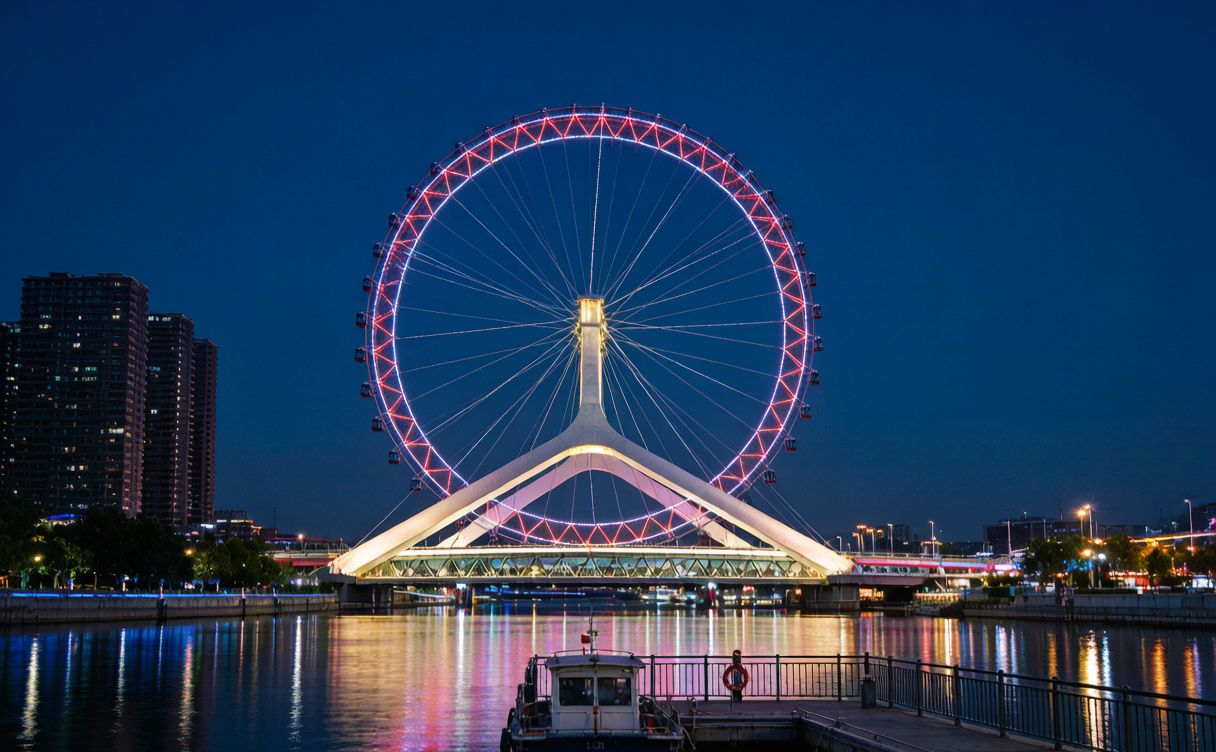
The Tianjin Eye is not just a ride; it is also a working bridge. That is the part that fascinated me most. The wheel is 120 metres tall and was built directly onto the Yongle Bridge, so cars and pedestrians pass underneath while the capsules rotate above. It holds the unusual distinction of being one of the only Ferris wheels in the world constructed on a bridge. From the ground, the structure looks like a sleek steel halo, and the river below reflects it in long, shimmering streaks.
Inside each enclosed, air-conditioned capsule you get a slow, calm rotation that takes about 30 minutes for a full turn. I went up during the late afternoon first, when the light was soft and the rooftops of Tianjin glowed gold. You can pick out the Haihe’s many other bridges, each with its own shape, and trace the line of the river as it curves through the city. On a clear day the views stretch surprisingly far. But honestly, what you see from the top matters less than the simple novelty of floating above a working bridge.
The Ride at Night
If you only do one thing here, do it after dark. I came back in the evening, and the difference was night and day — literally. The entire wheel is outlined in colored lights that shift slowly through hues, and the reflection on the Haihe turns the river into a moving ribbon of red, blue, and gold. From the top, the whole riverbank comes alive: restaurants, promenades, and the occasional tour boat drifting beneath you.
There is something quietly romantic about the night ride. My capsule was nearly empty, and for half an hour I just watched the city breathe. The slower pace is the point — at 120 metres, you are high enough to feel small but never scared, and the enclosed cabin keeps the wind out. If you are traveling with someone, this is an easy, low-pressure date spot. If you are solo like I was, it is a perfect moment to simply take photos and let the trip sink in. For travelers comparing China’s big cities, my Beijing vs Shanghai piece helps you decide where to spend more time, and Tianjin makes a relaxing half-day add-on to either.
Tips
A few things I learned that made the visit smoother. First, buy your ticket on site at the booth near the base, or through a Chinese travel app if you are comfortable — either way, lines are shortest on weekday afternoons. Second, pick your time deliberately: daytime for photos of the city, night for the light show. I did both and did not regret it, but if you must choose, choose night. Third, bring a light jacket even in summer; the cabin is climate-controlled, but the wait at the base can be breezy by the water.
Fourth, the area around the base gets crowded on weekends and holidays, so arrive early or late to avoid the worst of it. Fifth, combine the Eye with dinner nearby — the riverside has plenty of restaurants, and eating while the wheel glows outside your window is a small pleasure I highly recommend. If this is your first journey through the country, learning the practical basics before you arrive — from payments to SIM cards — makes experiences like this stress-free.
Best Time
The best seasons to ride the Tianjin Eye are spring (April to May) and autumn (September to October), when the air is clear and the temperatures are comfortable for riverside walking. I visited in April and the sky was crisp, which made the daytime views especially sharp. Summer brings heat and humidity, though the night ride stays pleasant thanks to the cooler evening air and the lit wheel. Winter is cold but has its own charm — fewer crowds and, occasionally, a dusting of snow on the bridge that looks magical against the lights.
Within the day, aim for the hour just after sunset, often called the blue hour, when the sky is deep blue and the wheel’s lights have just switched on. That window gave me my favorite photos: the structure glowing while the last light faded behind the rooftops. For broader inspiration on what else to see across the country, a good planning list is a helpful place to start mapping the rest of your route.
Good to Know
Before you go, a few practical notes. The Tianjin Eye generally operates from morning until late evening, but hours can shift for maintenance or weather, so check ahead. Tickets are priced moderately compared with big Western attractions, and children usually get a reduced rate. The site is accessible, with step-free access to the base, though peak-time queues can be long. The official Tianjin Government site is a reliable place to confirm public information and local travel notices before your visit.
I left Tianjin that night feeling like I had seen something genuinely different — not just another pretty view, but a piece of engineering whimsy that a city built for itself and its visitors alike. If your China trip starts in Beijing, a first-time guide and a simple two-day plan can help you slot Tianjin in as an easy side trip. The Eye may be a single wheel on a single bridge, but for me it became the moment Tianjin clicked.