

Most foreign travelers who plan a trip through Shanxi never make it past Pingyao and the Datong temples. About 200 kilometers southwest of Taiyuan the ground falls apart into a maze of yellow-earth gullies, and that is where Luliang sits. If you want a Shanxi itinerary quieter than the headline stops, this Luliang travel guide walks you through what is worth your time, how to get there, and when the light is best for those famous cave-village photographs.
Where Luliang Is and Why the Landscape Looks Like This
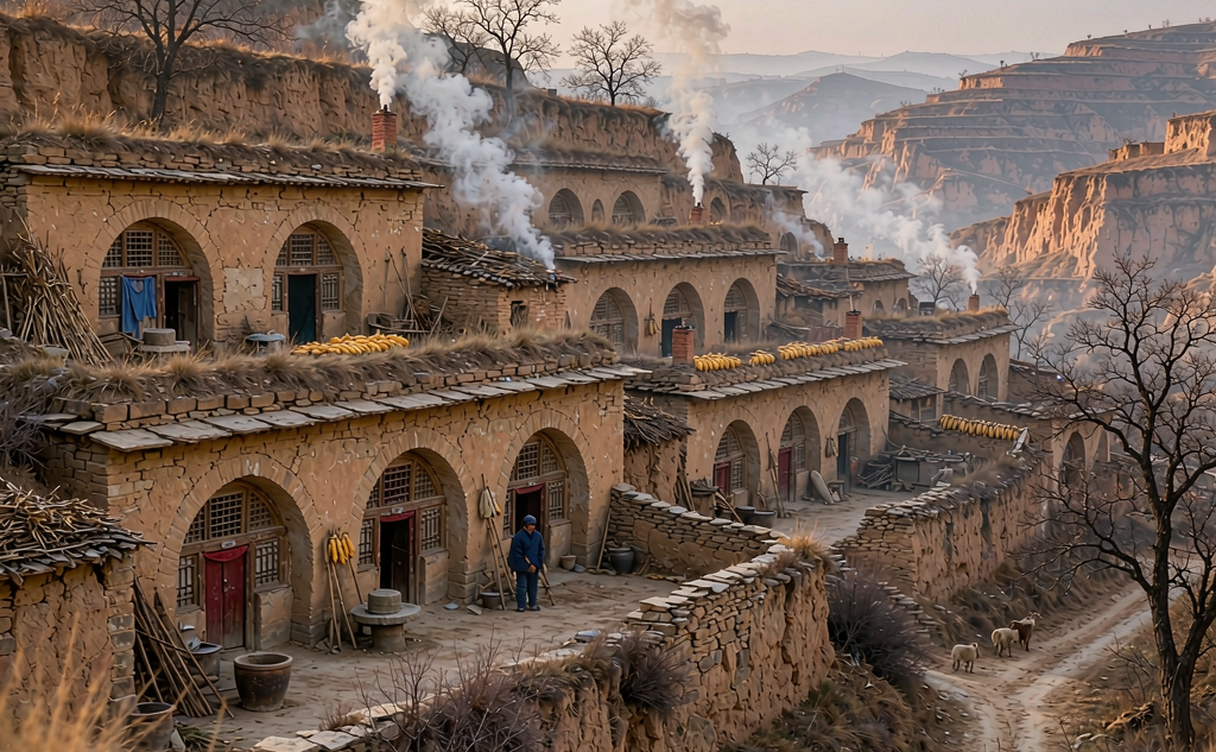
Luliang is a prefecture-level city in western Shanxi Province, hemmed in by the Lüliang Mountains to the east and the Yellow River to the west, where it forms the border with Shaanxi. The name literally means “Lüliang mountains,” and the range gives the whole region its character. What makes the area so visually striking is the loess itself — that fine, wind-blown yellow silt that blankets northern China. Centuries of rain have cut the soft earth into steep ridges, rounded hills, and deep ravines. The result is a kind of eroded geometry that you will not see in the granite mountains further south.
If you want the geological background, the Loess Plateau entry on Wikipedia lays out how this deposit formed and why it erodes so dramatically. For a traveler, the practical takeaway is simple: bring good shoes, expect dust after dry spells, and plan your photos for the low, slanted light of early morning or late afternoon when the gullies throw long shadows.
Qikou Ancient Town: the Old Yellow River Port
The single most rewarding stop in Luliang is Qikou (碛口古镇), an old trading town on the east bank of the Yellow River. During the Qing dynasty and the Republican era, boats could not pass the nearby rapids, so goods were unloaded here and carried overland. The town filled with warehouses, courtyards, and inns, and a surprising amount of it survives. We once arranged a stay for a couple who wanted to escape the reconstructed “ancient towns” elsewhere; Qikou’s appeal is precisely that it is not a theme park. The Ming- and Qing-style merchant courtyards are lived-in, the lanes are uneven stone, and the riverfront still smells of silt and dried fish.
From the riverfront you can climb to the ridge above town for a sweeping view of the Yellow River bending past the Shaanxi cliffs. A short taxi or walking ride uphill brings you to Li Jiashan (李家山), a village built into the loess slope as a stack of cave courtyards. The late painter Wu Guanzhong reportedly called it a rare treasure of the Loess Plateau, and the layered cave homes, each tier framing the one below, are exactly the image people chase. Go at sunrise; by midday the tour buses from Linfen and Taiyuan thin the magic.
Fenyang and the Birthplace of Fenjiu Liquor
Luliang’s Fenyang County holds Xinghua Village (杏花村), home of Fenjiu (汾酒), one of China’s oldest and most respected light-aroma baijiu. Even if you are not a spirits person, the Fenjiu Museum and the old fermentation workshops are a genuine piece of Chinese food heritage, and the guided tasting is eye-opening for anyone used to whisky or sake. A standard visit with tasting runs roughly 60 to 90 minutes, and bottles at the on-site shop are cheaper than in city liquor stores, though export packaging varies. We generally tell clients to budget about 80 to 150 RMB per person for the museum-and-tasting combination if booked through a local driver.
Fenyang also makes a convenient lunch stop between Qikou and Taiyuan. The local noodle culture is strong: look for oat-flour noodles (莜面) and碗托 (wantuo, a steamed buckwheat jelly sliced and dressed with vinegar and garlic). A filling bowl costs 12 to 25 RMB at a county-town shop, with a tangy, savory flavor unlike the wheat noodles of central China.
Mountains, Temples, and a Nature Reserve
If you want green relief from all the yellow earth, head to Jiaocheng County for two worthwhile sites. Xuanzhong Temple (玄中寺) is a mountain monastery important in Pure Land Buddhism and historically linked to the spread of the faith to Japan; the wooded hillside setting is calm and the climb is gentle. A few kilometers away, Guashan (卦山) offers walking trails among oddly folded rock formations and old trees. Entrance to these temple-mountain sites typically falls in the 40 to 60 RMB range, with Xuanzhong sometimes bundled into a seasonal ticket.
For wildlife and forest, Pangquangou (庞泉沟) National Nature Reserve in the northeast protects old-growth conifer forest, including habitat for the rare Chinese giant salamander. It is a half-day excursion best done with your own car, and the cooler air makes it a good July or August escape when the plateau bakes.
Beiwudang Mountain (北武当山), near Fangshan, is the local answer to the famous Wudang range in Hubei — a Taoist peak with a stone stairway, summit temples, and broad views over the gullied plain. The climb is a real workout (roughly 1,000 steps near the top), so allow three to four hours round trip. Pair it with our Mount Wutai guide if you are building a Shanxi mountains circuit.
Things to Do in Luliang: A Practical List
Readers searching for things to do in Luliang usually want a short, realistic menu rather than a travel-brochure list. Here is ours, ordered by payoff versus effort:
1. Walk Qikou’s riverfront and sleep one night in a restored courtyard inn (150 to 400 RMB depending on season and finish).
2. Photograph Li Jiashan at sunrise, then hike the village lanes with a local guide who can explain the cave architecture.
3. Tour the Fenjiu Museum and do a tasting in Xinghua Village.
4. Visit Xuanzhong Temple and Guashan for a half-day of forest and history.
5. Climb Beiwudang Mountain if you are reasonably fit and want the view.
6. Eat your way through Fenyang and Lishi (the prefecture seat) noodle shops; the food alone justifies the detour.
How to Get to Luliang
The fastest way in is usually via Taiyuan. The provincial capital sits three to four hours by car or about two hours by the frequent intercity services, and from there you can hire a driver or take a regional bus. Luliang does have an airport — Lüliang Dawu Airport (吕梁大武机场) — with limited domestic flights, mainly to and from Taiyuan and a handful of big cities; schedules change by season, so confirm before booking. There is also a railway station on the Taiyuan–Zhongwei–Yinchuan line, served by a handful of daytime trains from Taiyuan in roughly two to three hours.
If you are arriving from outside Shanxi, the sane plan is to fly or take a bullet train to Taiyuan first, then deal with Luliang as a loop. Our Taiyuan travel guide covers the hub in detail, and the China high-speed train guide for foreigners explains how to buy tickets and read the seat classes. Within Luliang itself, public transport to the scattered counties is thin, so a private car or a pre-arranged driver is the realistic choice for Qikou and the mountain sites.
Best Time to Visit Luliang
The Loess Plateau has sharp seasons. Spring (April to May) and autumn (September to October) are the sweet spots: mild temperatures around 15 to 22°C, clear air after rain, and the loess glowing at golden hour. Summer (June to August) is hot and can be humid, with afternoon thunderstorms that turn the lanes to mud — but it is also when Pangquangou is greenest. Winter is cold, often below freezing, and the wind off the plateau is biting; you get solitude and snow on the caves, but many inns in Qikou close or run skeleton staff.
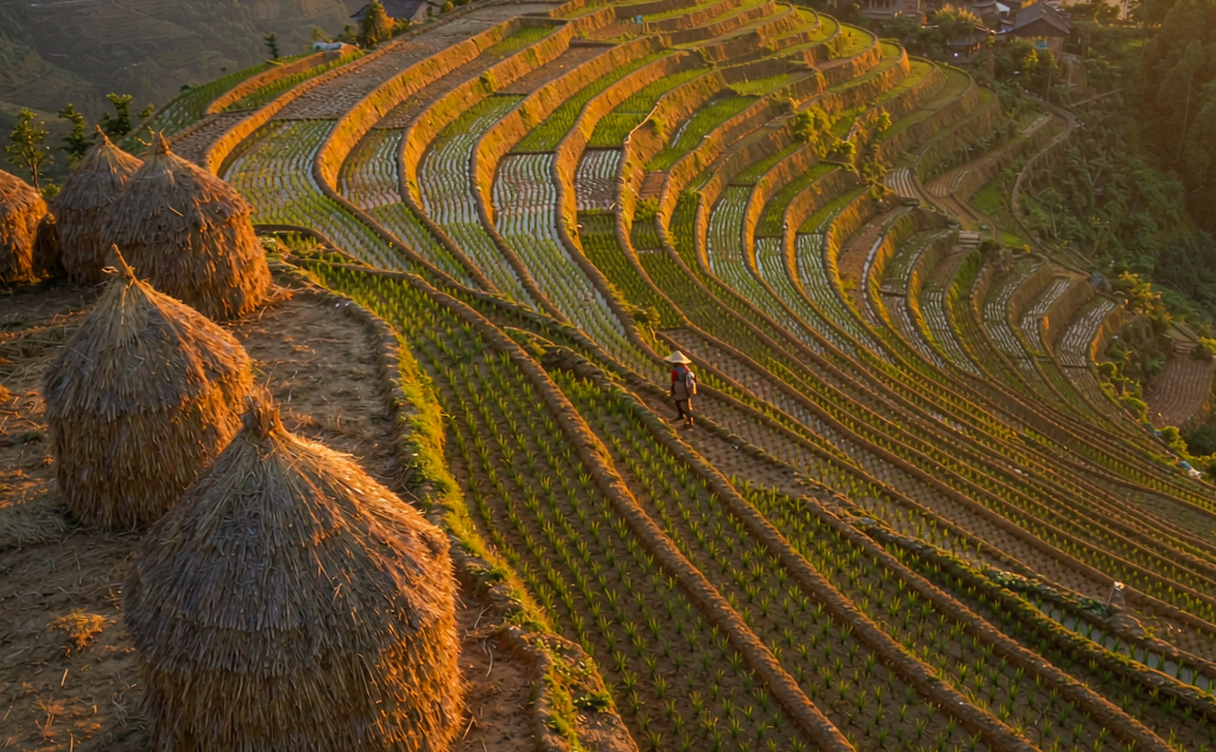
For photography, aim for late September to mid-October, when the millet and sorghum on the terraces turn amber and contrast with the yellow earth. That is also harvest season, so the villages feel alive rather than staged.
A Suggested Luliang Itinerary
A tight but complete loop looks like this:
- Day 1: Arrive Taiyuan, pick up driver, drive to Qikou (about 3.5 hours). Walk the riverfront, overnight in a courtyard inn.
- Day 2: Sunrise at Li Jiashan, late-morning explore of Qikou courtyards, afternoon drive to Fenyang (2 hours). Overnight Fenyang.
- Day 3: Fenjiu Museum tasting, lunch noodles, then Xuanzhong Temple and Guashan near Jiaocheng, return to Taiyuan by evening.
If you have a fourth day, add Beiwudang Mountain or a Pangquangou forest walk. This Luliang itinerary keeps driving manageable and leaves room for the slow, unplanned moments — a chat with a cave-dwelling grandmother, a roadside persimmon stand — that are the real reason to come.
Food, Money, and What to Pack
Luliang is cheap by international standards. A decent guesthouse room runs 150 to 400 RMB, a noodle meal 12 to 30 RMB, and a driver for the day roughly 400 to 700 RMB including fuel if arranged through a Taiyuan agency. Carry cash for small village stalls; mobile pay works in towns but not always in Li Jiashan. Pack sturdy closed shoes (the loess is slippery when wet), a dust mask for windy dry days, and a light layer even in summer because plateau evenings cool fast.
Readers building a longer Shanxi route should also look at our Pingyao ancient town guide for the famous walled town two hours northeast, and the broader best things to do in China list for context on where Shanxi fits in a first China trip. If this is your first time in the country, start with the China travel guide for first-timers before booking trains.
Why Luliang Rewards the Detour
Luliang will never be as famous as the Datong grottoes or the Pingyao walls, and that is exactly the point. The loess villages, the river port that time forgot, and the quiet temple mountains give you a Shanxi that most itineraries skip. We have sent honeymooners, retired photographers, and a family of four here, and each came back with a folder of images and a story about the old woman who pressed warm steamed buns into their hands. Plan loosely, travel slowly, and let the yellow earth do the rest.
Want a driver and a custom Shanxi loop built around Qikou and the loess villages? See our Taiyuan travel guide for hub logistics and booking tips.
First time navigating Chinese trains? Our China high-speed train guide for foreigners walks you through tickets, apps, and seat classes step by step.
Building your whole trip? Start with the China travel guide for first-timers and then layer in our best things to do in China shortlist.