

Shuozhou is the kind of place that does not show up on most Shanxi itineraries, and that is exactly why it rewards the traveler who digs a little deeper. Tucked into the northern part of the province, on the rail and road corridor between Datong and the Inner Mongolia border, this is frontier country — the ground where the Great Wall meets the loess, where merchant caravans and armies once funneled through the passes. Our clients who stop here on the way to or from Datong consistently tell us the wooden pagoda alone was worth the detour. This Shuozhou travel guide covers what to see, how to arrive, when to come, and how to string it into a northern Shanxi route.
A Bit of Context: Why Shuozhou Exists
Shuozhou’s reason to exist is geography. It sits on the northern edge of the Shanxi basin, where the Yanmen and Shahu passes cut through the mountains toward the steppe. For two thousand years this was a military frontier, and the city’s layout still reflects that: an old walled core, garrison temples, and a ring of Wall fortifications within an hour’s drive. Today it is also a coal and energy hub, so expect working industry alongside the heritage — a combination that keeps the prices low and the sites uncrowded.
If you want the broader sweep of the region’s defenses, the Great Wall of China overview on Wikipedia is a useful primer, because several distinct Wall sections near Shuozhou date to the Ming dynasty and remain remarkably intact.
The Yingxian Wooden Pagoda: Shuozhou’s Crown Jewel
The headline attraction is technically in Yingxian County, which administratively belongs to Shuozhou, and it is one of the great wooden structures on Earth. The Fogong Temple Wooden Pagoda (应县木塔), also called the Sakyamuni Pagoda, was built in 1056 during the Liao dynasty and stands about 67 meters tall — the oldest and tallest purely wooden pagoda in the world. No nails hold the main frame; it is joined with interlocking brackets and timber, and it has survived a dozen major earthquakes. You cannot climb it (preservation concerns closed the interior years ago), but standing at the base and looking up the stacked eaves is genuinely humbling.
We once arranged a sunrise visit for a architecture professor who had lectured about the pagoda for decades but never seen it; he spent forty minutes just circling the base photographing the bracket sets. Entry is modest, usually in the 50 to 60 RMB range, and the site includes a small museum on the structure’s engineering. Pair the stop with our dedicated Yingxian wooden pagoda guide for the deeper history and the best angles.
Chongfu Temple: A Jin Dynasty Survivor in the City
Back in Shuozhou’s urban core, Chongfu Temple (崇福寺) is the sleeper hit. Built in the Jin dynasty (12th century) and restored since, it preserves a rare wooden hall, original Buddhist statues, and Ming-era murals that most tourists never hear about because the big grottoes up the road in Datong steal the attention. The main hall’s painted sculptures of seated Buddhas are among the finest surviving examples of their period in northern China. Entry is cheap (often under 40 RMB) and you will likely share the courtyard with only a few locals burning incense.
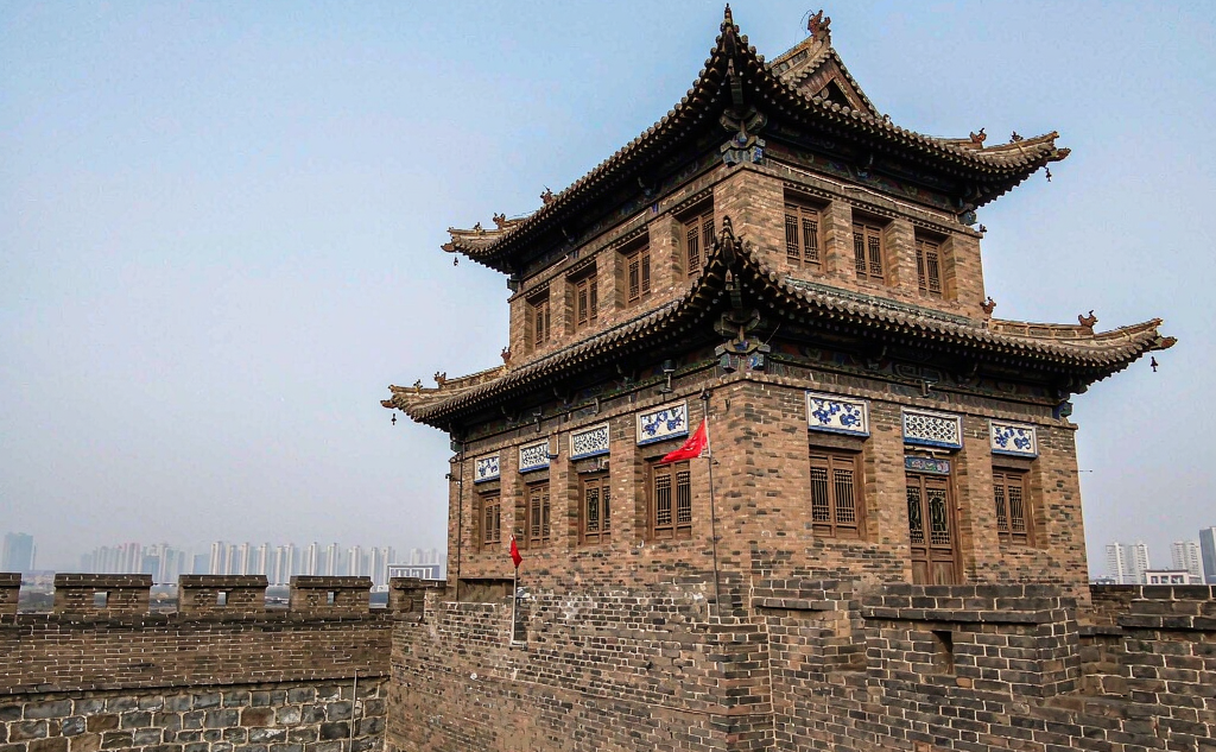
Spend an hour here, then walk the nearby restored city wall and gate towers. The Shuozhou ancient city wall is a reconstruction, honest about its modern rebuild, but the scale gives you a feel for the garrison town, and the evening lighting on the ramparts makes for a pleasant stroll after dinner.
The Guangwu Great Wall and the Shahu Pass
For Wall enthusiasts, the Guangwu section (广武长城) is the real prize. Two walled garrison towns — old Guangwu and new Guangwu — sit at the foot of a stretch of Ming Wall that climbs the ridges with watchtowers still standing in a near-unbroken line. This is not the restored tourist Wall of Badaling; it is weathered, photogenic, and largely empty. The nearby Shahukou (杀虎口) pass, on the old border with Inner Mongolia, was a key customs and migration gateway, and the surrounding Youyu County has leaned into eco-tourism after decades of desertification control — expect windbreak forests, reservoirs, and wide open skies.
We recommend hiring a driver for the Guangwu loop because public buses are sparse and the sites are spread across the county. A half-day covering both Guangwu towns and a Wall ridge walk runs comfortably, and the light is best in late afternoon when the towers throw long shadows across the slopes.
Things to Do in Shuozhou: Our Shortlist
Travelers searching things to do in Shuozhou will find the list shorter than in Datong but more relaxed. In order of value:
1. Stand beneath the Yingxian Wooden Pagoda and walk the Fogong Temple grounds (half day).
2. Explore Chongfu Temple’s Jin dynasty statues and murals in the city (1 hour).
3. Drive the Guangwu Great Wall ridge and photograph the watchtowers (half day).
4. Visit Shahukou pass and the Youyu green-belt scenery on the Inner Mongolia edge (half day).
5. Walk the restored Shuozhou city wall at dusk (free, 45 minutes).
How to Get to Shuozhou
The logistics got much easier in the last year. Shuozhou East Railway Station (朔州东站) now sits on the high-speed line linking Datong and the provincial network, putting Datong roughly 30 to 50 minutes away by train and Taiyuan within two to three hours. For most foreign visitors the sensible path is to base in Datong, then make Shuozhou a day trip or an overnight loop. Our Datong travel guide explains the northern hub and its grottoes and walls in depth.
If you are starting from the capital, fly or take a bullet train to Taiyuan and connect north; the Taiyuan travel guide covers arrivals and onward trains. Within Shuozhou, the scattered Wall and pagoda sites demand a car, so pre-book a driver through your Datong or Taiyuan hotel. Train tickets and seat classes are explained in our China high-speed train guide for foreigners, which is worth a read before you book, because the new northern lines use the same apps and rules as the rest of the network.
Best Time to Visit Shuozhou
Northern Shanxi has a sharp continental climate. Spring (May to June) and autumn (September to early October) are ideal: cool, dry, and clear, with temperatures around 12 to 22°C. Summer is warm and occasionally stormy, but the long daylight suits the outdoor Wall walks. Winter is harsh — often well below freezing, with biting wind off the steppe — and while the pagoda in snow is striking, some county sites run reduced hours.
For photographers, late September to early October is best: the fields turn gold, the air is crisp, and the Wall stones catch warm light. Avoid the dusty spring wind days in April if you can; the loess blows.
A Suggested Shuozhou Itinerary
A realistic loop, usually attached to a Datong stay:
- Day 1 (Datong base): Morning train or drive to Shuozhou (under an hour). Visit Chongfu Temple and the city wall, lunch in town, then afternoon at the Yingxian Wooden Pagoda (40 minutes away). Overnight Shuozhou or return to Datong.
- Day 2: Driver to Guangwu Great Wall and Shahukou pass; late-afternoon Wall ridge walk; return to Datong or continue toward Taiyuan.
This Shuozhou itinerary is deliberately light — the sites are spread out, and rushing them wastes the quiet that makes them special. If you have a third morning, add a Youyu County lakeside walk for the contrast between frontier fort and managed forest.
Food, Costs, and Practical Notes
Shuozhou eats like the rest of northern Shanxi: wheat and oat noodles, steamed buns, lamb, and pungent local vinegar. Try the county’s 莜面 (oat noodles) and 羊杂 (mutton offal soup) if you are adventurous; a bowl runs 15 to 30 RMB. A decent hotel room in the city is 180 to 450 RMB, and a private driver for the day is roughly 400 to 700 RMB. Mobile payment works in the city but carry cash for the Wall villages and small pagoda-town stalls.
The city is safe and walkable after dark, though English signage is minimal — download an offline map and have your hotel write destinations in Chinese characters. As with the rest of the province, attractions accept domestic ID or passport at the ticket window; keep your passport handy.
Where Shuozhou Fits in a Bigger Trip
Shuozhou works best as a northern Shanxi add-on rather than a standalone destination. Most travelers combine it with Datong’s Yungang Grottoes and Hanging Temple, then loop south through Taiyuan and Pingyao. For wider context, our best things to do in China list ranks the region among the country’s top heritage corridors, and first-time visitors should open the China travel guide for first-timers before locking in trains and hotels.
We have sent history buffs, architecture students, and a retired couple on the Wall walk here, and the common verdict is the same: Shuozhou delivers the frontier atmosphere of northern China without the crowds of the headline sites. Plan it as a slow day out of Datong, and let the wooden pagoda be the centerpiece.