

Taicang sits on the south bank of the Yangtze River estuary, a compact Jiangsu city that most foreign visitors pass by on their way between Shanghai and Suzhou. That is a mistake worth correcting. For the better part of three decades in the early 1400s, the fleets commanded by the navigator Zheng He launched from Taicang’s Liuhe Port on maritime expeditions that reached Southeast Asia, the Indian subcontinent, the Arabian Peninsula, and the east coast of Africa. The city still carries that outward-looking heritage, and it has layered a thoroughly modern identity on top of it: today Taicang is one of the most quietly international small cities in the Yangtze Delta, with a dense cluster of German manufacturers, riverside cycling paths, and a slow, livable rhythm that feels like a deep breath after Shanghai.
This Taicang travel guide covers how to reach the city, when to come, what to see, and what to eat, with notes for visitors building a longer Jiangsu or Shanghai-region itinerary.
How to Get to Taicang
Taicang has no airport, and understanding that shapes your whole plan. Most travelers arrive via Shanghai or Suzhou and make the short final hop by road or rail. From Shanghai Pudong International Airport the drive runs about 90 minutes in light traffic; from Shanghai Hongqiao the trip is closer to 45 minutes. Suzhou’s industrial park and the city proper are both within roughly 40 to 60 minutes by car, depending on which bridge you take across the Yangtze’s southern channels.
High-speed rail is the comfortable choice. Trains connect Shanghai and Suzhou to Taicang Railway Station, and the station links directly to the city bus network and ride-hailing pickup points. If you are already working through a Shanghai first-time travel guide, Taicang slots in neatly as a relaxed day trip or an overnight escape from the metropolis. Once you arrive, the central districts are flat and compact enough that cycling or walking covers a lot of ground.
Best Time to Visit Taicang
The Yangtze Delta has four distinct seasons. Spring, from late March through May, brings mild temperatures, lower humidity, and riverside parks full of new green; it is the most pleasant window for walking the old town streets and cycling the river embankments. Autumn, from September to early November, is equally comfortable, with clear skies and cool evenings. Summer is hot and muggy, with July and August daytime temperatures often above 35°C and frequent late-afternoon thunderstorms that can disrupt boat trips. Winter is cold and damp more than snowy, and some riverside services reduce hours.
If your schedule is flexible, target the shoulder months. The Suzhou travel guide describes the same regional climate in greater depth, since Suzhou lies under an hour from Taicang and shares its weather almost exactly.
Things to Do in Taicang
Begin with Zheng He. The Liuhe Port area, known historically as Liukou, is where the treasure fleets assembled before heading to the open sea. The Zheng He Memorial Pavilion and the adjacent park trace the seven voyages through wall maps, scale models of the wooden ships, and stone inscriptions that record each departure date and destination. It is a quiet, reflective place rather than a loud museum, and the riverside promenade beside it is a reward on its own.
Taicang Museum, in the city center, fills in the longer picture: the region’s salt production, rice agriculture, and shipping economy, alongside porcelain and cargo recovered from wreck sites. Admission is free and crowds are rare, which makes it a calm first stop to get your bearings.
For atmosphere, go to Shaxi Ancient Town, a canal-side settlement that has preserved its Ming and Qing layout without the heavy commercialization you meet at the bigger water towns. Wooden shopfronts line the water, and older residents still hang washing, tend small courtyards, and play cards in the shade. If you want to compare it with the famous nearby towns, our Zhouzhuang water town guide explains what sets each Jiangsu canal town apart.
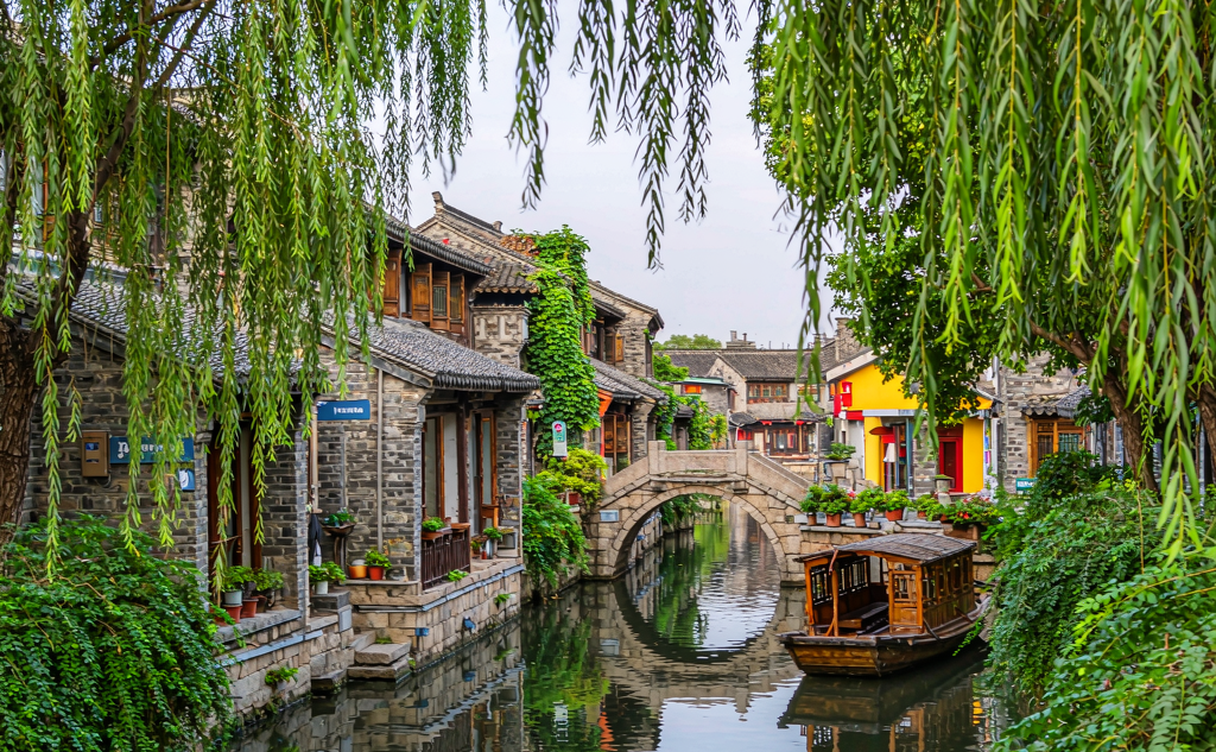
Taicang’s German connection is the other surprise. A pocket of European-style buildings, breweries, and bakeries around the development zone reflects the city’s role as a base for German industry. The contrast with the ancient port is jarring in the best way, and it is a reliable spot to find a proper espresso or a plate of schnitzel after days of Chinese food.
Round out your visit with the Liuhe lighthouse and the river beaches where the Yangtze meets the sea, a flat, windy landscape that shows why this was such a natural jumping-off point for ocean voyages. The Nanjing travel guide pairs well if you want to extend south to the former capital and its own maritime and republican history.
Taicang Food Guide
River food defines the local table. Hairy crab from the Yangtze and nearby lakes arrives in autumn and is steamed plainly to show off the sweet meat and rich roe. Taicang is also known for cured pork, for a fragrant style of pressed tofu, and for a glutinous rice cake called lütuo, tinted green with mugwort and filled with sweet bean paste. At small riverside restaurants you can order fresh whitefish, river shrimp, and seasonal greens at prices that feel modest next to Shanghai.
The city’s bakeries, a legacy of its German community, turn out good bread and pastries when you need a break from rice and noodles. For the wider regional context of Jiangsu cooking, the Yangzhou travel guide walks through the Huaiyang tradition that Taicang’s kitchens belong to.
A Suggested Taicang Itinerary
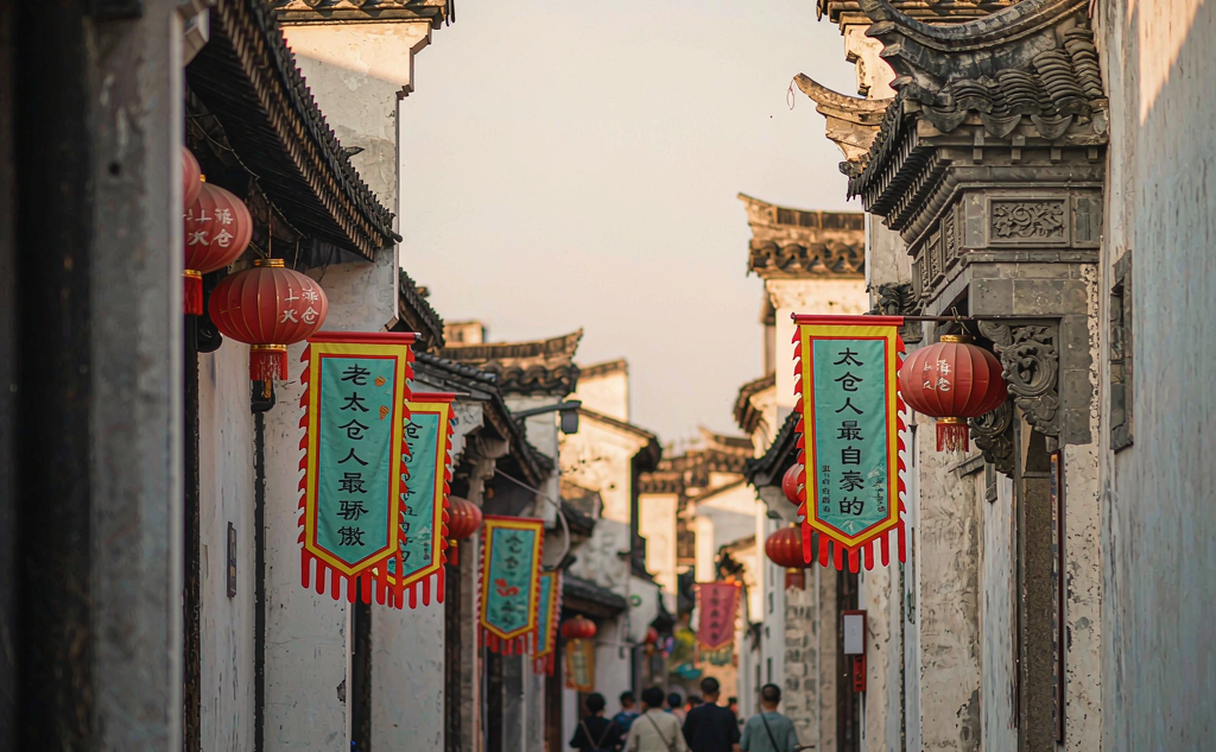
If you have a single full day, begin at Taicang Museum in the morning to frame the city’s long story, then take a short taxi ride to Liuhe Port and the Zheng He Memorial while the light is still soft. Eat lunch at a riverside restaurant near the water, where the hairy crab and whitefish are the obvious orders in season. Spend the afternoon in Shaxi Ancient Town, timing your walk for the low afternoon sun when the wooden facades and canal reflections photograph best, and close the day with a coffee in the German quarter’s bakeries.
With two days, give the second morning to the river mouth, the lighthouse, and the flat beaches where the Yangtze finally meets the sea, then return to Shaxi for its quieter side lanes and the small neighborhood temples that most day-trippers hurry past. Staying overnight in the old town changes the experience: after the last tour bus leaves, the lanes go quiet and you hear the river instead of the crowds.
Taicang also works as a calm buffer between bigger trips. Visitors coming off an intense few days in Shanghai often use it as a half-day decompression stop, and the short rail link means almost no time is lost. It pairs naturally with Suzhou for a two-city loop of canals, gardens, and slow streets, and the regional trains make that combination simple to arrange on the day.
On the practical side, money and connectivity are easy. Mobile payment covers almost everywhere, ATMs are common in the center, and the city’s compact size keeps taxi fares low. The tourist desk at the railway station gives out a basic map, and although little signage is in English, the staff are practiced at pointing travelers to the correct bus or platform. If you only have time for one thing, make it the Zheng He Memorial at Liuhe, since that is the site that gives Taicang its singular place in Chinese maritime history.
Where to Stay and Practical Tips
Taicang is small, so you rarely need to book tickets in advance beyond your train. Carry a little cash for family-run eateries, though mobile payment dominates everywhere else. English signage is limited, so a translation app earns its place in your pocket. The city makes an easy add-on to a China Grand Canal travel guide route, because the canal system that shaped Jiangsu runs not far to the west and connects logically with a slower, water-focused trip.
For official maps, seasonal event listings, and English-language tourism information, the Jiangsu provincial tourism portal is the most reliable starting point: https://www.jiangsu.gov.cn/