

Benxi sits in the mountainous eastern corner of Liaoning province, a city that most foreign travelers have never heard of and that rewards the ones who make the detour. Two things put it on the map. The first is the Benxi Water Cave, a limestone cavern so large that you explore it by boat on an underground river that runs for kilometers in the dark. The second is the autumn maple season, when the surrounding hills around Guanmen Mountain turn the region into one of the most photographed fall-color landscapes in northeast China. Add the UNESCO-listed Wunü Mountain and you have a destination that combines geology, foliage, and deep history within a short train ride of Shenyang.
This Benxi travel guide explains how to get there, when to visit, what to do, and what to eat, aimed at visitors already exploring Liaoning or the wider northeast.
How to Get to Benxi
Benxi has no international airport; Shenyang is the gateway. Shenyang Taoxian International Airport connects to major Chinese cities and a handful of international routes, and from there it is about an hour by high-speed train or 90 minutes by car to Benxi. Trains between Shenyang and Benxi run frequently through the day, and the journey is short enough that many visitors treat Benxi as a day trip from the provincial capital. If you are building a northeast China route, the China high-speed train guide for foreigners walks through ticket booking and station navigation in detail.
Dalian, to the south, is another possible base, though the train connection is longer. Our Dalian travel guide covers that coastal city if you want to combine sea and mountains. Within Benxi, local buses and taxis reach the water cave and the maple areas, but consider a private driver for the more remote foliage spots in autumn when demand spikes and group tours fill the roads.
Best Time to Visit Benxi
Autumn is the headline season. From late September to mid-October the maple forests around Guanmen Mountain and Benxi National Geological Park glow red and orange, and the cave’s cool interior is a welcome contrast to the crisp outdoor air. This is also the busiest period, so book trains and hotels early if you want to travel then.
Summer, June through August, is warm and green, good for the water cave and hiking without the crowds, though it is also the rainy season and afternoon storms are common. Winter is cold and snowy; the cave stays open and the frozen landscape has its own appeal, but some mountain roads close. Spring is short and muddy as the snow melts. For a broader look at the region’s seasons, the Shenyang travel guide describes the same northeastern climate and how to dress for it.
Things to Do in Benxi
The Benxi Water Cave is the centerpiece. You board an electric boat and drift through a lit cavern where stalactites and stalagmites rise from a river that never sees daylight. The main channel stretches for more than two kilometers, and the scale is genuinely surprising after the modest entrance. The connected geological museum and the smaller “Taiyuan” cave add context on how the karst formed over millions of years. Bring a light jacket; the underground temperature holds around 12°C year-round, a shock if you arrive on a hot summer afternoon.
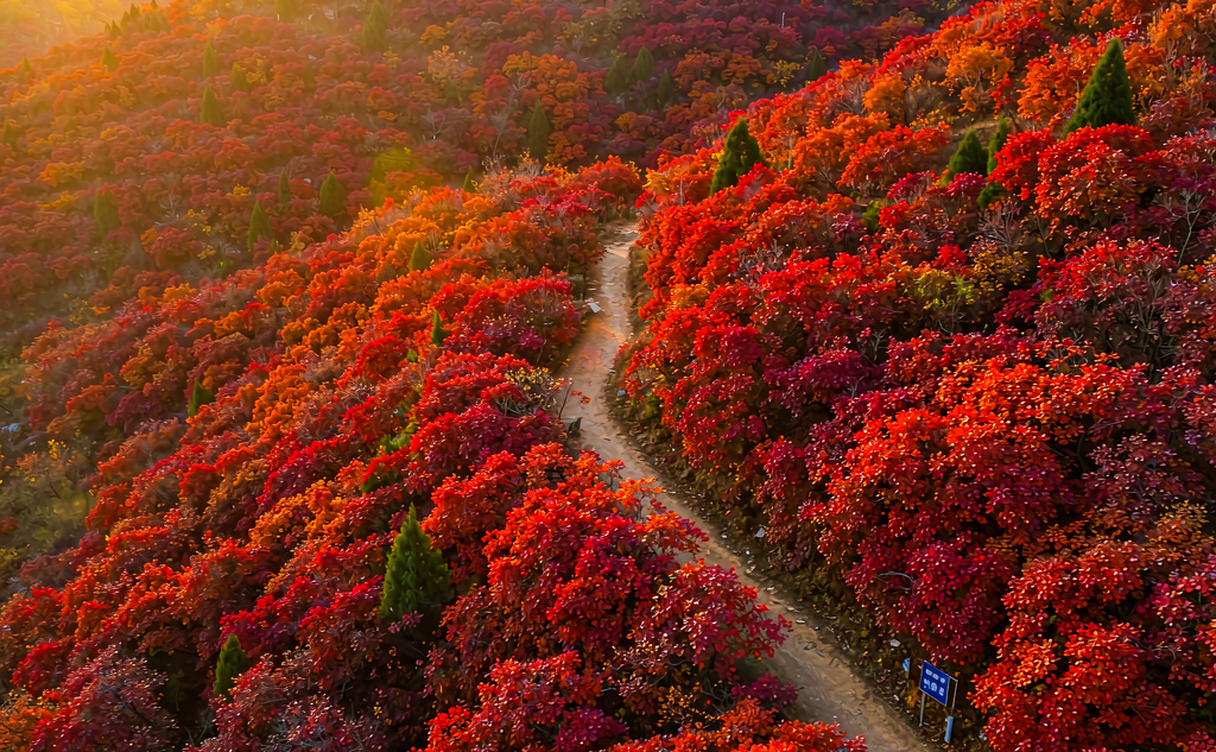
For foliage, Guanmen Mountain National Forest Park is the classic choice, with boardwalks and a cable car that lift you above the maple canopy. Go early in the day during peak color to avoid tour buses. Wunü Mountain, a dramatic cliff-top fortress city, is the historical anchor: it was the early capital of the Goguryeo kingdom, and the site is part of a UNESCO World Heritage property recognizing the ancient Koguryo capitals and tombs. The climb is steep but the views over the valley are extraordinary, and the ridge walk at the top follows the old defensive walls.
Benxi Lake, famously billed as one of the smallest lakes in the world, is a curious roadside stop rather than a major sight, but it fits a half-hour photo break between the cave and the city. The Harbin ice festival travel guide is worth reading if you extend north in winter, since the two experiences share the same cold-weather travel logic of dressing in layers and booking early.
Benxi Food Guide
Liaoning cooking leans hearty and northeastern. In Benxi you will eat a lot of stews built on potato, cabbage, and pork, plus hand-pulled noodles and steamed buns that fill you up against the cold. The region’s river fish, pulled from the Taizi River, is a local specialty, often simply braised with soy and ginger to keep the flesh sweet. Wild mushrooms foraged in the surrounding hills appear in autumn dishes, and the maple-area farms sell chestnuts and mountain grapes that make good trail snacks.
Hotpot is a reliable cold-weather meal, and the city’s Korean-influenced restaurants reflect Liaoning’s proximity to the peninsula, serving grilled meats and kimchi-style sides that cut through the richness. For more on the province’s table, the China travel guide for foreigners has a regional food overview that places Benxi in the context of northeastern Chinese cuisine.
A Suggested Benxi Itinerary
With one day, spend the morning at the Benxi Water Cave, arriving at opening to beat the coach tours, then move to the geological museum next door while the light inside is still manageable. Eat a hot noodle lunch in the city, and use the afternoon for Guanmen Mountain if you are visiting in autumn color season, or for Wunü Mountain if you prefer history and a wide view. The cliff-top fortress takes most of a half day once the climb is included, and the ridge walk at the top is the payoff. Shoulder-season visits in June or September are the sweet spot, with open roads and thin crowds.
Two days lets you do the cave on day one and split the mountains across day two, with time to linger at Wunü’s walls rather than rushing the descent. In summer, swap the foliage for a slower pace at the cave and an evening in the city’s night-food streets, where grilled skewers and cold noodles make an easy meal after a day underground.
Benxi is best treated as a link in a northeastern chain rather than a sole destination. Many travelers combine it with Shenyang for the provincial museums and the former imperial palace, then continue to Dalian for the coast, or north to Harbin for the ice festival in deep winter. The trains make these hops short, and the contrast between cave, mountain, and city keeps the route from feeling repetitive. If you only have time for one sight, make it the water cave, because nothing else in the region offers that combination of scale and stillness.
Practical notes: buy your cave ticket early in the day, since timed entries can sell out on autumn weekends; wear shoes with grip for the wet walkways; and keep a warm layer in your bag for the constant underground chill. The tourist desk at the station can point you to the correct bus, though a translation app will smooth the rest of your questions.
Where to Stay and Practical Tips
Most visitors stay in Benxi city proper and make day trips, or overnight near the water cave to beat the morning queues. Autumn weekends sell out, so reserve ahead. English is scarce outside the cave’s basic signage, and a translation app is essential for menus and directions. Dress in layers for the cave-plus-mountain combination, since you move between 12°C underground and chilly outdoor air in the same day, and wear shoes with grip for the wet stone paths.
Wunü Mountain and the associated Goguryo capitals form a UNESCO World Heritage Site, and the official listing has background on the site’s history and conservation: https://whc.unesco.org/en/list/1135/