

In the far south of Shanxi Province, where the Yellow River bends past the borders of Shaanxi and Henan, Yuncheng is a crossroads of Chinese history that most foreign travelers skip entirely. It is the legendary hometown of Guan Yu, the deified general of the Three Kingdoms, and the site of a vast saline lake that turns rose-pink under the right light. For visitors building a Shanxi itinerary, a Yuncheng travel guide adds salt, temples and a touch of the surreal to the usual catalogue of ancient walls and courtyard homes.
Yuncheng takes its name from the salt ponds that once made the region rich; salt was a state monopoly and a strategic resource for millennia. Today the city is a relaxed base for exploring lakeside landscapes, mountain temples and some of the finest Yuan-dynasty mural art in the country.
Why Visit Yuncheng
Yuncheng pairs natural oddity with deep heritage. The salt lake is a photographer’s curiosity, the Guandi Temple is one of the most important sites dedicated to Guan Yu anywhere in China, and the nearby Yuan dynasty murals at Yongle Palace rank among the great surviving works of Taoist art. Few places let you combine a pink lake, a warrior-god temple and a masterwork of medieval painting in a single day.
How to Get to Yuncheng
Yuncheng is well served by rail, with high-speed trains linking it to Xi’an in under two hours and to Taiyuan in roughly three. The Yuncheng North Railway Station is modern and foreigner-friendly, and the local airport offers a handful of domestic connections. If you plan to arrive from farther afield, our China high-speed train guide for foreigners explains how to book and ride with confidence. Many visitors combine the city with Taiyuan, the provincial capital, or use it as a southern gateway before heading into Shaanxi.
Best Time to Visit Yuncheng
Spring and autumn are best, with mild temperatures and clear skies for both lakeside and temple visits. Our best time to visit China overview puts Shanxi in the comfortable continental band, but locally aim for April to May or September to October. The salt lake shows its most vivid colors in the warm, still days of late summer and early autumn, when algae and salinity combine to stain the water pink and orange. Winters are cold and dry, while summers can be hot, though the lake breeze helps.
Top Things to Do in Yuncheng
- Yuncheng Salt Lake: Also called the Dead Sea of China, the lake is rich in minerals and buoys swimmers in places. The vivid color bands are best seen from the viewing platforms on the eastern shore, especially near sunset.
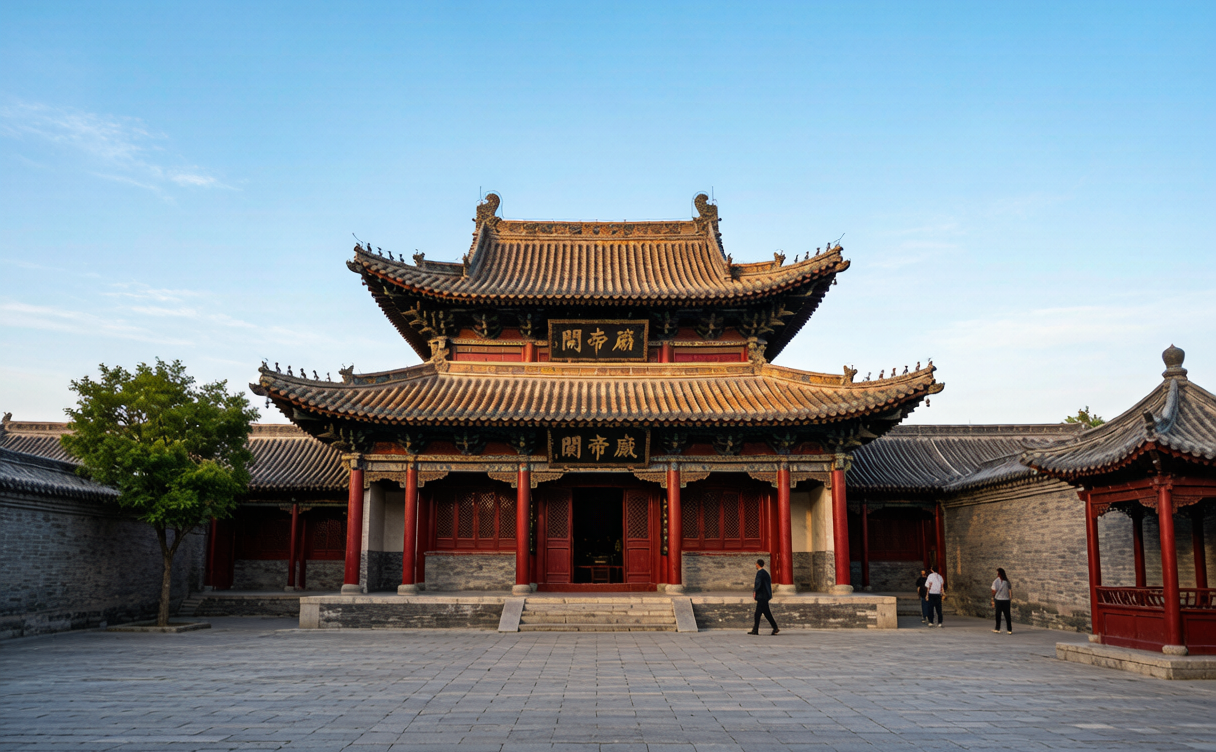
- Guandi Temple at Jiezhou: The largest and most revered temple complex honoring Guan Yu, born in nearby Jiezhou. The halls, carved screens and the enormous cypress are impressive, and the annual festival draws devotees from across China.
- Yongle Palace (Yongle Gong): In Ruicheng County, this Yuan-dynasty Taoist temple holds vast, luminous murals of celestial beings. The paintings were carefully moved and rebuilt when a reservoir threatened the original site, a remarkable feat of preservation.
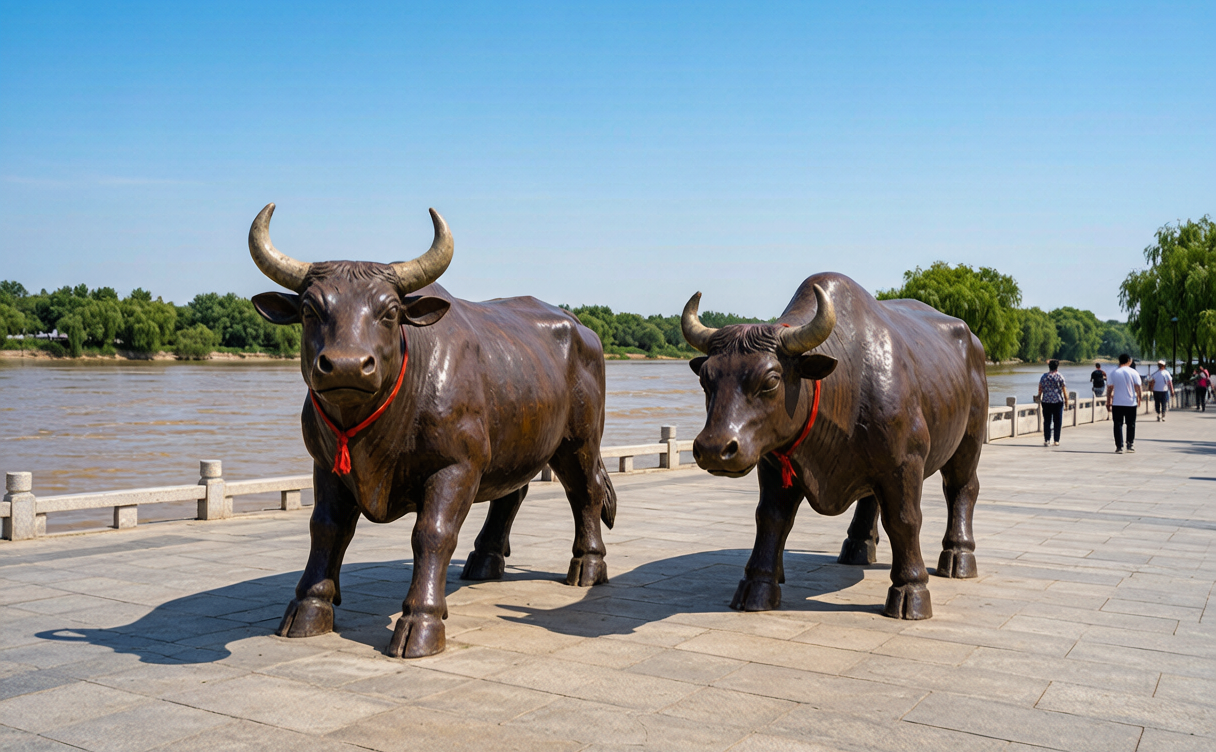
- Pujiu Temple and the Yellow River iron oxen: Near the river, this temple is tied to a famous love story, and the giant cast-iron oxen once anchored a Tang-dynasty pontoon bridge across the Yellow River.
- Mount Zhongtiao: The low range behind the city offers hiking, temples and broad views over the salt lake and the plain.
Yuncheng Food Guide
Shanxi is the noodle capital of China, and Yuncheng has its own beloved variants. Try the local flat noodles with savory toppings, and the region’s sesame seed cakes eaten warm from the griddle. Shanxi’s famous vinegar appears at every table, used as a dip and a seasoning rather than a condiment to fear. Mutton soup and stuffed buns are common breakfasts, and the night market near the old city is the easiest place to graze on small dishes. If you are compiling a list of must-see sights across the province, our China bucket list attractions guide is a good companion, and Yuncheng’s salt lake and murals deserve a spot on it.
A Suggested Two-Day Yuncheng Itinerary
Day one: arrive by morning train, visit the salt lake in the afternoon for color and light, then explore the old city and dinner at the night market.
Day two: head to Jiezhou for the Guandi Temple in the morning, continue to Yongle Palace at Ruicheng for the murals, and return in the evening via Pujiu Temple if time allows.
Travelers with an extra day can climb Mount Zhongtiao or push north toward Mount Wutai, one of China’s sacred Buddhist mountains and a natural extension of a Shanxi temple route.
Practical Tips for Foreign Visitors
- Getting around: The salt lake and outlying temples are spread out; hire a car with a driver for the day or join a local tour to reach Ruicheng efficiently.
- Tickets: Major sites sell tickets at the gate, but bring cash and your passport, as some counters are cash-only.
- Photography: The salt lake colors shift through the day; late afternoon gives the strongest pink tones.
- Etiquette: Temple grounds are active places of worship; speak quietly and avoid blocking ceremonies.
Yuncheng is the kind of city that surprises you, where a working saline lake and a warrior-god’s hometown sit comfortably side by side. For a factual pre-trip read, the Wikipedia entry on Yuncheng summarizes the region’s long salt-making past.
Where to Stay
The city center near the railway station and the old town is the practical choice, with a range of hotels and easy access to food streets. If you want quiet and lake views, a few resorts sit on the eastern shore of the salt lake, convenient for sunrise photography but farther from restaurants.
Exploring the Salt Lake Region
The salt lake is larger than it looks, and the best light changes with the wind and the season. Plan at least half a day, bring water and sun protection, and consider a weekday visit to avoid domestic tour crowds. The surrounding dikes are flat and walkable, making the site accessible even for travelers who prefer minimal hiking.
Local Crafts and Souvenirs
Yuncheng’s salt heritage shows up in small ways you can take home. Local shops sell blocks of the lake’s mineral salt, often flavored with herbs, alongside the usual Shanxi vinegar and noodle tools. The areas around Jiezhou are known for woodcarving and paper-cutting tied to Guan Yu festivals, and a modest hand-carved figure makes a meaningful keepsake. At Yongle Palace, the museum shop offers reproductions of the murals as scrolls and postcards. Bargaining is gentle in this region; a smile and a little patience go further than aggressive haggling. Markets near the old city are the best places to compare quality before you buy, and most vendors will wrap fragile items for the journey. For travelers watching a budget, the salt lake itself costs little to enjoy, and a sunset walk there is the best free souvenir of all.