

Yulin sits in the far north of Shaanxi Province, out where the Loess Plateau meets the edge of the Mu Us Desert and the Great Wall once marked the frontier between farm and steppe. A Yulin Shaanxi travel guide has to explain a city that most foreign visitors never consider: a dusty, wind-scoured place where you can climb a massive Ming dynasty wall tower in the morning, walk a red sandstone gorge at noon, and stand in a rippled desert canyon by evening. It is raw, off the beaten path, and rewarding for travelers who already know Xi’an and want to see the province’s wild northern edge.
Why visit Yulin
Most people fly into Xi’an and never venture this far north, but Yulin rewards the extra effort with scenery you cannot find around the provincial capital. This is the Shaanxi of frontier forts and wind, not terracotta armies and city walls. The light is huge and the landscapes are spare, which makes it a favorite of landscape photographers. The city is also compact and inexpensive, with a restored old town and a handful of museums that put the region’s Great Wall history into context.
Yulin’s whole character comes from its position on the frontier. For centuries this was the disputed edge between the Chinese farming world and the nomads of the steppe, and the Ming dynasty poured resources into fortifying it. That history is visible everywhere, from the great tower at Zhenbeitai to the smaller beacon mounds that still dot the desert within sight of the road. Understanding that backdrop turns a few scattered ruins into a coherent story of defense, trade, and restless borders.
How to get to Yulin Shaanxi
The first practical question is how to get to Yulin Shaanxi. The city has an airport with flights from Xi’an, Beijing, and a few other hubs, and the flight from Xi’an takes just over an hour. The high-speed train is slower but more scenic, linking Yulin with Xi’an in around five to six hours via Yan’an. Within the city, taxis are cheap and the sights are close together, but the outlying attractions, the wave valley and the desert wall, require a car and driver for the day.
Zhenbeitai, the Great Wall tower
The single most impressive structure in Yulin is Zhenbeitai, a massive rammed-earth watchtower and fortress that guarded the northern line of the Great Wall. Built in the early seventeenth century, it is the largest surviving pass of the Ming wall and rises in tiers above the desert scrub, with long earthen ramparts stretching toward the horizon. Climbing to the top gives you a real sense of how the wall controlled movement across this open country. It is windy and exposed, so bring a hat and sunglasses, and go early to avoid the midday glare.
Hongshixia, the red stone gorge
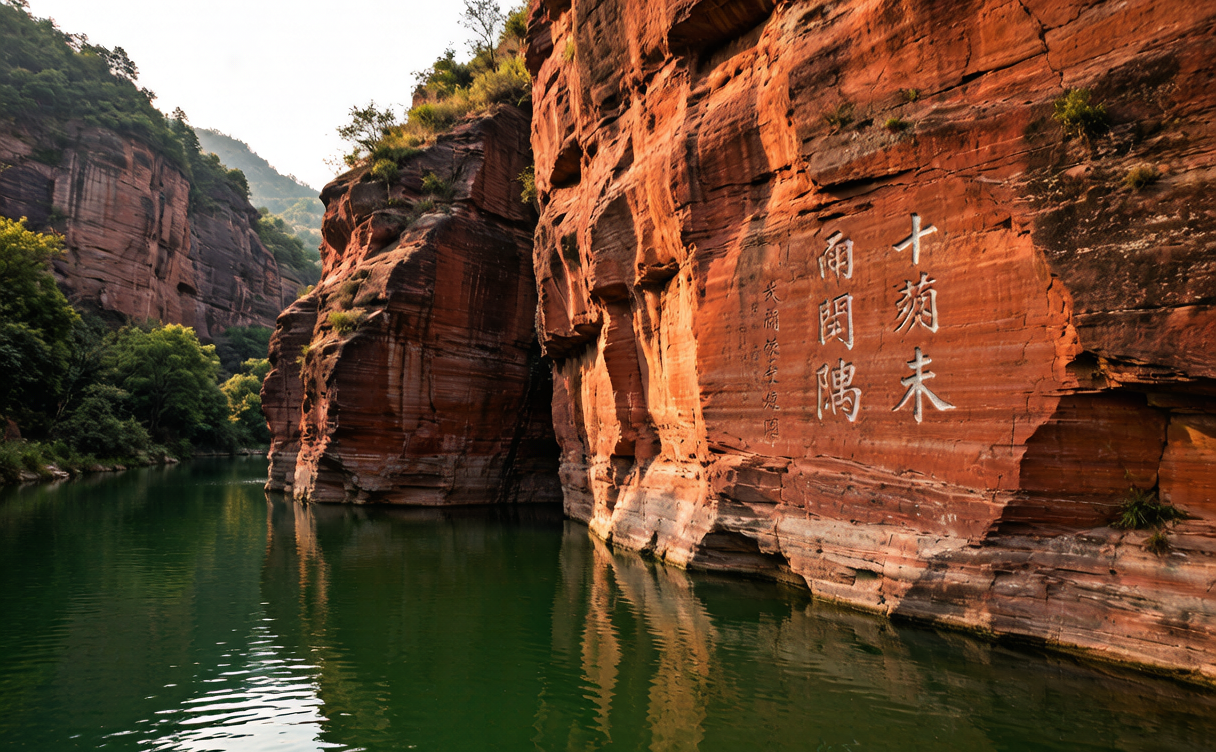
A short drive from the city, Hongshixia is a red sandstone gorge where a small river has cut a channel between cliffs carved with centuries of inscriptions. A raised walkway lets you follow the rock face and read the calligraphy left by passing officials and generals, while a green reservoir at the base reflects the red walls. It is an easy, shaded half-day, and the contrast between the crimson stone and the blue water is striking. Keep some time afterward to explore the nearby Yulin old town walls, which still ring part of the center.
Yellow River wave valley, Jingbian
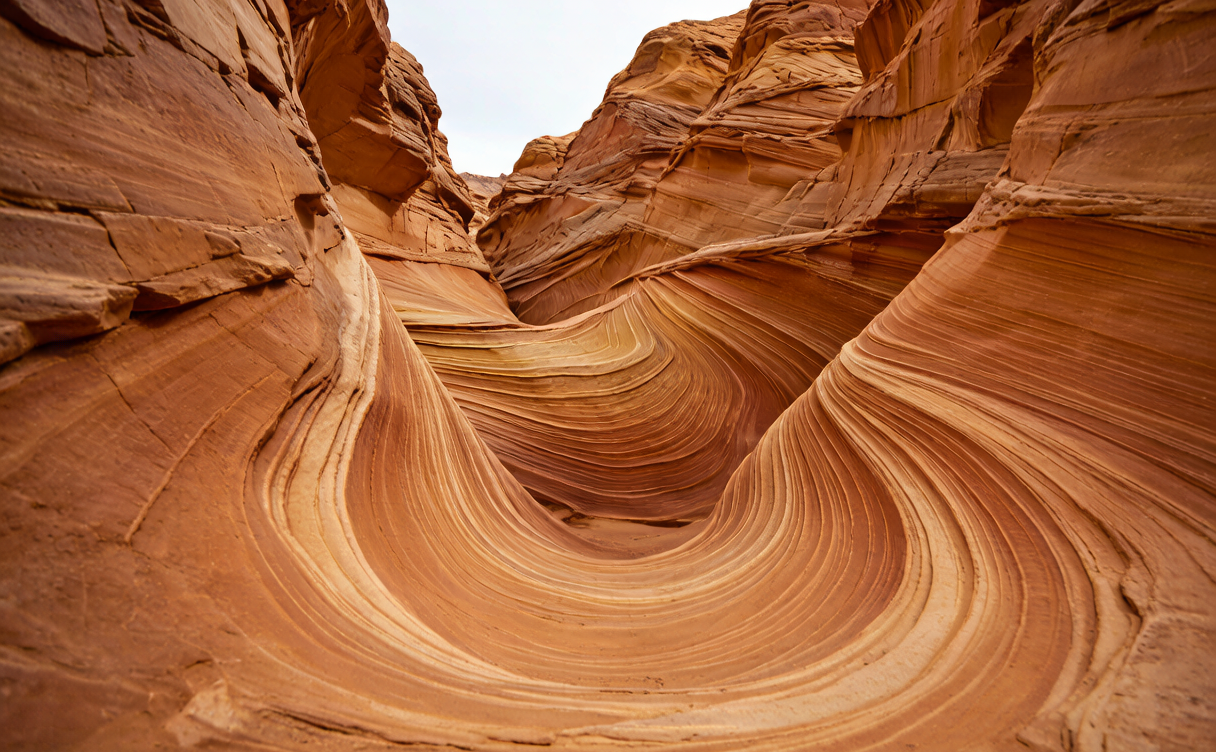
The region’s headline natural wonder is the Yellow River wave valley at Jingbian, a few hours south of the city. Here, layers of red and cream sandstone have been eroded into smooth, rippling bands that look like frozen waves rolling through a narrow canyon. The formed by wind and water over millions of years, the patterns are best photographed when the sun lights one wall while the other stays in shadow. A boardwalk and viewing platforms make it accessible, but the canyon floor can be slippery after rain, so wear proper shoes. This is the kind of place that fills a memory card in an hour.
The wave valley is part of a wider family of red sandstone landforms across northern Shaanxi, but Jingbian’s rippled walls are the most accessible and the most photogenic. Give yourself at least half a day, because the site is a drive from Yulin and the light changes quickly across the canyon. A local guide can point out the best angles and explain how the layers record millions of years of shifting desert and river deposits.
Things to do in Yulin
Beyond the three big sights, things to do in Yulin are low-key. The Yulin Museum has decent exhibits on the Great Wall and local folk art, including colorful paper cuts. The old town’s narrow lanes are good for a wander, and the evening food stalls serve the hearty northern Shaanxi staples: millet porridge, hand-pulled noodles, and lamb stews. If you have a second day, the nearby village of Gaojiabao, a restored Ming dynasty fortress settlement, makes a quiet, atmospheric side trip.
Best time to go
Spring and autumn are the most comfortable seasons, with clear skies and manageable temperatures. Summers are hot and can be dusty, while winters are brutally cold and many outdoor sites feel exposed. Whatever the season, the wind is a constant companion in Yulin, so a windproof jacket earns its place in your bag. Dust storms are most likely in spring, and while they are rarely dangerous, they can flatten the light and coat your camera gear, so keep a cloth handy and check the forecast before a day at the open sites.
Where to stay and eat
Yulin’s hotels are practical rather than luxurious, and the best value sits near the old town, within walking distance of the evening food stalls. Northern Shaanxi cooking is robust: think hand-pulled noodles in a vinegary broth, steamed buns stuffed with lamb, and bowls of millet porridge to start the day. The night market is the easy place to sample several dishes at once, and it is where you will meet the few other travelers who have made it this far north.
Planning your visit
Yulin works best as a two or three day stop on a northern Shaanxi loop rather than a destination in itself. Pair it with the Yellow River towns to the east and the wall forts to the north, and you will see a side of China that the classic tourist trail misses entirely. Travelers starting from the provincial capital should first read our Xi’an travel guide to understand the province’s heartland before heading into its frontier.
If you want to extend north toward the Ningxia deserts, our Yinchuan travel guide covers the capital of the plains beyond the wall, and our Datong travel guide connects Yulin with Shanxi’s cave temples and wall forts to the east.
Sources: The Great Wall of China, including the Yulin-section fortifications, is inscribed by UNESCO at https://whc.unesco.org/en/list/438/.