

Chifeng sits in the eastern corner of Inner Mongolia, where the grasslands of the north meet the mountains and farmland of Hebei Province. A good Chifeng travel guide has to cover two very different landscapes: the rolling Ulan Butong grassland to the southwest and the surreal granite spires of the Keshiketeng Global Geopark scattered across the region. Together they make Chifeng the most accessible taste of Inner Mongolia for travelers already planning a Beijing or Hebei trip, and a far quieter alternative to the famous grasslands farther west.
Why visit Chifeng
Most foreign visitors to Inner Mongolia head straight to Hohhot or the distant Hulunbuir grasslands, and Chifeng is often left off the map. That is a pity, because it packs a remarkable range of scenery into a compact area. Within a couple of hours of the city you can stand on a golden steppe dotted with grazing horses, wander among tall stone forests, and even reach a strip of shifting sand at the edge of the Hunshandake Desert. The city is also easy to reach, which lowers the planning burden for a first trip to the region.
Chifeng also carries deep history. It was a core territory of the Liao dynasty, founded by the Khitan people more than a thousand years ago, and the surrounding countryside is studded with pagodas, tombs, and temple ruins that most foreign visitors never see. Even a short stop at the local museum reframes the grasslands as a crossroads of steppe and sedentary cultures rather than an empty frontier.
How to get to Chifeng from Beijing
The most common question is how to get to Chifeng from Beijing, and the answer keeps improving. The high-speed train now links Beijing with Chifeng in roughly two and a half hours, making it an easy overnight or two-night excursion from the capital. Flights also run from Beijing and a handful of other hubs, and the airport is a short drive from the center. Once in the city, you will need a car and driver for the scenic areas, because the grasslands and geopark sites are spread across a wide territory with limited public transport.
Ulan Butong grassland tour
The signature experience is a Ulan Butong grassland tour. This plateau grassland, once the hunting ground of Qing dynasty emperors, is gentler and more forested than the open plains farther north, with low hills, birch groves, and meandering rivers. In autumn the grasses turn amber and the light is spectacular, which is why photographers flock here in September and October. You can ride a horse, visit a herder’s yurt for milk tea and cheese, and watch the sun set over an endless golden horizon.
Staying overnight on the steppe is the highlight. Tourist yurts range from basic to surprisingly comfortable, and the clear night sky, far from city lights, is thick with stars. Wrap up warm even in summer, because grassland nights get cold.
Keshiketeng Global Geopark
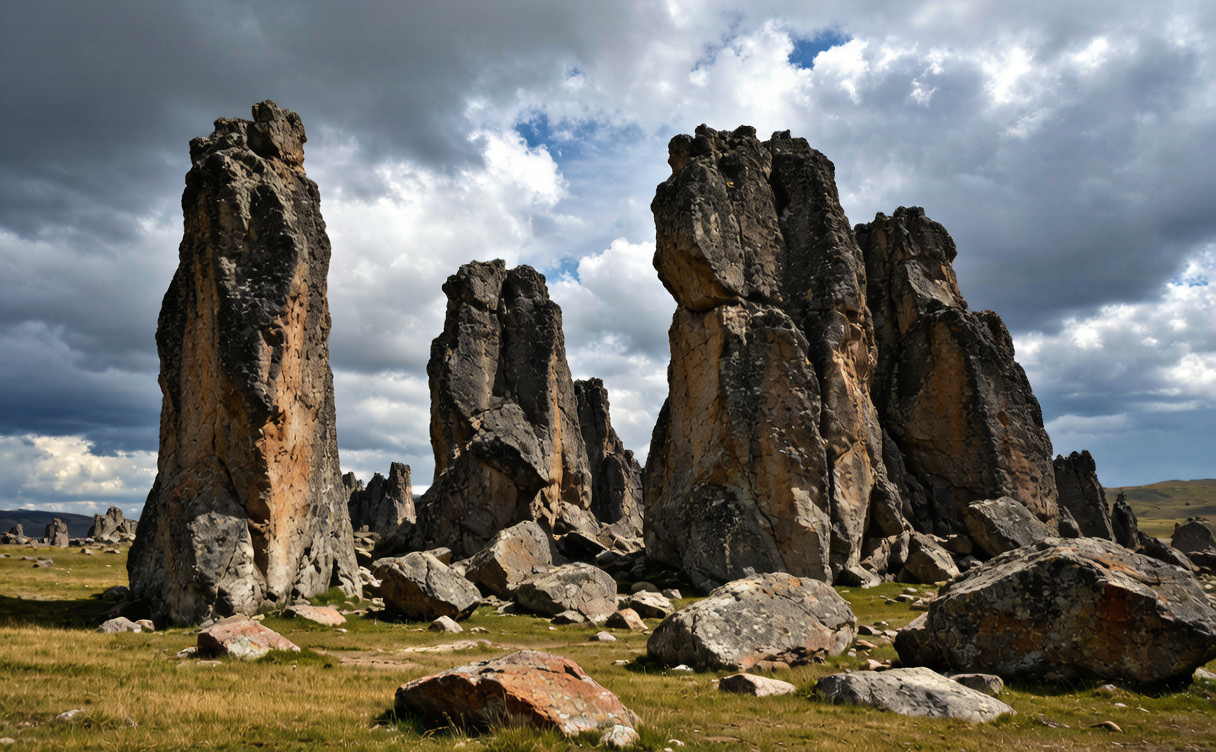
The other headline sight is the Keshiketeng Global Geopark, a UNESCO-recognized landscape of weathered granite pillars, volcanic relics, and alpine meadows. The most photographed section is the stone forest at Ashatu, where towers of rock several stories tall stand in open fields as if arranged by a giant. Nearby, the Dali Lake, a freshwater lake ringed by grassland, is a fine spot for a walk and a picnic, and in summer it attracts migratory birds.
The geopark is large, so pick two or three zones rather than trying to see everything in one day. A car and an early start make the difference between a relaxed visit and a rushed one. The rock formations look best in the angled light of morning or late afternoon, so plan your photography around those hours.
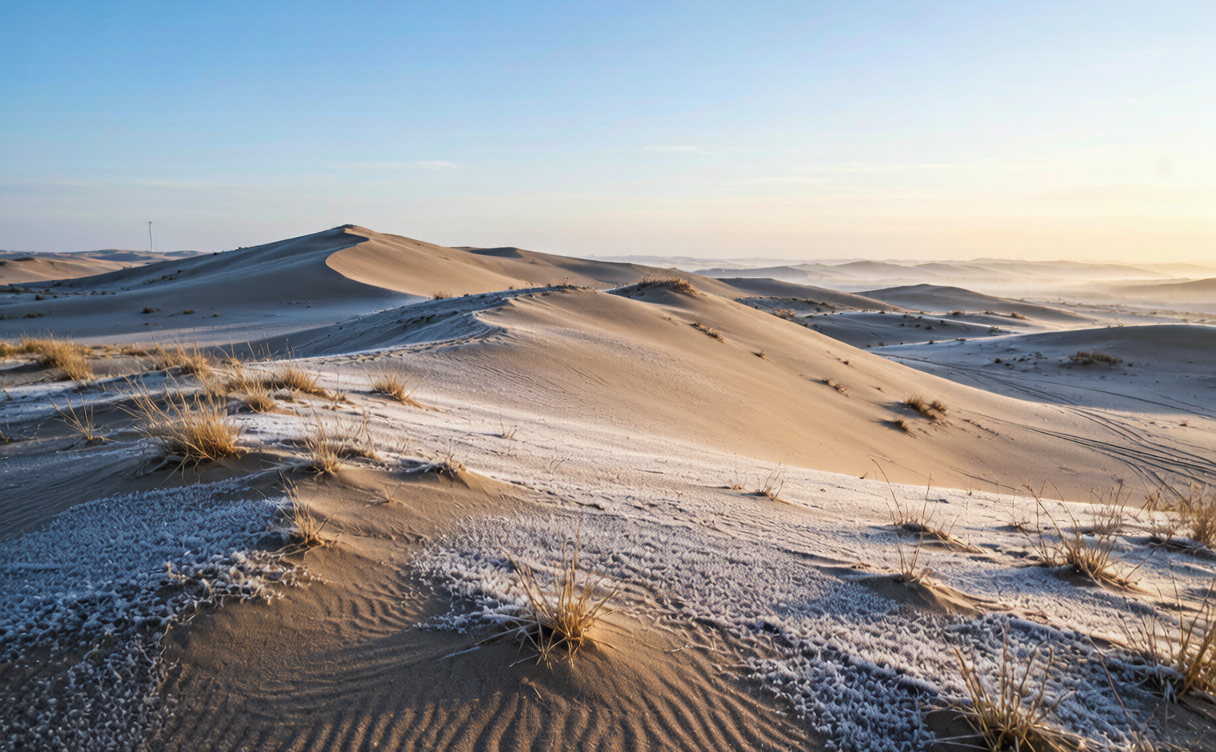
Beyond the stone forest, the geopark takes in volcanic cones, hot springs, and the strange sandy expanses of Hunshandake on its western edge. A long day can pair the granite pillars with a walk on the dunes, where the wind shapes small ripples you can hear shifting underfoot. Winters here are severe, and some access roads close, so the geopark is best saved for the warmer half of the year.
Best time to visit Chifeng grassland
Timing matters. The best time to visit Chifeng grassland is from late June to early September, when the steppe is green and the weather is mild, or from mid-September to early October, when the autumn colors peak and the crowds thin. Winter is brutally cold and many grassland facilities close, while spring can be dusty and brown. If autumn photography is your goal, aim for the first three weeks of October.
A Chifeng itinerary for foreigners
A practical Chifeng itinerary for foreigners runs three to four days. Day one is travel and a relaxed afternoon in the city, perhaps visiting the Chifeng Museum for context on the region’s Liao dynasty history. Day two heads to Ulan Butong for a grassland day and overnight yurt stay. Day three explores the Keshiketeng geopark, returning to the city by evening. Day four leaves room for Dali Lake or a slow morning before the train back to Beijing.
If you want to extend the trip, the wider region rewards a longer loop. Travelers coming from the provincial capital can read our Hohhot travel guide for the classic grasslands and monasteries of central Inner Mongolia, while those chasing the ultimate steppe should consider the Hulunbuir grassland far to the northeast.
The contrast between the two is itself worth noting. Hulunbuir is vast, flat, and remote, better suited to a dedicated week on the road, whereas Chifeng compresses steppe, stone forest, and desert into a compact, train-friendly package. For a first taste of Inner Mongolia, that compactness is exactly what makes Chifeng the smarter choice.
Where to stay
Accommodation in Chifeng itself is standard Chinese mid-range: clean, affordable, and convenient for an early departure. The memorable nights are on the grassland, where yurt camps range from simple felt tents with shared bathrooms to insulated wood cabins with private heating. Book ahead in July and August, the peak green season, and confirm whether your camp has reliable hot water, because standards vary. A night on the steppe paired with a dawn walk is worth more than two extra nights in the city.
Food and practical tips
Inner Mongolian food centers on lamb and dairy, and Chifeng is no exception. A guide to Inner Mongolian lamb dishes will tell you what to order, from whole roasted lamb to hand-pulled noodles with mutton. Vegetarians will find fewer options, so plan accordingly.
Foreign visitors should carry their passport for hotel and attraction checks, and download a translation app before leaving the cities, where English is rare. Mobile payment dominates, so set up a payment method that works in China, though cash is still accepted at most tourist sites. Booking a driver for the grassland days is strongly recommended, as signage and transport outside town are limited.
Sources: The Keshiketeng Global Geopark is listed by UNESCO at https://www.unesco.org/en/global-geoparks/keshiketeng.