

Laoshan is the mountain that gives Qingdao its mythic backdrop: pale granite peaks that rise straight from the Yellow Sea, wrapped in pine forest and threaded with Taoist temples. A Laoshan Mountain Qingdao guide needs to do two jobs at once, because Laoshan is both a serious hiking mountain and a sacred site with more than two thousand years of Taoist history. For foreign visitors based in the breezy seaside city of Qingdao, it is the obvious day trip that trades beer gardens and beaches for cliffs, waterfalls, and cliff-top shrines within an hour of the center.
Why Laoshan is special
Most famous Chinese mountains sit inland, but Laoshan meets the sea. Its granite domes plunge directly into the water, and on clear mornings the contrast of grey rock, dark green pines, and deep blue sea is genuinely unforgettable. The mountain is also one of the birthplaces of the Quanzhen school of Taoism, and working temples still host priests and pilgrims. That combination of coastal scenery and living spirituality is rare, and it is what earns Laoshan a place alongside China’s better-known sacred peaks.
Laoshan also looms large in Chinese imagination. For centuries it was spoken of as a home of immortals, and it features in the classic strange-tale collection “Liaozhai Zhiyi,” where Taoist masters summon the sea and walk on waves. That folklore still colors the visit: the same cliffs that hikers photograph at sunrise have, for local people, always been a thin place between the ordinary world and the magical one. You do not need to believe it to feel the atmosphere in a misty gorge.
How to get to Laoshan from Qingdao
The first thing to settle is how to get to Laoshan from Qingdao. The mountain is large, with several separate entrance areas, so your transport depends on which part you want to see. The most popular southern route, the Taiqing scenic area, can be reached by tourist bus from Qingdao’s city center in around ninety minutes, or by a combination of metro and local bus. A taxi or private car is faster and more flexible, especially if you plan to combine two areas in one day. Aim to leave the city before eight in the morning to beat both the crowds and the haze that sometimes builds after midday.
Laoshan entrance ticket price
Budget matters, so the Laoshan entrance ticket price is worth knowing in advance. Admission is charged per scenic area rather than for the whole mountain, and the ticket typically includes the internal shuttle bus that carries you between the gate, the temple, and the trailheads. Prices rise on public holidays and drop in the low season, so check the official notice before you go. Expect to pay a modest sum that still feels like good value given the size of the area, and bring cash as a backup even though mobile payment is widely accepted at the gates.
Laoshan hiking routes
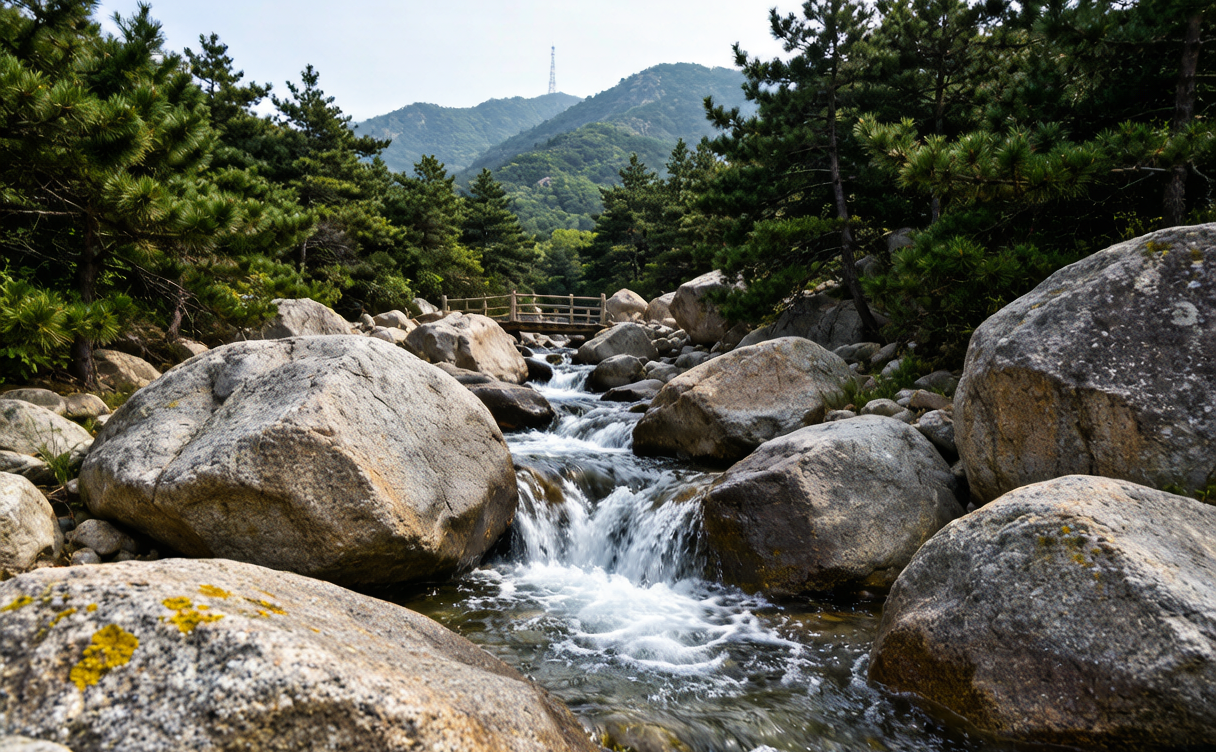
There is a route for almost every fitness level. The easiest walks stay low, linking the temple complexes and the coastal road with gentle paved paths. Intermediate hikers can take the cable car partway up and then walk the ridge trails for views back over the sea. Serious walkers tackle the full ridge from one scenic area to another, a long day with real elevation gain and some exposed sections. Whatever you choose, wear proper shoes, carry water, and start early, because the mountain is bigger than it looks from the coast and the last shuttle leaves in the late afternoon.
Two routes deserve special mention. The Jufeng loop climbs toward the main summit for the big sea panoramas, a stiff half-day that rewards the effort on a clear day. The southern cultural route, by contrast, links Taiqing Palace with the Mingxia grottoes and the coastal road, mixing light walking with temple visits and plenty of places to stop for tea. Many first-time visitors do the southern route one day and save Jufeng for a second trip, which is a sensible way to enjoy the mountain without rushing.
Taiqing Palace, Laoshan
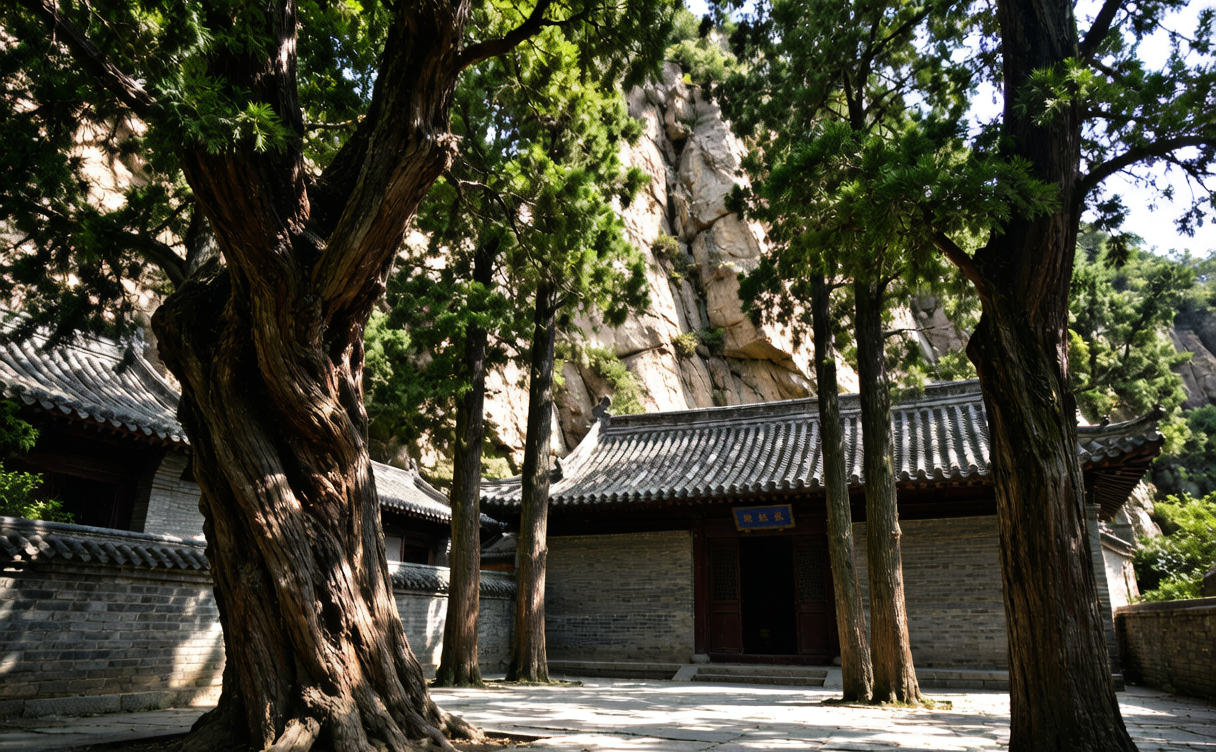
The spiritual heart of the mountain is Taiqing Palace, Laoshan’s largest and oldest Taoist temple complex, tucked under a granite cliff in a grove of ancient cypress trees. The halls are modest but atmospheric, with incense smoke, the sound of a stream, and quiet courtyards where monks tend small gardens. A giant carved turtle and a spring said to have healing water are among the minor sights around the temple. Even travelers with no interest in religion tend to find the stillness here a welcome break from the busy city. Arrive early and you may catch the morning chanting, a low, rhythmic sound that carries surprisingly far between the old stone walls.
Best time to visit Laoshan
Timing shapes the experience. The best time to visit Laoshan is spring and autumn, when the temperatures are mild and the views are clearest. Summer is green and lush but humid, and the coast can be foggy in the early morning. Winter is cold and quiet, with occasional snow on the peaks, but some facilities close. Avoid Chinese public holidays if you can, because the southern routes get crowded and the shuttle queues lengthen. If your schedule is fixed on a holiday, the northern Yangkou entrance is usually quieter and has its own dramatic sea cliffs, so it makes a decent fallback when Taiqing is packed.
Combining Laoshan with Qingdao
Laoshan pairs naturally with a few days in the city. Before the mountain, our Qingdao travel guide lays out the waterfront, the old quarter, and how to string the sights together. After a morning on the trails, the leafy villas and seaside promenade of Badaguan make an easy, flat afternoon, and the city’s seafood scene is the perfect reward, detailed in our Qingdao seafood guide.
Practical tips
Foreign visitors should carry their passport, as the ticket gate may ask for identification. Wear layers, because the sea breeze on the ridges is cooler than the city. English signage is limited, so download an offline map and your key phrases in Chinese before you set off. If you want a temple lunch, ask about the simple vegetarian set meal some monasteries offer, which is both cheap and a small taste of Taoist hospitality.
Safety on Laoshan is straightforward but worth respecting. The granite is polished smooth in places and dangerously slick after rain, so step carefully on the cliff-edge plank paths and stay behind the rails. Mobile coverage is good near the temples but patchy on the high ridges, so do not rely on your phone for navigation on the longer loops. Tell your hotel roughly when you expect to be back, and turn around with daylight to spare rather than risk the shuttles.
Sources: Official visitor information for Laoshan is published by China National Tourism Administration at https://www.travelchina.gov.cn/.