

Most foreign visitors who plan a trip to Jiangsu province head straight for Suzhou, Nanjing, or Yangzhou, drawn by classical gardens and canal towns. Yet tucked into the far northeast corner of the province, pressed against the Yellow Sea, sits Lianyungang — a breezy port city that offers something none of those famous places can: a real coastline. This Lianyungang travel guide is written for first-time international travelers who want to combine mythology, mountains, and beaches in one relaxed stop before or after exploring the rest of the Yangtze Delta.
Why Visit Lianyungang?
Lianyungang is best known for Huaguo Mountain, the peak that Chinese legend identifies as the birthplace of the Monkey King (Sun Wukong) from the classic novel Journey to the West. For travelers, the draw is more earthly: a forested granite mountain wrapped in cloud, a long sandy island beach, and a slower pace than the mega-cities to the south.
Unlike the flat, river-threaded landscape of central Jiangsu, Lianyungang is framed by hills that fall straight into the sea. That geography gives the city its name — “Lianyun” roughly means “connected clouds” — and it explains why this is the province’s only real seaside resort. If you are building a wider Jiangsu itinerary, pairing Lianyungang with the garden cities further inland makes for a well-rounded trip. You can read our Nanjing travel guide for the provincial capital and its Ming-era city wall.
Getting to Lianyungang
Understanding how to get to Lianyungang is the first practical step. The city sits on a major high-speed rail line, and services from Nanjing, Xuzhou, and even Shanghai are frequent. From Xuzhou, an interchange hub on the Beijing–Shanghai line, the ride takes roughly two hours. From Nanjing it is about three to three and a half hours. The China high-speed train guide for foreigners walks you through buying tickets, using your passport, and reading seat numbers, which is essential because Lianyungang’s station can be busy at holiday peaks.
By air, Lianyungang Huaguoshan Airport has limited domestic connections; most international travelers fly into Nanjing, Shanghai, or Qingdao and connect by train. If you are already exploring the Shandong coast, our Qingdao travel guide pairs well as a northern bookend to a seaside tour.
Top Things to Do in Lianyungang
1. Huaguo Mountain and the Monkey King Trail
The headline attraction and the reason most people write “things to do in Lianyungang” into a search box. Huaguo Mountain (Huaguo Shan) rises just east of the city center. A cable car or a series of stone steps takes you up past the Water Curtain Cave (Shuilian Dong), a cool grotto said to be the Monkey King’s lair, draped with a thin veil of falling water. Higher still sits the towering statue of Sun Wukong looking out over the hills.
The site is busy on weekends and national holidays, so arrive early. Wear proper shoes — the paths are steep and can be slippery after rain. The views across the forested ridges toward the sea are the reward.
2. Liandao Island Beach
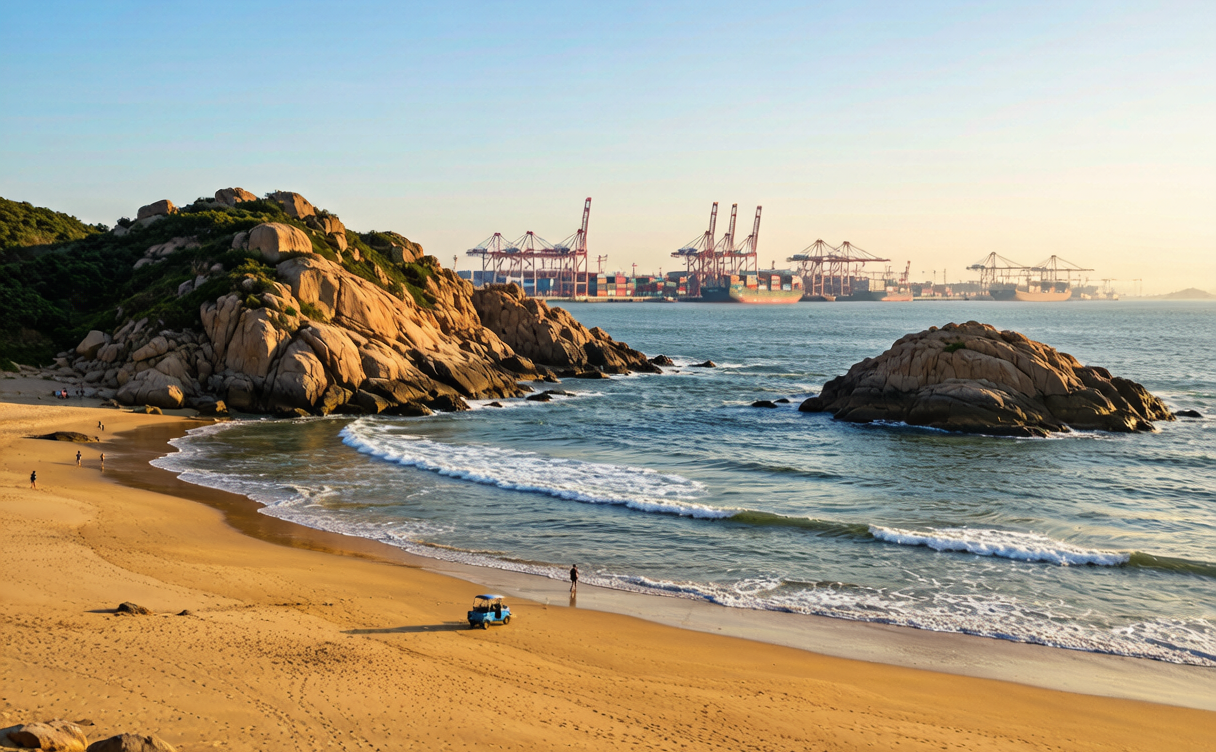
Liandao (Lian Island) is the largest island in Jiangsu and home to the province’s most accessible seaside. A long causeway connects it to the mainland, and a coastal road runs past sandy coves and low rocky headlands. The water is cooler and greener than southern beaches, and in summer the strand fills with domestic tourists. For a quieter experience, walk the eastern headland trails rather than the central swimming beach. This is where the “Liandao Island beach Jiangsu” promise becomes real: a place to put your feet in the Yellow Sea without leaving the province.
3. Jiangjun Cliff Petroglyphs
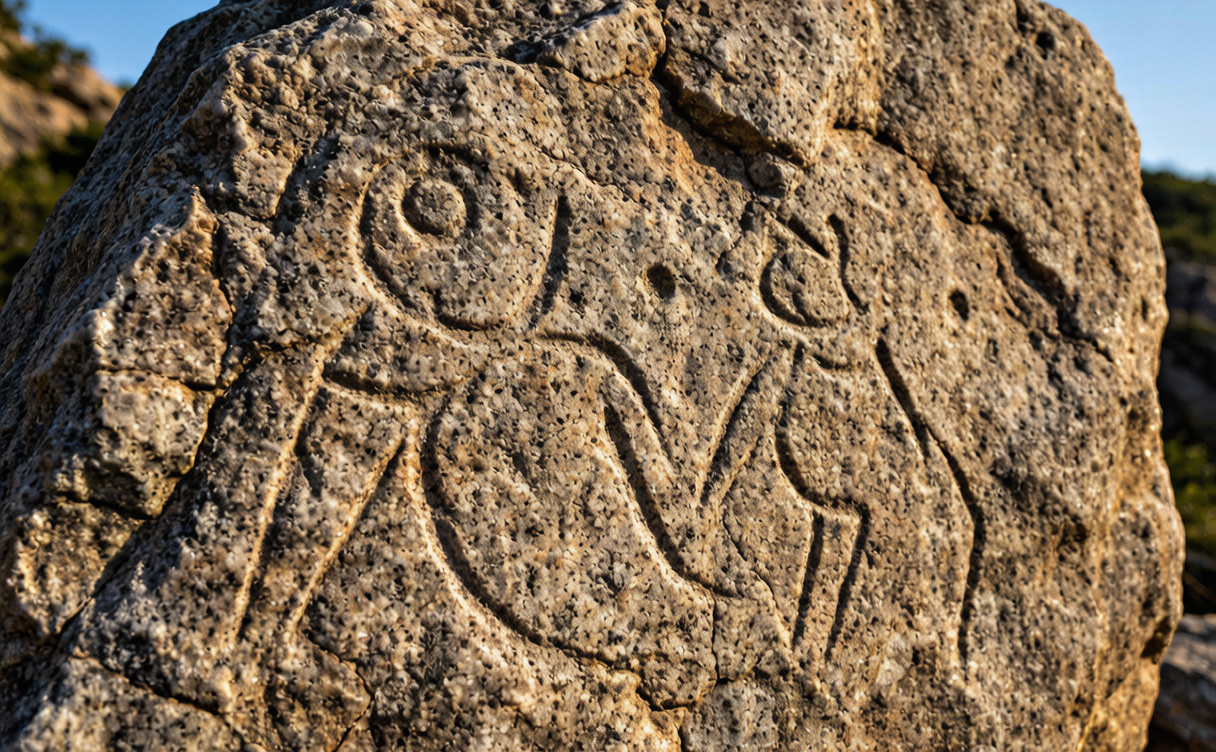
Less famous but genuinely intriguing, the Jiangjun Cliff (Jiangjun Ya) site preserves ancient carved symbols on granite — some of the earliest recorded rock art in eastern China. The meaning of the shallow grooves is still debated, which only adds to the atmosphere. Pair it with a visit to the nearby Kongwang Mountain if you have a half day to spare.
4. Yuntai Mountain and Seafood Dining
The broader Yuntai mountain range behind the city offers additional hiking and, importantly, some of the best seafood in Jiangsu. Lianyungang’s port means the dinner tables are supplied daily: razor clams, swimming crab, shrimp, and sea snails, often simply steamed and dressed with a little vinegar and ginger. Eat near the old harbor district in the evening for the liveliest scene.
Local Flavors: What to Eat in Lianyungang
No Lianyungang travel guide would be complete without the food, because the city’s identity is tied to its harbor. The signature dish is “haixian mian” — a briny seafood noodle soup loaded with shrimp, squid, and clam, eaten for breakfast by locals and a revelation for first-time visitors. Cold dressed jellyfish and a plate of steamed razor clams with a dash of local vinegar are everyday pleasures. The neighboring Donghai county is also one of China’s main producers of crystalline quartz, so you will see carved stone trinkets in the markets — harmless souvenirs rather than must-buys.
For a fuller picture of Jiangsu’s table, the Yangzhou travel guide explains the refined Huaiyang cuisine that defines the province’s south, a useful contrast to Lianyungang’s rougher, sea-first cooking.
A Sample Lianyungang Itinerary
A practical Lianyungang itinerary runs two full days:
- Day 1: Morning at Huaguo Mountain (allow 3–4 hours), afternoon exploring the city center and the seafood dinner.
- Day 2: Half day on Liandao Island beach and coastal road, then the Jiangjun Cliff petroglyphs or Kongwang Mountain before your train out.
If you have a third day, use it to slow down — rent a bike along the seafront or take a boat trip from the fishing harbor. Travelers continuing west often stop in Xuzhou, a city famous for its Han dynasty tombs and terracotta warriors that predate Xi’an’s.
Combining Lianyungang With the Rest of Jiangsu
Because Lianyungang sits at the end of a rail spur, it is easiest to treat it as a bookend rather than a through-stop. A common routing is to fly into Nanjing, work south through the garden cities, then loop up the coast to Lianyungang before exiting via Xuzhou toward the north. The Zhenjiang travel guide is handy here, since Zhenjiang sits on the Yangtze just west of the route and makes a natural lunch-and-train-change point. Whichever direction you travel, keep one buffer day: the mountain and the island are both weather-sensitive, and a foggy morning on Huaguo can erase the view you came for.
Where to Stay and When to Go
Most visitors stay in the Xinpu district (the modern city center) or near the train station for convenience. Beach lovers choose hotels on Liandao Island in summer. Spring (April–May) and autumn (September–October) are the most comfortable seasons; summers are warm and humid but good for swimming, while winters are cold and quiet.
Practical Tips for Foreign Travelers
- Language: English signage is limited outside the train station and top attractions. Carry your hotel address in Chinese characters on your phone.
- Payments: Link a foreign-card-friendly payment app or carry cash; many small seafood stalls do not take international cards.
- Transport: DiDi (Chinese Uber) works in the city; short taxi rides are cheap.
- Tickets: Buy attraction tickets through major Chinese travel apps or at the gate; off-season prices drop sharply.
Lianyungang makes an easy, low-stress addition to a longer China trip, especially if you want a coastline without flying all the way to Hainan. Its mix of legend, mountain, and sea is distinct from the canal-and-garden image most travelers have of Jiangsu.
Sources
Official tourism information is published by the Lianyungang Municipal People’s Government: https://www.lyg.gov.cn/