

Everyone knows Xi’an’s terracotta warriors. Almost nobody outside China knows that Xuzhou has its own army — thousands of miniature Han dynasty soldiers, standing in battle formation in pits beside a king’s rock-cut tomb, two centuries younger than Qin Shi Huang’s giants and infinitely easier to see up close. Xuzhou is where the Han dynasty’s founding family came from, and the city sits on more Han-era archaeology than anywhere else in China. Add a vast city-center lake, a legendary barbecue culture, and bullet trains from four directions, and this Xuzhou travel guide might be the most useful two-day detour on the Beijing–Shanghai line.
Why Visit Xuzhou
Xuzhou (ancient Pengcheng) is the ancestral home of Liu Bang, the peasant rebel who founded the Han dynasty in 202 BC — the dynasty so defining that China’s majority ethnic group still calls itself Han. His descendants ruled the region as kings of Chu and cut palatial tombs deep into Xuzhou’s rocky hills, burying jade suits, bronze chariots, and miniature terracotta armies.
Modern Xuzhou is a gritty, likeable rail-junction city of nine million: coal-and-machinery heritage, leafy boulevards, and a food scene locals defend with religious intensity. It gets a fraction of the foreign visitors of Nanjing or Suzhou, which means the museums are quiet and hotel prices are gentle.
Best Time to Visit Xuzhou
The best time to visit Xuzhou is April–May and September–November. Spring brings 15–25°C days and blooming hills around Yunlong Lake; autumn is dry and golden with similar temperatures. Summers are hot and humid (regularly 33–37°C in July–August) — this is when the city’s outdoor barbecue culture peaks, so there’s an upside if you time sightseeing for mornings. Winters are cold but usually dry (-2 to 8°C), and the Han tombs, being underground, are a comfortable year-round refuge. Skip the first week of October, when domestic crowds fill every museum in China.
How to Get There
Xuzhou East is a major junction on the Beijing–Shanghai high-speed corridor, which makes how to get to Xuzhou almost trivially easy.
| From | Option | Time | Approx. Cost |
|—|—|—|—|
| Nanjing | High-speed train | 1–1.5 hr | $15–20 |
| Shanghai | High-speed train | 2.5–3 hr | $28–40 |
| Beijing | High-speed train | 3–3.5 hr | $30–45 |
| Qingdao | High-speed train | 3–3.5 hr | $25–35 |
| Zhengzhou / Kaifeng | High-speed train | 1.5–2 hr | $15–25 |
| Xi’an | High-speed train | 4–4.5 hr | $40–55 |
Xuzhou East station is about 25–35 minutes from downtown by metro Line 3 or taxi (¥35–45); some slower trains use the central Xuzhou Station. Booking tips, seat classes, and passport procedures are covered in our China high-speed train guide for foreigners.
Top Things to Do in Xuzhou
The Han Terracotta Army
The Han terracotta army Xuzhou guards at the Lion Rock (Shizishan) site numbers over 4,000 figures — infantry, cavalry, and officials roughly 40 cm tall, arrayed in trenches exactly as they were buried around 154 BC. They’re smaller than Xi’an’s warriors but you stand closer, crowds are thin, and the attached tomb is the real showstopper. Entry to the combined site runs about ¥90–120. If you’re comparing armies, our guide to visiting the Terracotta Warriors in Xi’an explains the differences in period and scale.
The Tomb of the King of Chu at Lion Rock
The Xuzhou Han dynasty tombs are rock-cut palaces: at Shizishan, a 117-meter corridor drives dead straight into the hill, opening into chambers for wine, weapons, coins (224,000 of them were found), and the king himself, who wore a burial suit of over 4,000 jade plates sewn with gold wire. The suit’s replica — and dazzling originals — sit in the Xuzhou Museum, one of the best regional museums in the country and free with passport registration. The Guishan tomb across town, with its twin 56-meter corridors cut at near-perfect precision, is arguably even more atmospheric.
Yunlong Lake and Yunlong Mountain
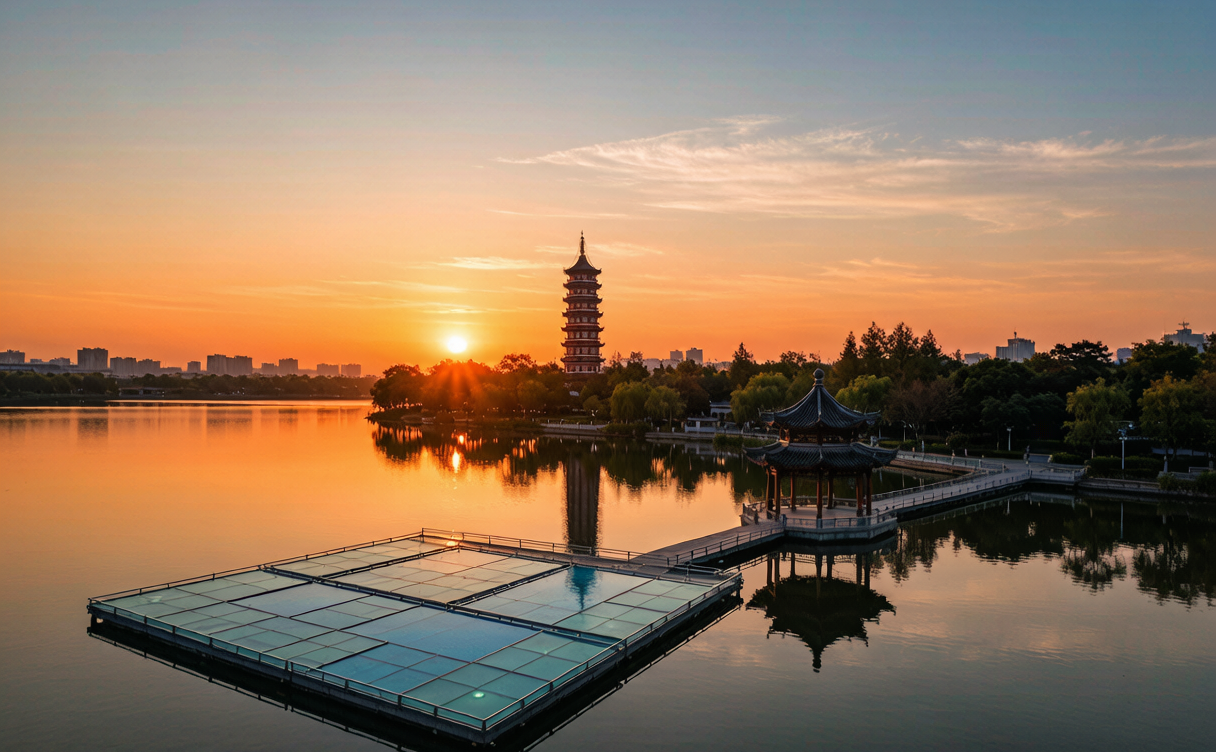
Yunlong Lake Xuzhou wraps 12 km of shoreline right against the city center — bigger than Hangzhou’s West Lake and far less commercial. Rent a shared bike for the circuit, climb Yunlong Mountain’s stone steps past the Xinghua Temple to the pagoda-topped ridge, and finish at the lakeside aquarium promenade at sunset. Free, open all day, and the evening light on the water is Xuzhou at its best.
Household Museum of the Han Stone Reliefs
Han-era pictorial stones — carved banquet scenes, dragons, acrobats — line this quiet gallery near Yunlong Lake. It’s the artistic counterpart to the tombs and rarely sees a tour group.
Where to Stay
- Yunlong Lake north shore (recommended): Mid-range and boutique hotels with lake views, walking distance to the museum quarter; $35–70 per night.
- Downtown Pengcheng Square: Malls, metro interchange, and food streets on your doorstep; international chains $45–90, domestic chains $22–40.
- Xuzhou East station area: Convenient for one-night stopovers, $20–35, but a metro ride from everything interesting.
What to Eat
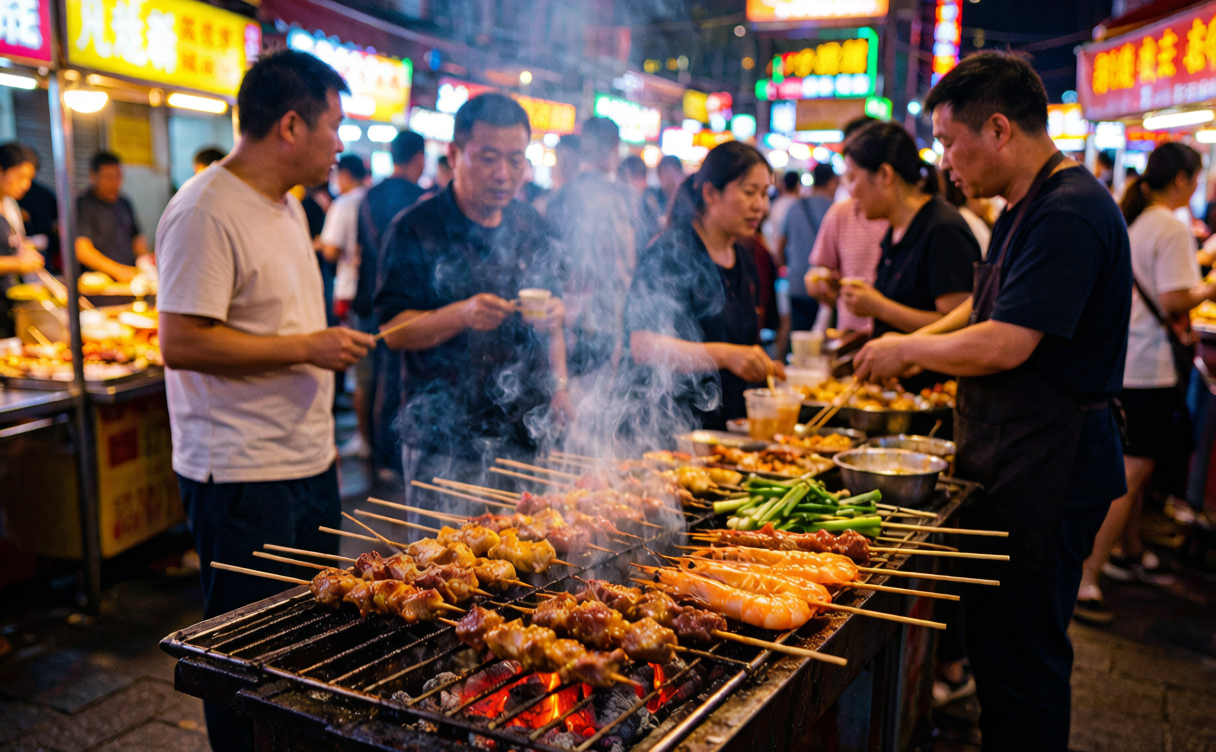
Xuzhou claims to be a cradle of Chinese cooking — the legendary chef Peng Zu supposedly served the emperors here millennia ago — but today the city’s religion is barbecue. Xuzhou barbecue means DIY grilling at low tables: lamb skewers, chicken wings, whole garlic, and the local signature, grilled fresh oysters and saozi (lamb offal), washed down with local beer. Expect ¥60–100 per person for a feast. Beyond the grill, try sha tang (a peppery chicken-and-wheat breakfast soup with millennia of local lore), badawan mutton dishes, frog-fish (meiyu) hotpot, and dandan sweet rice cakes in the old lanes. September’s official barbecue festival takes over whole blocks.
Sample Itinerary: 2 Days in Xuzhou
Day 1 — The Han circuit. Morning at Lion Rock: tomb first (before tour groups), then the terracotta army pits. Lunch nearby, afternoon in the Xuzhou Museum for the jade suits, then the Han Stone Relief gallery if energy allows. Barbecue dinner in the Fuzimiao night-food area.
Day 2 — Lake and hills. Sunrise walk or bike around Yunlong Lake, climb Yunlong Mountain, visit Guishan tomb in the afternoon. Evening bullet train onward — Kaifeng’s Song-dynasty streets pair beautifully; see our Kaifeng travel guide.
With a third day, add the Window of the World-style Han Culture Scenic Area’s quieter corners or a half-day in the Jiawang wetlands.
Practical Tips
- Passport required at all museums and tomb sites for free-entry registration or ticket purchase.
- Metro: Three lines cover the main sights; rides cost ¥2–5 and accept Alipay/WeChat QR codes.
- Tomb claustrophobia: Corridors at Guishan are narrow and low — manageable for most, but know before you go.
- Weather timing: For a broader look at seasonal trade-offs across regions, our best time to visit China guide helps you slot Xuzhou into a longer route.
- Background reading: The Xuzhou sites feature in China’s national protected-heritage listings; UNESCO’s overview of China’s World Heritage properties gives useful Han-era context.
FAQ
How do Xuzhou’s terracotta warriors compare to Xi’an’s?
Xi’an’s are life-size, Qin dynasty, and world-famous; Xuzhou’s are 40 cm tall, Han dynasty, and nearly crowd-free. Serious history fans should see both — the contrast in scale and craft tells the story of two dynasties.
Is one day enough for Xuzhou?
A tight day covers Lion Rock and the Xuzhou Museum. Two days lets you add Guishan tomb, Yunlong Lake, and a proper barbecue night, which is the trip most visitors remember.
Are the Han tombs suitable for kids?
Generally yes — the corridors feel like adventure tunnels — though strollers won’t work inside Guishan.
Do the museums have English labels?
The Xuzhou Museum and Lion Rock site carry decent English summaries on major exhibits; smaller galleries are Chinese-only, so a translation app helps.
What’s the airport situation?
Xuzhou Guanyin Airport connects major domestic hubs, but with bullet trains reaching Beijing, Shanghai, and Xi’an directly, rail is almost always the smarter choice.
Written by Karl Huang, updated July 2026.