

Every morning in Ganzhou, workers unhook a chain of wooden boats so river traffic can pass, then reconnect them into a walkway that pedestrians have used for more than 800 years. The Dongjin floating bridge is the kind of living relic most Chinese cities lost decades ago — and in Ganzhou it’s just the opening act. This southern Jiangxi city keeps China’s best-preserved Song dynasty brick wall, a functioning medieval drainage system, and a hinterland dotted with fortress-like Hakka roundhouses. This Ganzhou travel guide shows you how to explore one of the most rewarding stops in Jiangxi off beaten path territory.
Why Visit Ganzhou
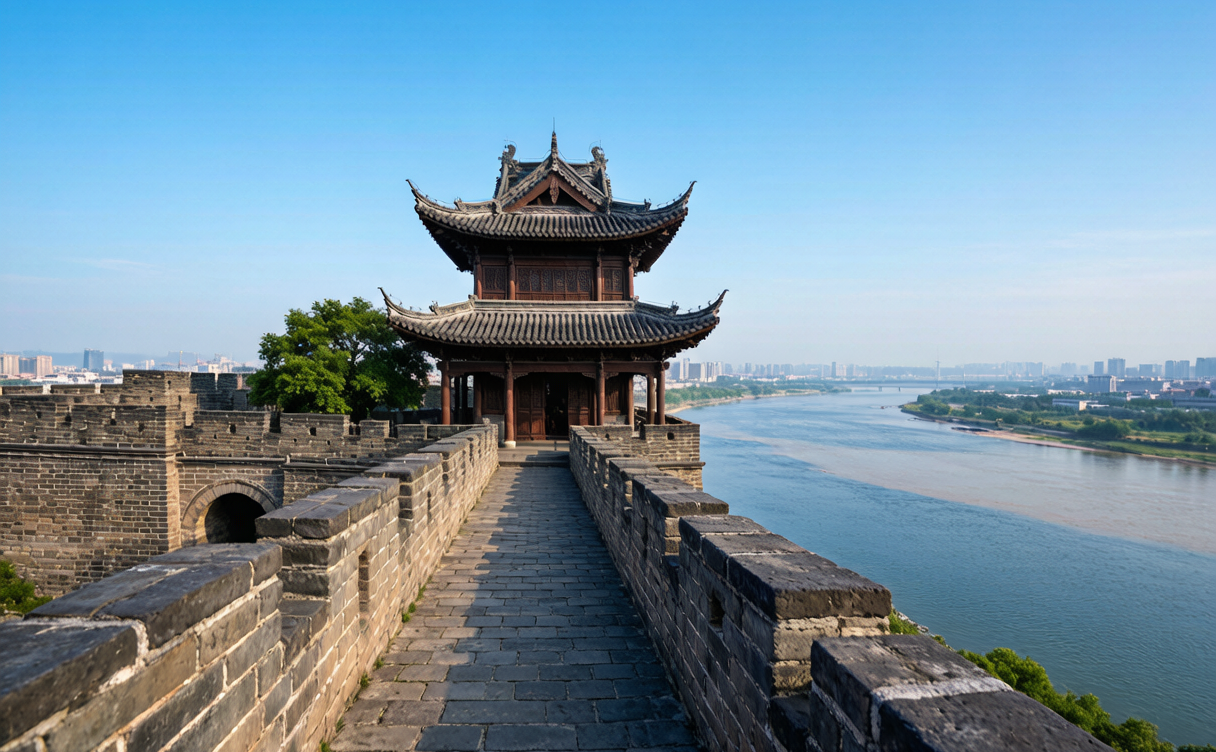
Ganzhou was the great inland port of the Song era, where cargo transferred between the Gan River route to the Yangtze and the mountain passes into Guangdong. That wealth built city walls, pavilions, and temples — and its later obscurity preserved them. While Pingyao and Xi’an draw crowds to their (heavily rebuilt) walls, Ganzhou’s 3.6 kilometers of original Song brickwork see barely any foreign visitors.
The city is also the capital of Hakka culture in Jiangxi. The surrounding counties hold hundreds of weiwu — square and circular fortress houses that predate and parallel the more famous Fujian tulou. Add honey-sweet navel oranges (Ganzhou grows more than anywhere on Earth), a walkable riverside old town, and high-speed rail links in four directions, and you have a two-day stop that feels like a find.
Best Time to Visit Ganzhou
The best time to visit Ganzhou is October through early December: dry, sunny, 15–25°C, and orange-harvest season, when markets pile high with Gannan navel oranges and orchard visits are easy to arrange. March–April is the green season — camellias and rapeseed bloom, though showers are frequent.
Summers are long, humid, and hot (often 33–37°C); sightseeing is best before 10am and after 4pm. Winter is mild by northern standards (5–13°C), rarely freezing, and the wall walk in thin mist is genuinely atmospheric. As everywhere in China, avoid the early-October National Day week.
How to Get There
Ganzhou sits on the Beijing–Hong Kong high-speed corridor, making how to get to Ganzhou far easier than its off-radar reputation suggests.
| From | Option | Time | Approx. Cost |
|—|—|—|—|
| Nanchang | High-speed train | 1.5–2 hr | $15–22 |
| Shenzhen | High-speed train | 2–2.5 hr | $22–30 |
| Guangzhou | High-speed train | 2.5–3 hr | $20–28 |
| Xiamen | High-speed train | 2.5–3 hr | $20–28 |
| Changsha | High-speed train | 2–2.5 hr | $18–25 |
| Beijing | High-speed train / flight | 7 hr / 2.5 hr | $60–90 / $80–180 |
Ganzhou West is the main bullet-train station, about 20–30 minutes from the old town by taxi (¥30–40) or bus. A regional airport (Ganzhou Huangjin) connects Beijing, Shanghai, and Chengdu. First time on Chinese rails? Our high-speed train guide for foreigners covers booking with a passport, station navigation, and luggage rules.
Top Things to Do in Ganzhou
Walk the Song Dynasty City Wall
The Ganzhou ancient city wall runs along the river for 3.6 km, built from fired bricks — many stamped with the names of their Song-era makers, an early quality-control system you can still read today. Walk the full stretch from Yongjin Gate to Bajing Terrace in about an hour, watching river life below on one side and old-town rooftops on the other. Access points charge little or nothing; the Bajing Pavilion park at the confluence of the Zhang and Gong rivers (which merge here to form the Gan) is the scenic climax.
Cross the Dongjin Floating Pontoon Bridge
The Ganzhou floating pontoon bridge is roughly 400 meters of planks laid over about 100 chained wooden boats, first installed in the Song dynasty and rebuilt continuously since. Cross with the morning commuters and fish-sellers around 7–9am for the best scenes. It’s free, and the far bank’s ordinary riverside neighborhoods are half the charm.
Explore Zaoer Lane and the Old Town
Haoju Alley and the Zaoer Xiang historic quarter preserve Ming–Qing courtyard houses, small temples, and the entrances to the Fushou Gou — a Song-era underground drainage network, over 900 years old, that still protects the old town from floods. Street-food stalls cluster here after dark.
Day-Trip to the Hakka Roundhouses
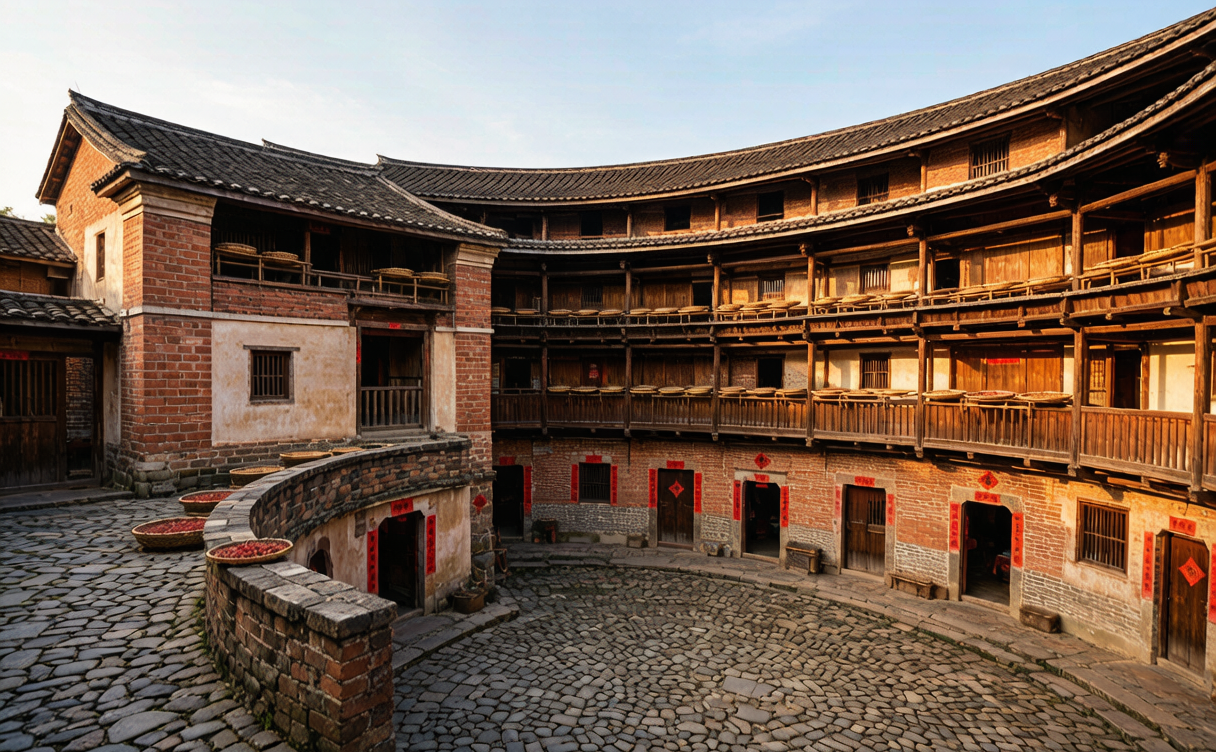
The Hakka roundhouses Jiangxi is known for cluster in Longnan county, about 40 minutes south by high-speed train. Guanxi Weiwu, the “champion of weiwu,” is a massive square fortress with nine-meter walls, gun ports, and carved interior halls; Yanyi Wei nearby now hosts craft workshops and homestays. If fortress architecture grabs you, continue over the mountains to the round earthen tulou villages of Fujian — the two traditions are cousins.
Tongtianyan Grottoes
Twenty minutes west of downtown, this red-sandstone hill holds hundreds of Buddhist carvings from the Song period onward, threaded with shady walking paths — a pleasant half-day when summer heat makes the wall walk punishing.
Where to Stay
- Old town / Yongjin Gate area (recommended): Boutique hotels inside restored courtyards and mid-range chains sit within walking distance of the wall, pontoon bridge, and food streets. Expect $30–60 per night.
- Zhanggong commercial center: Modern high-rise hotels with river views, $35–70.
- Longnan county: A night inside a converted weiwu homestay (around $25–50) is the memorable option if you’re doing the Hakka circuit.
- Budget: Domestic chains near Ganzhou station from $18–25.
What to Eat
Ganzhou eats Hakka: hearty, salty, built for farm work. Seek out sanbeiji (three-cup chicken — this corner of Jiangxi claims its origin), Hakka stuffed tofu, pounded tea rice (leicha) in the southern counties, rice noodles with yellow chicken sauce, and huangyuan mifu, a chewy steamed rice cake. From November to January, eat navel oranges daily — orchard-fresh fruit costs about ¥5–8 per jin at any market. Riverside night stalls near the pontoon bridge grill fish and skewers into the small hours.
Sample Itinerary: 2 Days in Ganzhou
Day 1 — Song dynasty city. Morning crossing of the pontoon bridge with the commuters, then walk the full city wall to Bajing Pavilion. Lunch on stuffed tofu in the old town. Afternoon in Zaoer Lane and the Fushou Gou exhibition, sunset back on the wall, night market dinner.
Day 2 — Hakka country. Early train to Longnan (about 40 minutes), tour Guanxi Weiwu and Yanyi Wei, late-afternoon return. Evening train onward — Shenzhen and Guangzhou are close enough for a same-night arrival, or head north via our Nanchang travel guide toward the Yangtze.
With a third day, add Tongtianyan Grottoes and an orange orchard visit in season.
Practical Tips
- Payments: Alipay and WeChat Pay rule; carry ¥100–200 cash for village vendors in Longnan.
- Language: English is rare. Screenshot place names in Chinese: 赣州古城墙 (city wall), 建春门浮桥 (pontoon bridge), 关西围屋 (Guanxi Weiwu).
- Timing the bridge: The pontoon bridge briefly opens for boat traffic — typically mid-morning — so cross early or expect a short wait.
- Getting around: Didi is cheap and plentiful; the old town itself is best on foot.
- Context reading: The wall and drainage systems are candidates on China’s UNESCO tentative lists — see the UNESCO World Heritage Centre’s China page for background on inscribed and pending sites.
FAQ
Is Ganzhou worth visiting for foreign travelers?
Yes — it’s one of the best-value historical stops in southern China: authentic Song-era sights, near-zero crowds, and a convenient rail position between Guangdong and the Yangtze region.
How many days should I spend?
Two days covers the old town plus a Hakka day-trip. One fast day works if you focus on the wall, bridge, and old lanes.
Are the Hakka roundhouses easy to reach without a tour?
Reasonably. High-speed trains reach Longnan, then a 15–25 minute taxi or Didi gets you to Guanxi Weiwu. Entry runs about ¥40–60.
Does anyone speak English at the sights?
Rarely. Signboards at major sites carry English summaries, but guides work in Chinese; translation apps fill the gaps fine.
What’s the connection between Ganzhou and the Hakka people?
Southern Jiangxi was a key waypoint in historic Hakka migrations from the Central Plains toward Guangdong and Fujian, which is why fortress villages, distinct cuisine, and Hakka dialects define the region — a story that continues in Chaozhou and the Teochew country just over the border.
Written by Karl Huang, updated July 2026.