

Liaocheng, in western Shandong Province, is often called the “Water City of the North” because its historic core wraps around Dongchang Lake, one of the largest inner-city lakes in China. For centuries the city was a busy port on the Grand Canal, the great artificial waterway that linked the Yellow and Yangtze river systems and carried the grain tax that fed imperial capitals. Today Liaocheng is a calm, walkable destination where canal bridges, Ming-dynasty walls, and lakeside pavilions let foreign visitors experience a slower, more local side of Shandong. This Liaocheng travel guide is built for independent travelers who enjoy history, boating, and small-city charm without big-city crowds.
Most visitors reach Liaocheng as a stop on a wider Shandong loop. It pairs naturally with Jinan travel guide to the east and Qufu travel guide, the hometown of Confucius, to the south. For those combining mountains and water, Mount Tai, Shandong sits within a few hours by rail.
How to Get to Liaocheng by Train
Liaocheng is well served by rail, including conventional and high-speed lines. The main station, Liaocheng Railway Station, connects to Jinan in under two hours and to Beijing in roughly three to four hours by conventional fast train. High-speed connections are expanding, and many travelers simply transfer through Jinan, which is on the national bullet-train network.
If you are coming from further afield, the easiest plan is to take a high-speed train to Jinan and then a short connection west, a route explained in our China high-speed train guide for foreigners. From the station, local buses and taxis reach the lake district in about twenty minutes. Because Liaocheng is compact, you will not need much internal transport once you are settled near Dongchang Lake.
For travelers already in southern Shandong, Liaocheng also connects reasonably to Linyi travel guide and the canal towns via conventional rail, though journeys are slower than the bullet trains to Jinan. Within the city, buses and shared bikes cover the flat center, and a short taxi ride handles the hop to the old wharf district. Booking accommodation within walking distance of the water means you can leave local transport behind almost entirely.
Best Time to Visit Liaocheng
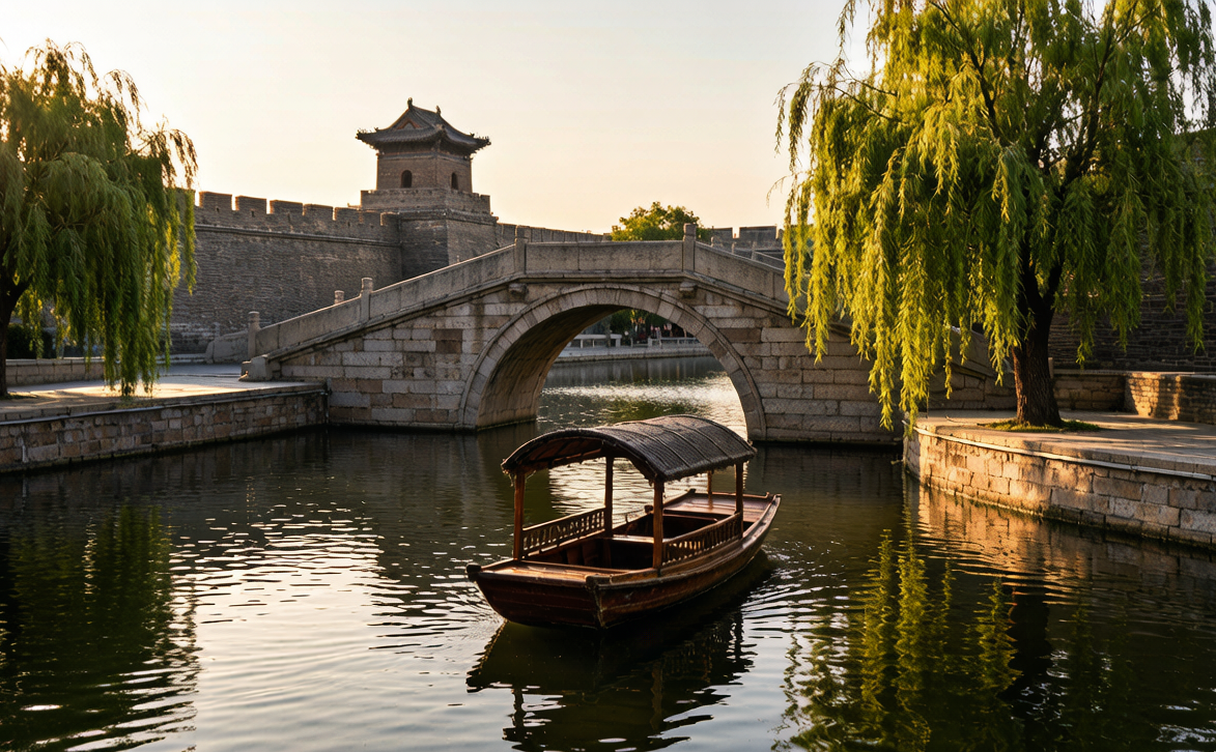
The most comfortable seasons are spring (April to May) and autumn (September to October), when temperatures are mild and the lake is pleasant for boating. Summers are hot and can be humid, while winters are cold and sometimes grey. The best time to visit Liaocheng for photography is late afternoon in autumn, when low light turns the canal and old walls golden.
Festivals are low-key compared with coastal cities, but the lunar calendar still brings temple fairs and lantern displays around the lake, especially during Spring Festival and the mid-autumn period. These are good moments to see local families out enjoying the waterfront.
Top Things to Do in Liaocheng
The centerpiece is Dongchang Lake Liaocheng, a broad expanse of water ringed by willows, causeways, and pavilions. A rented pedal boat or a small sightseeing launch lets you drift past the old city wall and under the arched canal bridges. At the lake’s heart sits Guangyue Tower, a reconstructed Ming-dynasty tower that offers sweeping views across the water and rooftops.
Just outside the walled core, the former canal wharves and the Tea-Brick Workshop district recall Liaocheng’s trading heyday, when tea and goods from the south were transferred here. The Shan-Shan Guild Hall, an ornate merchant temple built by Shanxi traders, is one of the finest surviving examples of its kind in northern China and should not be missed.
For a quieter half-day, visit the Dongchangfu City Wall and the small museums dedicated to the Grand Canal. Things to do in Liaocheng are best enjoyed slowly: a morning boat ride, a long lakeside walk, and an afternoon in the guild halls beats any rushed checklist.
A short history helps you read the city. Liaocheng grew rich in the Ming and Qing dynasties as a storage and transfer point on the Grand Canal, where grain from the south was inspected and forwarded toward the capital. The merchant houses, the ornate guild halls, and the very shape of the lakefront all date from that commercial golden age, and understanding this makes the quiet present-day streets far more interesting. The city’s name, meaning “rising in literature,” reflects the scholar-officials it produced, several of whom left stone memorial arches that still stand near the old gates.
Where to Stay in Liaocheng
Choose a hotel within walking distance of Dongchang Lake so you can stroll the waterfront in the early morning and after dark. Mid-range business hotels cluster near the lake’s eastern shore, and a few boutique properties occupy restored courtyard buildings inside the old town. Budget travelers will find clean, simple hotels close to the railway station, though these are a taxi ride from the scenery.
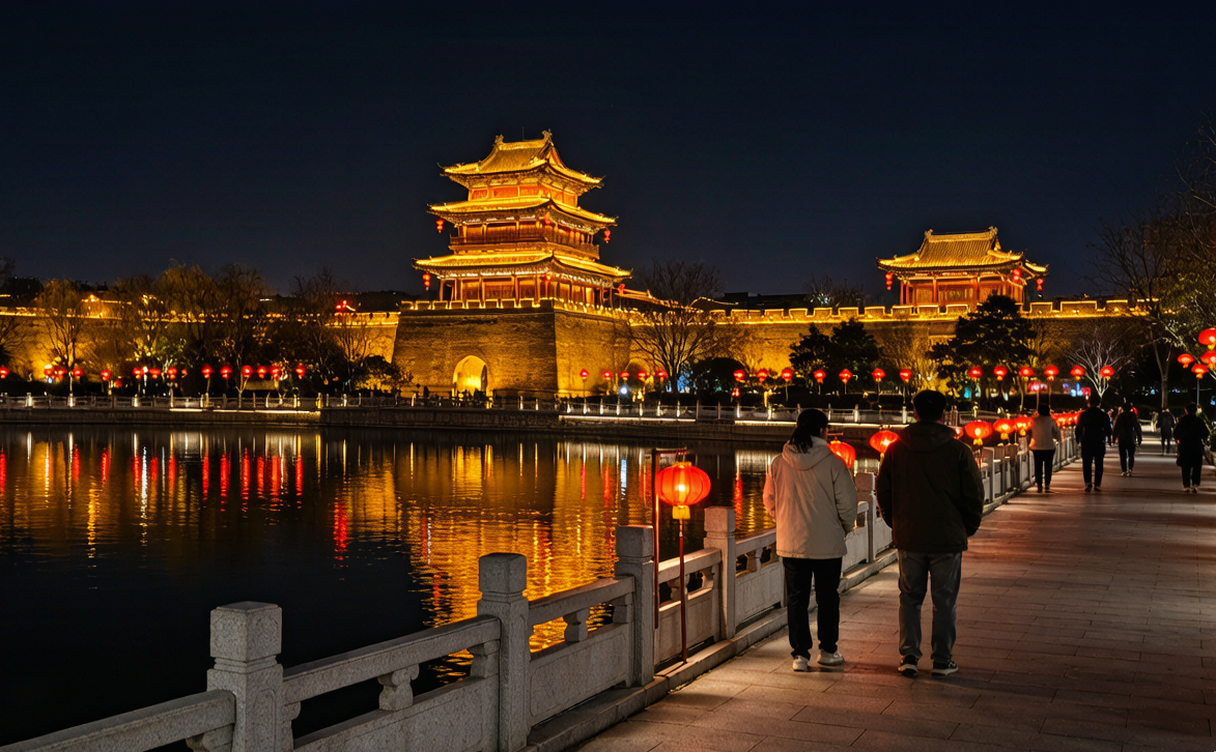
Book a lakeside room if possible; the difference between a standard city view and a water view is significant here, and the evening reflections are the city’s signature image.
A Liaocheng Itinerary
A relaxed Liaocheng itinerary needs about two full days.
Day 1: Arrive and settle near the lake. Spend the afternoon boating on Dongchang Lake and climbing Guangyue Tower before sunset. Dine on the waterfront.
Day 2: Visit the Shan-Shan Guild Hall and the canal wharf district in the morning, then walk the old city wall and the Grand Canal museums in the afternoon. In the evening, return to the lake for night views.
If you have a third day, consider a side trip to the surrounding canal towns or a train ride to nearby historic sites. Travelers heading south can continue to Taierzhuang Ancient Town guide, a reconstructed canal town further down the waterway, or to Linyi travel guide in the hills of southern Shandong.
Food and Local Specialties
Liaocheng cooking is typical of western Shandong: wheat-based, savory, and generous. Try Liaocheng braised chicken, a tender slow-cooked dish, and the local eight-treasure rice puddings sold at festival stalls. Lake fish and river shrimp appear on seasonal menus, and street vendors sell roasted sweet potatoes, Jian bing (savory crepes), and sugar-coated hawthorn in the evening.
The city is not a culinary destination on the level of Jinan or Qingdao, but the lakeside night market is friendly and cheap, and a lakeside teahouse is a fine place to rest between sights. Vegetarians should specify clearly, as broths often contain meat.
Side Trips from Liaocheng
Liaocheng’s western Shandong location makes it a good bridge between the province’s cultural heart and the canal towns to the south. Beyond Taierzhuang and Linyi, you can loop back through Qufu for Confucius’ temples and cemetery, or head east to Jinan’s springs and then up Mount Tai, Shandong for a summit sunrise.
Because all these places share the same rail network, Liaocheng works well as an inexpensive, low-stress base between bigger draws. Return each evening to quiet lake views and hotel rates well below those of the major tourist cities.
Conclusion
Liaocheng is a gentle, watery counterpoint to Shandong’s busier highlights, built around a lake, a canal, and a wall that together tell the story of northern China’s inland trade. The Grand Canal itself is recognized by UNESCO as a World Heritage Site, and you can read the official description of its history and extent at UNESCO Grand Canal.