

The Yi River runs through the middle of this city almost a kilometre wide, and on a summer evening the entire population seems to be walking along it — grandmothers dancing in formation, kids on scooters, anglers who have not caught anything in hours and do not care. An hour north, the Meng Mountains rise out of the wheat plain in ridges of pine and granite, cool enough in August that people drive up from Jinan just to sleep with the windows open. This Linyi travel guide is for travellers who want southern Shandong’s mountains, a serious slice of Confucian-era history, and a city where you will not see another foreign face all week.
Linyi Travel Guide: Why Bother?
Linyi is a prefecture of eleven million people best known inside China for one of the country’s largest wholesale commodity markets. It is not on any standard itinerary and there is no reason it should be — until you look at what sits within an hour of the centre.
The Yimeng Mountains are the best summer escape in the province. Yinque Mountain (银雀山) in the city is where, in 1972, workers digging foundations uncovered Han-dynasty bamboo slips carrying the text of Sun Tzu’s Art of War — one of the most important archaeological finds of twentieth-century China. Linyi is the birthplace of Wang Xizhi, the calligrapher every Chinese schoolchild copies. And Qufu, the home of Confucius himself, is a comfortable day trip on the high-speed line.
Come for two to three days, use the city as a base, and spend most of your time outside it.
Best Time to Visit
Linyi has a warm-temperate monsoon climate: four distinct seasons, and the mountains behave differently from the plain.
April to early June is the best all-round window. City temperatures run 18–28°C, the Meng Mountains are cooler by 4–6°C, and hillsides of wild azalea and locust blossom peak in late April.
July and August are hot and wet on the plain — 28–34°C with the year’s heaviest rain — but this is precisely when the mountains earn their reputation. Guimeng Peak sits around 22–25°C in midsummer, and mountain guesthouses fill with domestic families. Book ahead or come midweek.
September to early November is my pick for hiking: 15–26°C, dry, with clear long views from the ridgelines and red leaves in the Yishui gorges through late October.
Winter (December to February) runs −5°C to 6°C, grey and windy. Cave attractions and the underground canyon stay a constant 16–18°C year-round, which makes them a decent cold-weather option, but the mountains are bleak.
Avoid the first week of October. For a wider seasonal view, see our guide to the best time to visit China.
How to Get There
Linyi North (临沂北站) on the Rizhao–Lankao high-speed line is the station you want; it is about 25 minutes from the centre. The older Linyi Station handles slower conventional trains. Linyi Qiyang Airport (LYI) has domestic flights to Beijing, Shanghai, Guangzhou and Chengdu, and sits 10 km from town.
| From | Mode | Duration | Typical fare |
|—|—|—|—|
| Qufu East | High-speed rail to Linyi North | 55 min – 1 hr 10 min | ¥85 (US$12) |
| Jinan East | High-speed rail | 1 hr 40 min – 2 hr 20 min | ¥160 (US$22) |
| Qingdao North | High-speed rail via Rizhao | 2 hr 40 min – 3 hr 20 min | ¥180 (US$25) |
| Beijing South | High-speed rail | 3 hr 30 min – 4 hr 30 min | ¥400 (US$56) |
| Linyi Airport (LYI) | Airport bus / taxi | 25 min | ¥15 (US$2) / ¥45 (US$6) |
| Mengshan scenic area | Tourist coach from Linyi bus station | 1 hr 30 min | ¥30 (US$4) |
There is no metro. City buses cost ¥2 and cover the centre well; bus 3 and bus 8 run along the Yi River waterfront. Taxis start at ¥8. For the mountains, a chartered car with driver at ¥400–600 (US$56–84) per day saves hours over the bus network — scenic areas are scattered across three counties and public connections between them barely exist.
The Meng Mountains
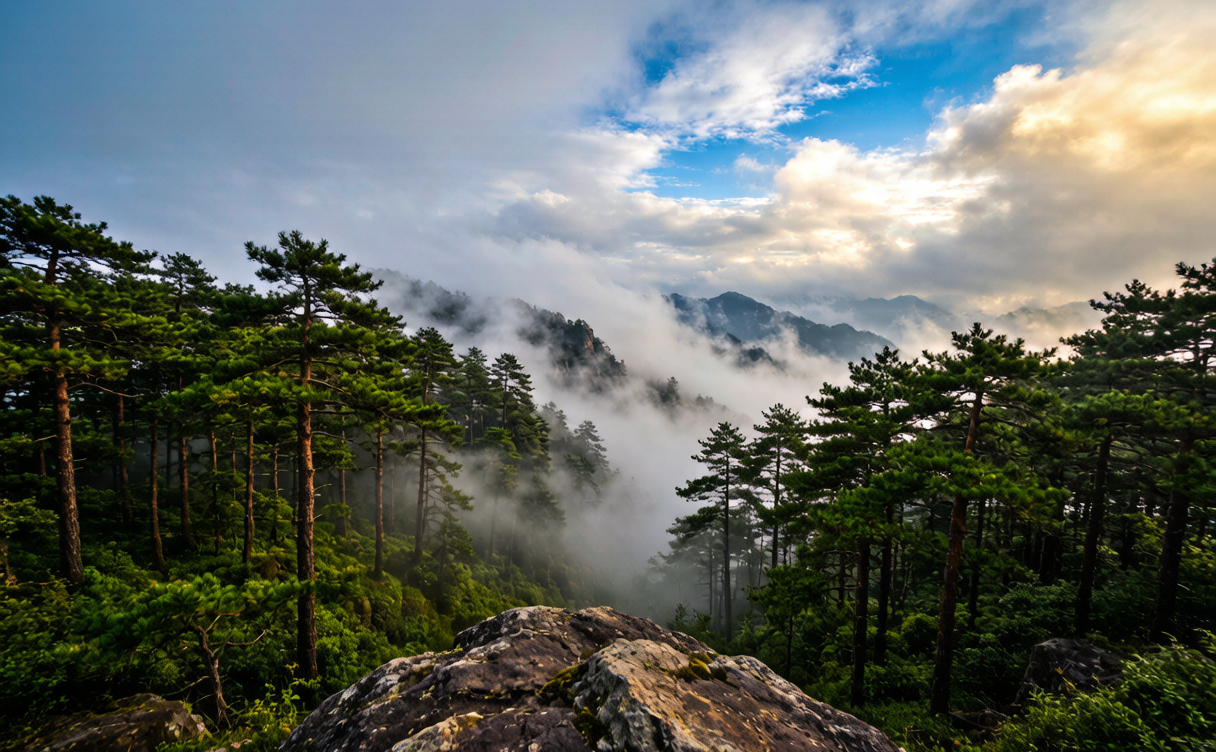
Mengshan (蒙山) is the second-highest range in Shandong and, unlike Taishan, almost entirely free of pilgrim traffic. The main summit, Guimeng Peak (龟蒙顶) at 1,156 m, is reached from the Guimeng entrance in Pingyi county; the eastern Yunmeng Scenic Area (云蒙景区) in Mengyin county is greener and has the better waterfalls.
Entry to each area is roughly ¥70–80 (US$10–11), open 07:30–17:30, with shuttle buses inside at ¥30–40 and cable cars around ¥80 return. From the top shuttle stop, Guimeng Peak is a 40-minute stair climb — manageable for anyone reasonably fit. Local tourism boards market the range as a “natural oxygen bar” for its forest air, which is marketing, but the pine air genuinely is glorious.
Give Mengshan a full day. Start at 08:00 and you will be back in the city by 18:00.
Bamboo Slips, Calligraphy and the Confucian Connection
The Yinque Mountain Han Tombs Bamboo Slips Museum (银雀山汉墓竹简博物馆) is small, dated, and one of the more remarkable places in eastern China. Two Western Han tombs excavated here in 1972 yielded nearly 5,000 bamboo strips including texts of Sun Tzu’s Art of War and the long-lost Art of War of Sun Bin, settling a two-thousand-year scholarly argument about whether the two men were the same person. The tomb pits are preserved under the building. Entry is around ¥20 (US$3), 08:30–17:00, closed Mondays. Allow an hour.
Ten minutes away, the Former Residence of Wang Xizhi (王羲之故居) is a reconstructed garden compound honouring the fourth-century master whose Orchid Pavilion Preface is the most copied piece of writing in Chinese history. Entry about ¥20 (US$3). More park than museum, but the stele corridor rewards anyone interested in the script.
For the source itself, take the morning train to Qufu, an hour west, where the Temple, Cemetery and Kong Family Mansion of Confucius form a UNESCO World Heritage site. A combined Qufu ticket runs about ¥140 (US$20) and a day trip from Linyi is entirely doable: 08:00 out, back by 20:00.
Beyond the City
- Zhuquan Village (竹泉村) in Yinan county — a restored stone village where spring water runs through bamboo groves between the houses. Touristy, but genuinely cool in August. Entry about ¥90 (US$13).
- Yishui Underground Grand Canyon (沂水地下大峡谷) — a long limestone cave system with an underground river you ride in a rubber boat. Constant 18°C. Entry about ¥120 (US$17) with the boat extra.
- Tianyu Nature Museum (天宇自然博物馆) in Pingyi — an enormous and slightly bewildering collection of dinosaur and feathered-bird fossils. Under-visited and excellent for children.
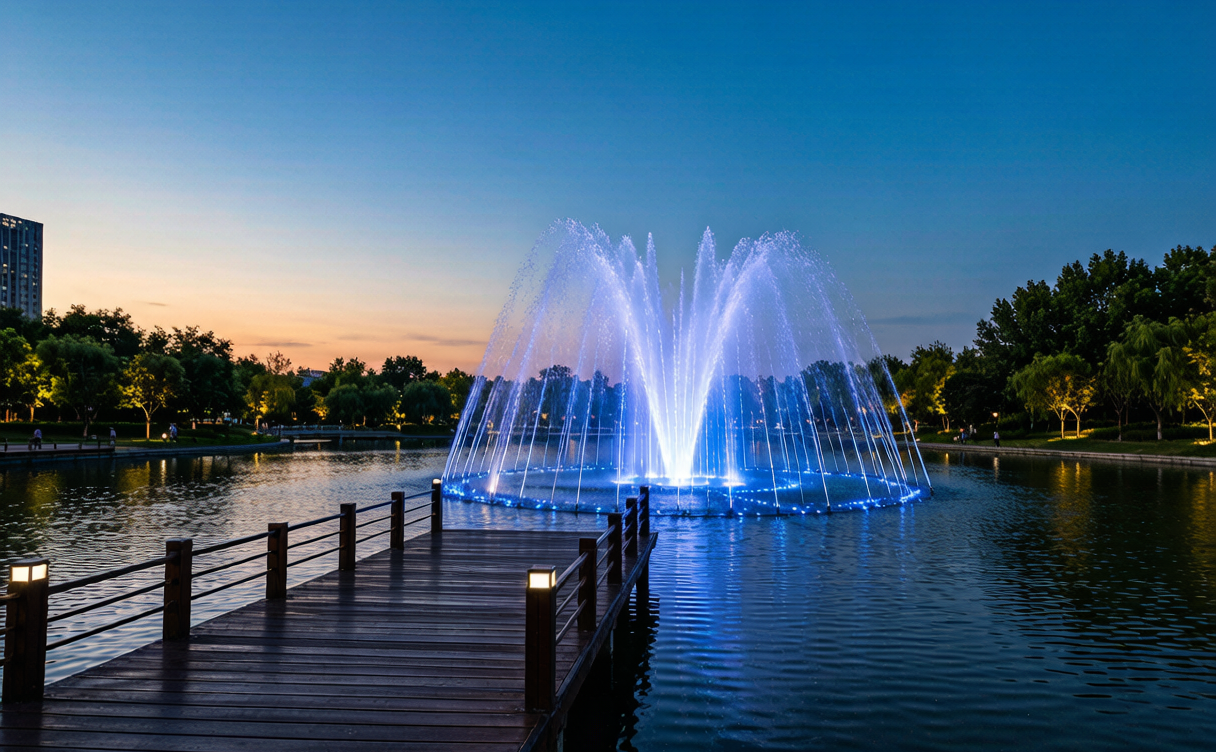
- The Yi River waterfront — free, and the evening fountain show on the Binhe belt is the most purely local thing you will do here.
Where to Eat
Southern Shandong food is heavier and spicier than the coast, with a lot of wheat and mutton.
- Húlà tāng (糊辣汤) — a thick peppery breakfast soup, eaten with fried dough sticks. ¥6–10 (US$1).
- Shāguō yángtāng (砂锅羊汤) — mutton soup simmered white, ordered by the bowl with flatbread torn into it. ¥20–30 (US$3–4).
- Jiānbing (煎饼) — Shandong’s rolled grain crepe, thick and leathery here with spring onion and bean paste, not the crisp Beijing version.
- Free-range mountain chicken (蒙山炖鸡) and wild greens at Mengshan guesthouses.
Where to Stay
Budget (¥110–190 / US$15–27). Domestic chains near Linyi Station and around the Beicheng New District. Reliable, plain, and a ¥15 taxi from the riverfront.
Mid-range (¥250–420 / US$35–59). Business hotels along Beijing Road and near the Yi River waterfront in Lanshan district — the best position for evening walks and city buses.
Splurge (¥550–900 / US$77–126). A handful of five-star domestic properties in the new administrative district, plus mountain resorts at Mengshan and Zhuquan at ¥500–1,000 in summer, which is where the money is better spent.
Confirm foreign-guest registration when booking; outside the main chains it is inconsistent in smaller counties.
Sample Itinerary: Two Days
Day 1 — City and history
- 08:00 Húlà tāng breakfast near Lanshan
- 09:00 Yinque Mountain Bamboo Slips Museum
- 10:30 Former Residence of Wang Xizhi
- 12:30 Mutton soup lunch
- 14:00 Linyi Museum or the wholesale market, for a look at how the city actually earns its living
- 18:30 Yi River waterfront, dinner and the fountain show
Day 2 — Mengshan
- 07:30 Depart by chartered car or coach
- 09:00 Guimeng entrance; shuttle up, 40-minute climb to the summit
- 12:00 Mountain guesthouse lunch — wild greens and free-range chicken
- 14:00 Yunmeng waterfalls or the ridge boardwalk
- 17:30 Return to the city
With a third day, choose between Qufu for Confucius or the Yishui underground canyon for something completely different.
Practical Tips
- English is essentially absent. Screenshot destination names in Chinese; drivers will not recognise pinyin.
- Mountain scenic areas stop selling tickets 60–90 minutes before closing, and last shuttles down leave around 17:00.
- Alipay and WeChat Pay work everywhere, including mountain ticket gates and village guesthouses.
- Summit weather is 5–8°C cooler than the city and windy. Carry a layer even in July.
- Bring your passport to every scenic area — it is your ticket ID.
FAQ
How many days should I spend in Linyi?
Two is the minimum — one for the city’s museums and riverfront, one for Mengshan. Three lets you add Qufu or the Yishui caves without rushing.
Is Linyi a good summer destination?
The city is hot and humid; the mountains are excellent. If you are coming in July or August, sleep at a Mengshan or Zhuquan guesthouse rather than in town.
Can I see Confucius sites from Linyi?
Yes. Qufu East is roughly an hour away by high-speed rail, which makes the Confucius temple complex a straightforward day trip. Linyi itself offers the Wang Xizhi residence and the Yinque Mountain bamboo slips rather than Confucian temples.
Do I need a car?
For the city, no. For the mountains and counties, strongly recommended. Public transport between scenic areas is slow and infrequent, and a driver for the day costs less than two taxi fares.
Is Linyi easy for independent travellers?
Very safe and very cheap. The difficulty is language, not logistics — bring offline translation and expect friendly curiosity rather than hassle.