

Our Huangyao ancient town guide introduces a settled, atmospheric riverside town in eastern Guangxi that has changed surprisingly little since the Ming and Qing dynasties. Built more than 1,000 years ago and reaching its height as a trading post, Huangyao is a maze of flagstone lanes, mossy stone bridges, and ancestral halls backed by soft karst peaks. If you want an ancient town experience that feels lived-in rather than theatrical, this Huangyao ancient town guide will help you time your visit, get there smoothly, and find the quiet corners that make it special.
Content Preview
- Huangyao Ancient Town Guide: Best Time to Visit
- Huangyao Ancient Town Guide: How to Get There
- Things to Do in Huangyao
- Where to Stay in Huangyao
- Sample 2-Day Itinerary
- Frequently Asked Questions
Huangyao Ancient Town Guide: Best Time to Visit
The best time to visit Huangyao is spring (March to May) and autumn (September to November), when temperatures are mild and the surrounding countryside is green or golden. Mornings in these seasons often bring a thin layer of mist that drifts between the tiled roofs and the banyan trees, which is exactly the atmospheric scene photographers chase. Winter is cool but uncrowded, while summer is hot and humid with afternoon thunderstorms.
Huangyao’s stone lanes are narrow and can feel cramped during China’s major holidays, especially the National Day week in early October and the Spring Festival. For a peaceful walk, arrive mid-week and plan to stay overnight so you can explore before the day-trippers arrive around 10 a.m. If you are coordinating a wider Guangxi trip, our best time to visit China guide helps you match Huangyao with other regions.
Huangyao Ancient Town Guide: How to Get There
Huangyao sits in Zhaoping County, under the city of Hezhou, roughly 200 km from Guilin. The most convenient rail link is Hezhou Station on the high-speed network, followed by a one-hour road transfer. From Guilin or Yangshuo you can also go by long-distance bus or private car.
| From | Mode | Time | Notes |
|——|——|——|——-|
| Hezhou (HSR station) | Bus / taxi | ~1 hr | Cheapest scenic-route approach |
| Guilin | Bus or private car | ~2.5–3 hrs | Direct coaches available |
| Yangshuo | Private car / bus | ~2 hrs | Easy add-on to a Yangshuo stay |
| Guangzhou / Shenzhen | High-speed train to Hezhou | ~2–3 hrs + 1 hr road | Good for travelers from Hong Kong via Shenzhen |
| Nanning | Train to Hezhou + road | ~4 hrs | Longer but doable |
Inside the town, vehicles are restricted in the core pedestrian zone, so you will walk everywhere. If you are coming from the Li River area, our Yangshuo countryside guide explains how to combine rice-field cycling with a side trip east to Huangyao.
Things to Do in Huangyao
Wander the Stone Lanes and Bridges
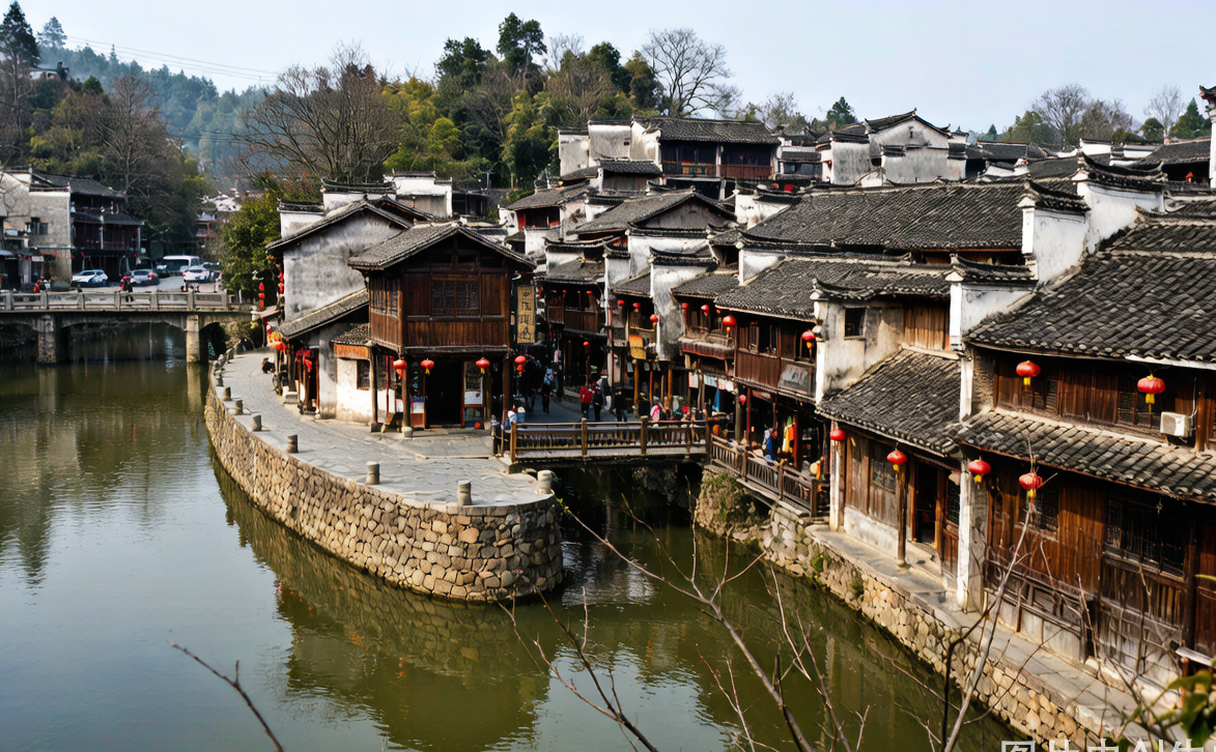
The joy of Huangyao is simply getting lost. More than a dozen well-preserved alleys—such as the Stone Slab Street—are flanked by gray-brick homes with carved wood doors. Arched stone bridges cross the clear streams that run through town, and the reflection of the karst in the water at dawn is unforgettable. Wear shoes with grip; the flagstones get slick after rain.
The Dragon-Claw Banyan and Ancient Well
Near the town entrance stands the famous Longzhao (Dragon-Claw) banyan, a massive tree whose roots spill across the lane like a claw. A short walk away is the Immortal Well (Xianren Jing), a spring that has supplied the town for centuries and where locals still fill jugs at sunrise. These small daily-life scenes are what separate Huangyao from more staged attractions.
Ancestral Halls and the Old Opera Stage
Huangyao was a prosperous merchant town, and its wealth shows in the elaborate clan halls—such as the Guo and Wu family halls—with carved beams and quiet courtyards. The restored ancient opera stage still hosts occasional performances. Climb to a low viewpoint on the town edge for a panorama of tiled roofs against the hills; the light is best in late afternoon.
Local Food and Huangyao Fermented Beans
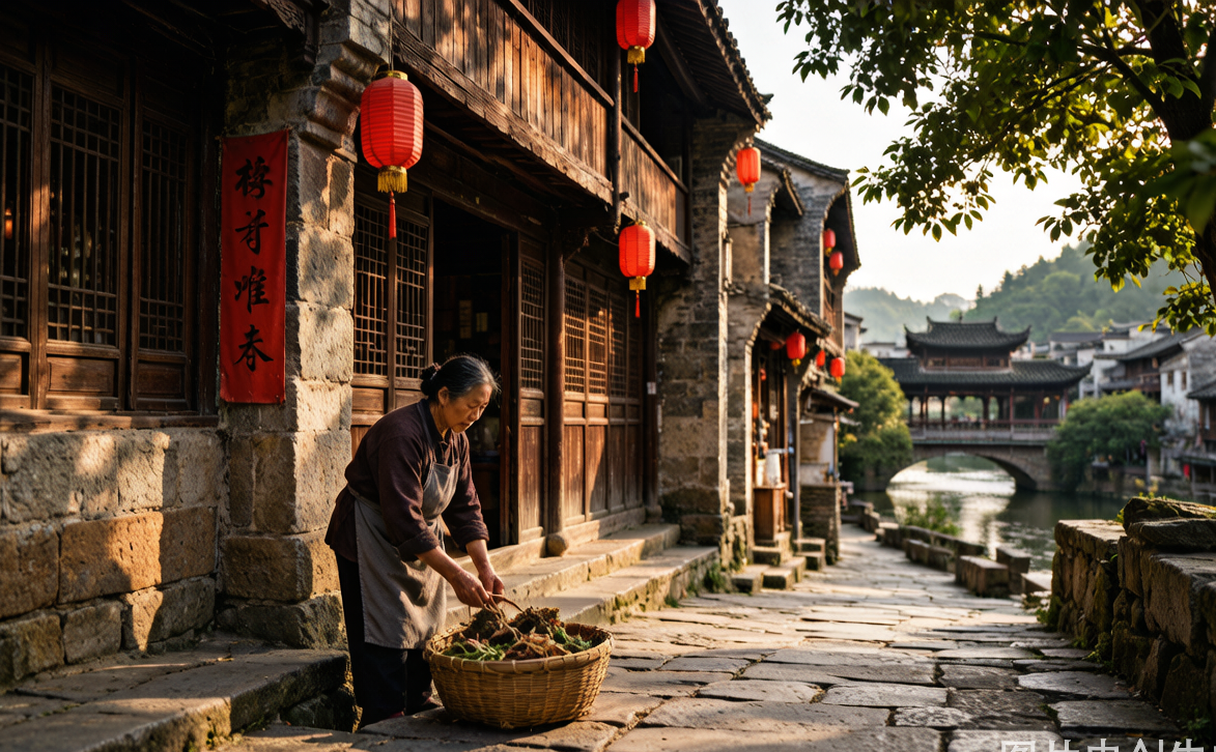
Huangyao is famous for its fermented black beans (douchi), used across Guangxi cooking. Try them stir-fried with green vegetables, or sample the local river fish and herb teas. Small family restaurants inside the town are inexpensive (30–60 RMB per person) and proudly local. For more on regional eating across the province, seek out Guangxi’s river fish and rice-noodle dishes wherever you travel.
Where to Stay in Huangyao
Staying inside the old town is the right call. Heritage-style guesthouses converted from old residences cost roughly 250–600 RMB per night and put you steps from the lanes; the experience of the town after dark, when the tour buses have gone, is the real reward. Hezhou city, about an hour away, has larger international-standard hotels if you prefer chain comfort or an early high-speed departure. Book ahead for weekends and holidays, as rooms inside the core are limited. Many lane-side guesthouses include a simple breakfast and can arrange a discounted town-entry ticket if you message them when reserving, which is worth confirming before you arrive.
Sample 2-Day Itinerary
- Day 1: Arrive from Guilin or Hezhou in the afternoon, check into a lane-side guesthouse, and wander the streets at golden hour; sample douchi dishes for dinner.
- Day 2: Rise early for misty lane photography, visit the banyan and ancestral halls, then take a late-morning bus onward to Yangshuo or Hezhou.
This Huangyao itinerary suits travelers who want culture without rushing. It also dovetails with a Li River cruise if you build the route north.
FAQ
How much is the Huangyao entrance ticket?
The standard ticket is around 88 RMB and is valid for the day, covering the preserved core and main halls. Some guesthouses include or discount it for overnight guests—ask when booking.
Is Huangyao better than Fenghuang or Lijiang?
It is quieter and less commercialized than many famous ancient towns, but smaller in scale. If you prefer atmosphere over sightseeing checklist, Huangyao wins; if you want nightlife and shopping, a bigger town may suit you better.
Can I visit Huangyao as a day trip from Guilin?
Yes. A day trip by car or bus takes roughly 2.5–3 hours each way, but staying overnight is strongly recommended to enjoy the early-morning calm.
Are there English signs and services?
Basic English signage exists at major points, but staff may speak little English. Download an offline map and a translation app before you arrive.
Is Huangyao accessible for older travelers?
The lanes are flat but made of uneven stone, and there are no cars inside the core. With careful footing it is manageable, though wheelchairs are difficult on the flagstones.
Final Thoughts
Huangyao rewards slow travel. Spend a night, wake before the crowds, and let the stone lanes, streams, and banyan shade tell you about a thousand years of southern Chinese town life. With the practical tips above, you can fit this timeless stop neatly into a Guangxi journey.
Huangyao’s layout and heritage are documented in detail on its encyclopedic entry (en.wikipedia.org/wiki/Huangyao), a useful reference if you want deeper historical background before visiting.
By Karl — Last updated July 26, 2026