

Our Chongzuo travel guide takes you to one of Guangxi’s quietest and most rewarding corners, a borderland where dramatic limestone karst rises straight out of emerald rice paddies and some of the world’s rarest primates still roam the forest. Tucked against the Vietnamese frontier in southern China, Chongzuo is the kind of place that rewards travelers willing to look beyond the famous peaks of Guilin. If you are building a Guangxi itinerary and want raw scenery without the tour-bus crowds, this Chongzuo travel guide is your starting point for planning transport, timing, and the best things to do in Chongzuo.
Content Preview
- Chongzuo Travel Guide: Best Time to Visit
- Chongzuo Travel Guide: How to Get There
- Top Things to Do in Chongzuo
- Where to Stay in Chongzuo
- Sample 3-Day Itinerary
- Frequently Asked Questions
Chongzuo Travel Guide: Best Time to Visit
The best time to visit Chongzuo is from October through April, when the weather is cool, dry, and comfortable for hiking and photography. During these months the skies are usually clear, the rice terraces glow green or gold, and the Detian Waterfall carries a healthy flow without the dangerous flood-stage currents of peak summer. Spring (March to April) is especially lovely, with peach and rape flowers brightening the countryside, while autumn (October to November) pairs blue skies with the most photogenic light on the karst.
Try to avoid the height of summer (June to August). The rainy season brings heavy showers, slippery trails, and higher humidity, though it also swells the waterfall to its most powerful. If you do come in summer, plan outdoor activities for the early morning. Vietnamese and Chinese public holidays, especially the week-long National Day holiday in early October, draw domestic crowds to Detian, so mid-week travel is smart. For broader seasonal context across the country, see our best time to visit China overview.
Chongzuo Travel Guide: How to Get There
Chongzuo sits about 120 km west of Nanning and is well connected by the Nanning–Chongzuo high-speed railway, which opened in 2022 and cut the trip to roughly one hour. Most international travelers fly into Nanning Wuxu International Airport (NNG) and then transfer. Below is a quick comparison of the main gateways.
| From | Mode | Time | Notes |
|——|——|——|——-|
| Nanning | High-speed train | ~1 hr | Most frequent, cheapest, comfortable |
| Nanning Airport (NNG) | Taxi / shuttle + train | ~1.5–2 hrs | Best for international arrivals |
| Guilin | High-speed train (transfer at Nanning) | ~4–5 hrs | Plan a break in Nanning |
| Pingxiang (border) | Bus / taxi | ~1.5 hrs | For crossing from Vietnam |
| Detian Waterfall | Bus from Chongzuo or charter | ~2 hrs | No train; road only |
Within Chongzuo, public buses reach Daxin County (gateway to Detian and Mingshi), but departure times are limited. For flexibility, hire a local driver for the day or join a small-group tour. If you are combining this region with the better-known Li River scenery, our Guilin and Yangshuo travel guide explains how to link the two areas by train.
Things to Do in Chongzuo
Chongzuo Mingshi Rural Area
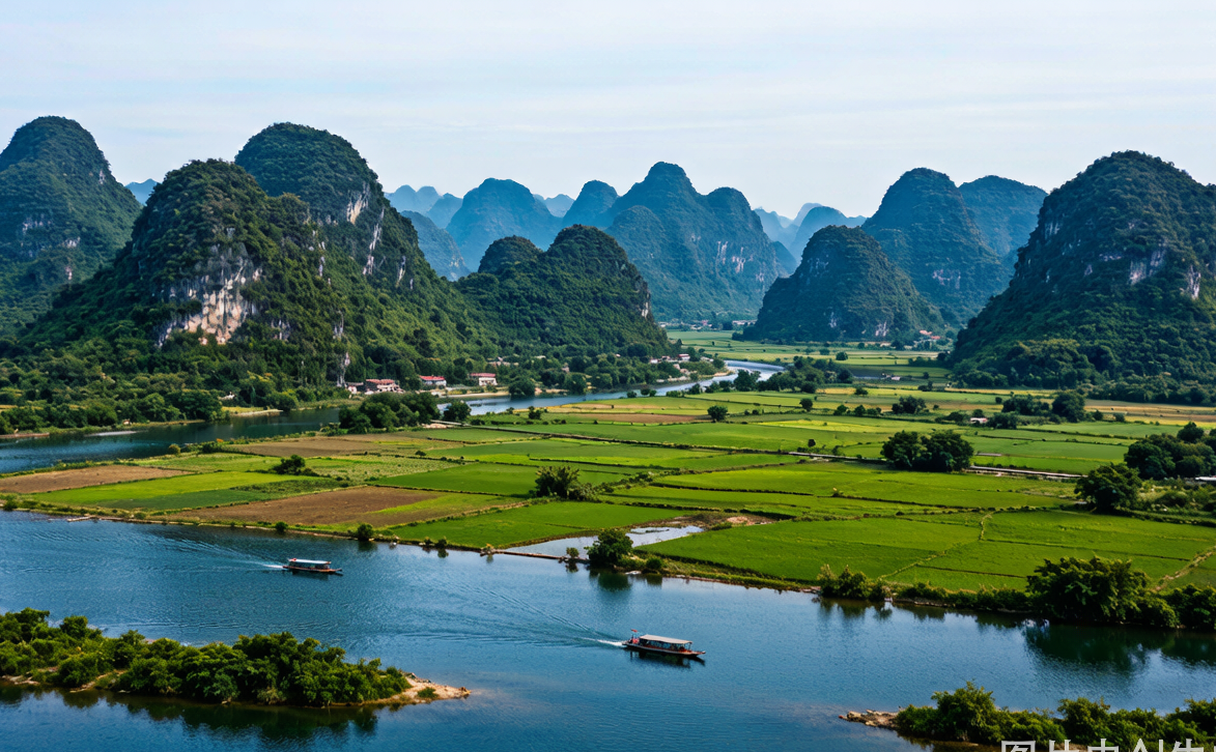
The Mingshi Rural Area (Mingshi Tianyuan) is the postcard image of Chongzuo: a winding river threading between rounded karst hills, flanked by bamboo, banana groves, and immaculate rice fields. You can cycle the flat riverside paths, take a bamboo raft, or simply walk the dikes at golden hour. Entrance to the scenic belt is around 80–120 RMB depending on the activities you choose, and the area is compact enough to enjoy in half a day. This is also where many travelers slow down and realize that Guangxi’s beauty extends far beyond the Li River.
Detian Transnational Waterfall
Detian is the largest cross-border waterfall in Asia, shared with Vietnam’s Bản Giốc Falls just beyond the barrier. A wide multi-tier curtain of water drops roughly 70 meters across a width of more than 200 meters, and you can take a bamboo raft to the base for a soaking, thrilling perspective. Tickets typically run 80–115 RMB plus a shuttle bus fee inside the park. Arrive early to beat both the heat and the tour groups, and bring a rain jacket for the spray.
White-headed Langur Nature Reserve
Chongzuo is the only place on Earth where you can see the white-headed langur (Cao vit langur), a critically endangered primate found nowhere else. The Chongzuo White-headed Langur National Nature Reserve, near Bapen, protects a few hundred individuals that clamber across the limestone cliffs at dawn and dusk. Visit the observation areas in the early morning for the best chance of sightings, and pair it with the nearby Ecological Park where rescued animals are cared for. This stop adds a genuine wildlife dimension that most Guangxi trips lack.
Taiping Ancient Town and Youyi Pass
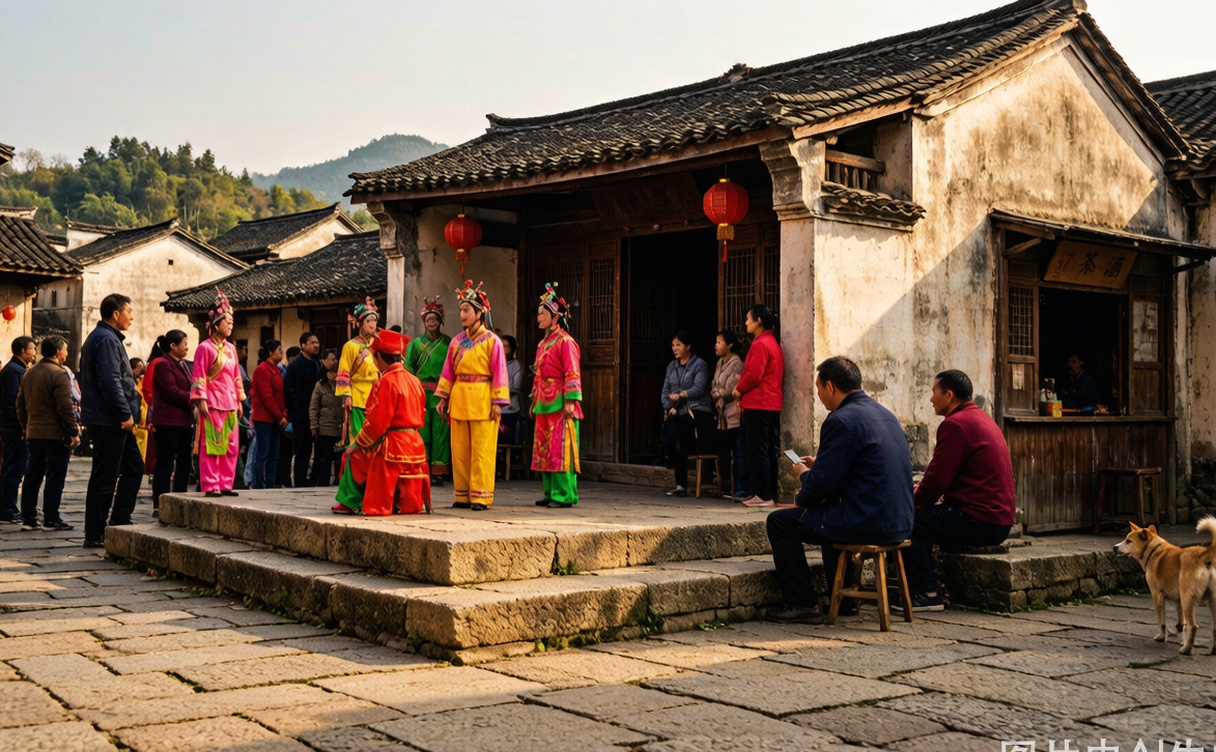
Back in Chongzuo city, the rebuilt Taiping Ancient Town (Taiping Gucheng) makes for a pleasant evening stroll with lit bridges, local snacks, and minor Zhuang cultural performances. For a deeper border experience, head to Youyi Pass (Friendship Pass) near Pingxiang, a historic gateway between China and Vietnam with old fortifications and a museum. It is a tangible reminder of the region’s role on the ancient trade routes.
Local Food to Try
Don’t leave without sampling Chongzuo’s sour-broth hotpot, grilled river fish, and the region’s fragrant rice. The city’s night market near the river is cheap, lively, and very local. County-town markets are the best place to try these dishes elbow-to-elbow with residents.
Where to Stay in Chongzuo
Most visitors choose one of three bases. Staying in Chongzuo city (Jiangzhou District) gives you the best transport links, a range of business hotels from 200–500 RMB per night, and easy access to Taiping Ancient Town. For scenery, book a riverside guesthouse inside the Mingshi Rural Area (300–700 RMB); you will trade convenience for misty morning views and absolute quiet. Budget-conscious travelers can sleep in Daxin County, which sits between Mingshi and Detian and has basic but clean hotels.
Sample 3-Day Itinerary
- Day 1: Arrive from Nanning by high-speed train, check in to Chongzuo city, and explore Taiping Ancient Town at night.
- Day 2: Full-day trip to Detian Transnational Waterfall and the Mingshi Rural Area; cycle or raft at Mingshi in the late afternoon.
- Day 3: Morning wildlife viewing at the white-headed langur reserve, then continue to Youyi Pass or return to Nanning.
This Chongzuo itinerary balances scenery, nature, and culture without long drives. If you want a longer southern China trip, the Li River cruise guide pairs naturally with a few extra days up north.
FAQ
Is Chongzuo safe for foreign travelers?
Yes. Chongzuo is a normal prefecture-level city in China with standard tourist infrastructure. Carry your passport for the occasional ID check near the border, and register your accommodation as required.
Do I need a visa to visit Chongzuo?
The same Chinese visa rules apply as everywhere else in mainland China. Many nationalities can use the 240-hour visa-free transit policy if arriving from abroad via a qualifying city; check current eligibility before you fly.
How many days do I need in Chongzuo?
Two to three days covers the highlights comfortably. Add a fourth day if you want to explore the countryside slowly or cross to Vietnam at Pingxiang.
Can I visit Detian Waterfall from Vietnam?
The waterfall is shared, but the Vietnamese and Chinese sides are separate parks with their own entrances and border controls. You cannot simply walk across; you would need the appropriate visa and a cross-border arrangement.
What should I pack for Chongzuo?
Light breathable clothing and a rain jacket in summer; layers in winter. Good walking shoes, insect repellent, and a zoom lens or binoculars for the langurs are all worthwhile.
Final Thoughts
Chongzuo proves that Guangxi’s magic is not confined to the postcard stretch of the Li River. With its blend of karst, cascading water, and rare wildlife, it is one of the most satisfying under-the-radar destinations in southern China. Use the tips above to time your trip, book your trains, and build a Chongzuo itinerary that fits your pace.
The karst landscapes of this region are part of the broader South China Karst, recognized by UNESCO as a World Heritage Site (whc.unesco.org/en/list/1248). Protecting these formations helps keep Chongzuo beautiful for the next generation of travelers.
By Karl — Last updated July 26, 2026