

This Shantou travel guide introduces the coastal gateway of the Chaoshan region in eastern Guangdong, a city built by traders and overseas Chinese and famous above all for its food. If you are hunting for things to do in Shantou that swing between breezy seaside promenades and the most refined cooking in southern China, you have come to the right place. Shantou pairs naturally with nearby Chaozhou and makes a flavorful counterpoint to the Cantonese classics of Guangzhou. Use this guide to eat, stroll, and slow down.
Best Time to Visit Shantou
The best time to visit Shantou is autumn and winter (October to March), when the humidity drops and temperatures sit in a comfortable 18°C–25°C range. Spring can be pleasant but rainy, while summer is hot, sticky, and peak typhoon season, with temperatures above 33°C and the occasional storm. The cooler months are also when Teochew hotpot and congee taste best. For a national calendar, see our best time to visit China guide.
How to Get to Shantou
Shantou is reached mainly by high-speed rail, which makes a Shantou itinerary easy to attach to a Guangdong or Fujian trip.
- By high-speed train: Chaoshan Railway Station serves both Shantou and Chaozhou, with bullet trains from Guangzhou in about 3 hours, Shenzhen in around 2.5–3 hours, and Xiamen in roughly 1.5 hours. Book through the official railway site, China Railway (12306), which supports foreign passport registration.
- By air: Shantou Waisha International Airport (SWA) connects to major Chinese cities; from the terminal a shuttle or taxi reaches the center in about 40 minutes.
- By road: Buses and ride-hailing link Shantou with Chaozhou (around 45 minutes) and the coastal town of Nan’ao.
First time on Chinese trains? Our China high-speed train guide for foreigners explains classes, tickets, and stations.
Top Things to Do in Shantou
Shantou Old Town and the Qilou Arcades
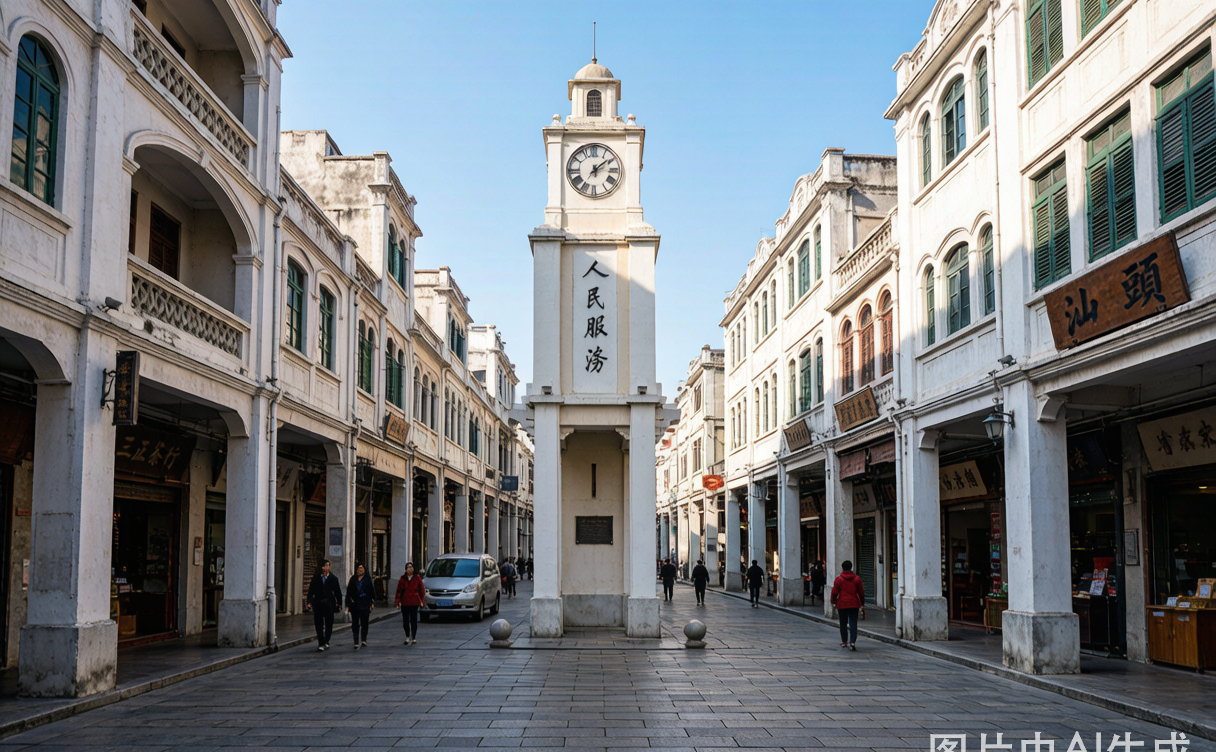
The heart of any Shantou travel guide is the Old Town around Xiaogongyuan, where rows of Qilou arcade buildings—built by returning overseas Chinese in the early 20th century—mix European facades with southern Chinese layout. Strolling the shaded arcades, you pass former banks, cinemas, and the restored Shantou Opium War-era customs house. Sunset is the best time for photos.
Queshi Scenic Area
Across the Shantou Bay, the Queshi (礐石) Scenic Area offers wooded hills, cliffside viewpoints, and a quiet cable car with sweeping harbor views. The nearby Queshi Cathedral and the green promenade make it a relaxed half-day away from the city buzz.
Nan’ao Island
A 40-minute drive over the long cross-sea bridge brings you to Nan’ao Island, a crescent of beaches, a historic lighthouse, and the wind farms that dot its ridges. Rent a scooter to circle the island, swim at Qing’ao Bay, and watch the fishing boats return at dusk. It is the easiest seaside escape from the city.
Chen Cihong Former Residence
In the nearby town of Hongting, the sprawling villa of the overseas-Chinese merchant Chen Cihong shows the wealth and taste of the Chaoshan diaspora, with a blend of Chinese courtyards and Western mansions set among lotus ponds.
Teochew Culture Park and Museum
Back in the city, the Shantou Museum and the Chaoshan culture exhibits explain the region’s language, opera, and porcelain, helping you read the old town with fresh eyes.
Shantou Travel Guide: Where to Stay
Most visitors base themselves in the Jinping District near the Old Town for food and architecture, or along the Longahu coastal strip for newer hotels and sea views. Budget guesthouses sit near the train station’s shuttle stops, while mid-range chains cluster downtown within walking distance of the night markets. Because the city is compact, a central stay keeps every bowl of beef hotpot within a short ride.
For a quieter night, the Longahu coastal strip has newer international hotels with sea-view rooms and pools, popular with weekend visitors from Guangzhou and Xiamen. Expect around ¥350–600 per night, while a central boutique near the Old Town runs ¥200–350. The Old Town’s guesthouses are the best value for food lovers who want to step straight into the night market.
Shantou Food and Local Specialties
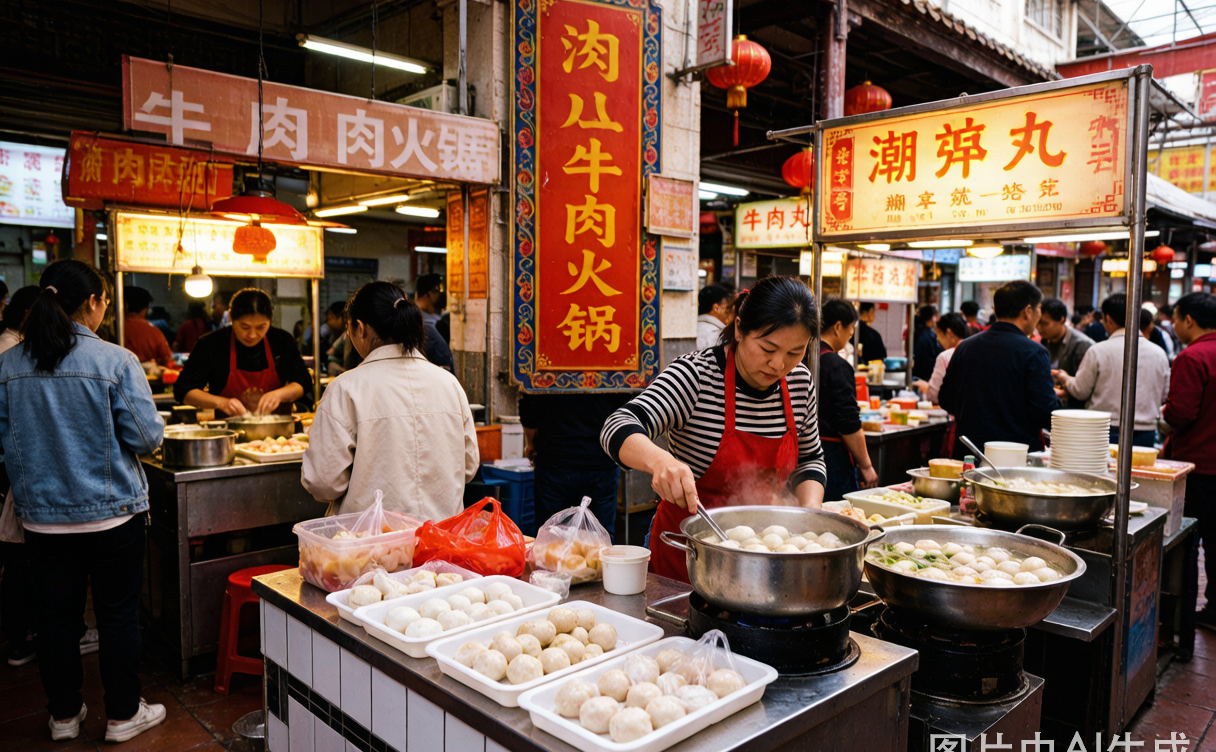
A proper Shantou food guide begins with beef hotpot (牛肉火锅), where paper-thin slices of locally raised beef are dipped for seconds in a clear broth and dipped in satay sauce—expect to pay around ¥80–120 per person. Equally essential are bouncy beef balls (牛肉丸), rice noodle rolls (粿条), oyster omelet (蚝烙), and marinated goose (卤鹅). Teochew congee (糜) is a comforting late-night staple. The city’s obsession with freshness and knife work sets Chaoshan cooking apart from the dim sum of Cantonese food guide, though both share a love of subtlety. A street-food crawl costs around ¥50–80.
Markets also sell Teochew sweet treats such as mahua twists and taro cakes, perfect with the region’s light oolong. A patient graze across five or six stalls gives a fuller picture of Chaoshan taste than any single restaurant, and it costs less than a formal banquet. Save room for a late congee supper, the local way to end a long day of eating.
Sample Shantou Itinerary
Day 1: Arrive by train, explore the Old Town Qilou arcades at dusk, then a beef hotpot dinner and a congee supper.
Day 2: Morning at Queshi Scenic Area, afternoon crossing to Nan’ao Island for the beach and lighthouse, evening back for oyster omelet and tea.
Day 3 (optional): Day trip to Chaozhou for the Guangji Bridge and beef hotpot there, or head to Guangzhou to compare regional cuisines, then continue through our national highlights for wider planning.
Shantou Travel Tips
- Language: The local Teochew (Chaoshan) dialect differs sharply from Mandarin; keep a translation app ready and your hotel’s Chinese name on paper.
- Payment: Mobile pay rules, but Alipay and WeChat now accept linked international cards; carry some cash for tiny stalls.
- Island transport: Rent a scooter on Nan’ao or hire a driver for the day; public buses are sparse.
- Routing: Our China travel guide for first-timers covers visas and payments before you fly in.
Shantou Travel Guide FAQ
Is Shantou worth visiting for food alone?
Yes. Chaoshan cuisine is among China’s most celebrated, and Shantou is its lively capital. Even travelers with little interest in sights come for the beef hotpot and never regret it.
How many days do I need in Shantou?
Two days cover the old town, Queshi, and Nan’ao with time to eat well; add a third to include Chaozhou next door.
Can I visit Chaozhou from Shantou?
Easily. The two cities are about 45 minutes apart by train or car, and many visitors split a long weekend between them. The Shanghai Yu Garden guide shows a different garden style if you continue north.
When is the best season for Shantou’s food?
October to March, when the cooler, drier weather makes hotpot and congee most enjoyable and typhoon risk is lowest.
In the end, this Shantou travel guide shows a city where overseas-Chinese heritage and a serious food culture meet by the sea. Wander the arcades, cross to Nan’ao, and let Shantou’s kitchens convince you that the best reason to visit Guangdong might just be its eastern coast.