

Last updated: July 2026 | Author: Karl
This is the page that replaces our old 144-hour transit guide. China’s transit visa-free window was doubled at the end of 2024, and the rules have kept shifting since. If you are a foreign traveler with a layover — or a stopover you want to stretch into a real trip — this is the only page you need. I have flown this route myself and watched friends turned away at check-in for missing a single detail. Below is everything, current as of mid-2026.
Content Preview
- What the 240-hour (10-day) visa-free transit policy is, and the date it replaced the 144-hour rule.
- Who qualifies: 55 countries, 65 open ports, 24 participating provinces/regions.
- How the 240-hour clock is calculated (it does not start when you land).
- The “onward ticket to a third country/region” rule — why Hong Kong, Macau, and Taiwan, China (region) all count.
- The seven regions excluded from the policy, stated plainly so you do not book a trip you cannot take.
- A step-by-step for before you fly, at check-in, on arrival, and at immigration.
- Two sample itineraries you can copy, plus an FAQ covering the most-asked questions.
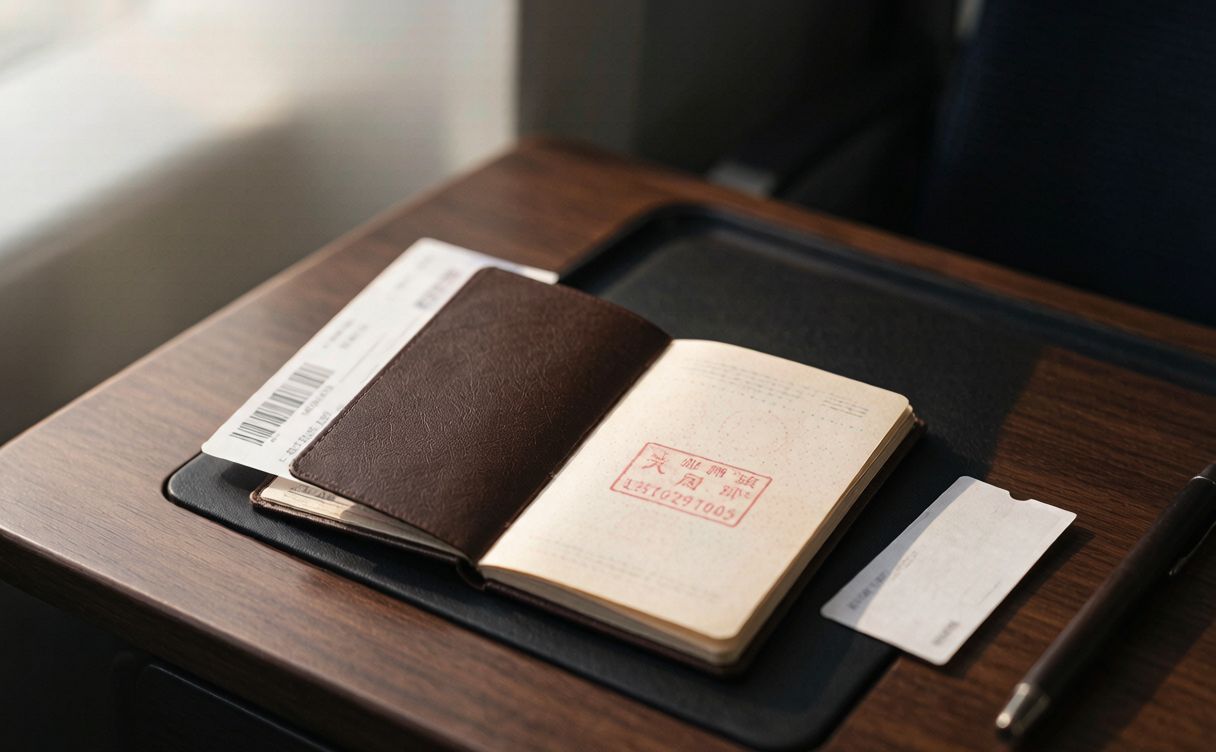
What the 240-Hour Visa-Free Transit Policy Is
The 240-hour visa-free transit policy lets eligible foreign nationals enter China without a visa for up to ten days, as long as China is only a transit point between two other countries or regions. You arrive, stay a while, then fly out to a third destination. No embassy, no visa fee, no weeks of paperwork.
In practice this means you can land in Beijing, spend nine nights exploring, and fly on to Tokyo or Singapore — all without a Chinese visa. For travelers from countries that otherwise need a visa to visit China, this is the single most useful rule on the books.
The old version capped the stay at 144 hours (six days) and was limited to a handful of cities. The new rule doubled the time and opened far more of the country. I track every change as it happens — see China Visa-Free Policy Updates 2025–2026 for the running timeline.
When It Started (Goodbye, 144 Hours)
China’s transit visa-free program began as a 72-hour pilot back in 2013, expanded to 144 hours (six days) for most eligible cities in 2016, and then was dramatically lengthened to 240 hours (ten days) and widened to 24 provinces/regions on 1 December 2024, with the official announcement published by the National Immigration Administration on 17 December 2024.
If you read any blog or forum post mentioning “144-hour transit,” treat it as outdated. The 144-hour rule has been folded into the 240-hour rule — same eligibility, longer stay, more open doors. Our original China 144-Hour Visa-Free Transit page is now retired in favor of this one.
Who Is Eligible: 55 Countries, 65 Ports, 24 Regions
Three numbers matter for eligibility.
55 countries. Nationals of 55 countries can use the policy — most of Europe (UK, Germany, France, Italy, Spain, and the rest of Schengen), the United States, Canada, Brazil, Argentina, Australia, New Zealand, Japan, South Korea, and many others. The full list is long and gets updated, so I keep it on a separate page: China Visa-Free Countries List. Check that list before you book — do not assume.
65 open ports. You must enter and exit through one of 65 designated international ports. These include the major hubs — Beijing (Capital and Daxing), Shanghai (Pudong and Hongqiao), Guangzhou, Chengdu, Xi’an, Hangzhou, Kunming, Qingdao, Xiamen — plus a growing list of secondary airports and seaports. If your port is not on the list, the policy does not apply, even if your nationality qualifies.
24 provinces/regions. The policy now covers 24 provincial-level regions, up from 19 under the old rule. That is the good news. The catch is in the next section.
If your nationality does not qualify for transit visa-free, or you want to stay longer than ten days, you will still need a standard visa. Here is the process: China Tourist Visa Application.
How the 240 Hours Are Calculated
This trips up more people than anything else, so read it twice.
The 240 hours do not start when your plane touches down. The clock begins at 00:00 (midnight) on the day after the day you enter China. You then have 240 hours — exactly ten days — from that midnight.
Example: you land in Shanghai at 3:00 PM on a Monday. Your 240-hour window starts at 00:00 on Tuesday and ends at 24:00 (midnight) on the following Friday — ten full days later. That gives you between ten and eleven calendar days on the ground, depending on your arrival time. Arrive late at night and you squeeze out almost an extra day.
The practical rule: do not cut it close. Your onward flight must depart before the deadline, and “depart” means leaving Chinese immigration control, not just being at the gate. A flight at 11:55 PM on the final day is fine; at 12:05 AM the next day, you have overstayed.
The Onward Ticket Rule: A Third Country or Region
To use the policy, your journey must be genuine transit. You need:
- A confirmed onward ticket leaving China, and
- That onward destination must be a third country or region — different from both your origin and China.
So the pattern is: Country A → China → Country B, where A and B are not the same place. A round-trip ticket (say, New York → Shanghai → New York) does not qualify, because you are returning to your origin. You need a multi-city routing.
Crucially, Hong Kong, China, Macau, China, and Taiwan, China (region) all count as a valid “third region.” This is the part many travelers miss. A routing like Los Angeles → Beijing → Hong Kong, China is perfectly valid transit, even though Hong Kong, China is part of China’s sovereign territory — for immigration purposes it is treated as a separate region and accepted by airlines and border officers. Likewise, Tokyo → Shanghai → Macau, China works.
You must hold the onward ticket before you board your flight to China. The airline checks it at check-in; immigration checks it again on arrival. A vague plan to “figure it out later” gets you denied boarding.
Excluded Regions — Read This Before You Book
Here is the blunt, factual part too many guides bury. Even though 24 provinces/regions participate, seven provincial-level regions are excluded from the 240-hour transit visa-free policy:
- Tibet, China
- Xinjiang, China
- Gansu
- Qinghai
- Ningxia
- Inner Mongolia
- Jilin
If you enter under the 240-hour policy, you cannot travel to any of these seven regions during your stay. Full stop. Tibet, China and Xinjiang, China are dream destinations, but the transit rule does not cover them; reaching them needs a standard tourist visa plus the relevant permits, not this window. Plan your route inside the 24 participating regions only.
Step-by-Step: How to Actually Use It
I have broken this into the four moments where things go wrong.
1. Before you fly. Confirm your nationality is on the eligible countries list. Book a genuine A→China→B itinerary with a confirmed onward ticket, and pick entry and exit ports that are both on the 65-port list. Save screenshots of your flights and hotel bookings to your phone.
2. At check-in (your home airport). Show the airline your passport, your China-bound ticket, and your confirmed onward ticket to the third country/region. The check-in agent has the final say on whether you board. If unsure, stay calm, have the policy reference ready, and confirm your routing is A→China→B (not A→China→A). Build in a buffer — do not book the onward flight for the very last hour.
3. On arrival in China. Follow signs for “Transit Without Visa” (TWOV) or “24/144/240-Hour Transit.” Do not queue in the regular visa line. Have your passport, onward ticket, and accommodation details ready.
4. At the immigration desk. The officer stamps a temporary entry permit into your passport valid for 240 hours. They may ask your purpose, your hotel, and your exit flight. Answer plainly. Once stamped, you are free to move within the participating regions for the duration.
Before any of this, read our Things to Know Before Visiting China — it covers SIM cards, payments, and the apps you will actually need on the ground.
Sample Eligible Itineraries
Two routings that work cleanly under the policy, using only participating regions:
Itinerary A — Beijing → Shanghai → exit. Fly into Beijing (Capital or Daxing), spend four or five days on the Great Wall, the Forbidden City, and the hutongs. Take the high-speed train to Shanghai (a great ride, fully inside the eligible zone), spend four days on the Bund and water towns, then fly out to Tokyo or Seoul. This is the classic first-timer route and the backbone of our China 1-Week Itinerary.
Itinerary B — Xi’an → Guilin → exit. Land in Xi’an, see the Terracotta Warriors and the city wall, then fly south to Guilin and Yangshuo for the karst landscapes and the Li River. Exit from Guilin to Hong Kong, China or onward to Southeast Asia. Stretched slightly, this becomes the China 10-Day Itinerary; with a few extra stops — Chengdu, Hangzhou, Kunming — it scales up to the China 2-Week Itinerary.
Note that both itineraries stay inside the 24 participating regions and never touch the seven excluded ones. That is the whole game.
Frequently Asked Questions
Can I leave the transit city and travel to other parts of China?
Yes — within limits. Under the 240-hour rule you are no longer locked to a single city. You may travel freely across the 24 participating provinces/regions. You just cannot enter the seven excluded regions (Tibet, China; Xinjiang, China; Gansu; Qinghai; Ningxia; Inner Mongolia; Jilin).
What if my onward flight is delayed past the 240-hour deadline?
The risk everyone worries about. If the delay is the airline’s fault, border officers generally exercise discretion, but do not rely on it. Build a buffer of at least a day into your exit flight. If a delay looks likely to push you over, contact the airline and immigration immediately — an overstay, even unintentional, can cause problems for future visits.
Do I need a visa for the excluded regions like Tibet, China or Xinjiang, China?
Under this policy you cannot go to them at all — no visa waiver covers entry into those seven regions during a transit stay. To visit Tibet, China or Xinjiang, China you need a standard tourist visa (and, for Tibet, China, additional permits via a registered tour). See China Tourist Visa Application.
Can I enter through one port and exit through another?
Yes. Enter at any of the 65 designated ports and exit through a different one, as long as both are on the list and in participating regions. A Beijing entry and a Shanghai exit is normal.
Does the 240 hours include the day I arrive?
No. The count starts at 00:00 the day after arrival. Your arrival day is “free” on top of the ten counted days, which is why late arrivals give the most value.
Can my partner or child use it if I qualify?
Each traveler must qualify individually by nationality. If everyone in your group is from an eligible country with a valid onward ticket, you all use it together. If one person’s nationality is not on the list, that person needs a separate visa.
Is Hong Kong, China or Macau, China a valid onward destination?
Yes, both count as a third region for the onward-ticket rule. Tokyo → Shanghai → Hong Kong, China is valid transit. As an onward exit point they work perfectly; just note the mainland transit permit does not itself grant entry into those regions as a separate visit.
What documents should I carry?
Passport valid at least six months, the China-bound ticket, the confirmed onward ticket to a third country/region, and your accommodation details. Keep printed or screenshot backups — airport Wi-Fi is unreliable.
This Replaces the Old 144-Hour Rule
To be crystal clear: the 144-hour visa-free transit policy is retired. Any page, forum post, or 2023 blog telling you “six days, one city” is out of date. The current rule is 240 hours (ten days) across 24 provinces/regions for 55 countries through 65 ports. If you booked based on the old six-day limit, you now have four extra days to play with — use them.
For a full, plain-English walkthrough of your first trip, including payments, transport, and etiquette, start with our China Travel Guide for First-Timers.
This guide reflects the policy as published and in force as of July 2026. Transit visa-free rules change, and border officers retain final discretion. For the authoritative legal text, confirm against the official National Immigration Administration of China: en.nia.gov.cn. When in doubt, verify your specific routing with the airline before you fly.
Author’s note (Karl): I update this page whenever the port list or eligible regions change. If something here contradicts what your airline told you, trust the airline at the gate — but email me and I will dig in.