

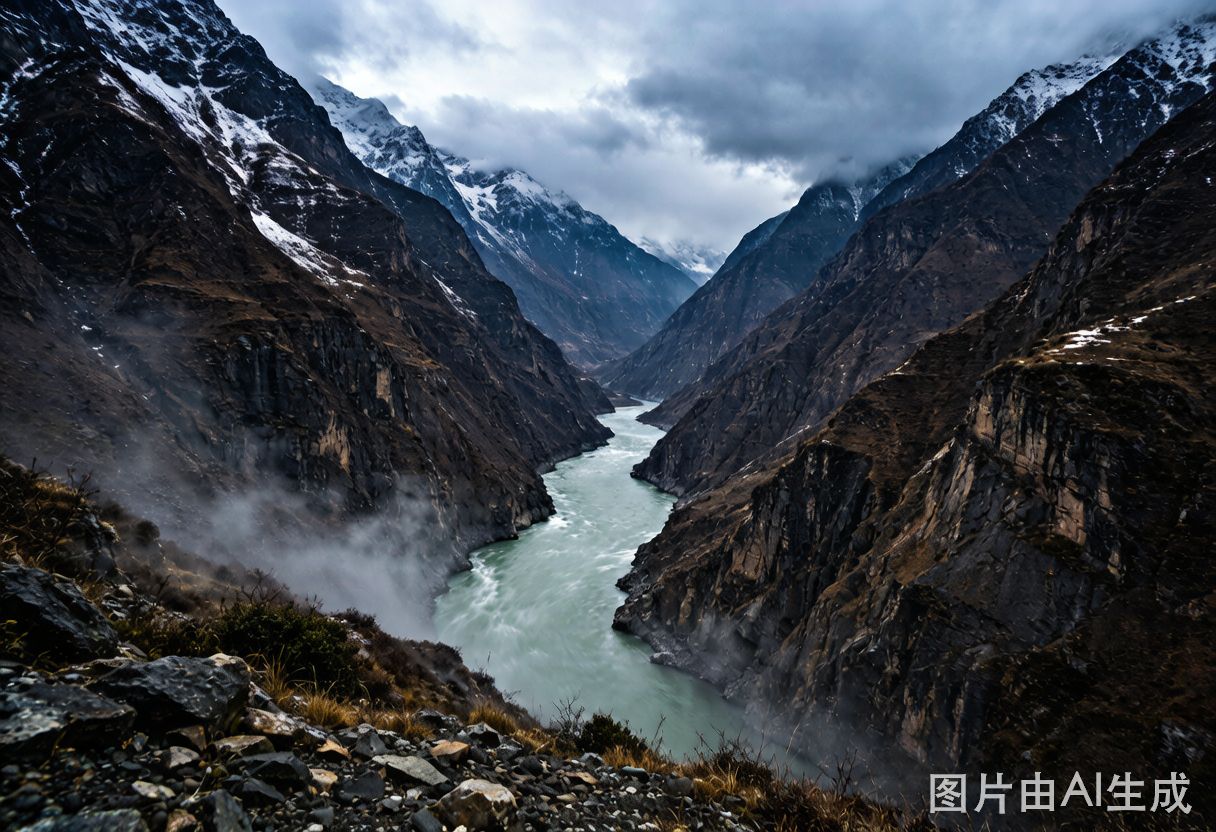
Standing on the rim of Tiger Leaping Gorge, I watched the Jinsha River (the upper Yangtze) churn white through a slot barely 25 meters wide, the roar reaching me a full vertical kilometer above. On the far wall, the trail I would walk the next morning clung to the cliff like a pencil line. This is not a gentle scenic stroll — it is one of the deepest river gorges on Earth, where the Haba Snow Mountain (5,396 m) and Jade Dragon Snow Mountain (5,596 m) squeeze the Yangtze into a violent torrent. After three separate treks here between 2019 and 2024, I can tell you the classic 2-day hike is the single best independent adventure in northwest Yunnan, and this guide covers exactly how to do it yourself.
Where Is Tiger Leaping Gorge?
The gorge sits in the upper Yangtze valley of Yunnan Province, roughly 100 km north of Lijiang and about 90 km southeast of Shangri-La (Zhongdian). Administratively it falls under Lijiang’s Yulong Naxi Autonomous County, near the town of Qiaotou (also called Hutiaoxia Town). The gorge itself runs about 25 km in length, with the river dropping through a vertical relief of more than 3,900 meters from the surrounding peaks — figures that earn it a regular spot on lists of the world’s deepest gorges.
The nearest hubs for international travelers are Lijiang (with a domestic airport and high-speed rail) and Shangri-La (with its own airport). Most trekkers route through Lijiang first, which pairs perfectly with a visit to the UNESCO-listed Lijiang Old Town.
Upper Trail vs. Middle Trail
This is the question every first-timer gets wrong. There are two distinct routes, and they are not the same walk.
The Upper Trail (Upper Gorge Road)
This is the paved road that runs along the top of the north rim, now largely a vehicle-access road. Parts of it are walkable and connect the roadside viewpoints, but it is exposed, dusty from passing buses, and lacks the drama most people picture. I walked a section once to reach the upper viewpoint at Naxi Family Guesthouse — nice view, but it is not the famous hike.
The Middle (High) Trail — The Real Trek
The Middle Trail (often called the “high road” or “28 Bend” route) is the legendary path. Carved into the cliff face high above the river, it traverses terraced farmland, Naxi villages, pine forest, and a series of heart-pounding exposed ledges. This is the route I recommend and the one described in the day-by-day plan below. It sits roughly 300–600 m above the river, so you hear the roar continuously but only glimpse the water at a few overlooks.
A third option, the Lower Trail down to the riverside Tiger Leaping Stone, is a steep stair descent at the eastern end (near Tina’s) — worth a half-day detour but not the through-route.
Trailheads: Qiaotou and Tina’s
There are two main access points, and the standard trek goes from one to the other.
- Qiaotou (Hutiaoxia Town): The western trailhead, where the Middle Trail officially begins. You’ll register, possibly pay a small entry fee at the checkpoint, and start climbing the famous 24/28 Bends — a relentless series of switchbacks gaining about 600 m in the first 2–3 hours.
- Tina’s Guesthouse: Roughly the halfway mark and the most popular lunch and overnight stop. Despite the name, “Tina’s” is more a district of guesthouses (Tina’s, Sean’s, etc.) than a single building. From here the trail continues east toward the gorge’s dramatic end.
A third logical exit is Walnut Garden (Halfway), a smaller cluster of guesthouses beloved by trekkers who want a quieter night than busy Tina’s.
The Classic 2-Day Itinerary
This is the schedule I’ve used and given to friends. Total walking: about 22–26 km over two days.
Day 1 — Qiaotou to Tina’s (or Walnut Garden): ~12 km, 6–7 hours
Start early at Qiaotou. The 28 Bends are brutal but short; at the top you’re rewarded with your first sweeping view of Jade Dragon Snow Mountain across the gorge. The path then rolls along the cliff, past Naxi villages and the aptly named Halfway Guesthouse (famous for its “Gorge View” balcony — a great coffee stop). Continue to Tina’s for the night. Pack light: the guesthouses here are basic but warm, with hot showers and hearty food.
Day 2 — Tina’s to the eastern end and your pickup: ~10–14 km, 4–5 hours
Descend to the Lower Trail to see the Tiger Leaping Stone up close (expect a fee and many stairs), or take the higher path to the “Middle Gorge” viewpoint. Most trekkers arrange a driver to meet them at the far eastern trail end (near Daju or the Daju ferry) for the transfer onward.
Difficulty and Duration
Grade the trek moderate-to-strenuous. There is no technical climbing — it is a walking trail — but the 28 Bends alone will test unfit legs, and the exposed ledges have no guardrails in places (don’t hike in heavy rain or high wind). I’d rate it suitable for anyone with a reasonable fitness base who walks 10+ km comfortably. Porters are available at Qiaotou if you overpacked.
Timeline flexibility:
– 2 days / 1 night: The standard, what I recommend.
– 3 days / 2 nights: More relaxed, adds time at Walnut Garden and Tina’s.
– 1 day (express): Possible if a driver shuttles you to the high road and back, but you’ll miss the atmosphere.
Best Season to Trek
The gorge is hikeable most of the year, but two windows are clearly best:
- Spring (March–May): Warm, clear skies, wildflowers on the terraces, snow still on the peaks. My favorite time.
- Autumn (September–November): Cool, dry, and the most stable weather. Excellent visibility for the snow mountains.
Avoid the summer monsoon (June–August) — frequent rain makes the clay trail slippery and the river a muddy brown torrent (still impressive, less photogenic). Winter (December–February) is cold but clear and crowd-free; bring layers and check that guesthouses are open. For broader planning across the country, see our best time to visit China guide.
What to Pack
Keep it light — you’ll carry it up those bends yourself. My checklist from the last trip:
- Sturdy trail shoes with grip (not flip-flops — I saw someone attempt it; don’t).
- Daypack (20–30 L), rain cover, and a light rain jacket (weather flips fast).
- 2 L water plus electrolytes; refill at guesthouses.
- Sun protection: hat, sunglasses, SPF — the altitude and glare are stronger than they feel.
- Layers: a t-shirt, long sleeve, and a fleece; mornings are cold even in spring.
- Snacks (nuts, chocolate) — village shops are sparse on the trail.
- Cash (small bills): some guesthouses and the entry fee still prefer cash over cards, so carry a few hundred yuan in small denominations.
- Power bank and a headtorch (for pre-dawn starts or power cuts).
- Basic first-aid and any personal meds.
For a full country-wide rundown, our China packing list for first-timers covers everything else.
Getting There: From Lijiang and Shangri-La
From Lijiang: Buses to Qiaotou leave from Lijiang Bus Station (or you can hire a private car, ~1.5–2 hours, ¥150–250). Many travelers base themselves in the Lijiang Old Town for a night or two before the trek. The high-speed rail and airport make Lijiang the easiest launch point.
From Shangri-La: Buses and private cars run south to Qiaotou in about 2–2.5 hours. This pairs well if you’re continuing the Yunnan circuit toward Dali or Kunming.
Onward after the trek: Most drivers drop you in Daju or back at Qiaotou; from there it’s easy to return to Lijiang or continue to Shangri-La. Book your pickup the evening before at your guesthouse — they know the reliable local drivers and the going rate.
Where to Sleep
Guesthouses are simple family-run operations: private rooms with shared or en-suite bathrooms, a communal dinner table, and unbeatable views. My picks:
– Halfway Guesthouse — best balcony view on the whole trail.
– Tina’s / Sean’s (Tina’s area) — most social, easiest to arrange transport.
– Walnut Garden guesthouses — quiet alternative to Tina’s.
Book ahead in peak spring and autumn; off-season you can just walk in.
A Note on Safety and Respect
The trail is safe but remote — there is no cell coverage on long stretches, so tell your guesthouse your plan and carry a travel insurance policy that covers trekking. Respect Naxi and Yi village customs, don’t litter (the gorge is pristine because hikers pack out what they pack in), and never cross the guardrails for a photo.
For first-time visitors to the country generally, our China travel guide for first-timers is the best place to start.
Final Thoughts
Tiger Leaping Gorge delivered something the famous Yunnan towns couldn’t: a real sense of the raw scale of this landscape, earned step by step on my own two feet. Two days is enough, the logistics are straightforward once you know the trailheads, and the payoff — standing above that roaring slot of river with snow peaks on both sides — is unforgettable. Go in spring or autumn, pack light, and let the gorge do the rest.
External reference: For background on the nearby UNESCO World Heritage landscape that includes the Lijiang region, see the UNESCO World Heritage Centre – Old Town of Lijiang.