

If you want a Chinese city that slows your pulse instead of raising it, this Xiamen travel guide is for you. Xiamen sits on the southeast coast facing the Taiwan Strait, and it trades the relentless energy of Beijing or Shanghai for sea breezes, bike lanes, and a laid-back Hokkien (Minnan) culture. The headline act is Gulangyu, a car-free island of piano music and faded colonial villas, but the mainland has its own pull: a working Buddhist temple on a hillside, long stretches of beach, and some of the best seafood snacks in the country. Plan three or four days here and you’ll leave relaxed rather than drained.
At a glance
- Best for: Slow travel, island hopping, temple visits, seafood lovers
- Top sight: Gulangyu Island (UNESCO World Heritage site)
- How to get there: High-speed train from Shenzhen, Fuzhou, or Shanghai; flights to Xiamen Gaoqi International Airport
- Getting around: Metro + bus on the mainland; ferry to Gulangyu; no cars on the island
- Best season: March–May and October–November (avoid the July–August heat and typhoon risk)
- Language: Mandarin widely spoken; local Hokkien dialect heard everywhere
- Budget feel: Mid-range — cheaper than first-tier cities, pricier than rural Fujian
Getting to Xiamen and getting around
Xiamen is well connected. The high-speed rail links it to Fuzhou in about an hour and to Shenzhen in under four. If you’re building a longer China trip, the national network makes a Xiamen stop easy to slot in — see our guide to booking China train tickets on 12306 for the step-by-step. Flights arrive at Xiamen Gaoqi International Airport, with a metro line running straight into the city.
On the mainland, the metro covers the core areas and buses fill the gaps. The one transfer you must plan is the ferry to Gulangyu. Tourists use the ferry from the Xiamen International Cruise Center (Dongdu), not the closer downtown pier locals use. Buy tickets in advance through the official WeChat mini-program or at the terminal; a round trip runs around 50 RMB and the crossing takes about 20 minutes. Keep your passport handy — it’s checked against the ticket.
Gulangyu Island: the car-free piano isle
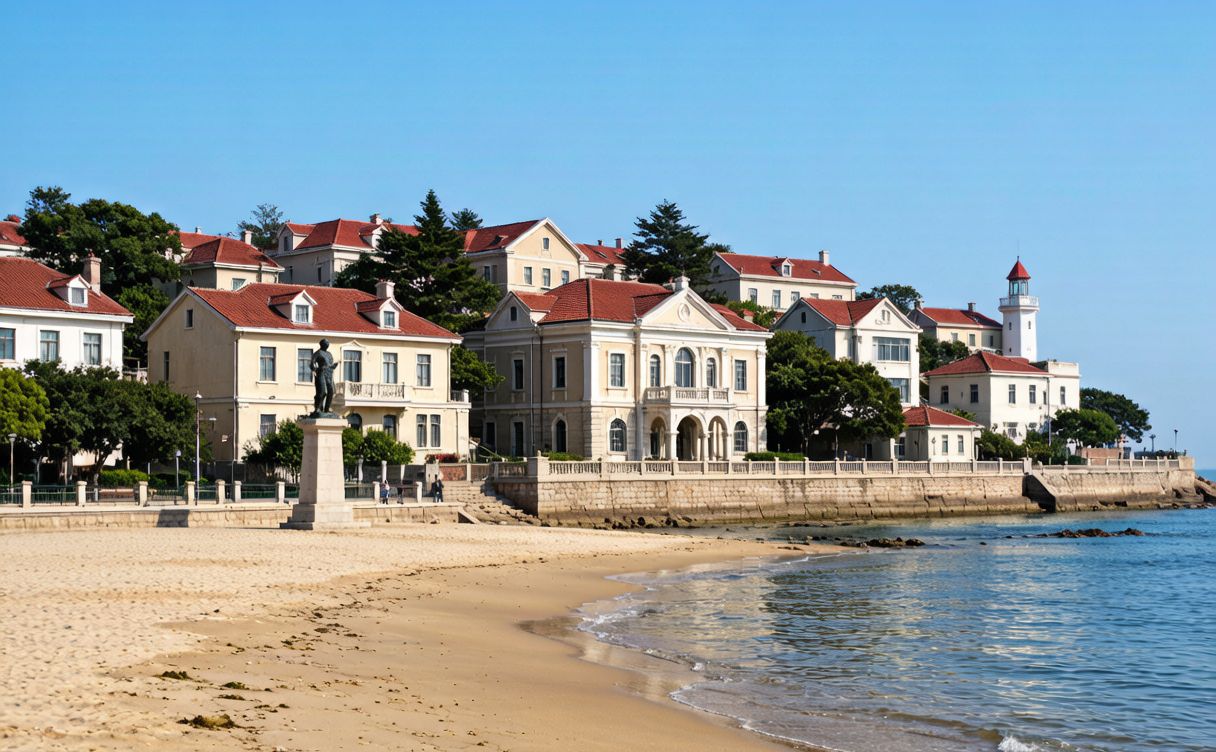
Gulangyu is the reason most travelers come, and it earns the hype. Cars and bikes are banned, so the only traffic is foot traffic. The island was a foreign concession in the late 19th and early 20th centuries, and the legacy is a remarkable scatter of European-style villas — Baroque, Gothic, neo-classical — tucked among banyan trees and bougainvillea. In 2017 it was listed by UNESCO for exactly this blend of cultures; you can read the official description at UNESCO’s Gulangyu listing.
Music is the island’s other identity. Gulangyu has one of the highest densities of pianos per capita anywhere, and you’ll hear someone practicing through an open window as you wander. The Piano Museum holds a hundred-plus antique instruments, including a real ivory-keyed Broadwood. Wander without a fixed plan — the car-free lanes reward getting lost.
A few practical notes:
– Buy the through ticket if you want the main attractions (Piano Museum, Shuzhuang Garden, Sunlight Rock). Individual tickets add up fast.
– Sunlight Rock is the highest point and the obvious sunrise spot, but it gets crowded. Go early or late.
– Food and water cost more on the island. Bring a bottle; refill at your hotel.
– Stay overnight if your budget allows. Day-trippers clear out by late afternoon and the lanes turn quietly magical.
Beaches and the island’s edges
Back on the mainland, Xiamen’s coastline is the draw. Huangcuo Beach near the Convention Center is the most accessible and the best for a morning swim or a rental bike along the shore path. Baiji Pavilion (Baijiaoyuan) and the stretch by the Island Ring Road are popular for cycling, with the sea on one side and low hills on the other.
For a calmer scene, head to Zengcuo’an, a former fishing village turned backpacker hub right by the water. It’s touristy now, but the lanes behind the main drag still have small guesthouses, surf shops, and seafood joints that open at dusk. The beach here is rocky rather than sandy, so manage expectations — the appeal is the village energy more than the sand.
If you want a proper beach day, consider the soft sand at Xiamen University’s Baicheng Beach, though access depends on campus rules, which tighten during exam periods. Check locally before making the trip.
Nanputuo Temple and the hillside above
A short walk from Xiamen University, Nanputuo Temple is a working Chan (Zen) Buddhist monastery that has stood on this site for over a thousand years. The front halls are busy with incense and devotees; climb the stone steps behind the main hall and the crowds thin out as you gain height. The top gives a clean view back over the temple roofs to the sea.
It’s free to enter, though you may pay a few yuan for incense. Dress modestly — covered shoulders and knees — and keep your voice down near the prayer halls. The vegetarian restaurant inside the temple grounds is a local institution; the monk-made vegetarian pastries (especially the sesame cakes) are worth buying to go. Go early in the morning if you want the calm version rather than the weekend crush.
Eating in Xiamen: Hokkien food basics
Xiamen food is part of the wider Fujian (Min) cooking tradition, but with its own coastal twist. If you want the bigger picture before you arrive, our guide to China’s eight great cuisines covers the regional logic; here’s what to actually order on the ground.
- Oyster omelette (海蛎煎, hǎolìjiān): Eggs, sweet potato starch, and fresh oysters fried into a soft, slightly chewy pancake, served with a tangy ketchup-like sauce. The version at roadside stalls beats most restaurants.
- Shacha noodles (沙茶面, shāchámiàn): A bowl of wheat noodles in a deeply savory, faintly spicy broth built on shacha (a Southeast Asian–influenced barbecue sauce). You pick your own toppings — fish balls, tofu, offal, greens.
- Peanut soup (花生汤, huāshēngtāng): A sweet, smooth dessert soup, usually eaten for breakfast. Sound odd? Try it once.
- Buddha jumps over the wall (佛跳墙, fótiàoqiáng): The famous Fujian banquet soup, a long-simmered mix of seafood, meat, and herbs. Expensive and rich — order it for a group, not solo.
- Satay/barbecue skewers along Zengcuo’an and the night markets.
Most of this is cheap. A filling bowl of shacha noodles runs 15–25 RMB; a plate of oyster omelette is similar. For a sit-down seafood dinner, head to the Eighth Market (第八市场, Bādà Shìchǎng), a wet market by day that morphs into a steam-and-smoke seafood strip at night. Point at what’s swimming, agree a price, and they’ll cook it.
When to go and how long to stay
The short version: spring (March–May) and autumn (October–November) are best. Temperatures sit in the comfortable 20s°C, the light is good for photography, and the humidity hasn’t peaked. Our broader best time to visit China overview lines up Xiamen with the national pattern, but the coastal location adds two wrinkles.
First, summer (June–September) is hot, sticky, and peak typhoon season. Storms are usually brief but can disrupt ferries for a day. Second, the Chinese holiday weeks — notably National Day in early October — flood the city with domestic tourists, and Gulangyu gets packed. If your dates are fixed in a holiday week, book ferries and hotels well ahead.
Three full days covers Gulangyu, the temple, a beach afternoon, and the food scene. Add a fourth if you want to linger or take a day trip to nearby Tulou earthen buildings (a longer haul, best as a guided tour). First-timers to China should read our China travel guide for first-timers before booking — it covers payments, apps, and the small frictions that catch newcomers.
Practical tips before you go
A few things that make the trip smoother:
- Payment: Alipay and WeChat Pay dominate. Set them up before arrival; our things to know before visiting China explains the setup that actually works for foreign cards.
- Connectivity: Get a data plan sorted before you land. Compare options in our SIM and eSIM guide for tourists.
- Cash: You won’t need much, but a little helps at tiny ferry-side stalls. See do you need cash in China.
- Ferry tickets: Book Gulangyu ferries the night before if you’re traveling on a weekend.
Xiamen rewards a slower pace. Don’t try to cram it into a whistle-stop day trip — give it the time and it gives back a version of China that’s quieter, saltier, and easier to actually enjoy.