

Planning your first trip and wondering where to stay in Beijing? After a dozen visits and far too many hotel lobbies, I can tell you that picking the right neighborhood changes everything about how your trip feels. China travel rewards preparation, and few decisions matter more than your home base. When you’re traveling in China for the first time, Beijing’s sheer scale can be intimidating — it’s a city of ring roads, hutong alleys, and subway lines that stretch for hours. The good news: once you understand the three or four neighborhoods that matter most, choosing where to stay in Beijing becomes simple. This guide walks you through the best areas, who each one suits, and how to avoid the mistakes I made on my first visit.
Wangfujing & Dongcheng: Sleep Next to the Forbidden City
If your mental image of Beijing is the Forbidden City, Tiananmen, and the great imperial landmarks, Dongcheng District is where you want to be. Wangfujing, the famous shopping street at its heart, puts you within walking distance of the city’s headline sights. On my second trip, I stayed just off Wangfujing and walked to the Forbidden City’s Meridian Gate in twelve minutes — no taxi, no subway crush, just a calm morning stroll before the crowds arrived.
Staying here means you’re also close to Wangfujing Snack Street, the Temple of Heaven, and the southern hutongs. It’s the most “classic Beijing” experience you can book. The trade-off is price: central Dongcheng hotels skew upscale, and the area feels polished rather than local. But for a first-timer who wants the icons on the doorstep, it’s hard to beat.
Before you lock in a hotel here, I’d strongly suggest reading our Beijing first-time travel guide so you know which sights genuinely need advance tickets. And if the Forbidden City is your priority, grab timed entry details from our Forbidden City guide and tickets page — slots sell out faster than most visitors expect.
Chaoyang: Embassies, Sanlitun Nightlife & Modern Comfort
Chaoyang is the Beijing most business travelers know, and it’s also where the city comes alive after dark. The Sanlitun district is packed with rooftop bars, international restaurants, and the kind of nightlife that simply doesn’t exist in the old core. I spent a week here on a work trip and found myself walking to dinner every night without a plan — something unimaginable in quieter districts.
The upside of Chaoyang is choice and comfort. You’ll find the widest range of international-chain hotels, reliable English signage, and subway Line 10 circling you toward everywhere that matters. The downside: it’s a 30- to 45-minute subway ride to the Forbidden City. If your trip is built around imperial sights, that daily commute adds up. But if you want nightlife, expat energy, and a soft landing into China, Chaoyang is the easy choice.
Chaoyang is also the most convenient base if you plan a Great Wall day trip — many tour pickups leave from this side of town. Our Great Wall Beijing day trip guide breaks down which section to pair with a Chaoyang stay. And when hunger hits after a late night out, our Beijing duck where to eat guide points you to the roast-duck houses worth the cab ride.
Hutong Stays: Live Inside Old Beijing (Nanluoguxiang)
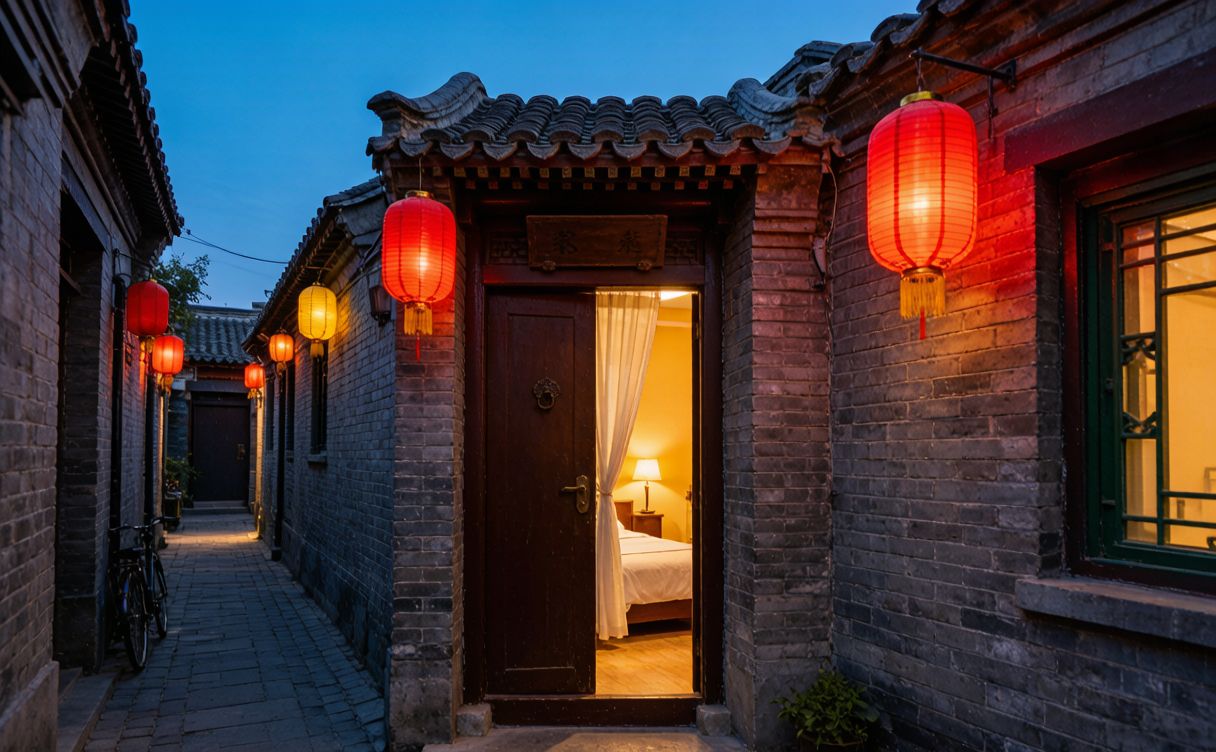
For the most memorable nights of my travels, nothing beats a hutong courtyard stay. Nanluoguxiang and the surrounding alleyways are where Beijing’s old single-story courtyard homes (siheyuan) have been converted into boutique guesthouses. You sleep behind a grey-brick wall, wake to the sound of a bicycle bell, and step out into a lane that hasn’t changed shape in centuries.
The catch is honesty about comfort. Hutong rooms can be small, sound travels, and some bathrooms are shared or down the hall. I once stayed in a gorgeous courtyard near Nanluoguxiang where the charm was endless but the heating struggled in November — worth it for the experience, less so if you need five-star predictability. Book these through a reputable platform; the official Beijing tourism site lists licensed courtyard stays if you want a vetted starting point.
Hutong stays suit travelers who value atmosphere over amenities and who want to feel the city’s bones. They sit roughly between Dongcheng’s sights and the Gulou nightlife, so you get a bit of both worlds on foot.
Getting Around: Transport Access by Neighborhood
Beijing’s subway is clean, cheap, and the fastest way to cross the city — but your hotel’s proximity to a line decides your daily rhythm. Dongcheng puts you on Lines 1 and 5, the spine routes to the big sights. Chaoyang sits on the Loop Line 10 and the airport express, which means a 20-minute ride from the terminal instead of an hour. Hutong areas near Nanluoguxiang connect via Line 8, quieter but still useful.
A practical rule I follow: stay within 500 meters of a subway entrance, whatever the district. Taxis and ride apps help, but evening surge pricing and traffic around ring roads can double a short trip. On one trip I ignored this and booked a “great value” room a twenty-minute walk from the nearest station; by day three the daily trek had worn the group down more than any sightseeing. If you’re arriving on the airport express, Chaoyang’s convenience is genuinely worth the longer hop to the Forbidden City, especially after a long international flight when the last thing you want is a cross-town transfer.
For the full picture of what’s reachable from each base, our things to do in Beijing guide groups attractions by district so you can match your hotel to your must-sees.
Who Should Stay Where
Let me make this concrete, because the “best” neighborhood is really the one that fits your trip:
- First-timers who want the icons — Dongcheng/Wangfujing. You’ll walk to the Forbidden City and Tiananmen. Accept higher prices for unbeatable location.
- Nightlife and comfort seekers — Chaoyang/Sanlitun. International hotels, bars, and the airport express. Accept the commute to old-town sights.
- Atmosphere lovers — Hutong courtyards around Nanluoguxiang. Unforgettable character. Accept smaller rooms and occasional quirks.
- Families and business travelers — Chaoyang again, for the chain-hotel reliability and spacious rooms.
One more angle worth considering: if Beijing is your launch point for a wider China trip, your base matters less than your logistics. Decide what to see here versus save for other cities, and let your hotel choice follow the sights you actually keep.
A Few Practical Notes From Experience
Beijing’s hotel scene has shifted since the pandemic, and a couple of things caught me off guard. First, many mid-range hotels now expect payment and ID at check-in via the national system — bring your passport every time, no exceptions. Second, booking direct through a hotel’s English site sometimes beats the aggregator price for international chains, especially in Chaoyang. Third, air quality varies by season; if you’re sensitive, check the forecast and consider a room with a good filter.
I’ll leave you with the single best piece of advice I can give a first-timer: don’t try to stay “everywhere.” Beijing rewards a single well-chosen base and day trips outward, and splitting your nights between districts almost always costs more time in transit than it saves. Pick your neighborhood using the guide above, settle in, and let the city come to you. The right address turns a confusing mega-city into a place that starts to feel like home — and that’s the real secret of where to stay in Beijing.