

If you are planning a trip to China, let me say this up front: the street food in China is the single best thing you can eat on your entire journey, and it is also the thing travelers worry about most. I get it. On my first night in Beijing, I stood in front of a sizzling lamb-skewer stall, chopsticks in hand, and quietly asked myself whether I was about to ruin the next three days of my vacation. The good news is that with a few simple habits you can eat your way through night markets from Chengdu to Kashgar with confidence. This guide is the practical, no-nonsense advice I wish someone had handed me before my first trip, written so you spend your time savoring the food instead of worrying about it.
Why Street Food Is Worth the Risk
China is one of the great eating civilizations on earth, and the street is where a huge share of that culture lives. The eight regional cuisines that define Chinese food are not locked inside white-tablecloth restaurants. They spill out onto sidewalk grills, steaming cart windows, and midnight noodle counters. If you only eat in hotels, you miss the country. I have had some of the finest meals of my life standing on a curb — a ¥6 bowl of knife-cut noodles in Xi’an, a smoky cumin lamb skewer in Urumqi, a freshly steamed soup dumpling pulled hot from a bamboo basket in Shanghai.
The flip side is real, too. Traveler’s stomach issues do happen, and they are almost always preventable. The goal is not to eat like a nervous tourist; it is to eat like a smart local. My Chinese food guide to the eight great cuisines breaks down the regional styles so you know what you are looking at before you point and order.
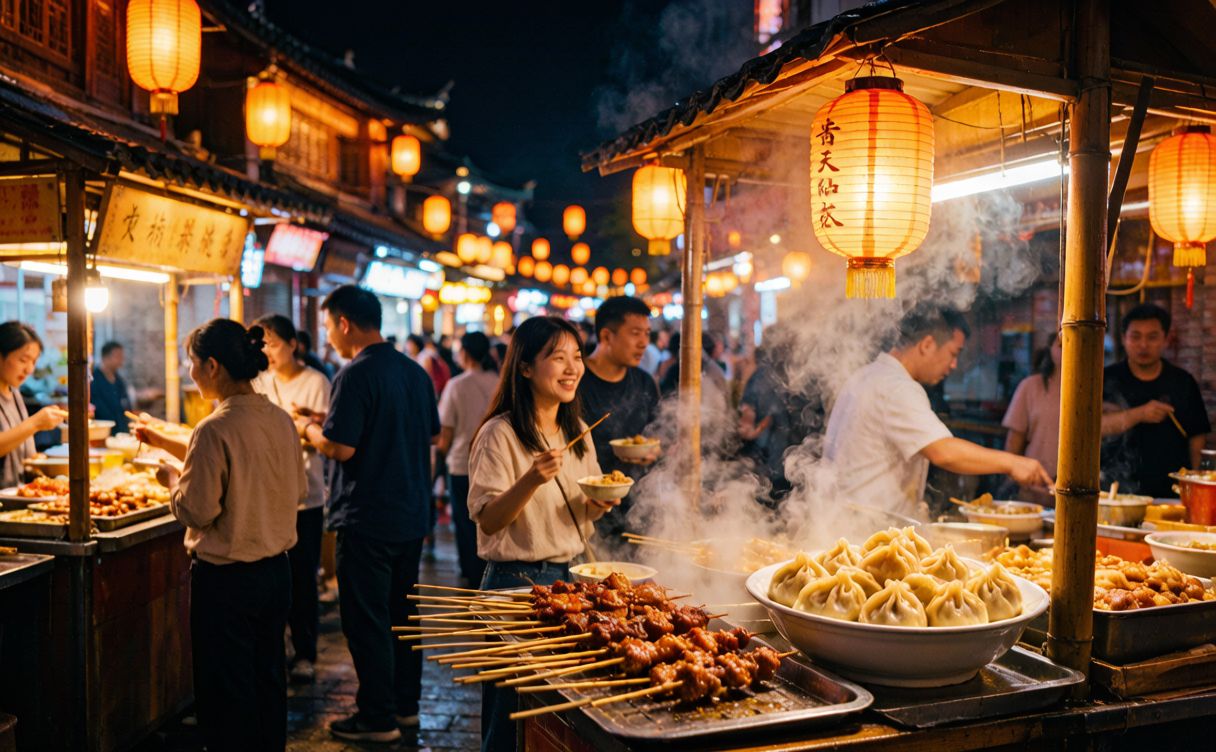
The Golden Rules I Follow Every Time
After a dozen trips and exactly two stomach bugs, here is the short list of rules I actually keep. None of them are hard.
1. Follow the crowd — and the turnover. The safest stall is the busiest one. High volume means ingredients move fast, food is cooked to order, and the cook has a reputation to protect with neighbors who eat there every night. If a cart has three people queuing and another has flies circling, the choice is easy.
2. Eat what is cooked hot, served hot. Heat kills the bugs that make you sick. A bubbling wok, a roaring grill, a steaming basket — these are your friends. The riskiest items are room-temperature prepped foods that have sat out: cut fruit, cold noodle salads, and unrefrigerated dairy. I love a good cold sesame noodle, but I only buy it somewhere visibly busy and freshly made.
3. Watch the hands and the water. Does the vendor have a clean spot for clean chopsticks? Do they handle money and food with the same bare hand? Little tells add up. I keep a small bottle of hand sanitizer clipped to my bag for exactly this reason — more on the packing essentials below.
4. Peel it, boil it, cook it, or forget it. Fruits you peel yourself (oranges, bananas) are safe. Things washed in local tap water and served raw are the gamble. When in doubt, apply the old traveler’s rule.
5. Go easy on day one. Your gut needs a few days to meet the local microbiome. I save the most adventurous offal-and-chili challenges for day three or four, not the airport-tired first night.
6. Drink bottled or boiled water, not tap. This is non-negotiable. My China travel safety tips article covers water, scams, and transport safety in one place if you want the full picture.
A Night-Market Story (and What It Taught Me)
I will never forget my first real night market in Chengdu. The air was thick with chili oil and smoke, and a woman with a knee-high stack of bamboo steamers was selling something I could not name. I pointed at a random basket. She laughed, handed me a dumpling, and mimed “hot, hot!” — it was a soup bun, and I promptly burned my tongue and splattered broth down my shirt. Delicious. I survived.
What stuck with me was not the burn. It was watching her: she never touched the food with her hands, she kept the lids on the steamers between servings, and a line of locals ten deep meant nothing sat around. That is the pattern. In Chengdu especially, the street food scene is relentless and wonderful, and you can read up on the whole city in our Chengdu pandas and city guide before you go.
The Translation-App Moment That Saved Dinner
Here is a practical trick that has saved me more than once. Street vendors rarely speak English, and the menu is often a wall of characters. Before a trip I download a translation app that works offline and lets me point my camera at a sign. In Guangzhou I once photographed a stall menu and discovered the “beef” skewer I was about to order was actually “beef tripe” — not a problem, just not what I expected. More usefully, I could type “no spicy, is this cooked fresh?” and show the screen. Vendors appreciate the effort, and you avoid the tongue-numbing mapo surprise when you wanted something mild.
Allergies and dietary needs are where this really matters. If you have a serious allergy, learn the characters or carry a written card. “I cannot eat peanuts” in Mandarin, shown on your phone, is worth more than any phrasebook. Staying connected so the app works is easier than it used to be — pick up a local eSIM or SIM card the day you land and your maps and translation will be ready whenever a menu stumps you.
Regional Street Food You Should Not Miss
Different regions, different rules of the game. A few highlights:
- North (Beijing, Xi’an): Jianbing (savory breakfast crepes), lamb skewers, and the legendary Peking duck — though for the real thing you want a sit-down spot. Our Beijing duck where to eat guide separates the tourist traps from the locals’ favorites.
- South (Canton / Guangdong): This is dim sum country, and much of it is sold from carts and windows. The Cantonese dim sum food guide is my go-to for what to order and how to order it without fuss.
- West (Xinjiang, Tibet): Flatbread, mutton, and hand-pulled noodles cooked over open flame — naturally low-risk because everything is seared hot. Just watch the water and the unpeeled fruit.
- Sichuan and Chongqing: Numbing, spicy, and unforgettable. The heat itself is a mild preservative, but the chili oil is rich, so pace yourself.
What to Pack for Safe Street Eating
A little kit goes a long way, and most of it rides in your day bag. I keep a small pouch with: pocket hand sanitizer, a pack of wet wipes, a few emergency Imodium or similar (buy at a Chinese pharmacy — they are everywhere and cheap), activated charcoal tablets, and a reusable chopstick set. None of it is bulky, and all of it has earned its place.
The hand-wipes habit deserves emphasis. You will eat standing up, leaning on a railing, with no sink in sight. Wipe your hands before you grab those skewers. It is the single easiest thing you can do. If you want the full rundown of what belongs in your suitcase, our China packing list for first-timers covers meds, adapters, and the rest.
If You Do Get Sick: Stay Calm
Even careful travelers occasionally get a mild bug. I have been there — once in Chongqing after ignoring my own rule about room-temperature cut fruit. Here is what I do: stop eating, sip bottled water and plain rice porridge (congee), rest, and use the anti-diarrhea meds I packed. Most episodes pass in a day or two. Seek real medical care if you have a high fever, blood in stool, or symptoms lasting more than 48 hours — Chinese hospitals are modern and efficient, especially in big cities, and pharmacists are helpful for over-the-counter fixes.
One more tip: keep your travel insurance details and a note of your hotel address in your phone, in both English and Chinese characters, so a taxi driver or nurse can help fast.
The Bottom Line From Karl
Street food in China is not something to be afraid of — it is something to prepare for. Cook it hot, buy it busy, keep your hands clean, and ease in over the first few days. Do that, and the worst that happens is a burned tongue and a funny story, which is exactly what happened to me in Chengdu and what I would happily do again tomorrow.
The deeper reward is human. Some of my warmest memories in China are wordless exchanges over a grill — a vendor sliding me the best skewer, a stranger pouring me a cup of tea to cool my spicy mouth, a kid giggling at my chopstick skills. Food is how you meet this country. Eat bravely, eat wisely, and the street will take care of you.
For authoritative, up-to-date health advice before you fly, the U.S. Centers for Disease Control and Prevention keeps a thorough China travel health notice with vaccine and food-safety recommendations tailored to travelers.