

The Dish Called “Lung Slices” That Never Had Any Lung
The first thing that surprises anyone standing at a Chengdu cold-dish counter is the name. Fuqi Feipian is printed on menus as “Husband-and-Wife Lung Slices,” and yet the red-oil mountain in front of you contains not a single piece of lung. What you get instead is a glistening pile of paper-thin beef, tongue, and honeycomb tripe, blanketed in a chili oil so red it looks almost dangerous, flecked with crushed peanuts, toasted sesame, and a confetti of cilantro. The paradox is the whole charm of the dish, and once you understand how it got that name, the food tastes even better.
This is a Sichuan cold dish built for the moments before a meal really begins — the shared appetizer that wakes up the palate with numbness and heat. It is sold from glass cases in every Chengdu neighborhood, lugged to picnics, and packed into takeaway tubs by expats who have learned the magic phrase at the counter. What follows is how the dish was born, what goes into an honest version, and exactly how to make Fuqi Feipian at home without a restaurant’s thirty-year-old broth barrel.
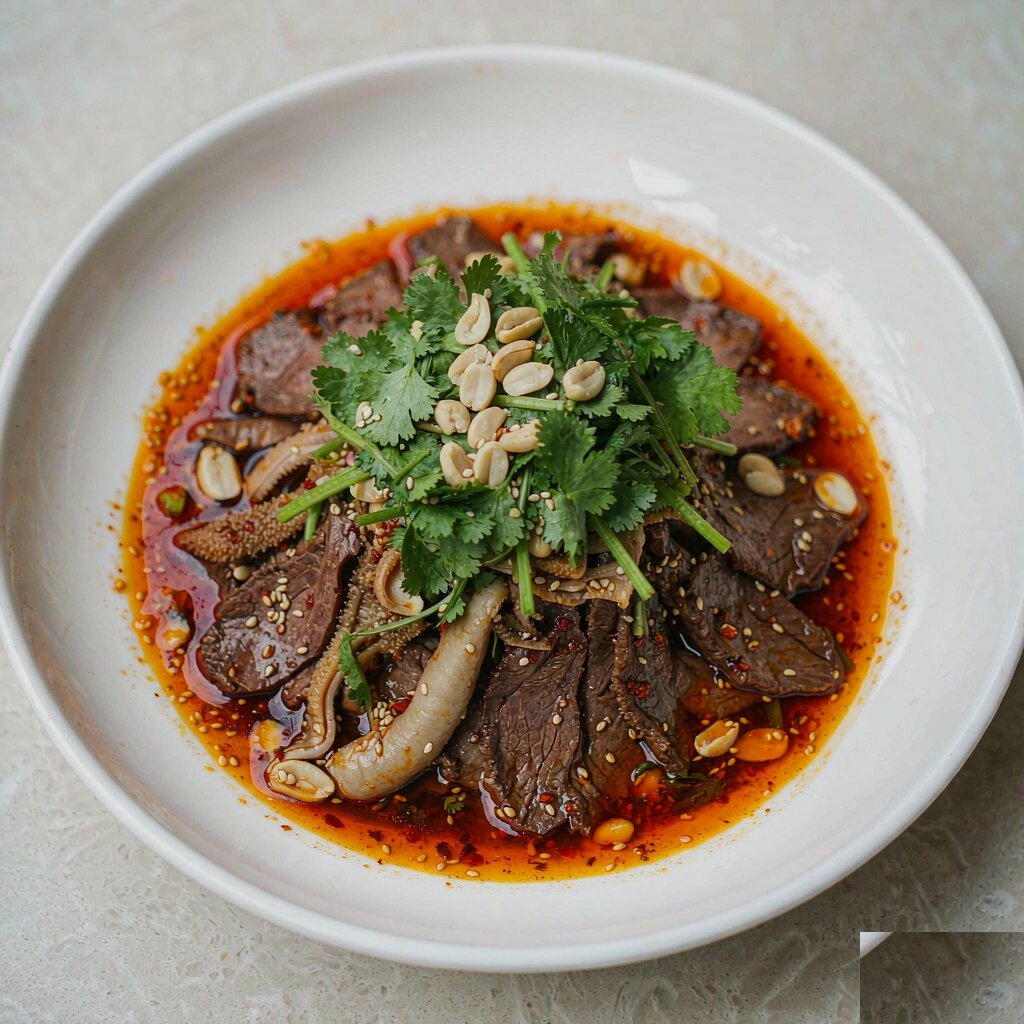
A Street Cart, a Married Couple, and a Name That Stuck
The story most Chengdu locals will tell you goes back to the 1930s, to a man named Guo Zhaohua and his wife Zhang Tianzhen, who sold cheap braised offcuts from a pushcart on the city’s streets. Their signature was “feipian” — literally lung slices — because in the lean years the cheapest thing a vendor could buy was beef lung, which they simmered, sliced, and dressed in chili oil for laborers who wanted something salty, spicy, and filling for almost no money.
The couple’s version gradually dropped the lung altogether and upgraded to the better cuts: beef shank, tongue, and tripe, the parts that turn silky rather than rubbery when braised right. Customers started calling the cart’s food “the husband-and-wife’s feipian,” and the name Fuqi Feipian outlived the ingredient it described. By the 1950s it had been formalized into a restaurant dish; today it is one of the few cold appetizers with a near-mythic origin story printed on almost every menu in Sichuan.
That history matters for cooking, because the soul of the dish is not a single protein but a method: braise humble beef parts until tender, chill them hard, slice them thin enough to curl, then drown them in a dressed chili oil that does the talking. The “lung” in the name is a ghost; the red oil is the real star.
What Fuqi Feipian Actually Tastes Like
If you have only met Sichuan food as tongue-numbing mapo tofu or blazing hotpot, Fuqi Feipian will feel different — cooler, slicker, more perfumed. The first sensation is the mala pair: Sichuan peppercorn delivers a buzzing numbness across the lips while the chili oil lays down a warm, layered heat that builds rather than spikes. Underneath that is a savory depth from the braising broth, a gentle sweetness from a little sugar, a bright lift from black vinegar, and the nutty crunch of peanuts and sesame that keeps every bite from being purely soft.
The texture is the part people remember. Properly made, the beef shank is dense and faintly ropy, the tongue is smooth and almost creamy at the edges, and the honeycomb tripe — if it is in the mix — gives a clean snap. None of it is served hot. The dish is eaten at room temperature or lightly chilled, which is why it is filed under “cold dish” and why it pairs so naturally with beer on a humid Chengdu evening.
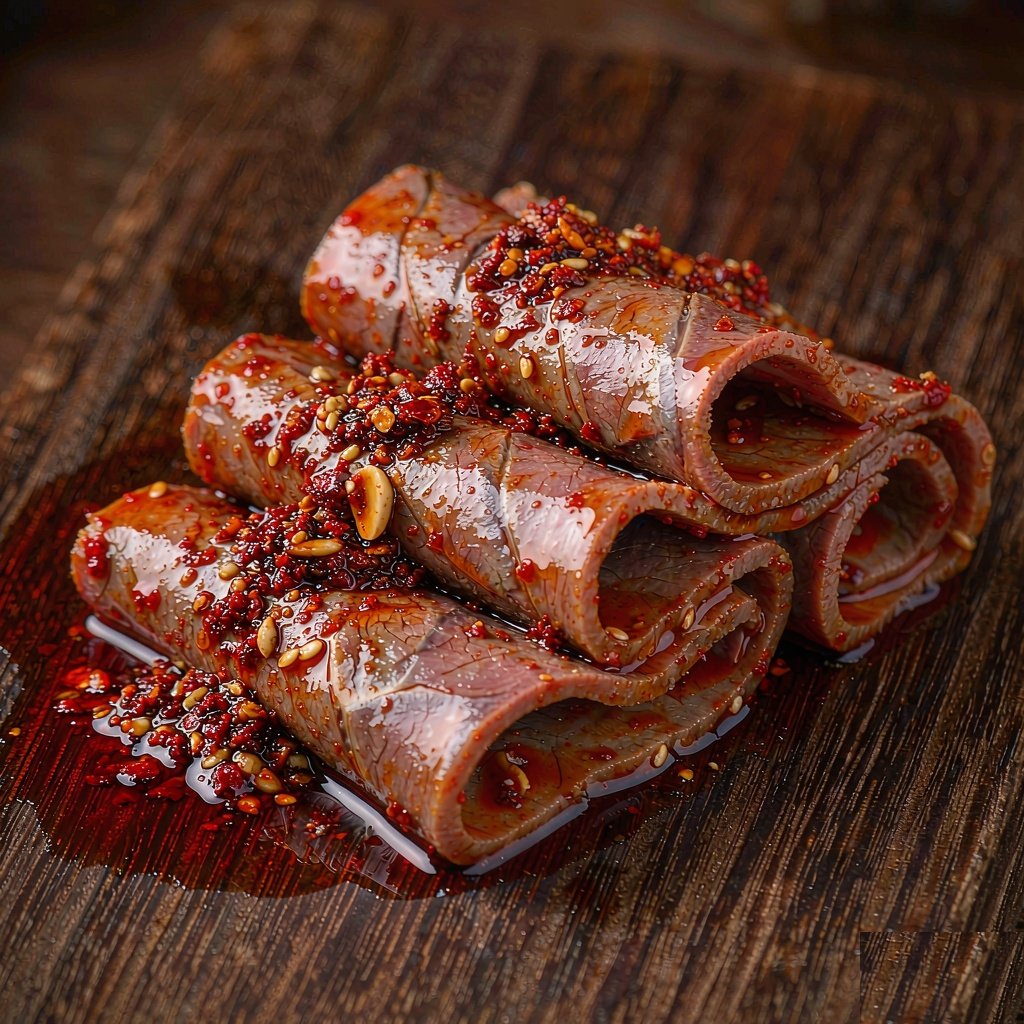
Fuqi Feipian Ingredients, With Amounts
A home version that honors the original needs two separate component lists: the braised meats and the dressing. Do not skip the chilling step — cold meat slices cleanly, warm meat shreds.
For the braised meats (serves 4 as an appetizer):
- 400 g beef shank (or brisket), in one piece
- 200 g beef tongue, cleaned
- 200 g honeycomb tripe (omasum), or extra shank if offal isn’t your thing
- 1 tablespoon Sichuan peppercorns
- 2 star anise, 1 cinnamon stick, 3 bay leaves, 1 teaspoon fennel seeds
- 4 slices ginger, 3 scallions, 2 tablespoons Shaoxing wine, 1 tablespoon salt
For the red-oil dressing:
- 5 tablespoons chili oil (homemade or a good store brand), with some of its sediment
- 1 tablespoon toasted sesame paste or tahini
- 2 cloves garlic, minced to a paste
- 1 tablespoon light soy sauce, 1 teaspoon black vinegar
- 1 teaspoon sugar, 1 teaspoon toasted sesame seeds
- 2 tablespoons crushed roasted peanuts
- A large handful of cilantro, chopped
Anyone tracking intake will want to know the fuqi feipian calories picture: a typical restaurant portion runs 350–500 kcal, most of it from the oil and peanuts rather than the lean meat. It is rich, not heavy with starch, which is part of why it sits so well before a big meal.
How to Make Fuqi Feipian at Home, Step by Step
This is a two-stage recipe: braise ahead, then dress to order. The braise can be done a day in advance, which actually improves the slicing.
1. Blanch the shank, tongue, and tripe separately in boiling water for two minutes, then rinse off the scum. This keeps the broth clean.
2. Return the meats to a pot with enough water to cover. Add the Sichuan peppercorns, star anise, cinnamon, bay, fennel, ginger, scallions, wine, and salt. Simmer gently: shank about 60 minutes, tongue 45 minutes, tripe only 15–20 minutes so it stays snappy. Test the shank with a chopstick; it should meet slight resistance, not fall apart.
3. Lift the tongue out, plunge it into cold water, and peel off the tough outer skin while it is still warm. Return everything to the broth and let it cool in the liquid, then refrigerate the meats overnight. Cold meat is non-negotiable for thin slices.
4. The next day, slice against the grain as thin as you can manage — aim for translucent. Tripe gets cut into bite-sized ribbons. Pile the slices on a serving plate without dressing them yet.
5. Build the dressing in a bowl: whisk the sesame paste with the soy, vinegar, sugar, and a splash of the warm braising broth until smooth, then fold in the chili oil, garlic, half the peanuts, and half the sesame.
6. Pour the dressing over the cold slices, toss gently with your hands or chopsticks, and finish with the remaining peanuts, sesame, and a generous shower of cilantro. Serve within twenty minutes so the slices don’t weep.
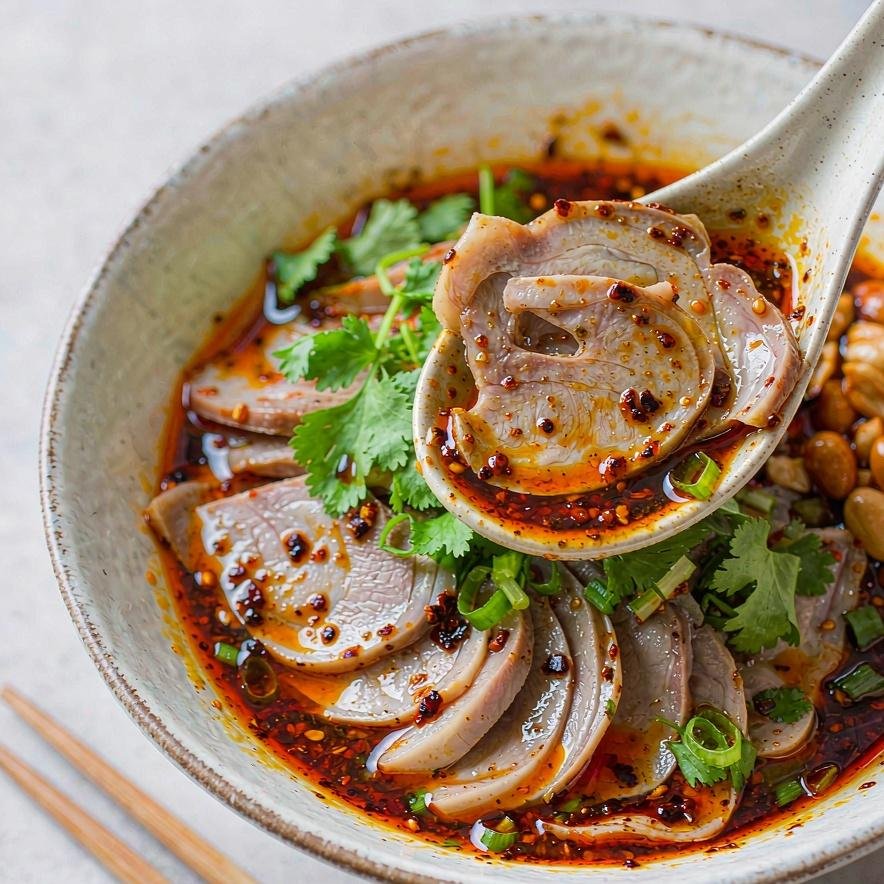
Who Fuqi Feipian Is For — and Who Should Hesitate
This appetizer is built for spice-tolerant eaters who enjoy texture contrast and a dish that doubles as a conversation piece. It is a near-perfect opener for a Sichuan dinner, a brilliant partner for cold beer, and a reliable potluck hero because it travels well and tastes better at room temperature than almost anything else you could bring.
That said, a few people should pause. Offal-averse diners can ask for a beef-only version — many Chengdu shops will happily comply — but the classic mix leans on tongue and tripe. Because the dish is rich in organ meat, anyone watching purine intake for gout should treat it as an occasional indulgence rather than a weekly staple. The sodium and oil are high, so anyone on a strict low-sodium plan should go light on the dressing. If you have sensitivities, the broader guide to eating around dietary restrictions in China covers how to phrase “no offal” or “less oil” at a counter without confusion.
Practical Tips and Regional Twists
The single biggest home mistake is slicing warm meat. If you forgot to chill it, ten minutes in the freezer tightens the fibers enough to get clean cuts. The second mistake is a flat dressing — balance is everything, so taste and adjust: more vinegar if it feels greasy, more sugar if the heat is sharp, more chili-oil sediment for color and aroma.
Toast your Sichuan peppercorns in a dry pan for thirty seconds before grinding them into the oil; the difference in fragrance is dramatic. If you are short on time, a pressure-cooked shank and a quality bottled chili oil will get you 80 percent of the way there, and plenty of cheap Sichuan street food stays delicious precisely because vendors master this shortcut.
Regionally, the Chengdu version tends sweeter and more aromatic, while Chongqing iterations push harder on heat and garlic. Outside China, takeout “fuqi feipian” is often just cold spicy beef with extra tripe and a heavier oil — pleasant, but the authentic Fuqi Feipian vs western takeout gap is real, mostly because overseas kitchens skip the scented braise and lean on straight chili oil. Making it at home closes that gap fast.
How to Eat It, and What to Pour Beside It
Fuqi Feipian is almost always a shared starter, set down before the mains so the table has something to pick at while the rice cooks. Eat it with the provided communal chopsticks, chase each bite with a sip of cold beer or jasmine tea, and resist the urge to refrigerate leftovers for long — the cilantro wilts and the oil firms up. If you love it as a meal rather than a bite, toss the dressed slices with a handful of cold noodles and you have a hearty lunch.
For travelers, hunting the best Fuqi Feipian in Chengdu is a rite of passage: the old shops near Wenshu Monastery and the long-standing names around the city center still braise in the traditional style, and a tub from a trusted counter beats anything a hotel buffet will plate.
Frequently Asked Questions
What does Fuqi Feipian taste like?
It tastes of numbing Sichuan peppercorn and warm chili oil first, then savory braised beef, a whisper of sweetness, and a bright vinegar lift, with peanut and sesame crunch cutting the richness. It is cool, slick, and aromatic rather than scorching.
How to make Fuqi Feipian at home?
Braise beef shank, tongue, and honeycomb tripe in a spiced broth, chill them overnight, slice paper-thin, then dress with chili oil, sesame paste, garlic, soy, vinegar, sugar, peanuts, and cilantro. The full fuqi feipian step by step method above breaks each stage down.
Is Fuqi Feipian really made from lung?
No. Despite the name “lung slices,” modern Fuqi Feipian contains beef shank, tongue, and tripe — never lung. The name is a historical echo of the 1930s street carts that once used cheap beef lung before upgrading to better cuts.
How many calories are in Fuqi Feipian?
A restaurant portion is roughly 350–500 kcal, with most of the energy coming from chili oil and peanuts rather than the lean meat. It is a rich appetizer, not a light salad, so portion it as a shared starter.
What is the difference between Fuqi Feipian and other Sichuan cold dishes?
Unlike smashed cucumber or cold dressed noodles, Fuqi Feipian is built on braised beef offcuts rather than vegetables or carbs, and its red-oil dressing is heavier on sesame and aromatics. The texture contrast — silky meat against crunchy tripe — is its signature.
Where can I find the best Fuqi Feipian in Chengdu?
The most traditional versions come from established Chengdu cold-dish shops and the long-running counters near Wenshu Monastery, where the braise is made daily. Look for places with a glass case of whole braised meats sliced to order rather than pre-dressed tubs.
Once you have made it once, Fuqi Feipian stops being a menu mystery and becomes a dish you can call your own — a red-oil proof that the best Sichuan flavors often begin, strangely, with a name that lies about its own ingredients.