

Tucked into the western suburbs of Chengdu, the Jinsha Site Museum preserves the remains of an ancient Shu kingdom capital that flourished more than 3,000 years ago. For travelers curious about early Chinese civilization beyond the familiar Yangtze and Yellow River heartlands, this is one of the most rewarding stops in Sichuan. Our Jinsha travel guide walks you through what makes the site special, how to plan a visit, and what to expect when you arrive.
The discovery itself reads like a detective story. In February 2001, a construction crew digging foundations for an apartment complex struck gold, jade, and elephant ivory buried deep in the soil. What could have become another housing block instead became one of the most important archaeological finds in modern China. The site dates from roughly 1200 to 600 BCE, a period overlapping the late Shang and Western Zhou dynasties, and is widely believed to be the ceremonial and political center of the Shu people after the decline of the better-known Sanxingdui culture.
Why Jinsha Matters
Jinsha reshaped how historians understand the origins of Chinese civilization. For decades the textbook story centered on the central plains, yet here in the Sichuan basin sat a sophisticated urban society with its own rituals, artistry, and likely its own writing system. The Shu state was not a backward outpost but a contemporary of the Shang, trading, worshipping, and crafting on a grand scale.
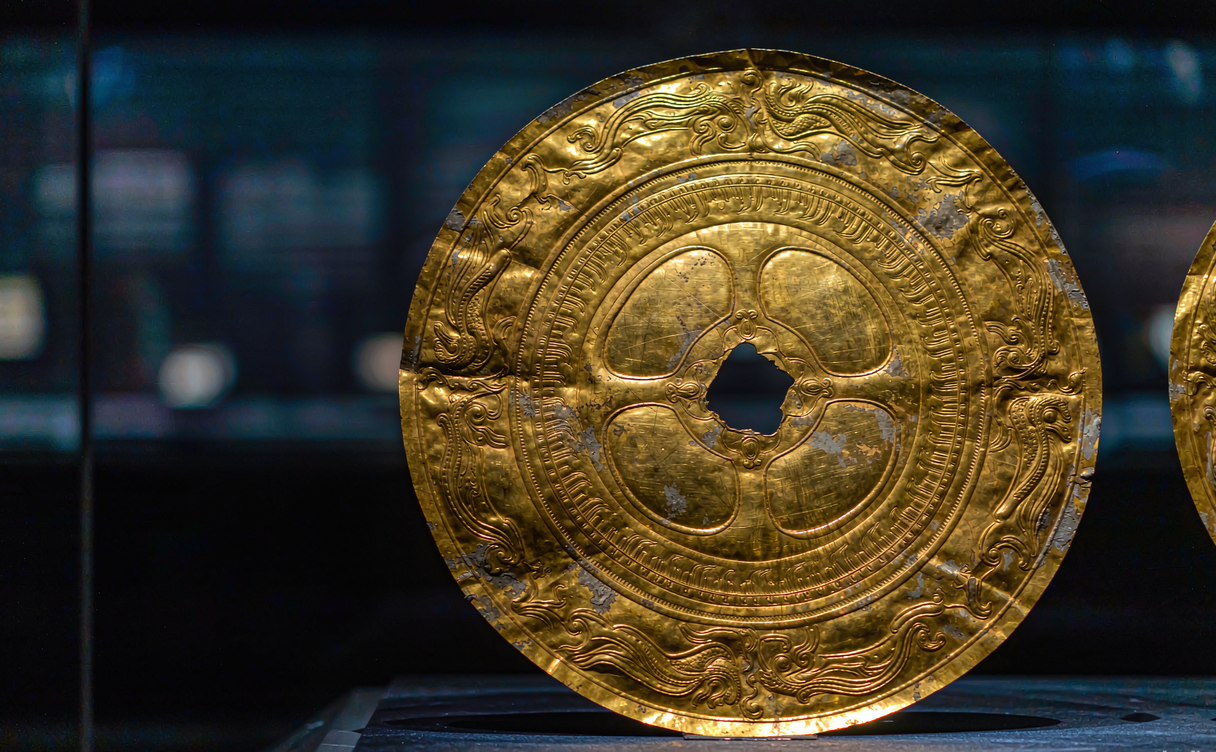
The single object that defines the museum is the Sun and Immortal Bird gold ornament. Cut from a sheet of pure gold barely thicker than a human hair, it measures about 12.5 centimeters across and weighs only 20 grams. At its center, twelve rays of sunlight radiate from a spinning sun; around the rim, four birds wheel in eternal flight. In 2005 this design was adopted as the official symbol of Chinese cultural heritage, and it later became the city emblem of Chengdu. Standing before the original, you feel the precision of a craftsperson working three millennia ago with tools we can barely imagine.
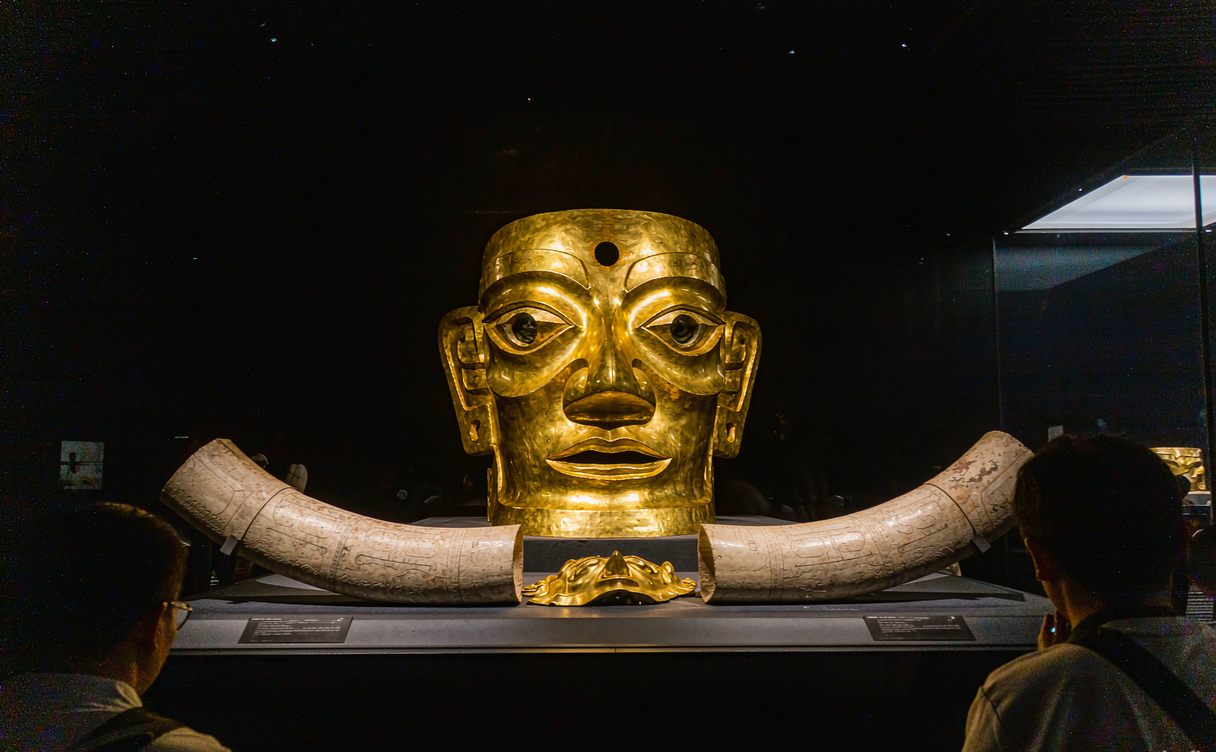
Beyond the famous disc, the excavation yielded around 10,000 artifacts: gold masks, bronze ritual vessels, jade discs and tubes, stone tools, and a staggering pit containing roughly 600 elephant tusks, the largest such accumulation ever found. The tusks themselves now rest in climate-controlled storage, but the pit, with its ash layers and post holes, is preserved beneath glass for you to look straight down into.
Planning Your Visit
The museum sits about five kilometers west of Chengdu’s Tianfu Square, making it an easy half-day trip from the city center. The most convenient approach is the metro: Line 7 to Jinsha Museum Station, Exit C, followed by a short walk to the entrance. Several city bus lines also stop nearby, and taxis or ride-hailing apps handle the trip from most central hotels without trouble.
Under normal operation the site opens daily, with the exhibition halls generally running from morning until late afternoon and last entry about an hour before closing. Admission has typically been around 70 yuan for a combined ticket covering both the relics hall and the exhibition hall, with discounted rates for students and free entry for children, seniors, and certain eligible groups on designated days. Because schedules and pricing shift, always confirm current details on the official museum website before you travel.
A practical caution for 2026: the museum began its first comprehensive upgrade project on December 5, 2025, and is scheduled to remain closed to the public through April 30, 2027. If you are reading this guide while planning a trip that falls inside that window, build your itinerary around Chengdu’s other attractions and check the reopening status before counting on a Jinsha visit. When it reopens, expect refreshed exhibits and improved visitor facilities.
Ready to explore more of China’s incredible heritage? Browse our growing collection of China travel guides to plan every stop on your journey.
What You Will See Inside
The museum is split into two main buildings. The Relics Hall sits directly above the excavated pit, a vast covered space where you walk on elevated walkways and peer through glass at the layered earth where sacrifices once took place. This is the closest most visitors will ever come to an active dig, and the scale of the ivory and ash deposits is genuinely humbling.
The Exhibition Hall, by contrast, is a conventional museum space that displays the finest recovered treasures. Here you find the gold mask with its serene, elongated face; intricate jade cong tubes carved with impossible precision; bronze figures and bells; and, at the climax of the route, the Sun and Immortal Bird ornament in its own protective case. Allow at least two to three hours for a full visit, and consider renting the audio guide or joining a tour, because the meaning behind each object is easy to miss without context.
The surrounding grounds deserve time too. The Sun and Immortal Bird sculpture in the central plaza makes a natural photo stop, and the wooded paths along the former “jade road” offer a calm counterpoint to the galleries. On weekdays you may have the open spaces largely to yourself, while weekends and holidays draw school groups and local families.
Tips for a Better Experience
A few Jinsha tips will help you get the most from the trip. First, go early. Mornings are quieter, the light in the galleries is easier on the eyes, and you beat the tour buses that tend to arrive after midday. Second, wear comfortable shoes; the relics hall involves elevated walkways and a fair amount of standing. Third, photography rules are strict in the exhibition areas, so check signage and avoid flash where it is banned.
If you enjoy tea, the neighborhood around the museum is a pleasant place to slow down afterward. Chengdu’s tea culture is a travel highlight in its own right, and our China tea house guide explains where to sit, what to order, and how to read the local rituals of the gaiwan cup. Pairing a museum morning with an afternoon in a leafy teahouse captures the city’s rhythm better than any checklist.
History lovers will also appreciate how Jinsha connects to a wider story. The Shu civilization of Chengdu echoes themes you can explore at the Shaanxi History Museum in Xi’an, while the leisurely pace of Sichuan life pairs naturally with our Shanghai Tianzifang guide and our Shanghai Xintiandi guide for those continuing east. For first-timers building a multi-city route, the Beijing first-time travel guide and the best hotels in Lijiang round out a classic China itinerary.
Love uncovering China’s hidden histories? Keep reading our China travel guides to discover more unforgettable destinations across the country.
The River and the Wider Region
The name Jinsha also belongs to a river, and the connection is worth knowing. The Jinsha River is the westernmost headwater section of the Yangtze, carving a dramatic course through the mountains of southwestern China before it meets the Min and then becomes the great river that flows to the sea. While the Chengdu museum is the headline attraction for most visitors, the river shares the name and the same golden, sediment-rich character that inspired it.
Chengdu itself makes an excellent base. Beyond Jinsha, the city offers the Dujiangyan irrigation system, the lazy charm of its parks, and some of the best food in the country. Travelers often combine a Sichuan stay with Yunnan to the south, where our recommended best hotels in Lijiang help you settle into the old town beneath the snow peaks. Wherever your route leads, understanding the Shu past at Jinsha adds a layer of meaning to every later stop.
A Note on Respect and Context
Archaeological sites invite a particular kind of attention. The objects at Jinsha were buried with purpose, and the museum’s careful presentation reflects both scholarship and reverence for the people who made them. Move slowly, read the labels, and resist the urge to rush to the famous gold disc before appreciating the quieter jades and bronzes that surround it. The reward is a sense of continuity with a civilization that built cities and worshipped the sun long before the written histories most of us learned in school.
For authoritative background on the site and its place in Chinese archaeology, the Wikipedia entry on the Jinsha ruins offers a concise overview of the discovery and its significance. Pair that reading with a morning at the museum and you will leave with far more than a photograph of a gold bird.
Final Thoughts
A Jinsha guide can only point the way; the experience itself belongs to the visitor. Whether you come for the celebrated Sun and Immortal Bird ornament, the silent drama of the ivory pit, or a deeper understanding of the Shu kingdom, the museum delivers a encounter with the ancient past that few Chinese cities can match. Plan around the current renovation closure, arrive early, and let the gold do the talking.
Inspired to see more of China? Explore our full library of China travel guides and start mapping your next great adventure today.