

The Weighing Ritual That Defines Malatang
The first time I queued at a malatang shop, what hooked me was not the chili — it was the scale. You grab a plastic tray, wander the glass-fronted fridge, and skewer by skewer you build a tower of lotus root, fish balls, tofu skin and limp greens, each one tagged with a colored rubber band that tells the cashier its price. Then the whole tray goes on a digital scale, the number flickers, and a cook drops your harvest into a cauldron of red, oily, faintly buzzing broth. That moment — the weighing, the plunge, the wait — is the entire personality of this dish, a version of spicy hot pot that turns a sit-down banquet into a three-dollar street ritual you can eat alone at midnight.
What Malatang Actually Is — and What It Tastes Like
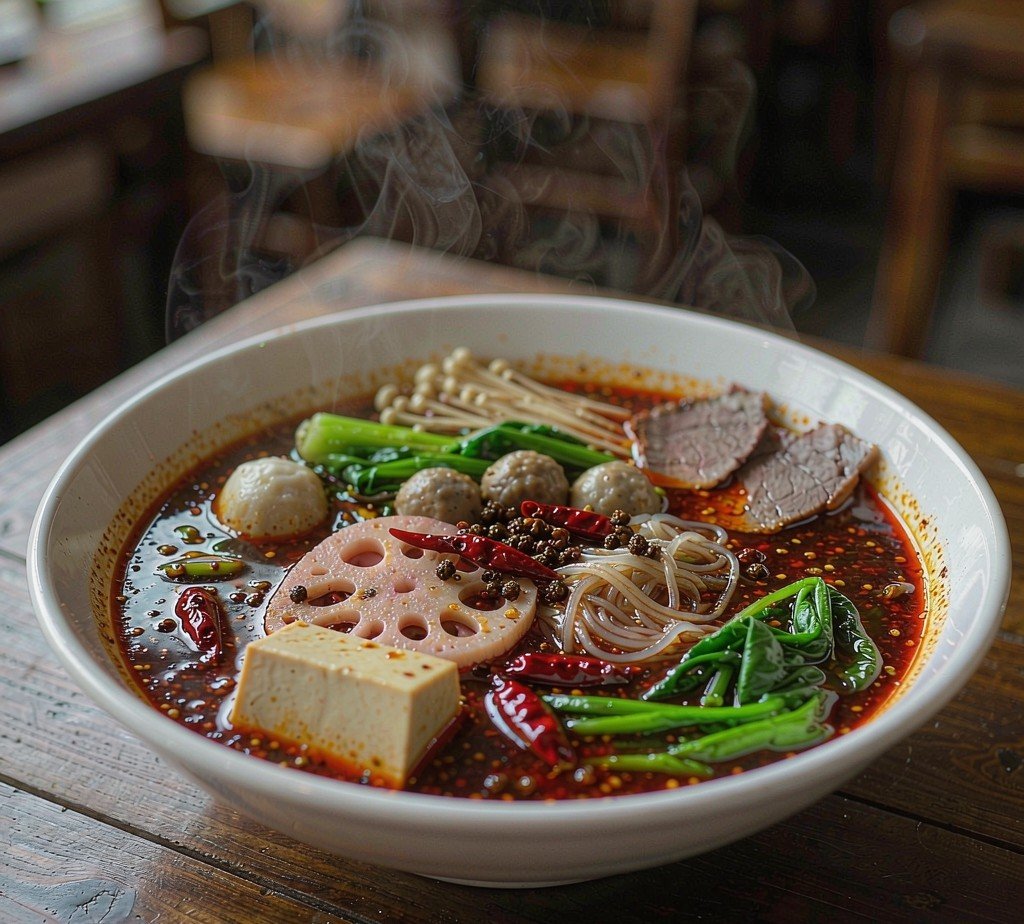
Malatang (literally “numbing-spicy-hot”) is China’s build-your-own Chinese street hot pot: you select raw ingredients, a vendor boils them to order in a shared spicy broth, then ladles everything — broth and all — into your own bowl. The name breaks down into three characters that describe the sensation exactly. Ma is the citrus-pine numbness of Sichuan peppercorn; la is the heat of dried chili; tang is the boiling temperature that keeps it alive on the tongue.
So what does malatang taste like? It is layered rather than merely hot. Up front you get clean chili heat, then the signature tingle of huajiao spreads across your lips, then a deep savory base from fermented bean paste, and finally the round, nutty softness of sesame paste or peanut that keeps the oil from overwhelming you. The broth is aromatic and clinging, not a thin soup. Most shops let you dial it from “微辣” (mild) to a level that makes tourists sweat, so the dish is far more flexible than its fiery reputation suggests.
Malatang vs Hot Pot: The Difference That Actually Matters
Travelers confuse malatang with hot pot constantly, so it is worth being precise. In a traditional hot pot you sit at a table, cook raw ingredients yourself in a broth that bubbles in front of you, and linger for an hour. Malatang is single-serving, cooked by a vendor in one big pot, and designed to be eaten and gone in fifteen minutes. It is cheaper, faster, and friendlier to solo diners. It is also distinct from mala xiang guo, its dry sibling: that dish stir-fries the same ingredients with the same seasoning but no broth, so you lose the soothing soup. If you want to understand how China’s regional hot pot styles differ from this portable format, malatang is the quickest introduction — it is hot pot stripped down to its essence and folded into a bowl.
Core Ingredients and How Much to Use
A proper home malatang lives or dies on the soup base, so start there. For two generous servings:
- 2 tablespoons Pixian doubanjiang (fermented chili bean paste) — the savory backbone
- 1 tablespoon Sichuan chili flakes, or ready-made chili oil
- 1 teaspoon ground Sichuan peppercorn (huajiao)
- 4 cups chicken or vegetable stock
- 1 tablespoon neutral oil, 3 slices ginger, 2 scallions
- Optional aromatics: 1 star anise, a small piece of cassia bark
The “skewers” you would pick at a shop translate at home into a fridge raid. Good malatang ingredients are firm tofu or tofu skin, leafy greens such as bok choy or spinach, sliced lotus root, mung-bean glass noodles, enoki and wood-ear mushrooms, fish balls or thin beef rolls, and the occasional quail egg. Finish each bowl with one tablespoon of sesame paste thinned with warm water, a splash of garlic water, chopped scallion, and extra chili oil to taste.
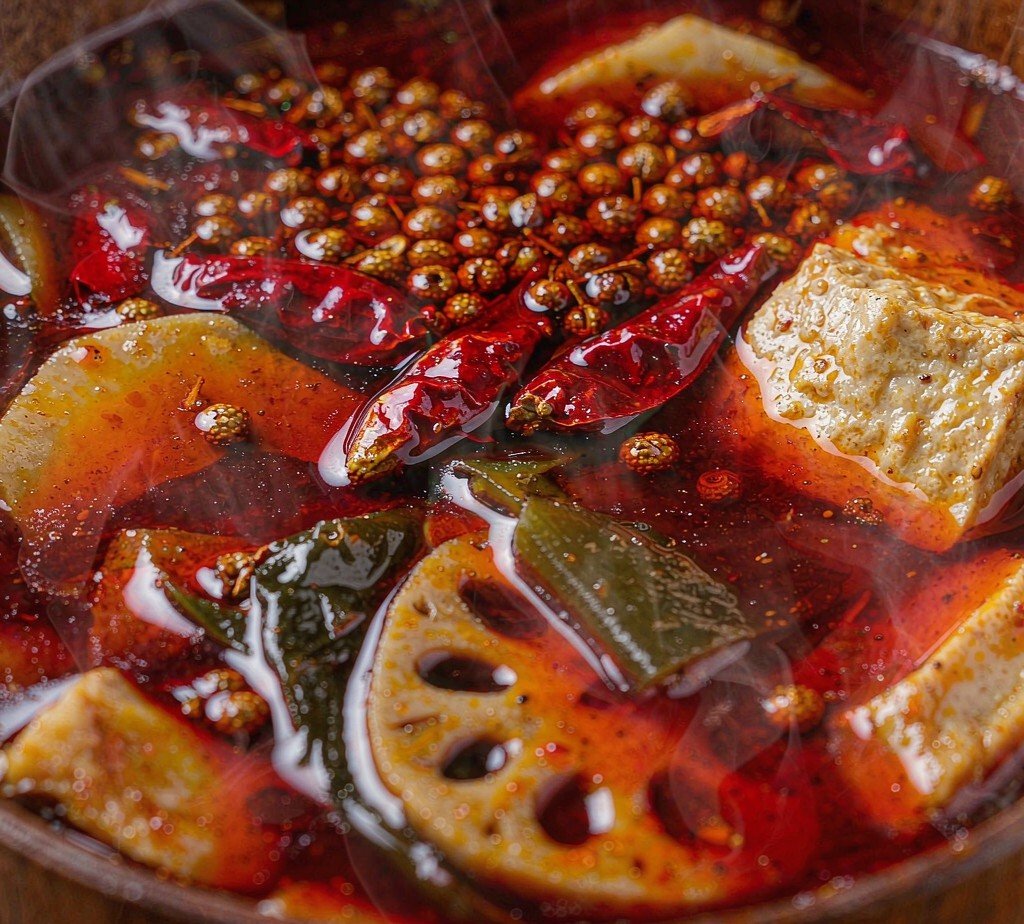
One practical note on malatang calories: the dish is broth-based but oily, and the sesame paste adds up. A loaded bowl with several fish balls and extra oil lands around 600–800 kcal, while a vegetable-heavy version with less paste sits closer to 400–500. Vegetarians actually do well here — the selection of tofu, greens and mushrooms is enormous, and the broth itself can be made meat-free without losing character.
Who Should Order It — and Who Should Hold Off
Malatang suits spice-curious travelers, solo eaters, late-night wanderers, and anyone watching their budget: a filling bowl rarely costs more than a few dollars. Vegetarians are unusually well served. The people who should modify their order are those with low heat tolerance (ask for “微辣” or “不辣”), anyone bothered by the numbing tingle (request “少花椒” or “不要花椒”), the grease-averse (ask “少油”), and small children, who rarely enjoy the combination of oil and pepper. None of these are reasons to skip it; they are reasons to speak up when you order.
How to Make Malatang at Home, Step by Step
This malatang recipe is built for a home kitchen and takes about twenty-five minutes.
- Step 1 — Build the aroma base: heat the oil, fry ginger and scallion until fragrant, then add doubanjiang and chili flakes and stir until the oil turns deep red.
- Step 2 — Toast the peppercorn: add the ground huajiao for ten seconds only, just until it perfumes the oil — do not let it burn.
- Step 3 — Simmer the broth: pour in the stock with star anise and cassia, and let it bubble gently for ten minutes so the malatang soup base recipe develops its depth.
- Step 4 — Blanch in the right order: lotus root, tofu skin and firm vegetables first for two to three minutes, then glass noodles, then delicate greens for thirty seconds, then pre-cooked balls or meat just to heat through.
- Step 5 — Assemble: ladle broth and ingredients into a wide bowl, keeping the noodles underneath.
- Step 6 — Finish: thin the sesame paste with warm water and swirl it in, then add garlic water, scallion and an extra drizzle of chili oil.
- Step 7 — Eat immediately, while the broth is still scalding and the numbness is at its peak.
Tips, Regional Twists, and How to Eat It Like a Local
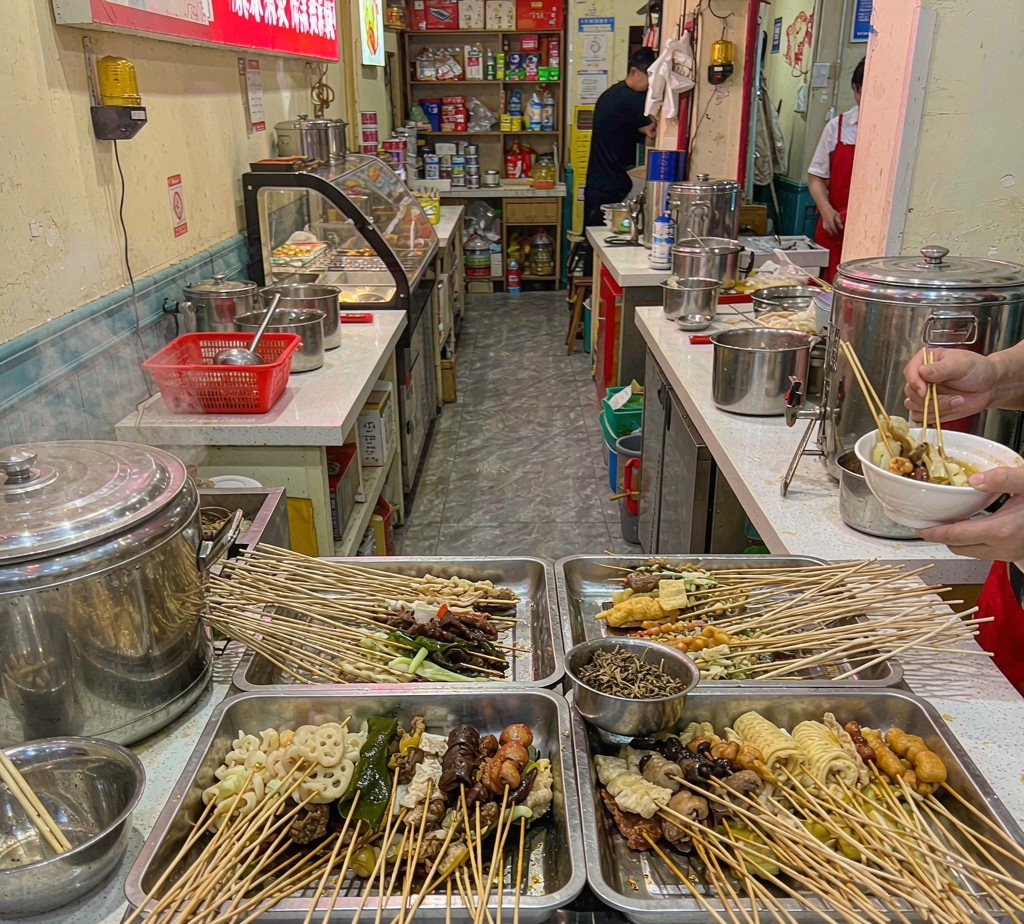
The single best how to eat malatang tip is to stir the sesame paste through the broth before your first bite — it cools the heat and ties everything together. When ordering at a shop, remember you pay by weight, so a tray that looks modest can surprise you at the register; pick with intent. Regional style matters too: northern shops lean heavily on sesame paste, almost turning the bowl into a warm dressed salad, while Sichuan and Chongqing versions are oilier and far more numbing, and coastal cities sometimes offer a non-spicy or tom-yum broth for the hesitant. The dry malaxiangguo is worth trying as a contrast once you have the soupy original down.
For travelers, the dish is a gateway. In Chengdu’s late-night street food scene, a malatang stall is rarely more than a block away, usually open past midnight and paired with cheap beer. The Sichuan peppercorn is the soul of the whole thing, so buy it whole and grind it fresh if you cook at home. And if you are mapping out budget meals across China, few dishes deliver this much comfort per yuan.
Frequently Asked Questions
What does malatang taste like if I cannot handle spice?
Order it “微辣” (mild) or “不辣” (no spice) and ask for extra sesame paste, which mutes the heat. The broth stays savory and nutty even without the chili, so you still get the experience.
Is malatang the same as hot pot?
No. Hot pot is a communal, cook-it-yourself meal at the table; malatang is a single-serving bowl boiled to order by a vendor. It is faster, cheaper, and built for one person rather than a group.
How many calories are in a bowl of malatang?
A vegetable-forward bowl runs roughly 400–500 kcal, while a meat-and-ball-heavy version with extra oil and sesame paste can reach 600–800 kcal. The broth itself is light; the calories come from oil, paste and processed balls.
Can I make fully vegetarian malatang?
Easily. Use vegetable stock, skip the meat and fish balls, and load up on tofu, tofu skin, mushrooms and greens. The numbing-spicy base is naturally plant-based once you drop the doubanjiang made with animal fat (most brands are vegetarian).
Where did malatang originate?
The format traces back to Liaoning in northeast China, where street vendors boiled assorted skewers in a spicy broth for workers. It spread nationwide in the 1990s and absorbed Sichuan’s mala flavors, which is why most people now associate it with Chongqing and Chengdu even though its roots are farther north.
How do you order malatang at a shop?
Grab a tray, pick your skewers or loose items from the fridge, take them to the scale, tell the cook your spice level and whether you want noodles, then pay by weight and wait at the pickup counter. Broth, toppings and a seat are included.
There is a particular kind of comfort in a malatang bowl that no restaurant plate quite matches: it is cheap, it is yours down to the last skewer, and it arrives scalding at an hour when nothing else is open. Learn the weighing ritual once and you have a meal you can find in almost any Chinese city, customized to exactly the heat and numbness you can handle. That, more than the chili, is why the dish travels so well.