

Mount Wuyi in Fujian Province is one of China’s most compelling natural and cultural landscapes, where red sandstone cliffs rise above a winding river and terraced tea gardens perfume the humid air. A UNESCO World Heritage Site, it offers a slow bamboo-raft drift down the Nine-Bend River, steep hiking trails along dramatic gorges, and some of the most celebrated rock tea on earth. If you are planning a trip to southeast China, Mount Wuyi deserves a prime spot because it packs geology, history, and flavor into one compact valley system. This guide explains how to visit, what to do, and how it compares with other famous Chinese scenery.
Why Mount Wuyi Belongs on Your Fujian Itinerary
The appeal of Mount Wuyi Fujian lies in its layered identity. It is at once a protected biosphere, a cradle of Neo-Confucian academies, and the birthplace of da hong pao, the legendary “big red robe” oolong. The core scenic area spans the Nine-Bend River and the surrounding peaks of the Wuyi range, which form a natural boundary between Fujian and Jiangxi. Travelers who enjoy slow mornings on the water and energetic afternoons on the trail will find the rhythm here especially rewarding. Few destinations let you float past a cliff tomb in the morning and sip tea plucked from the same hillside by afternoon.
Unlike the busy coastal cities of the province, Wuyi moves at the pace of the river. The town of Wuyishan sits at the gateway to the park, with guesthouses, tea shops, and shuttle buses that make the mountains accessible even for first-time visitors. Pairing a few days here with a stop in nearby Quanzhou makes for a well-rounded Fujian journey, and our Quanzhou travel guide is a good companion read. The contrast between Wuyi’s green gorges and Quanzhou’s maritime heritage shows two very different sides of the same province.
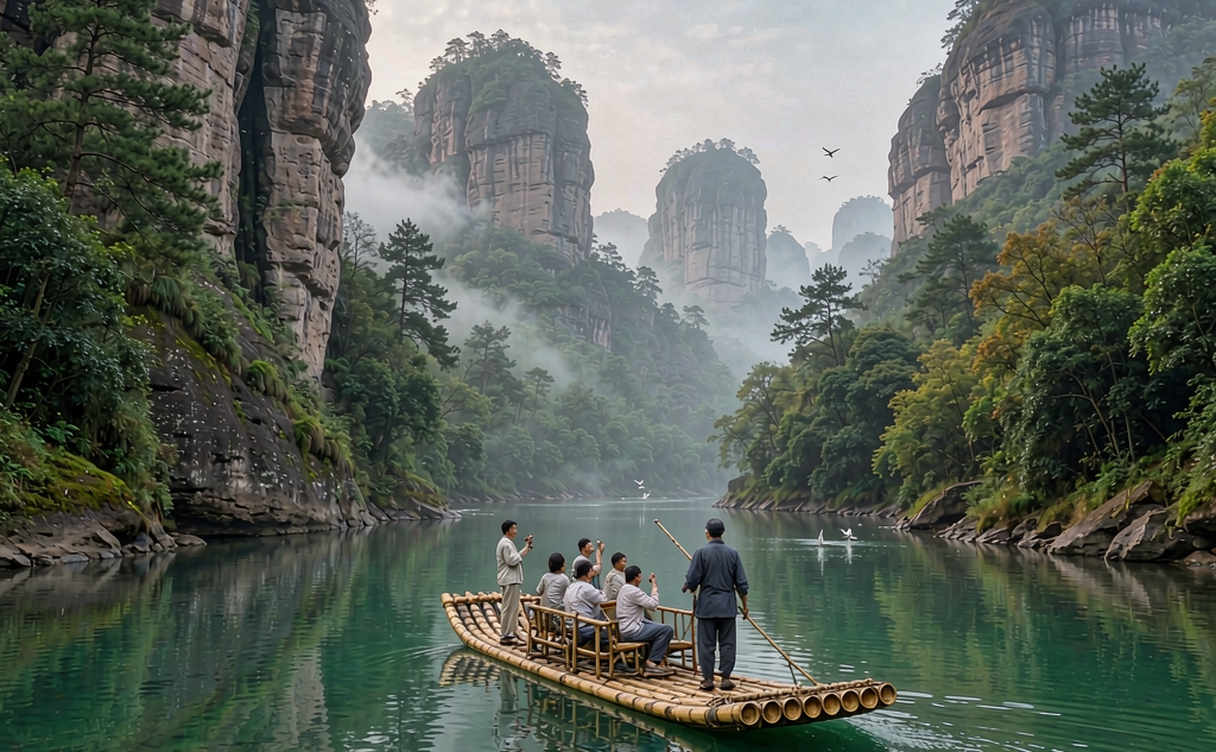
The Nine-Bend River: A Slow Raft Through Living History
The signature experience is the Mount Wuyi nine-bend river raft, a roughly 90-minute journey on a slender bamboo raft poled by a local boatman. The river curls through nine named bends, each revealing a different tableau of vertical rock faces, hanging vines, and the occasional macaque on a ledge. Your boatman will point out formations with names like “Jade Maiden Peak” and “King Peak,” narrating the folklore in a mix of Mandarin and gestures. It is a gentle, almost meditative ride that rewards attention more than adrenaline.
Timing matters for the raft. Early morning departures catch the softest light on the cliffs and the thinnest crowds, while late afternoons glow amber but fill with tour groups. Photography enthusiasts should bring a rain cover, because the boatman’s pole can splash. Because the raft is the single most popular activity, booking through your hotel the night before is wise during weekends and holidays.
Beyond the scenery, the Nine-Bend River is an open-air museum. High in the cliffs you can spot the hanging coffins of the ancient Yue people, timber burial boxes wedged into cave mouths more than three thousand years ago. These Wuyi Mountain UNESCO cliffs preserve both geology and this fragile human heritage. Seeing them from the water gives a boat-level perspective that ridge hikers cannot match.
Hiking the Peaks and Gorges
For those who prefer leg power to paddle power, Mount Wuyi hiking routes range from flat riverside boardwalks to lung-busting stair climbs. The ascent of Tianyou Peak is the classic half-day challenge, a stone staircase that spirals up through a cleft in the rock to a panoramic platform above the river. On a clear day the view unfolds in stacked layers of green hills fading into mist, a composition that has inspired painters for centuries. Go early, because the narrow stairs become a conveyor belt of visitors by midday.
A quieter option is the Trail of the Water Curtain Cave, where a seasonal waterfall sheets down a massive rock face and a path leads past small temples and tea terraces. The route to the Dahongpao scenic area is flatter and family friendly, ending at the famous mother tea bushes that produced the original da hong pao. Wherever you walk, wear grippy shoes; the sandstone gets slick after rain and the stone steps are steep. Carry water and a light rain shell, since Fujian weather shifts quickly.
One useful planning note: the park runs a shuttle bus system linking the major trailheads, the raft dock, and the tea areas. You buy a combined ticket that covers entry, the raft, and bus rides for a set number of days. Study the route map at your hotel and decide each morning whether you are a “raft day” or a “hike day” person.
Tea: The Soul of the Mountain
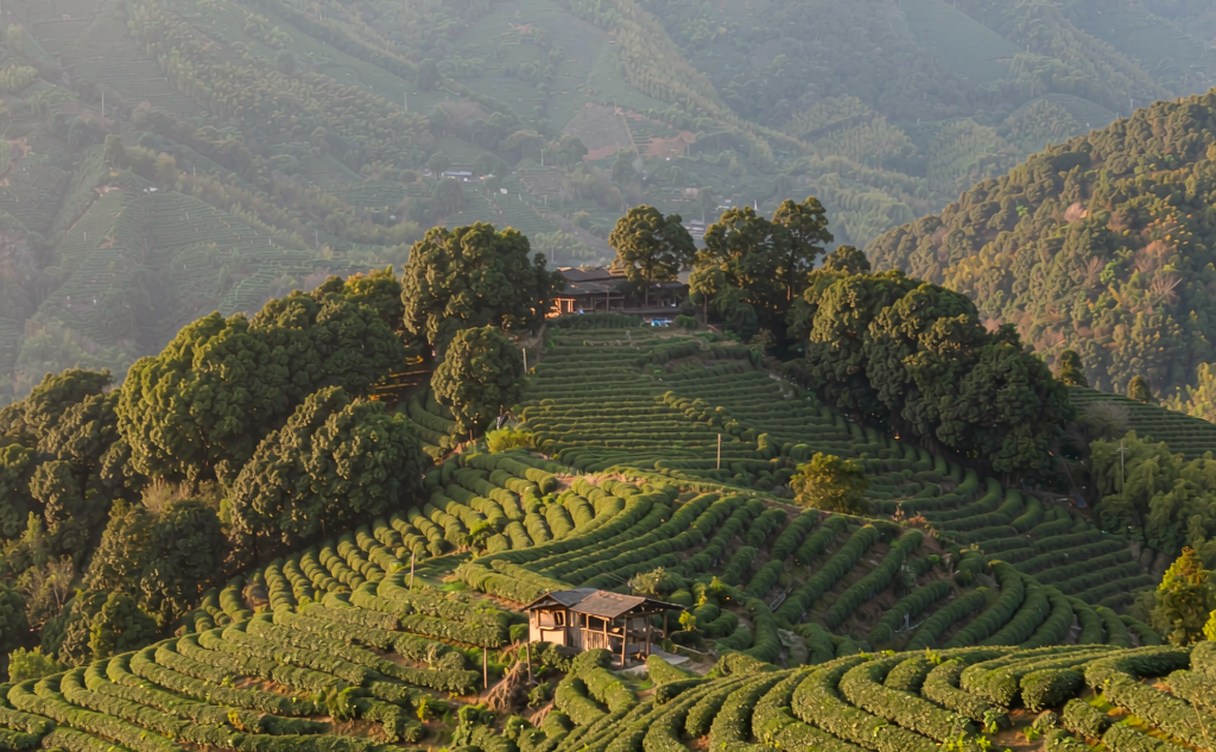
You cannot understand Wuyi without its tea, and the best Wuyi rock tea farms to visit sit in the narrow valleys where mineral-rich soil meets mountain mist. Rock tea, or yan cha, takes its name from the craggy terrain, and the most famous variety is da hong pao, a heavily roasted oolong with a smoky, orchid-ending finish. Many family farms welcome visitors for a tasting session in a simple pavilion with a gaiwan and local spring water. A short farm visit turns an abstract “Fujian tea” idea into something you can smell, swirl, and remember.
The village of Xingcun and the areas around the river’s upper bends concentrate many small processors. Look for farms that let you walk the terraces, watch the shaking and roasting steps, and compare a young green oolong against an aged roasted one. Buying directly supports these growers and usually costs less than the same leaves in a city shop. Our Fujian cuisine guide explains how to pair these teas with local food once you are back at the table.
If you want a deeper dive, the annual spring tea harvest in late April and early May is the liveliest time to visit, with the hillsides busy with pickers and the air thick with the scent of withering leaves. Autumn offers cooler, clearer hiking and a calmer pace, a strong alternative for travelers who prioritize trails over tastings. Most farms speak enough English or use translation apps to walk you through a session.
Ready to plan your Fujian tea trail? Browse our best hotels in Quanzhou to build a comfortable base before heading into the mountains.
Getting to Mount Wuyi Fujian
Knowing how to get to Mount Wuyi Fujian saves both time and stress, because the mountain sits in a rural corner of the province rather than a major metropolis. The most efficient option is the high-speed train to Wuyishan North Railway Station, which connects to Fuzhou, Xiamen, and Quanzhou on the national rail network. From the station, a taxi or shuttle reaches the scenic area entrance in roughly forty minutes, and many hotels offer pickup. Trains are punctual, affordable, and far less tiring than a long highway drive.
If you are flying, the small Wuyishan Airport has limited domestic routes, so most travelers route through Xiamen or Fuzhou and then take the train. Driving gives flexibility for exploring outlying villages, but the mountain roads are winding and parking near the gates is restricted to designated lots. For a broader regional plan, our Quanzhou food guide pairs well with a train hop south after your mountain stay.
Where to Stay and What to Eat
Most visitors stay in Wuyishan town, within a short shuttle ride of the gates, where lodgings range from boutique tea-themed inns to larger resorts. Staying adjacent to the scenic area reduces early-morning transit and lets you catch the first raft slot. Evening options are modest but satisfying: river fish, bamboo shoots, and mushroom dishes cooked in the local style, often washed down with the mountain’s own tea. The town’s night market is a relaxed place to sample snacks after a day on the trails.
Food here leans into the province’s lighter, umami-rich cooking, and a tea-infused meal is easy to arrange through your guesthouse. If you want to extend the culinary thread, our Baishuiyang Fujian guide covers another of the province’s natural wonders where you can combine river play with rural eating. Wuyi’s kitchens are unpretentious, so judge a restaurant by how busy it is with local families.
Mount Wuyi vs Guilin: Which Scenery Wins
A common question for first-time China travelers is Wuyi Mountain vs Guilin scenery, since both feature dramatic karst and river landscapes. Guilin’s limestone towers rising from the Li River are broader and more famous internationally, with postcard views that have defined “Chinese landscape” for centuries. Wuyi, by contrast, offers red sandstone rather than grey limestone, a more enclosed valley feel, and the added dimension of living tea culture woven into the hillsides. The two are both beautiful, but they satisfy different moods.
Choose Guilin if you want the grand, expansive river-cruise spectacle and easy integration with Yangshuo’s backpacker scene. Choose Wuyi if you prefer a smaller, more intimate park where hiking, rafting, and tea tasting happen within a few kilometers of each other. For travelers already exploring Fujian, Wuyi is the obvious pick, while those basing in Guangxi will naturally gravitate to Guilin. Both appear on the UNESCO list, and you can read the official designation details on the Wikipedia page for Mount Wuyi to see the full criteria.
Practical Tips Before You Go
A few small preparations make the trip smoother. Buy your combined park ticket in advance during holidays, dress in layers because mountain mornings are cool even in summer, and download an offline map since signal drops on the trails. Tipping the raft boatman is not required but a few yuan for lively commentary is appreciated, and bringing your own reusable cup lets you join impromptu tea sessions at the farms. Respect the cliff tombs and protected zones; this is a heritage site first and a playground second.
If you have extra days, the cedar-scented Qingyuan Mountain Quanzhou guide makes a gentle contrast to Wuyi’s vertical drama and rounds out a southern Fujian circuit. Together the two mountains show how varied the province’s landscapes are, from misty tea cliffs to coastal sacred hills. With a little planning, Mount Wuyi Fujian becomes one of the most memorable corners of any China trip.
Short on time? Let us help you stitch Wuyi into a wider Fujian route with our Quanzhou travel guide as your southern anchor.
Final Thoughts
Mount Wuyi rewards the traveler who slows down. The raft teaches patience, the trails teach perspective, and the tea teaches you to taste a place rather than merely see it. Whether you come for the Wuyi Mountain UNESCO cliffs, the Mount Wuyi hiking routes, or simply a bamboo boat on green water, you leave with a fuller sense of what Fujian offers. Plan a few unhurried days, pack good shoes, and let the river set the pace.
Want a tailor-made Fujian plan? Pair this guide with our Fujian cuisine guide and start mapping your perfect mountain-and-tea escape today.