

Quanzhou is the Fujian city that keeps surprising people. For centuries it was “Zayton,” one of the great ports of the maritime Silk Road, where Arab, Persian, Indian, and Southeast Asian traders mixed with Chinese merchants; in 2021 UNESCO recognized that legacy with a World Heritage listing. Today it’s a relaxed, walkable city about an hour by high-speed train from Xiamen — and, in our experience, a far better place to actually stay than to merely day-trip. This guide to the best hotels in Quanzhou breaks down where to sleep, by neighborhood and by budget, so you land in the right spot.
If you only remember one thing: stay in the old town, not the new district. Quanzhou’s magic is in its lanes, its red-brick Minnan houses, and its temples — and those are concentrated in Licheng District, around West Street and Kaiyuan Temple.
Where to stay in Quanzhou
The historic core (Licheng / West Street). This is our default recommendation for first-timers. From here you can walk to Kaiyuan Temple and its twin pagodas, the Qingjing Mosque, the puppet theater, and a dozen food stalls without ever calling a cab. The trade-off is narrow streets and the occasional early-morning scooter, but the atmosphere is unbeatable. Most of the characterful guesthouses are here.
Near the river / new city (Fengze). If you want an international-chain high-rise, a pool, and a quiet night, the area around the Jin River and the modern business district delivers. It’s a short taxi ride to the old town and convenient if you’re arriving late or leaving early.
By the station. Quanzhou has a central high-speed rail station; a cluster of mid-range and budget hotels sits nearby for one-night transit stops. Fine for convenience, dull for atmosphere.
For most travelers the answer to “where to stay in Quanzhou” is the old town, full stop. The only reason to pick elsewhere is if you specifically want a resort-style property or a business-hotel chain.
Quanzhou luxury hotels
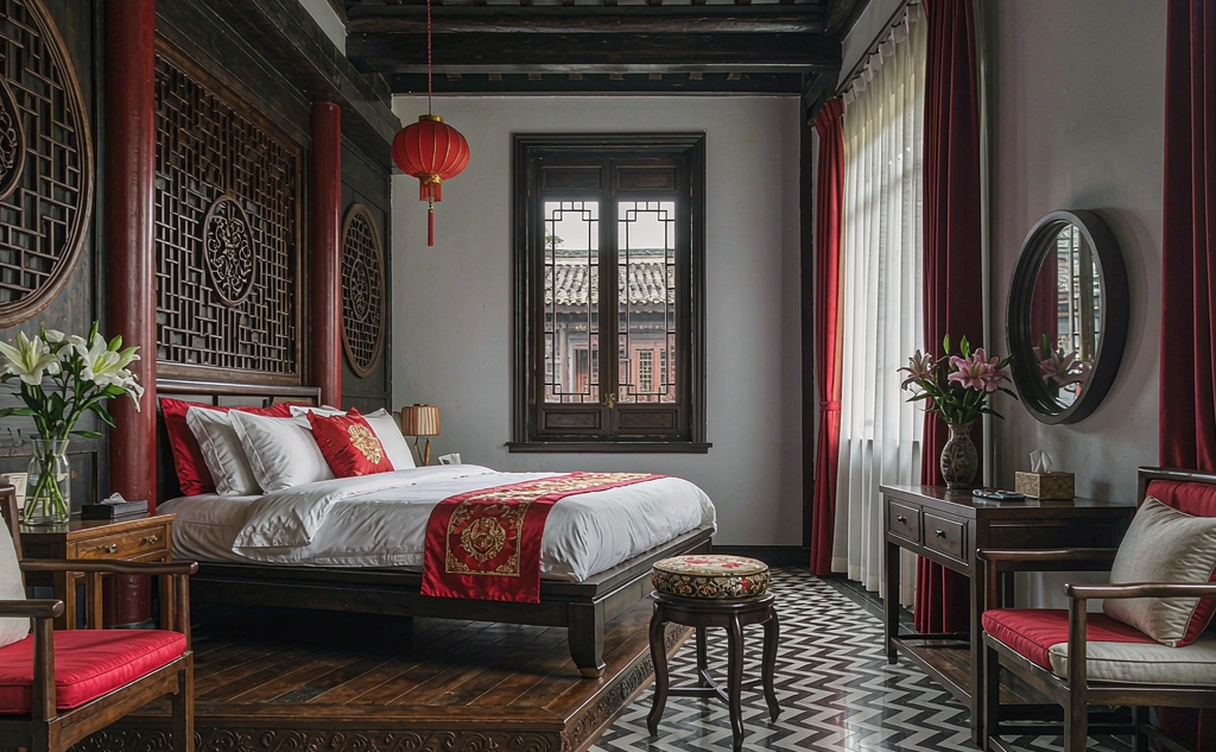
The top tier splits into two personalities. In the new-city area you’ll find international and domestic luxury chains with the usual polished rooms, gyms, and executive lounges — comfortable but interchangeable. In the old town, a handful of high-end heritage properties have converted historic Minnan courtyards into serene, design-led retreats with carved wood screens, small courtyards, and attentive service. These are the ones we send to travelers who want a sense of place.
Expect to pay roughly 900–1,800 RMB per night for a genuine luxury room in peak season, and notably less (sometimes 600–900 RMB) in winter. Quanzhou luxury hotels are far cheaper than their Xiamen or Shanghai equivalents for comparable quality, which is part of the city’s appeal.
Quanzhou boutique guesthouses
This is where Quanzhou shines. Scattered through the lanes behind West Street are restored courtyard homes turned into intimate guesthouses — six to twenty rooms, a tiny garden, a teahouse, and hosts who’ll point you to the best beef-hotpot stall. A Quanzhou boutique guesthouse typically runs 300–600 RMB, occasionally more for a signature suite. They book out on weekends, so reserve ahead.
We particularly like the ones within a five-minute walk of Kaiyuan Temple: you can step out at 7 a.m., beat the tour buses to the pagodas, and drift back for breakfast. If a guesthouse advertises “near West Street” but is actually a 15-minute drive away, that’s a red flag — confirm the walking distance before booking.
Quanzhou budget hostels and mid-range
For backpackers, Quanzhou has a small but solid set of hostels, mostly near the historic quarter and the station. Dorm beds run about 60–100 RMB; private budget rooms 150–250 RMB. They’re basic but clean, and they’re a good way to meet other travelers on the Fujian circuit.
Mid-range (three-to-four-star) Chinese hotel brands fill the gap at 350–600 RMB, offering reliable comfort, breakfast, and elevators — a sensible choice for families who want the old town’s location without a guesthouse’s quirks. A Quanzhou budget hostel works best for solo travelers; for two or three people, a mid-range room is often cheaper per head.
A Quanzhou hotel near Kaiyuan Temple
If you want one specific answer, make it a Quanzhou hotel near Kaiyuan Temple. The temple is the city’s heart — its east and west pagodas are the symbol of Quanzhou — and staying walkable to it puts the best food, the night lanes, and the morning calm all on your doorstep. Nearly every boutique guesthouse and several mid-range hotels in the West Street zone qualify. We’d rather you be slightly cramped in a characterful lane than perfectly comfortable 4 km away in a featureless tower.
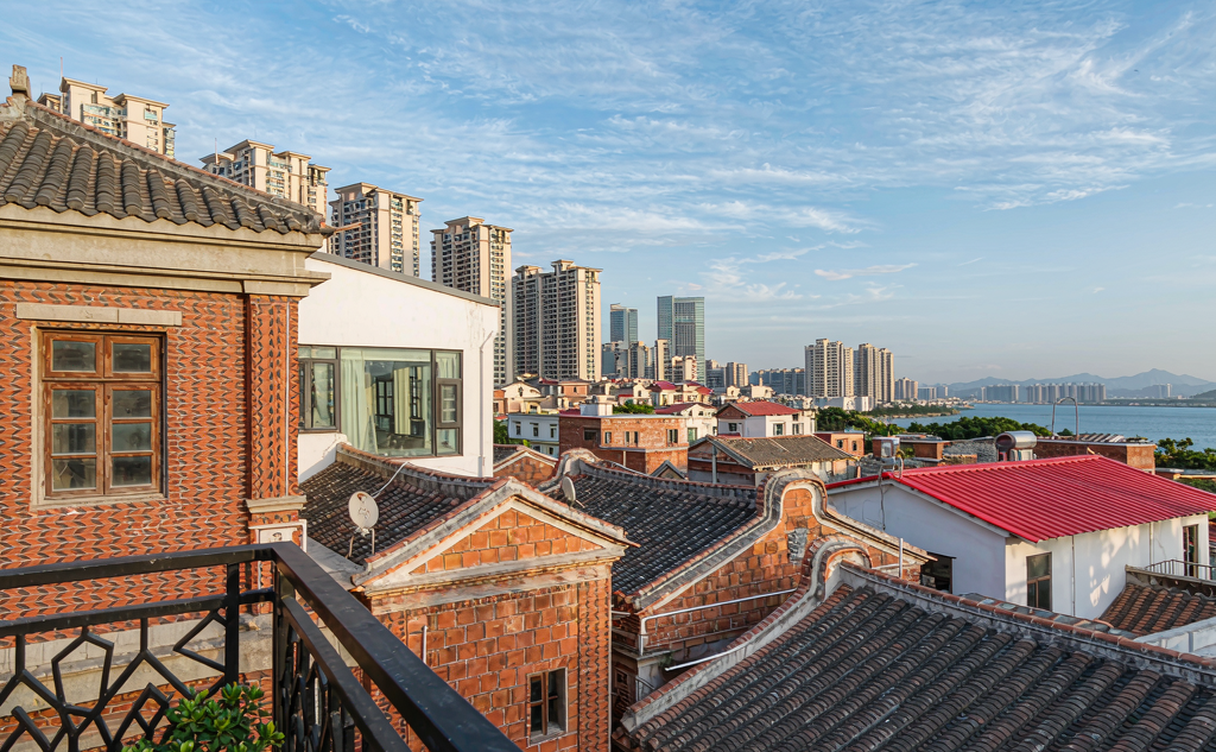
Room type matters more than usual in Quanzhou’s old-town guesthouses. Many are converted lane houses where the “standard” room is compact and the “courtyard” or “terrace” room is the one worth the upgrade — quieter, brighter, and often with a small private outdoor space. If you’re traveling as a couple or with a child, ask specifically about window placement; some interior rooms have only a light well. We’ve found that a direct message to the host gets you a better room than the default assignment, and most hosts reply quickly on the major booking apps.
Getting to Quanzhou is easy, and that shapes where you stay. The high-speed train from Xiamen takes roughly an hour, and from Fuzhou about two; most travelers arrive by rail and taxi straight to the old town. If you’re flying in, Quanzhou has a small airport with a few domestic routes, but Xiamen’s larger airport is often the better international gateway, with a simple train hop up the coast. Either way, staying in the historic core means you can drop your bags and be at Kaiyuan Temple on foot within minutes — the single biggest quality-of-stay advantage the city offers.
Staying near the temple also means you’re steps from Quanzhou’s best after-dark atmosphere. The lanes around West Street fill with small night stalls selling oyster omelets, peanut soups, and the city’s famous beef hotpot, and the twin pagodas are lit subtly so you can stroll back to your room past them. We consistently hear from travelers that the evening walk was the highlight of their stay — something you simply cannot get from a highway-side high-rise. If atmosphere is your priority, sacrifice the pool and the elevators and take the lane house every time; the trade-off is worth it for a first visit.
Booking tips and a wider Fujian loop
- Book early for weekends and holidays. Quanzhou is increasingly popular with domestic travelers; the best old-town guesthouses fill fast for Friday and Saturday nights.
- Confirm walkability. “Near the temple” is a loose term; ask the exact distance or check the map yourself.
- Match the season to the price. Winter (December–February, except Spring Festival) is the cheapest and quietest; the May and October holidays are the priciest.
- Eat your way through the stay. Quanzhou’s food is a highlight — our Quanzhou food guide maps the stalls worth leaving your hotel for.
For a broader trip, Quanzhou pairs naturally with its neighbors. The Xiamen travel guide covers the obvious nearby city if you want a beach-resort contrast. To the west, the earthen Fujian tulou villages make a memorable overnight, while northbound the Fuzhou travel guide extends the Fujian route. Ceramics fans can loop in the Jingdezhen porcelain guide for a full craft-and-coast itinerary.
Quanzhou’s global significance is formally recognized by UNESCO; the listing at UNESCO’s Quanzhou World Heritage page explains why the old port matters.
Stay where the history is — book an old-town room with our Quanzhou food guide in hand so you’re steps from the best stalls.
Pair Quanzhou with the coast — plan the next leg using our Xiamen travel guide and compare two very different Fujian cities.
Want the earthen-tower overnight that completes Fujian? Read our Fujian tulou villages guide to add a unique stay south of Quanzhou.