

Shuanglong Cave, tucked into the hills just north of Lanxi in Zhejiang province, is one of eastern China’s most dazzling show caves, famous for its twin underground springs, colossal lighted chambers, and the unforgettable boat ride that ferries visitors flat on their backs through a narrow limestone throat. If you are planning a Zhejiang karst cave day trip from a nearby hub such as Hangzhou or Jinhua, this Lanxi attraction delivers a cool, otherworldly escape that is especially welcome in the humid summer months. Below you will find everything you need: the story behind the caverns, practical ticket advice, how to reach the cave, and where to eat and sleep nearby.
Why Shuanglong Cave Stands Out
The name Shuanglong means “Twin Dragons,” a reference to two stalactite formations near the cave entrance that local legend says are the heads of dragons guarding the underground river. What sets this site apart from many other Chinese show caves is the scale of its main chamber, which soars high enough to swallow a multi-story building, combined with a carefully designed LED and colored lighting system that turns the limestone into a glowing sculpture gallery. The temperature inside stays around a constant 15°C year-round, making the caverns a natural retreat from Zhejiang’s humid summers.
Geologically, Shuanglong Cave is a classic karst formation created over millions of years as slightly acidic rainwater dissolved the region’s limestone bedrock. The result is a maze of corridors, pools, and dripping curtains of travertine that feel more like a cathedral than a rock shelter. Visitors consistently rank it among the best caves near Shanghai for a half-day excursion, thanks to its combination of easy access, dramatic visuals, and the novelty of the inner boat passage.
Lanxi Shuanglong Cave History
The human story of Lanxi Shuanglong Cave history stretches back more than 1,500 years. Local records show that scholars and monks were already visiting and inscribing poems on the cave walls during the Tang dynasty, and the site grew into a celebrated retreat for literati who came to escape the heat and compose verse by lantern light. Stone carvings and restored pavilions near the entrance still echo that heritage, and a small on-site museum explains how the cave was mapped and opened to the public in the 20th century.
During the Ming and Qing dynasties, the cave became a favored stop on the cultural circuit of the Jinhua region, praised in travel diaries for its “cool breath and jade-like stone.” In the modern era, improved roads and the growth of tourism infrastructure around Lanxi transformed what was once a local pilgrimage into a polished, family-friendly attraction. Today the management balances preservation with access, limiting daily visitor numbers during peak season to protect the fragile formations.
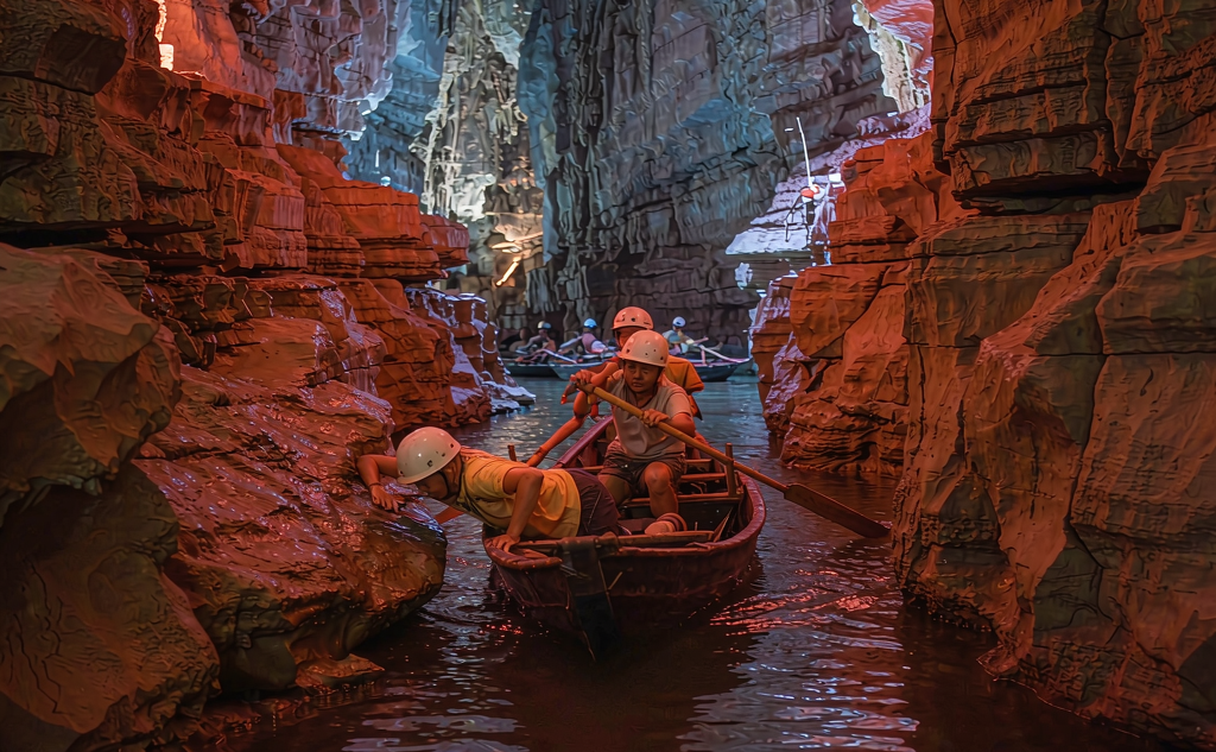
The Famous Shuanglong Cave Boat Ride Inside
No visit is complete without the signature Shuanglong Cave boat ride inside the mountain. Because the entrance to the inner caverns is a low, water-level gap barely a meter high, visitors lie flat on a small motorized punt that glides silently beneath the rock into the hidden world beyond. The passage lasts only a minute or two, but the sensation of slipping through solid limestone with dripping stone just centimeters above your nose is genuinely thrilling and a favorite photo moment.
Once through the throat, the boat delivers you into the vast inner hall where the lighting really shines. Wooden walkways loop past frozen waterfalls of calcite, mirror-still underground pools, and whimsical rock shapes that guides cheerfully name after animals and mythical figures. Comfortable non-slip paths and handrails make the circuit manageable for most fitness levels, though the boat passage itself is not suitable for travelers who cannot lie flat briefly or who have severe claustrophobia.
Shuanglong Cave Lanxi Tickets and Practical Tips
For current pricing, Shuanglong Cave Lanxi tickets typically combine the cave admission with the shuttle from the parking area, and small extra fees apply for the internal boat. Prices rise modestly during national holidays, so checking the official scene notice before you travel is wise. Children, students, and seniors usually qualify for discounted entry with valid ID, and combo passes that include nearby temples or the above-ground park can save money if you plan a full day.
Buy tickets at the front gate or through major Chinese travel apps to skip the worst of the queues on busy weekends. Arrive before late morning if you want to enjoy the boat ride with shorter lines, and wear a light layer since the cave air feels chilly compared with the outside heat. Photography is allowed but avoid flash on delicate formations, and keep your phone secured on the boat since dropping it in the underground river would end the fun quickly.
Planning a longer Zhejiang getaway? Pair your cave trip with our Jinhua travel guide for a full region itinerary. Our Jinhua food guide also points you to the best local noodles and snacks after your underground adventure.
How to Visit Shuanglong Cave from Hangzhou
Learning how to visit Shuanglong Cave from Hangzhou is straightforward thanks to Zhejiang’s fast rail and highway network. The most comfortable route is the high-speed train from Hangzhou East to Jinhua, a journey of roughly one hour, followed by a local bus or taxi for the final 30 to 40 minutes up to the Lanxi cave entrance. Driving yourself is also easy via the G60 expressway, and the scenic countryside along the way makes the trip part of the pleasure.
If you would rather combine the cave with city sightseeing, consider spending a night in Hangzhou first and exploring landmarks such as the Liuhe Pagoda in Hangzhou before heading south. Many travelers book hotels near West Lake in Hangzhou and use the lake city as a base, venturing to Lanxi as a relaxed day excursion. Either way, an early start lets you enjoy the cool caverns at midday and return before the evening rush.
Best Caves Near Shanghai for a Quick Escape
Shuanglong Cave is frequently listed among the best caves near Shanghai, but it is worth knowing the alternatives if you want to compare. The region’s karst landscape produces several show caves, though few match Shuanglong’s boat passage or its polished lighting design. For travelers based in the Yangtze Delta, Lanxi offers a calmer, less commercial atmosphere than some of the more famous cave parks closer to major metros, which is precisely why it rewards the extra travel time.
If your route already takes you through Jiangsu, our Changzhou travel guide covers another Delta city with its own underground and garden attractions worth a stop. The takeaway for cave hunters is simple: Shuanglong pairs naturally with a Hangzhou or Jinhua trip, while purely Shanghai-based visitors should budget a full day of transit for the round journey. The payoff is a genuinely unique underground boat ride you will not find in the average city museum.
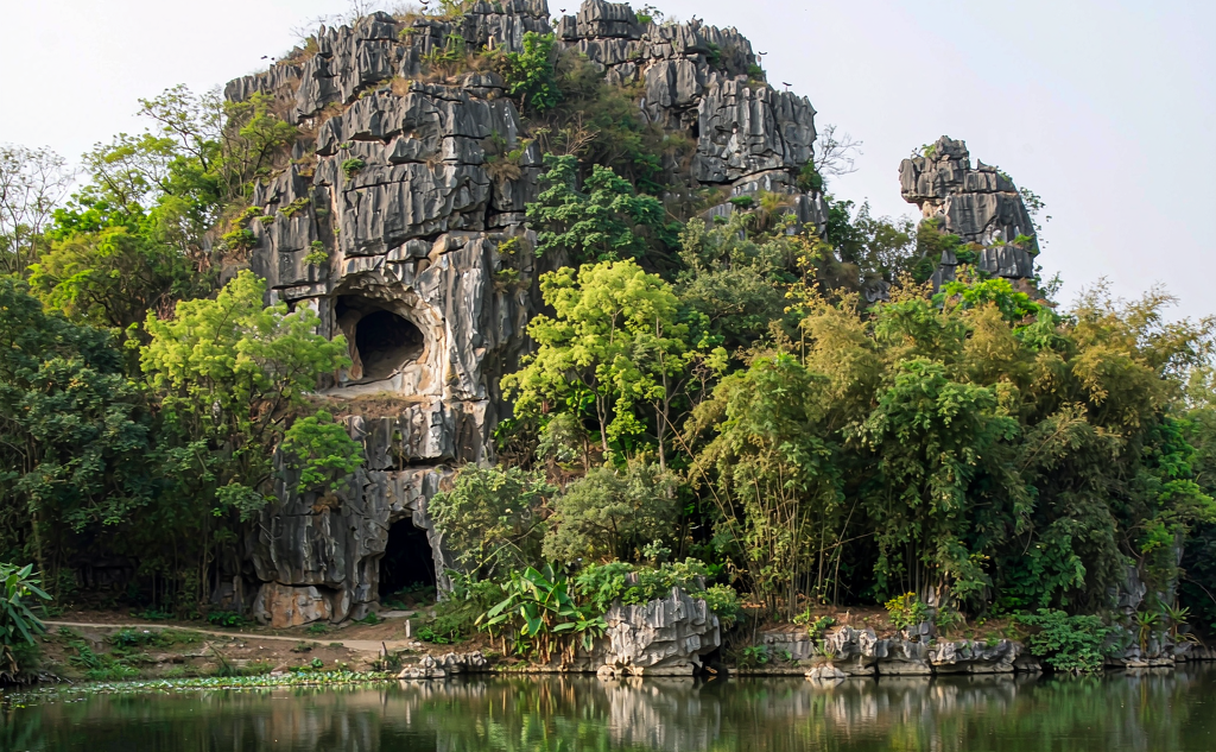
Planning a Zhejiang Karst Cave Day Trip
A well-paced Zhejiang karst cave day trip usually starts with a morning train or drive, reaches Lanxi by late morning, and spends two to three hours exploring the caverns and the surrounding hillside park. Allow extra time for the boat queue on weekends, and consider adding a short walk to the nearby above-ground temples and tea terraces that frame the cave mouth. Spring and autumn offer the most comfortable weather, while summer turns the cool interior into a welcome refuge from the heat.
Photography enthusiasts should bring a camera with good low-light performance, since the colored lighting is beautiful but dim in places. Families with young children will find the experience safe and engaging, though very small kids may need reassurance during the dark boat passage. Our companion Jinhua travel guide maps out a sensible loop that links the cave with other regional highlights if you want to extend beyond a single day.
Want a deeper regional plan? Read our Jinhua travel guide to build a multi-day Zhejiang itinerary, and bookmark our Jinhua food guide for the best post-cave meals in town.
Where to Eat and Stay Nearby
Lanxi itself is a relaxed county-level city with a growing selection of noodle shops, dumpling stalls, and small hotels that cater to weekend visitors. The local cuisine leans into Zhejiang’s sweet-and-savory profile, with river fish, bamboo shoots, and preserved vegetables featuring prominently on menus near the cave road. For a more metropolitan stay, Jinhua city offers a wider range of international hotels and is only a short hop from the caverns.
If you prefer to keep your nights in a bigger city, returning to Hangzhou after the cave is entirely practical, and our hotels near West Lake in Hangzhou guide helps you pick a convenient base. Wherever you sleep, aim to eat at least one slow meal of local specialties to round out the day. The contrast of a chilly, glowing underworld followed by a warm bowl of Lanxi noodles is exactly the kind of memory that makes a Zhejiang karst cave day trip worth the planning.
Ready to book? Browse hotels near West Lake in Hangzhou for a comfortable city base, then use our Jinhua travel guide to finalize your Shuanglong Cave day trip from the capital of Zhejiang.
Visitor Essentials at a Glance
Before you go, remember the core facts: Shuanglong Cave sits north of Lanxi in Zhejiang, about an hour by rail from Hangzhou to Jinhua plus a short transfer; tickets cover admission and shuttle with a small boat fee; the signature experience is the flat-on-your-back boat ride through the limestone throat; and the caverns stay a cool 15°C year-round. For broader context on how these landscapes form, the karst article on Wikipedia explains the geology behind China’s limestone caves in accessible detail. With this guide in hand, you are well prepared to enjoy one of the best caves near Shanghai and a highlight of any eastern China itinerary.