

Planning a museum trip itinerary China two weeks long can feel intimidating. With thousands of collections scattered across a vast country, where do you even begin? The good news is that China’s top museums cluster neatly into a handful of hub cities, and a well-planned China museum route lets you experience four thousand years of art, history, and archaeology without wasting a single travel day. This guide lays out a sensible two-week path through five cities, shares practical China museum pass booking tips, and explains how to photograph responsibly along the way.
Why Follow a China Museum Route
The appeal of a China museum route is focus. Instead of racing between every tourist sight, you let world-class collections tell the story of Chinese civilization. You begin in the capital with grand national treasures, move to the ancient heartland of the Silk Road, then south to the cosmopolitan collections of the Yangtze delta, west to the mysterious bronzes of Sichuan, and finish in the former imperial capital of the southwest. Each stop builds on the last, so the narrative of dynasties, trade, and craft deepens city by city.
A second reason is efficiency. Major museums sit close to metro lines and high-speed rail stations, which means you can pair a morning of galleries with an afternoon of neighborhood wandering. For first-time visitors, a themed route is also less overwhelming than an open-ended trip, because each museum has a clear role in the larger journey.
Week One: Beijing and Xi’an
Start in Beijing, the natural gateway for any China museum route. The National Museum of China sits on Tiananmen Square and holds a sweeping survey of Chinese history from prehistoric jade to modern revolution. Give it a full morning; the ancient bronze and ceramic halls alone reward two hours of slow looking. Across the city, the Palace Museum offers Ming and Qing imperial art in its original setting, a different but complementary experience.
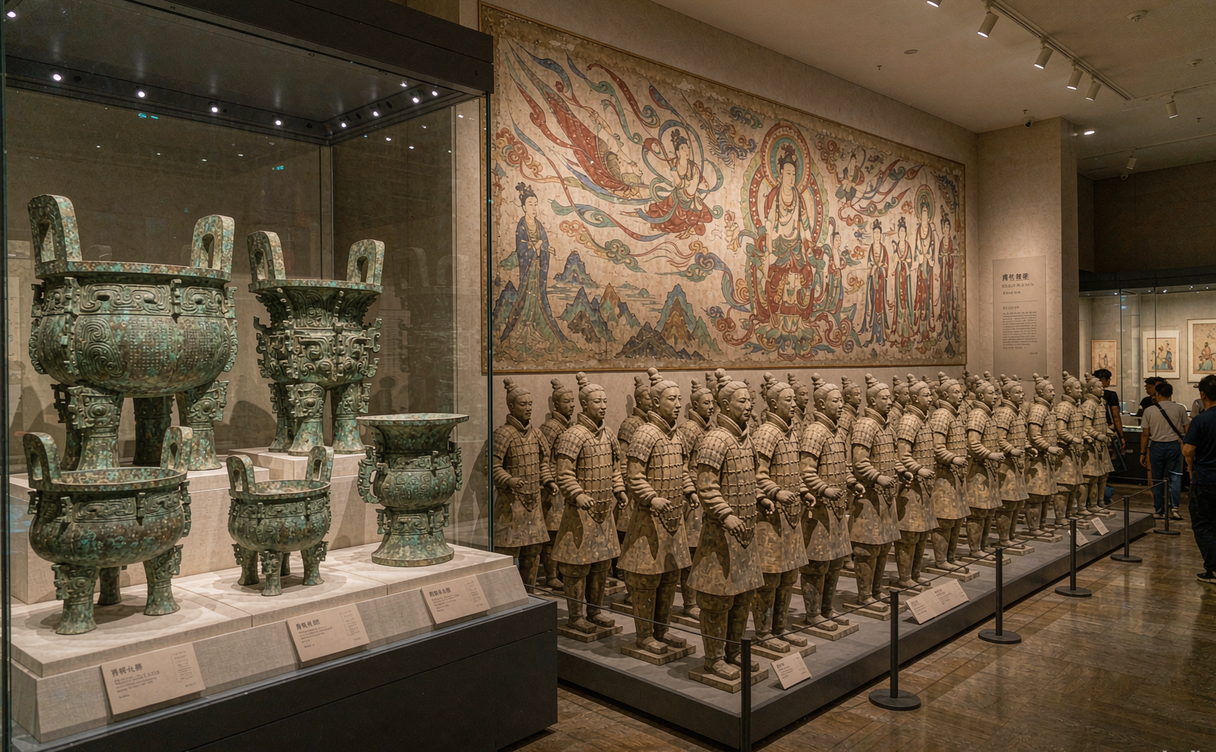
From Beijing, take the high-speed train southwest to Xi’an, the eastern terminus of the Silk Road. The Shaanxi History Museum is the crown jewel here, with Tang dynasty gold, Buddhist sculpture, and murals that once lined imperial tombs. Xi’an is also where the Terracotta Army lives, a short bus ride from the city center. Together, Beijing and Xi’an cover the political and ceremonial core of Chinese civilization, which makes them the perfect opening act.
A useful habit on day one is to book the next city’s tickets before you leave the current one. Free-entry museums such as the National Museum of China require timed reservations that sell out days ahead, so a little forward planning keeps your China museum route on schedule. Our China museum pass booking tips explain exactly how to secure slots without stress.
Ready to lock in your first reservations? Work through our China museum booking guide before you fly, and arrive with every ticket already in your phone.
Week Two: Shanghai, Chengdu, and Beyond
After Xi’an, fly or take the train east to Shanghai, where the Shanghai Museum showcases one of the finest collections of ancient Chinese bronzes and calligraphy in the world. The recently expanded west wing adds ceramics and sculpture across several floors, so plan a relaxed half day. Shanghai’s strength is context: it pairs classical collections with a cosmopolitan city that shows how tradition meets the modern era.
Then head west to Chengdu for a genuine surprise. The Sanxingdui Museum near Chengdu displays bronze masks and figures so distinctive that they reshaped what historians thought they knew about early China. This is the part of a China museum route that feels least like a textbook and most like a discovery, because the culture it reveals was unknown until the late 20th century.
If your schedule allows a fifth city, consider pairing Chengdu with nearby Chongqing or adding a side trip within Sichuan. The point is not to see everything but to let each stop breathe. A museum trip itinerary China two weeks long works best when you resist the urge to overpack the calendar.
Best Museums in China by City
Here is a quick reference for the best museums in China by city on this route:
- Beijing: National Museum of China and the Palace Museum.
- Xi’an: Shaanxi History Museum and the Terracotta Army.
- Shanghai: Shanghai Museum, with its unmatched bronze and calligraphy wings.
- Chengdu: Sanxingdui Museum and the Jinsha Site Museum.
- Optional add-on: Chongqing or a return loop through eastern capitals.
This shortlist keeps your China museum route coherent. Each city contributes a distinct chapter, from national survey to regional mystery, and none of them require detours far from the rail network.
China Museum Photography Rules
Knowing China museum photography rules ahead of time saves awkward moments at the door. Policies vary, but a few constants apply. Flash is almost always forbidden because it damages pigments and disturbs other visitors. Tripods and selfie sticks are usually banned inside galleries, and some exhibits, particularly those with loans or textiles, are no-photo entirely. Look for the camera icon with a slash, and when in doubt, ask a staff member.
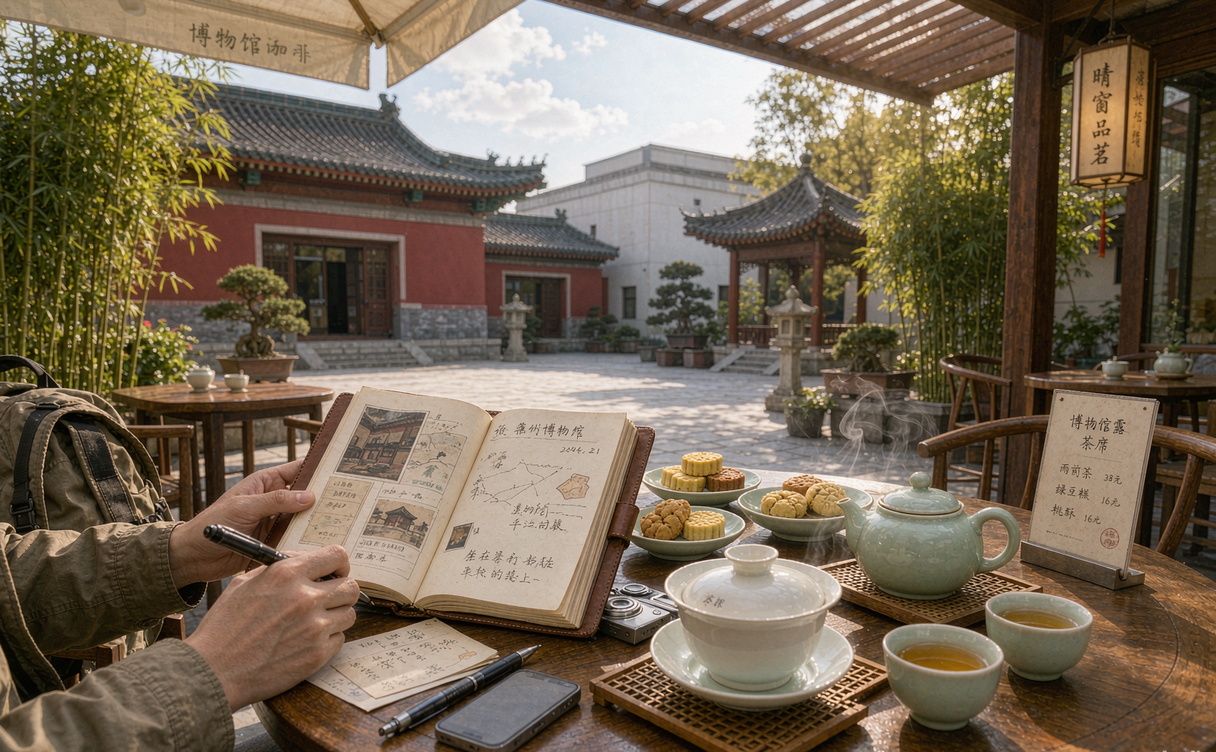
A respectful approach actually improves your pictures. Shoot in available light, turn off the shutter sound, and step back so you are not blocking a doorway. Many travelers find that sketching or note-taking captures more than a rushed photo ever will. Remember that the goal of a China museum route is understanding, not a social media reel, and the museums reward patience.
Best Time for a China Museum Route
The best time for a China museum route is spring, from March to May, or autumn, from September to early November. Crowds thin outside the summer holidays and the National Day week in early October, and the mild weather makes walking between metro and museum pleasant. Winter is also viable if you prefer quiet galleries, though some sites shorten hours.
Whatever season you choose, aim to enter at opening time. The first hour is the calmest, the light through the gallery windows is soft, and you will have space to appreciate the major pieces before tour groups arrive. Pair early starts with an afternoon rest, and your two-week China museum route will feel energizing rather than exhausting.
Practical Booking and Money Tips
Most major museums are free but require advance timed reservation through official apps or websites. The National Museum of China, for example, releases slots on a rolling basis and they disappear quickly on weekends. Keep a screenshot of your passport and a local SIM or eSIM so verification messages arrive without delay. For paid sites like the Terracotta Army, buy from the official channel to avoid inflate resellers.
It also helps to group museums by neighborhood. In Beijing, the National Museum and the Palace Museum are within walking distance, so a single day covers both. In Shanghai, the museum sits at the edge of People’s Square, steps from gardens and galleries you can enjoy for free. Thoughtful clustering is what turns a list of addresses into a real China museum route.
Want the full reservation playbook, with screenshots and app names? Open our China museum booking guide and never miss a release window again.
Make It Your Own
A China museum route is a template, not a cage. Some travelers swap Chengdu for Hangzhou’s silk and tea museums, while others extend into Nanjing for its comprehensive city history. The best museums in China by city change with new openings, so check current exhibits before you fly. What stays constant is the pleasure of moving through time, one collection at a time, with a clear path that removes the guesswork.
The National Museum of China is described in detail by the encyclopedic record at National Museum of China on Wikipedia, which is a handy background read before your visit. Use it to preview the highlights, then let the objects themselves do the teaching once you are standing in the gallery.
For inspiration beyond museums, browse our best things to do in China to round out your afternoons with markets, parks, and local food that make each city memorable.
Build your personalized plan today: start with our China museum booking guide and turn this two-week outline into a confirmed, ticket-ready itinerary.