

When the summer heat presses down on a Sichuan street, locals do not reach for ice cream. They sit on a low stool at a roadside stall and order a bowl of something cold, trembling, and sweet. This is the world of Chinese ice jelly bingfen, a family of herbal dessert bowls that cools you from the inside out. For foreign travelers, these bowls are one of the most rewarding culinary discoveries in China: cheap, refreshing, endlessly customizable, and deeply tied to the regions where they are sold.
The phrase Chinese ice jelly bingfen actually covers a few different treats that often get lumped together by visitors. “Ice jelly” usually refers to a translucent, jelly-like cube made from a plant-based starch or extract, served over shaved ice with brown sugar syrup. “Bingfen” is the powder-fine shimmering jelly, most famous in Sichuan, made from the seeds of a flowering plant and dressed with brown sugar, nuts, and fruit. There is also grass jelly, a dark, faintly bitter jelly made from a member of the mint family, and these three are often lined up side by side at the same stall.
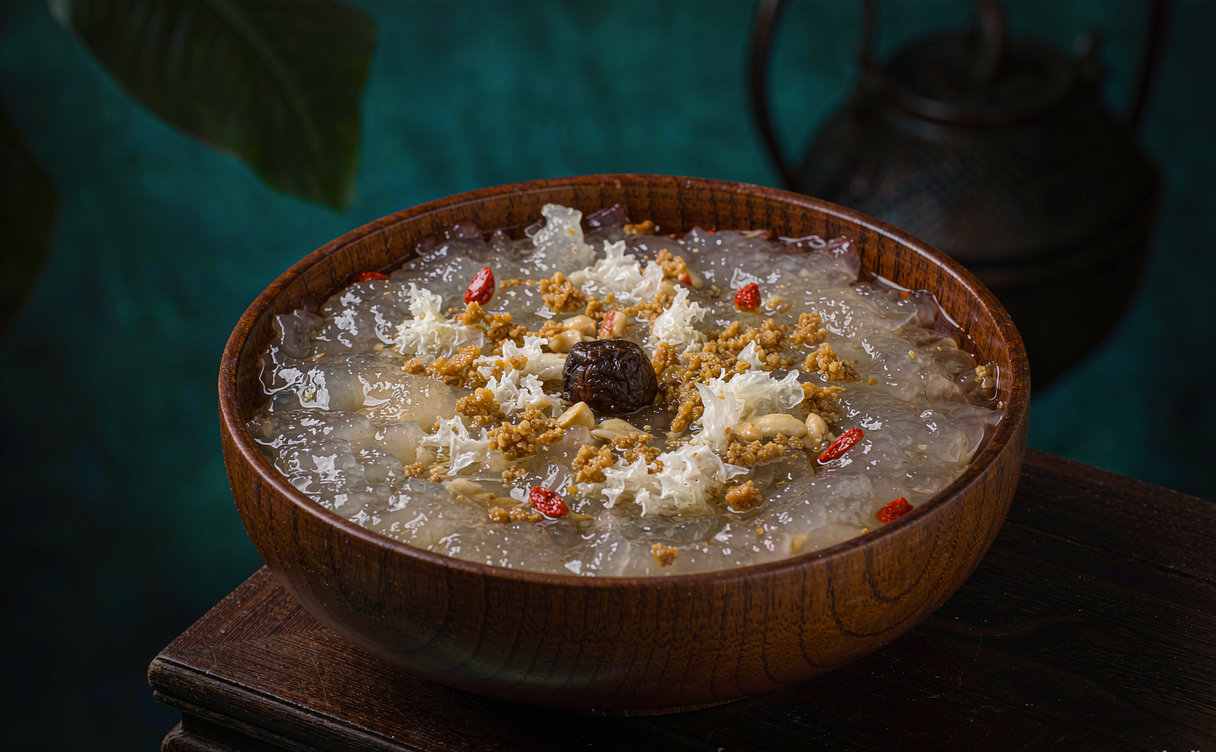
An ice jelly bingfen guide should start with how the bowls are built. A typical Sichuan bowl begins with a mound of snowy shaved ice. Over it goes a wobbling portion of the jelly, then a generous pour of dark, molasses-like brown sugar syrup. From there the toppings multiply: crushed peanuts, sesame seeds, raisins, dried longan, tremella (silver ear fungus), hawthorn slices, fresh fruit, and sometimes a spoonful of fermented rice wine. The result is cold, sweet, nutty, and texturally alive in a way that no Western dessert quite matches.
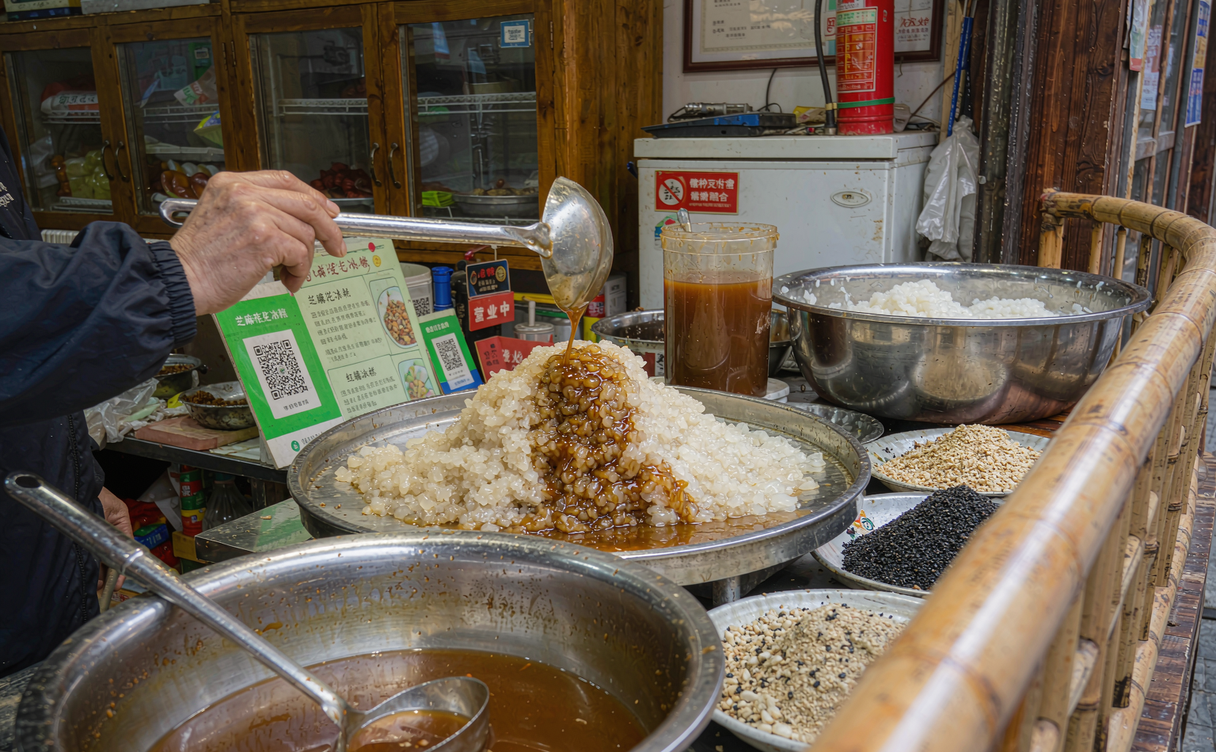
One of the most common questions travelers ask is about bingfen versus grass jelly China styles. They are not the same. Bingfen is nearly colorless and almost flavorless on its own, which is the point: it is a canvas for the syrup and toppings. Grass jelly, by contrast, is black, glossy, and carries a clean herbal bitterness that pairs beautifully with sweetened condensed milk or taro balls. In southern China, especially Guangdong and Taiwan, grass jelly is the star. In Sichuan and Chongqing, bingfen rules the summer. Knowing the difference helps you order with confidence instead of guessing at the counter.
If you want to taste the real thing, the best place to begin is where to eat bingfen in Chengdu. Wander the alleys around Kuanzhai Xiangzi (the Wide and Narrow Alleys) or the streets near Jinli, and you will find stalls with stainless tubs of shaved ice and clerks scraping jelly into bowls at speed. Many hotpot restaurants also list bingfen on the dessert menu, so you can pair a fiery meal with a cooling finish. Our Chengdu food guide maps out exactly which neighborhoods to target and what else to eat while you are there.
Learning how to order ice jelly in Chinese is easier than it sounds, and a few phrases go a long way. You can simply point and say “bingfen yi wan” for one bowl of bingfen, or “bingfen, bu yao la” if you want it without any chili oil (some regional versions do include a surprising dash). If you prefer grass jelly, ask for “xiancao”. Most stall owners are delighted that a foreign visitor knows the words and will happily load your bowl with extra peanuts. For a deeper dive into the regional flavors behind these bowls, see our Sichuan cuisine guide.
Budget travelers will be happy to learn about ice jelly dessert prices China wide. At a street stall a basic bowl of bingfen typically costs only a few yuan, roughly the price of a bottled water, while a loaded bowl with premium toppings might run a little higher. In a tourist shopping street or a sit-down dessert cafe, prices climb but are still modest by Western standards. Either way, this is one of the best value experiences you can have, and it doubles as a way to rest your feet in the shade during a long day of sightseeing.
The social side of these bowls is part of the charm. Bingfen summer dessert stalls appear almost overnight when the weather warms, setting out plastic stools and folding tables. Entire families gather in the evening, the children chasing the jelly around the bowl with their spoons while the adults chat. As a traveler, sliding onto a stool and ordering a bowl is a small, friendly way to join a very local rhythm of life. It is the kind of moment that never shows up in a guidebook’s top ten list but stays with you long after the trip.
The plant behind bingfen has a long history in Chinese food culture. The jelly is traditionally made by rubbing the tiny seeds of the plant in water until a natural pectin is released and the liquid sets into a soft gel. This traditional method is still celebrated, though many city stalls now use a quick-setting powder for consistency. Either version delivers the same cooling effect. For travelers curious about the botany and regional variations, the Wikipedia entry on bingfen offers a clear overview of how the dessert spread across China.
Beyond Sichuan, you will meet cousins of this dessert across the country. In Chongqing, the bowls are often sharper and spicier in the surrounding meal, making the cold jelly an even greater relief. In Yunnan, fruit-forward versions show up with fresh mango and passion fruit. In Guangdong, grass jelly takes center stage in sweet soups. Each region puts its own stamp on the idea of a cold herbal bowl, which makes hunting for them a fun thread to follow on any China itinerary. Our China desserts and sweets guide collects many of these regional treats in one place.
Pairing matters too. A bowl of bingfen is the classic antidote to a numbing, oily Sichuan hotpot. Order it at the end of a meal and the cold sweetness resets your palate completely. If you want to plan a full evening around this contrast, our Chengdu hotpot guide and Chongqing hotpot guide both explain how to build a meal that ends on a cool, sweet note.
For travelers who like a rule of thumb, think of it this way: choose bingfen when you want something light, neutral, and syrup-sweet; choose grass jelly when you want a deeper, herbal, almost medicinal note; choose ice jelly cubes when you want texture and a frosty base. All three are sold from similar stalls, all three are cheap, and all three are worth trying so you can decide which becomes your personal favorite.
There are a few practical tips worth keeping in mind. Go early in the evening, when stalls are freshest and lines are shortest. Watch how the syrup is poured; a good stall uses real brown sugar, not a thin sugary syrup, and you can taste the difference immediately. If you have a nut allergy, tell the vendor clearly, since peanuts and sesame are standard toppings. And do not be afraid to ask for “shao tang” (less syrup) if you find Chinese sweets run sweeter than you like.
The broader appeal of these bowls fits neatly into any trip. They are vegetarian friendly, naturally gluten free in most cases, and served at a temperature that feels like a gift on a hot afternoon. They also make a wonderful bridge to other parts of Chinese food culture, because the same stalls often sell fermented rice, glutinous rice balls, and sweet soups that open a whole new category of snacks. For ideas on weaving food stops into a wider route, our best things to do in China guide is a helpful companion.
Cool off with a bowl of bingfen on your next Sichuan trip — start with our Chengdu food guide.
Want the full fiery-and-cold combo? Plan a hotpot dinner and finish with grass jelly using our Chongqing hotpot guide.
Discover more regional sweets and where to find them with our China desserts and sweets guide, and build the perfect cooling break into your itinerary.