

If you have ever wandered a bakery in southwest China and caught the scent of fresh roses drifting from a flaky pastry, you have met the star of this guide. The Yunnan floral cake is a buttery, crumbly shortcrust pastry filled with sweetened rose petals, and it has quietly become one of the most beloved edible souvenirs in the province. For foreign travelers, it is also one of the easiest and most delightful local foods to enjoy, because it is mild, fragrant, and forgiving to uncertain palates. This Yunnan floral cake guide will walk you through what the pastry is, where to find the best versions in Kunming and Dali, how to eat it, and how to bring some home without it going stale.
What Exactly Is a Yunnan Floral Cake
At its heart, the Yunnan floral cake is a relative of the broader family of Chinese flower-filled pastries, but it has a personality all its own. The outer shell is a layered, oil-rich shortcrust that shatters when you bite in, similar in texture to a tender southern biscuit. The filling is made from edible rose petals, most famously the “Aoping” rose grown around Dali and in the hills near Kunming. The petals are cured with sugar and sometimes a touch of honey, then folded into a thick, jam-like paste that balances floral perfume with gentle sweetness.
Unlike many Chinese pastries that lean heavily on red bean or lotus seed, the Yunnan floral cake leads with aroma. The first impression is the smell of a rose garden after rain. The taste follows with a soft, candy-like sweetness that is never cloying when made well. Bakeries often offer small variations: some add a hint of osmanthus, others fold in a few crushed nuts, and a few experiment with passion fruit or citrus to brighten the rose. But the classic rose version remains the icon, and it is the one travelers should try first.
The cake is sometimes called a “rose cake,” and in Dali you will see it labeled as a local rose pastry in small independent shops. The Kunming versions tend to be larger and more uniform, produced by well-known provincial brands with long histories. Both are worth tasting, because the regional differences are part of the fun.
Where to Buy Rose Floral Cake in Kunming
For travelers wondering where to buy rose floral cake in Kunming, the good news is that the city makes it easy. Kunming is the provincial capital and the commercial hub of the rose pastry trade, so nearly every bakery, train station kiosk, and airport shop sells some version. The most reliable approach is to visit a dedicated floral cake shop near the city center or inside the major shopping districts. Look for stores with glass cases stacked high with individually wrapped cakes, because those are usually freshest and meant for gifts.
A smart first stop is one of the long-established Kunming brands that have been baking rose cakes for decades. These shops typically let you sample a broken piece before buying, and they package the cakes in decorative boxes that survive a long train or flight. If you want a deeper food adventure across the city, pair your pastry hunt with our Kunming food guide, which maps out markets, noodle stalls, and sweet shops worth the walk.
Beyond the famous brands, Kunming’s wet markets and morning food streets hide smaller operators who bake in smaller batches. Their cakes may be less polished but often taste brighter, because the rose filling is made daily. Ask your hotel concierge or a friendly vendor to point you toward the nearest “rose cake” stall, and you will almost always be rewarded.
The Dali Rose Cake Bakery Tour
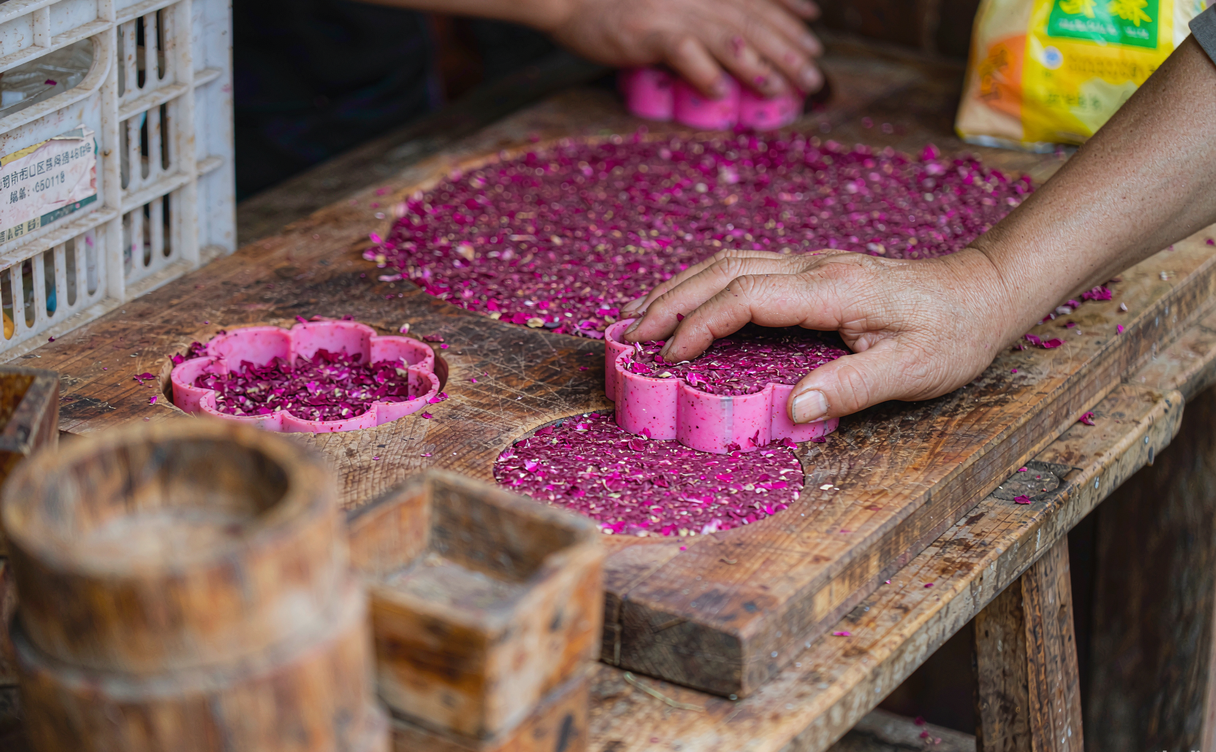
Dali sits at a higher altitude with cooler air, and the local roses grown on the Erhai lakeside foothills have a particularly intense fragrance. That is why a Dali rose cake bakery tour has become a favorite half-day activity for slow travelers. The old town of Dali and the nearby village of Xizhou are dotted with family bakeries where you can watch the pastry being pressed into wooden flower-shaped moulds, then baked until the edges turn the color of weak tea.
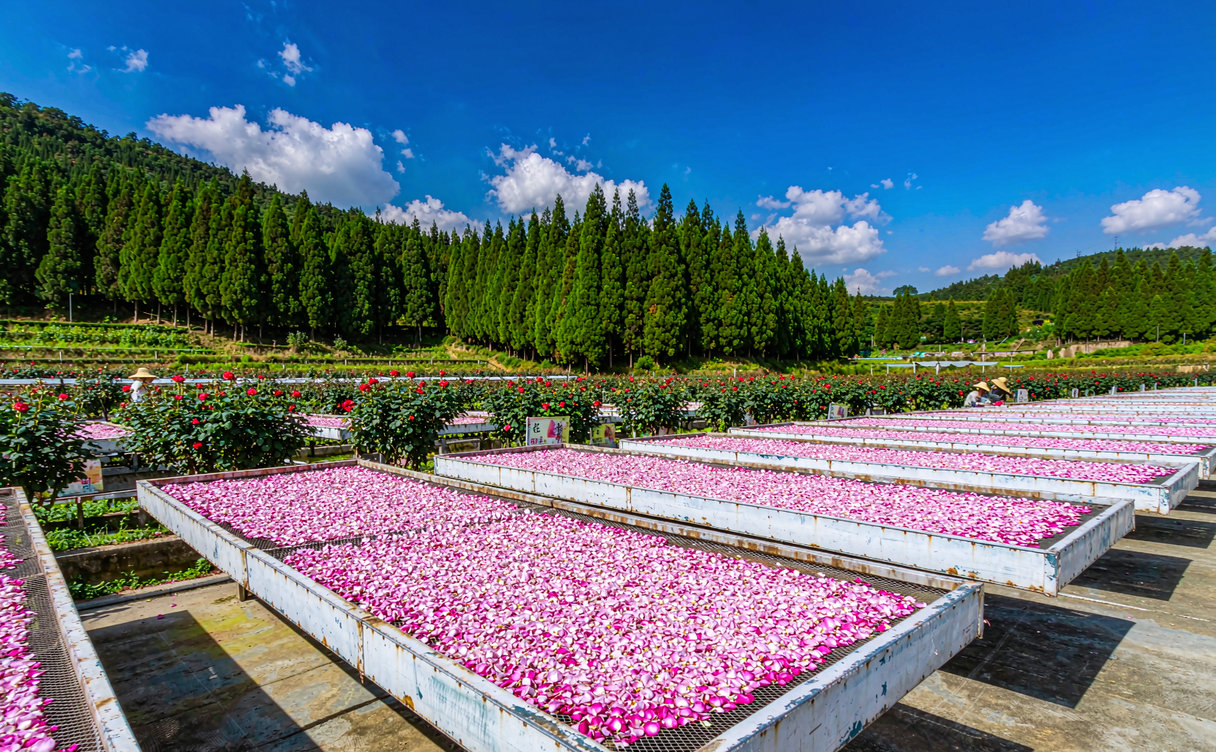
On a typical Dali rose cake bakery tour, you start in the old town with a café that bakes small, palm-sized cakes to order. The aroma alone is worth the visit. From there, many travelers rent a bicycle or e-bike and ride toward Xizhou, stopping at roadside farms that sell roses by the bucket and fresh cakes by the basket. Some farms even let you peek at the petal-drying trays, where rose blossoms are spread in thin layers to concentrate their scent before sugar curing.
If you are building a broader itinerary, our Dali travel guide lays out the old town, the lake, and the surrounding villages in a logical loop that fits a bakery crawl perfectly. Food lovers should also browse the Dali food guide for cheese, cured hams, and other local bites that pair surprisingly well with the sweet rose pastry.
How to Eat Yunnan Floral Cake
Learning how to eat Yunnan floral cake is refreshingly simple, but a few tricks make it better. The cake is delicious at room temperature, and that is how most shops sell it. For the fullest flavor, however, warm it for twenty to thirty seconds in a toaster oven or a dry pan over low heat. The warmth wakes up the rose oils and makes the crust even more brittle and fragrant.
Travelers often ask whether to pair it with something. The answer is yes, and the best companion is a plain Chinese green tea or a light black tea, which cuts the sweetness and lets the floral notes shine. In Yunnan itself, locals sometimes enjoy the cake with a cup of pu-erh, the fermented local tea, which creates an earthy-sweet contrast. Avoid strong milk or sugary drinks, because they smother the delicate rose.
Another pleasant way to eat it is to crumble a cake over plain yogurt or vanilla ice cream. The crumbs add a buttery, floral crunch that turns a simple dessert into something memorable. You can also pack a few cakes for a picnic beside Erhai Lake or on a Kunming rooftop at sunset. Because the pastry is sturdy and individually wrapped, it travels well within a day or two of purchase.
Floral Cake Versus Mooncake
A common question from first-time visitors is floral cake versus mooncake, since both are round-ish filled pastries sold in gift boxes. The differences are significant. The mooncake has a denser, chewier crust and richer fillings like salted egg yolk, red bean, or lotus paste, and it is tied to the Mid-Autumn Festival. The Yunnan floral cake, by contrast, has a flaky, short, biscuit-like crust and a light rose filling, and it is eaten year-round as an everyday treat and souvenir.
Texture is the quickest tell. Bite a mooncake and you meet resistance and depth; bite a floral cake and it crumbles. Flavor is the second clue: mooncakes are complex and savory-sweet, while floral cakes are bright and floral. If you enjoy one, you may still love the other, but they scratch different cravings. For travelers curious about the wider world of Chinese sweets, our China desserts and sweets guide compares these and many other regional treats side by side.
Floral Cake Prices and Shelf Life
Understanding floral cake prices and shelf life helps you shop smart. In Kunming and Dali, a single fresh cake from a small bakery usually costs a modest amount, while branded gift boxes range higher depending on packaging and filling quality. Handmade farm versions can be priced between the two, and they are often the best value for flavor. Prices rise a little in tourist-core streets, so stepping one block off the main drag usually saves money without sacrificing quality.
Shelf life is the part travelers most often get wrong. A truly fresh, preservative-free floral cake is best within a few days, especially in warm weather, because the rose filling can ferment or the crust can turn soft. Commercially packaged versions with sealed individual wrappers and a printed date typically last longer and are the safest choice to carry home. Always check the date, keep the cakes away from direct sun, and if you plan to fly with them internationally, choose sealed boxes that clearly list ingredients for customs.
Planning Your Pastry Trip
The best season for a rose pastry pilgrimage is late spring through early autumn, when Yunnan’s roses are in peak bloom and bakeries roll out the freshest batches. Kunming’s mild climate means you can hunt floral cakes comfortably almost any month, while Dali’s cooler air makes summer bakery rides especially pleasant. Try to build your tasting around markets that open in the morning, because that is when same-day cakes appear.
Pair the food with a little culture. After a bakery crawl in Dali, many travelers continue to Lijiang or deeper into Yunnan, and our Lijiang food guide picks up the trail with Naxi dishes and mountain teas. If your trip spans the whole country, our best things to do in China roundup can help you slot Yunnan into a larger route without missing icons elsewhere.
For background on the region’s geography and history, the Dali City entry on Wikipedia is a handy, reputable reference that explains the old town, the lake, and the Bai culture that shape local foodways.
Bringing Cakes Home
If you want to take Yunnan floral cake home as a gift, buy sealed, dated boxes from a reputable shop rather than loose pastries from a market stall. Pack them in your carry-on if possible, because checked baggage temperature swings can soften the crust. Declare any food items honestly at customs and keep the ingredient label visible. A small box of rose cakes makes a thoughtful, lightweight souvenir that captures a scent of Yunnan better than any postcard.
The Yunnan floral cake is more than a snack. It is a small, edible postcard from one of China’s most flower-loving regions, and it rewards the curious traveler with fragrance, texture, and a story worth telling at home. Whether you chase it through Kunming’s branded bakeries or Dali’s family workshops, the rose pastry is a sweet, low-risk adventure that fits any itinerary.
Ready to taste Yunnan’s rose pastries yourself? Plan a stop in Dali with our Dali travel guide.
Want more sweets across the country? Explore our China desserts and sweets guide to compare floral cakes with mooncakes and other regional treats.
Building a full Yunnan route? Start with the Kunming food guide and then branch out to Dali and Lijiang for a complete bakery-to-table trip.