

At 6:40 on a Tuesday morning in Lanzhou, the queue outside the noodle shop already bends around the corner. Inside, a man in a white skullcap slaps a rope of dough against a steel counter — thwack, fold, thwack — and eight seconds later drops a fistful of noodles into boiling water. Nobody in line looks up. They are reading their phones, holding paper receipts, waiting for a bowl that costs about nine yuan and takes four minutes from order to table.
You order by width, not by name. “二细,” the man ahead of me says — medium-fine. The woman behind him wants 毛细, hair-thin, almost translucent. A student asks for 大宽, belt-wide. Same broth, same beef, same radish, completely different mouthfeel. In Lanzhou this is not a gimmick. It is the whole point.
The five characters a bowl is judged on
Ask a Lanzhou local what makes a good bowl and you will hear a mnemonic, not a recipe: 一清、二白、三红、四绿、五黄. One clear, two white, three red, four green, five yellow. Clear broth. White radish. Red chili oil. Green cilantro and garlic sprout. Yellow, springy noodles. Miss one and the bowl is “not right”, even if a visitor would happily finish it.
What sits in front of you is a halal beef noodle soup: a beef-and-bone broth simmered until it is deep but still see-through, hand-pulled wheat noodles, thin slices of braised beef, translucent wedges of daikon, a spoonful of chili oil, and a fistful of herbs. It is not the thick, cloudy, mouth-numbing “Lanzhou lamian” sold in food courts abroad. The real thing is quieter. The broth tastes of beef and toasted spice rather than chili; the heat arrives late, from the oil, and you control how much.
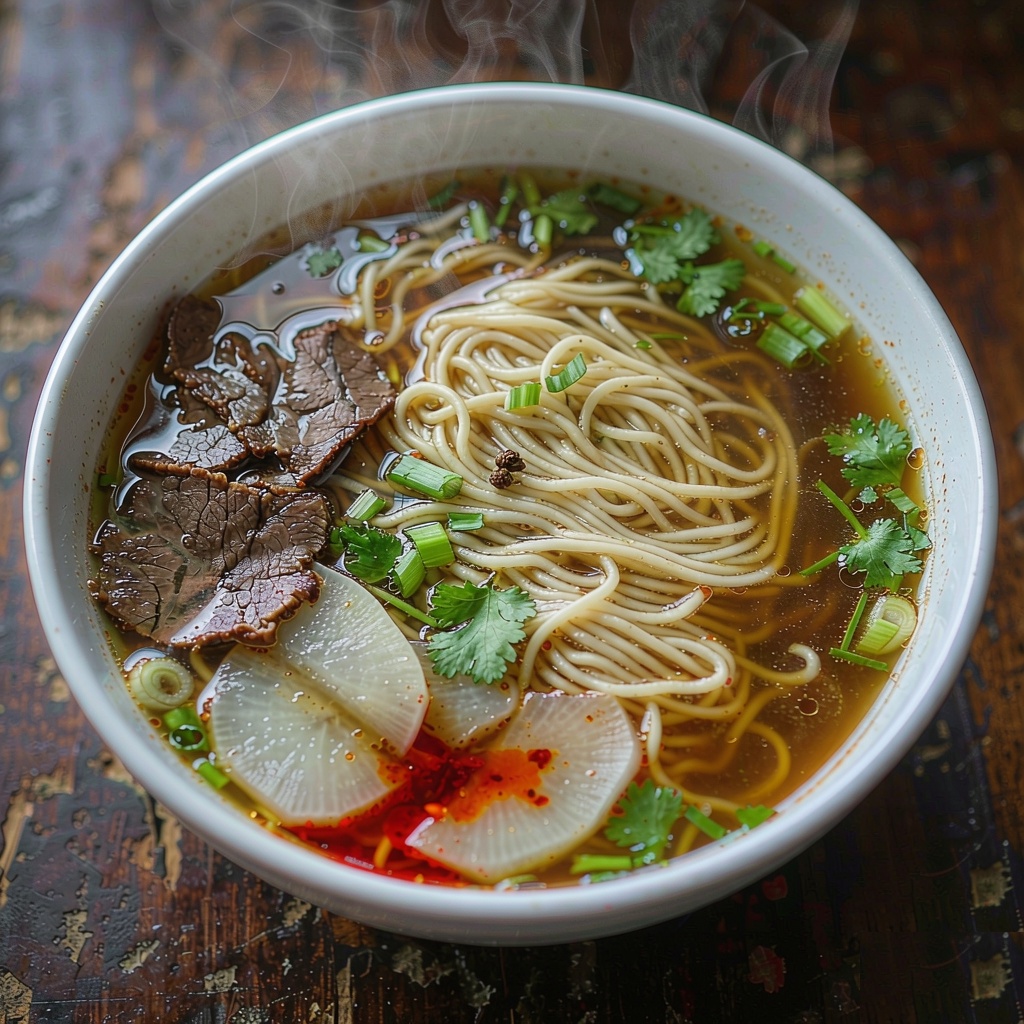
The character is what surprises first-time eaters: it is gentle. There is 草果 (black cardamom) and cassia in the broth, a little ginger, a whisper of fennel, and the finish is clean rather than fatty. The noodles have a faint alkaline snap — the same sensation as good ramen, but lighter. The radish softens in the hot soup and turns sweet. The beef is braised separately until a chopstick passes through it, then sliced thin so it warms in the bowl without overcooking.
Lanzhou eats this for breakfast. Not brunch, not lunch — breakfast, from about six in the morning, often standing, often in ten minutes. That timing tells you most of what you need to know about the dish: it is built to be fast, cheap, savoury and easy on a stomach at 7 a.m. If you want to plan a morning around it, there is a whole route worth following in this guide to eating Lanzhou beef noodles across the city.
What actually goes into the bowl
Restaurant versions use a commercial stockpot and a dough hook. A home version for four people is entirely doable, but you need to accept two things up front: the broth wants three hours, and the noodles want practice. Quantities below are for four generous bowls.
For the broth
- Beef shin or brisket, 1.2 kg, cut into fist-sized chunks (shin gives the best gelatin and slices cleanly)
- Beef bones, 1 kg — marrow bones and knuckles, split
- Water, 4 litres
- Ginger, 40 g, smashed
- Spring onion, 2 stems, tied in a knot
- Black cardamom (草果), 2 pods, cracked
- Cassia bark, 1 stick; star anise, 2; fennel seed, 1 tsp; Sichuan peppercorn, 1 tsp; bay leaf, 2; dried ginger (山奈), 3 slices; clove, 2
- Salt, 2–3 tsp, added near the end
For the noodles
- High-gluten wheat flour (bread flour works), 500 g
- Water, 245–255 ml, at room temperature
- Salt, 5 g
- Food-grade alkaline noodle agent (拉面剂) or baked soda, 2–3 g — this is what gives the yellow tint and the snap
To finish
- Daikon, 300 g, peeled and cut into thin half-moons
- Chili flakes, 3 tbsp; toasted sesame, 1 tsp; hot rapeseed oil, 120 ml
- Cilantro, a small handful, chopped; garlic sprout or spring onion, 2 tbsp, sliced
- Black vinegar, to taste, on the side
The puller’s part, and the honest home shortcut
The dough is where restaurants separate themselves. It is flour, water, salt and alkali, nothing else — but the ratio of water to flour changes with the weather, and the dough must rest long enough for the gluten to relax without going slack. Pullers rest it 30 to 60 minutes under a damp cloth, then work it through a sequence of stretches and folds before the first real pull. A trained hand goes from a rope to 毛细 in under a minute. A first-timer goes from a rope to a pile of broken ends.
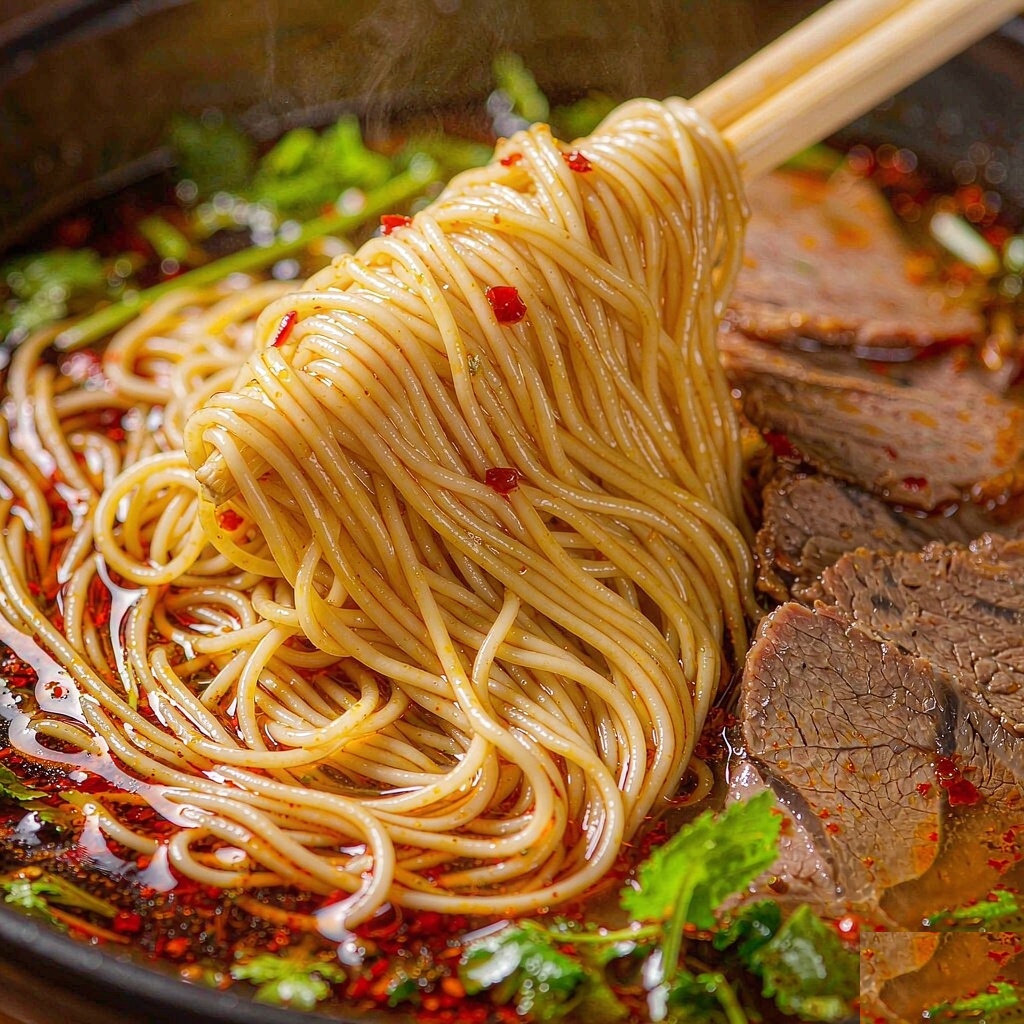
There are at least eight standard widths: 毛细, 细, 三细, 二细, 韭叶 (leek-leaf flat), 宽, 大宽 and 皮带宽 (belt-width). Thin noodles hold less broth per strand but feel silkier; wide ones pick up chili oil and give more chew. At home, unless you already pull noodles, I would skip the performance. Buy fresh alkaline wheat noodles from a Chinese grocer, or roll the dough thin and cut it with a knife into 韭叶-style ribbons. The bowl will be 90 per cent there, and you will not be fishing broken noodles out of the pot at 9 p.m.
Cooking it at home, step by step
- 1. Soak and blanch. Put the beef and bones in cold water for 30 minutes to draw out blood, then blanch in boiling water for 3 minutes. Drain, rinse off the scum, and wash the pot. This single step is the difference between a clear broth and a muddy one.
- 2. Start the broth cold. Return the meat and bones to the clean pot with 4 litres of cold water, ginger and the knotted spring onion. Bring to a bare simmer — small bubbles at the edge, not a rolling boil — and skim patiently for the first 20 minutes.
- 3. Add the spices in a bag. Toast the cardamom, cassia, star anise, fennel, peppercorn, bay, dried ginger and clove in a dry pan for 30 seconds, tie them into muslin, and drop the bag in. Simmer, uncovered, for 2.5 to 3 hours. Top up with hot water if the level drops below the meat.
- 4. Pull the beef early. After about 90 minutes, lift out the chunks that are tender and set them aside to cool. Leave the bones in for the full time. Skim the fat that rises; keep a spoonful of it for the chili oil if you like.
- 5. Season late. Salt the broth only in the last 15 minutes. Salting early tightens the beef and makes the broth taste flat. Taste for salt, then for spice — it should be savoury and aromatic, not salty.
- 6. Make the chili oil. Put the chili flakes and sesame in a heatproof bowl. Heat the rapeseed oil to about 180°C — a drop of chili flake should sizzle immediately but not blacken — and pour it over in three stages, stirring between each. Let it sit while you finish everything else.
- 7. Cook the noodles separately. Boil them in a large pot of unsalted water until just tender, 2 to 3 minutes for fresh noodles. Never cook them in the broth; the starch will cloud it and the broth will thicken into something closer to gravy.
- 8. Assemble in the bowl, not the pot. Ladle hot broth over the drained noodles, add the daikon (blanched for 2 minutes in the noodle water), lay the sliced beef on top, spoon over chili oil, and finish with cilantro and garlic sprout. Vinegar goes on the table, never in the kitchen.
Where home cooks go wrong
The broth boils. A hard boil emulsifies fat and scum into the liquid and turns it opaque. Clear broth is a technique, not an ingredient: keep it at a tremble, skim often, and never let it reduce uncovered for hours without topping up.
The spices go in raw and whole. Untoasted cardamom and cassia taste dusty. Thirty seconds in a dry pan fixes that. Too much clove or star anise will also flatten the beef — the spice bag should perfume the broth, not dominate it.
The chili oil is made with smoke. Oil that is too hot scorches the flakes and turns bitter. If you are unsure, heat the oil until it shimmers, wait 30 seconds, then pour. The colour should be brick red, not brown.
The radish is added too early. Daikon left in the broth for an hour turns mushy and sour. Blanch it separately and add it at the end, or simmer it in the broth for no more than five minutes.
The noodles sit. Hand-pulled noodles continue to absorb broth and soften within minutes. This is a bowl to eat immediately, which is also why the best shops have a four-minute turnaround and no delivery menu.
Who this bowl suits — and who should order something else
It suits anyone who likes clean, beefy soups and wants control over heat. It is a good introduction to Chinese noodles for children, because the chili oil is served on the side and the broth is mild. It is also one of the most reliable meals in China for travellers keeping halal: Lanzhou is a Hui city, and the dish is traditionally made with halal beef in kitchens that do not handle pork. If you are mapping your options, this overview of halal food across China is worth reading before you travel.
It does not suit everyone. The noodles are wheat, so it is off the table for coeliac diners and anyone on a strict gluten-free diet — there is no rice-noodle version in a traditional shop. The broth is beef-based, which rules it out for vegetarians, and restaurant broths are often seasoned with MSG, so ask for 不放味精 if that matters to you. The chili oil is optional but present in the kitchen; if you cannot tolerate any heat, say so clearly. And if you are watching sodium, ask for 少盐 — the broth can be salty, especially in chains.
Lanzhou, Hualong, and the name on the sign
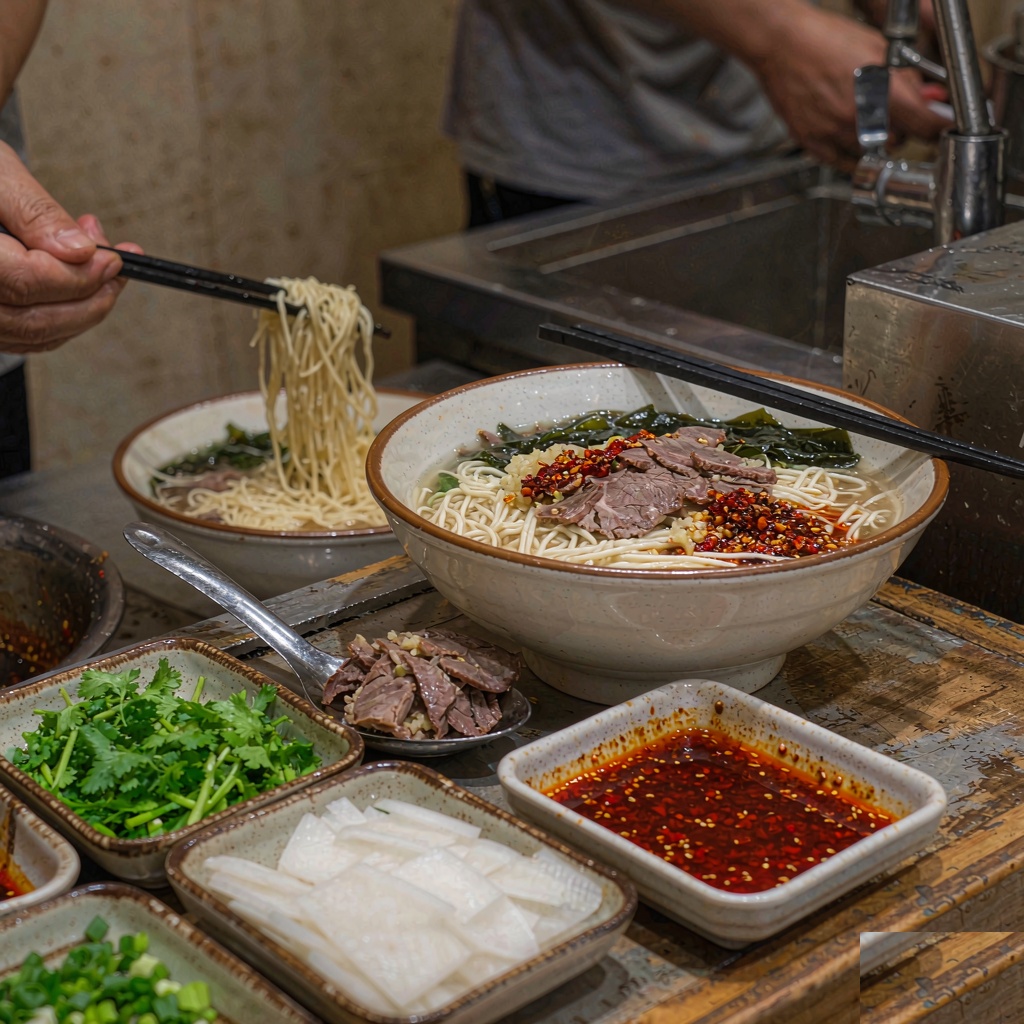
Here is a fact that confuses a lot of visitors. Most of the “兰州拉面” shops you see across China — the ones with the green sign and the man pulling dough in the window — are not run by people from Lanzhou at all. Many are run by families from Hualong Hui Autonomous County in neighbouring Qinghai, who began opening noodle shops in the 1980s and adopted the Lanzhou name because it sold better. Lanzhou locals will politely tell you the difference: their dish is 兰州牛肉面, beef noodles, and the broth is clear; the Hualong version is often darker, spicier and heavier on chili. Both are good. They are not the same bowl.
Within Gansu, the variations are mostly about width and garnish rather than recipe. 加肉 means extra beef; 加蛋 adds a braised egg; 小菜 brings a plate of pickled vegetables or cold shredded potato. Some shops offer 干拌, the noodles tossed with chili oil and beef without broth, which is a different pleasure entirely. Move east and the family tree widens: Shaanxi has its own beef noodles, and the wider repertoire of Gansu cuisine runs from hand-pulled noodles to lamb skewers and wheat-based staples. If you want to place Lanzhou in the bigger picture, this survey of Chinese regional noodle styles is a useful map.
What stays constant is the standard: clear broth, white radish, red oil, green herbs, yellow noodles. Once you have eaten a good bowl, the mnemonic stops being a slogan and becomes a checklist you cannot unsee. You will notice a cloudy broth. You will notice radish that has gone soft. You will notice noodles that were cooked an hour ago. That is the trouble with learning a dish properly — it ruins the mediocre versions for you, and makes the good ones worth a six-hour train ride.