

Most visitors come to Dali, in Yunnan, for the mountains and the lake — Cangshan rising behind, Erhai spreading blue in front — and discover the food almost by accident. That is a pity, because Dali cooks some of the most distinctive food in southwest China, shaped by the Bai people who have farmed this valley for a thousand years. This Dali food guide is written from trips spent eating through the old town’s lanes, the lakeside villages and the Tuesday markets, and its purpose is simple: to make sure you arrive hungry and know exactly what to order.
The Bai Kitchen: What Makes Dali Food Its Own
Dali sits at about 2,000 metres on the old Tea Horse Road, and its cooking is milder and more dairy-friendly than the fiery food of central Yunnan. The Bai (白族), the region’s largest ethnic group, built a table around the lake’s fish, the valley’s rice and a surprising love of milk — unusual in China, where most regions barely use it. The China ethnic minorities travel guide explains how these communities each kept their own kitchen, and Dali’s is among the most original.
The Bai themselves are profiled on Wikipedia’s Bai people page, which is worth reading before you eat — their three-course tea ritual alone tells you more about local hospitality than any map.
The Dishes You Should Not Miss
Rushan milk fan (乳扇). The dish Dali is famous for and the one to try first. Cow’s milk is curdled, stretched into a thin sheet, and twisted around a stick into a fan shape to dry — a cheese, really, closer to a paneer or a fresh pecorino than anything else in China. On the street it is grilled over coals and brushed with rose-sugar syrup (玫瑰糖) so it crisps at the edge and goes sweet and chewy within; ¥5–12 a stick. This is the heart of any Dali cheese and rice experience, and it is the snack you’ll crave on the way home.
Xizhou baba (喜洲粑粑). A flat wheat bread from the lakeside town of Xizhou, baked in a barrel oven until blistered, filled either with sweet brown-sugar-and-rose or with savoury pork and scallion. ¥6–12 from the old bakeries near the Xizhou market, best eaten warm, and the single best thing to eat on a morning scooter ride around Erhai.
Erhai claypot fish (砂锅鱼). The lake’s own fish, head and all, simmered in a clay pot with Yunnan ham, tofu and a basket of local mushrooms. Mild, clean and built for rice — ¥60–110 at a lakeside restaurant, and the reason to sit by the water rather than in the old town for this one dish.
Sour-spicy fish (酸辣鱼). The everyday version: Erhai fish braised with pickled vegetables, dried chillies and a sour note from tomato or fermented plum. Bolder than the claypot, ¥50–90, and the dish to order if you want a little heat.
Erkuai and ersi (饵块 / 饵丝). Rice pressed into a cake (kuai) or a noodle (si), then grilled, fried or boiled. The celebrated version is Weishan ersi — thin rice noodles in a pork-and-herb broth, ¥10–18, eaten for breakfast across the region. Our Yunnan rice noodles guide covers the wider noodle culture, but Dali’s ersi has its own chewy character.
Carved plum (雕梅) and pea-flour jelly (豌豆粉). The preserved plum, scored and candied, is a Bai sweet you take home by the jar; the pea jelly is a cold, savoury street snack dressed with vinegar, chilli and crushed peanuts, ¥5–10. Both turn up at every market.
Where to Eat: Old Town, Lakeside and Markets
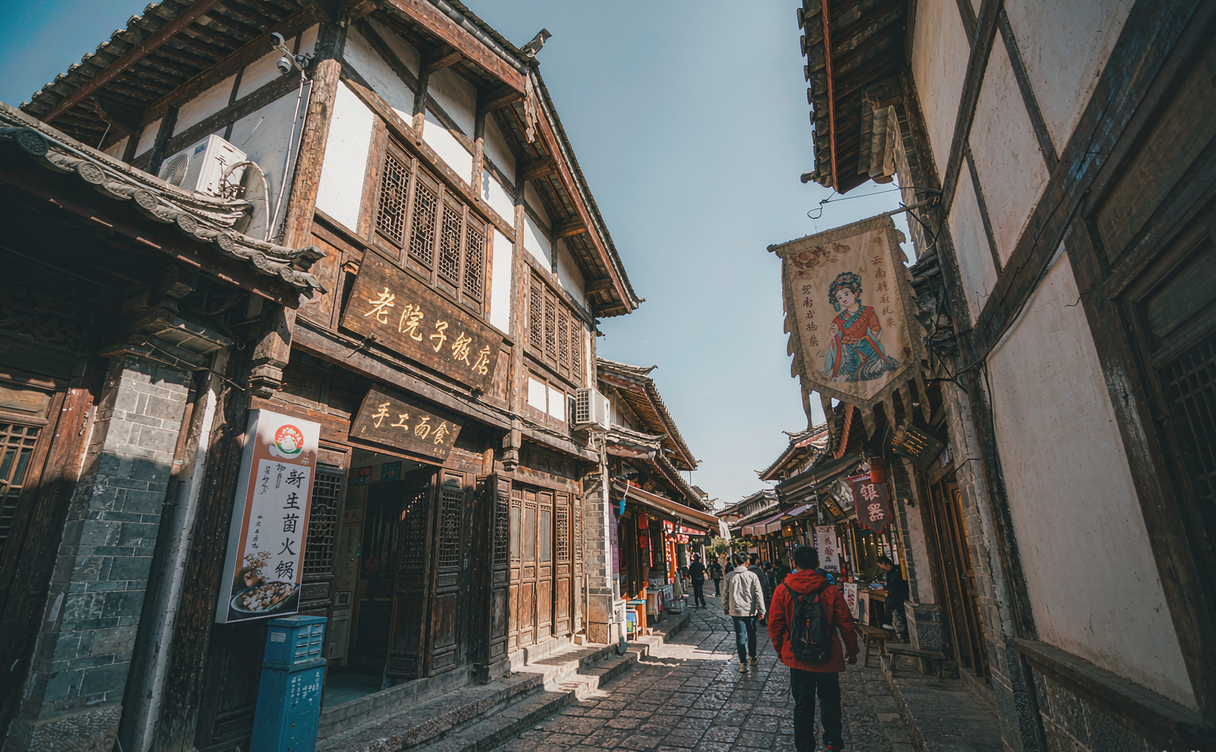
Dali Old Town (大理古城). The easy base. The lanes off Renmin Road and the stretch near the south gate hold the best old town restaurants: small Bai kitchens doing claypot fish and sour-spicy fish for ¥50–90 a head, plus rushan stalls every few metres. The front-of-lane places are tourist-priced; walk toward the residential north end for better value.
Xizhou (喜洲). Fifteen minutes by bus or scooter, this Bai village is the baba capital and has the finest old courtyard houses. Come on market day (every three days by the lunar calendar) when the food stalls multiply and the cheese is freshest.
Shuanglang (双廊). The photogenic lakeside village on Erhai’s eastern shore, where the restaurants trade on the view as much as the fish. Pretty and pricier; go for a long lunch, not a budget feed.
The Tuesday market and village fairs. Dali’s rural markets are where the real eating happens: fresh rushan, grilled corn, rice cakes, and the Bai three-course tea poured by women in traditional dress. Our Dali Yunnan travel guide lists the market days and how to reach them.
The Bai Three-Course Tea Ceremony
No Dali food tour is complete without sancandao cha (三道茶) — the Bai “three-course tea” served in order: the first bitter (roasted bitter tea), the second sweet (with brown sugar, walnut and raisins), the third an aftertaste (with honey and a pinch of pepper). It is part hospitality, part philosophy — life is bitter, then sweet, then worth remembering — and it is performed in teahouses across the old town and in Xizhou courtyards for ¥30–60 including a short singing performance. Go once; it frames every other bite you’ll eat here.
Best Time to Eat in Dali
Dali’s high-mountain air keeps it mild and dry, but the calendar still changes the table. Spring (March–May) is the standout: the Third Month Street fair (三月街) in April draws vendors and performers, the cherry blossoms frame Cangshan, and the rushan is at its fresh. Autumn (September–November) is clear, golden and the best for lake fish and long lunches in Shuanglang. Summer (June–August) brings the rainy season — green and quiet, with mushrooms everywhere (only eat foraged ones cooked in a proper kitchen). Winter (December–February) is cold at night but brilliantly sunny by day, with the lake at its stillest and the tea ceremony at its cosiest.
A good northward pairing is the Lijiang travel guide for Naxi food and the Lugu Lake guide for the Mosuo kitchen on the far side of the mountains; both build on what you learn eating in Dali.
Practical Tips and Ordering
Order family-style and share. A table of two can eat claypot fish, a plate of rushan, an ersi each and tea for ¥150–250 total — Dali is among the better-value food towns in Yunnan. Spice here is gentle; ask for 麻辣 or 辣 if you want more, and 不辣 for none.
A note on shengpi (生皮), the traditional Bai dish of lightly scalded pork skin and meat: it is a genuine local specialty and beloved by many, but it is served rare, and travellers with cautious stomachs should approach it carefully or skip it. The cooked dishes above are universally safe and a better introduction.
Vegetarians eat very well: rushan (cheese), baba, pea jelly, mushroom claypots and endless vegetable stir-fries built on the valley’s produce. Confirm no pork stock in the broths if you’re strict. Payment is easy — Alipay and WeChat Pay work in the old town and the bigger lakeside spots, though carry ¥100 in cash for the village markets where cards don’t reach.