

The Night a Bowl of Mapo Tofu Shut Me Up
The first time I ate real mapo tofu (麻婆豆腐, mapo doufu) I was sitting on a plastic stool in a narrow Chengdu restaurant with one wall fan and a floor that never quite dried. The dish came out in a clay bowl still ticking with heat. I took one spoonful and stopped talking for a solid minute. It was not simply hot. The heat arrived in two waves: a blunt chili burn across the tongue, and then a cool, buzzing numbness that crept through my lips and sat there like static. That second sensation — má, the tingle of Sichuan peppercorn — is the entire point of the dish.
Years later, after cooking it badly more times than I will admit, I can say this: mapo tofu is one of the cheapest, fastest, most rewarding things a home cook can make, and also one of the easiest to ruin. The version most people meet abroad — pale cubes in a thin red sauce — has almost nothing to do with the real thing. What follows is the dish as it is actually eaten in Sichuan, plus the mistakes I made so you do not have to.
What Mapo Tofu Really Is
Mapo tofu is a braised tofu dish built on three pillars: soft tofu, a spoonful of fermented broad-bean chili paste called doubanjiang, and ground meat (traditionally beef, but pork is common). Everything else — garlic, ginger, scallion, stock, a final dusting of toasted ground peppercorn — exists to support those three. It belongs to Sichuan cuisine, the branch of Chinese cooking that made a philosophy out of the numbing-spicy pairing, and it sits at the very center of that tradition.
The name is a nickname, not a description. Má pó means roughly “the pockmarked old woman,” after the nineteenth-century Chengdu cook credited with the recipe. The dish was born as cheap food for laborers — bean curd was the poor man’s protein — and it has stayed humble ever since. In its home city you will find it in banquet halls and in six-seat kitchens alike, and the six-seat version is usually better.
Taste and Texture: What “Má Là” Actually Feels Like
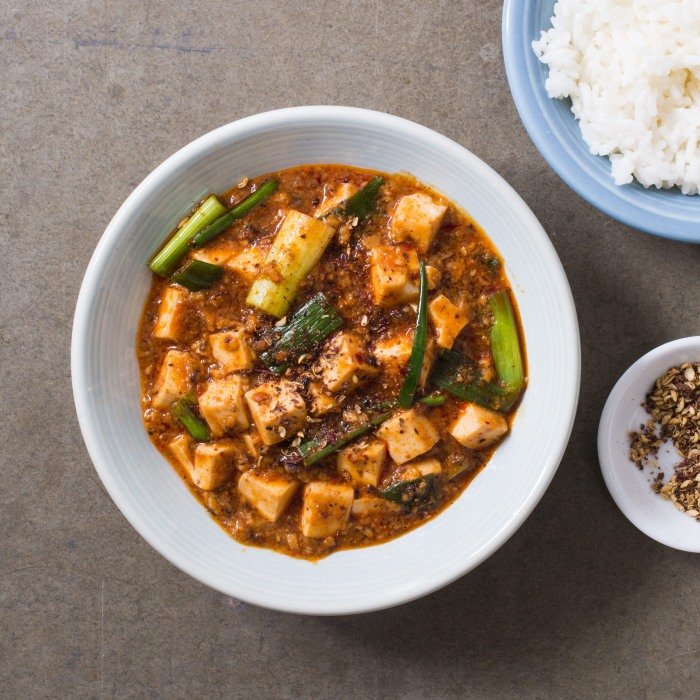
Sichuan cooks judge mapo tofu against a string of characters, and the useful ones for a beginner are má (numbing), là (chili-hot), tàng (piping hot), xiāng (fragrant) and nèn (delicate). A good bowl is all five at once. The tofu should be so soft it barely holds shape on the spoon, yet intact enough to cube. The sauce should cling, not pool like soup. And the aroma should hit you before the heat does.
What surprises first-timers is that mapo tofu is not mainly a chili dish. The doubanjiang brings salt, fermented depth and a slow-building red heat; the peppercorn brings the tingle; the meat brings a savory, slightly crisp counterweight to all that softness. If your mapo tofu tastes only of chili, someone used too much chili oil and too little fermented bean.
The Ingredients That Do the Heavy Lifting
This is a two-person-with-rice dish as written, and it scales cleanly. Do not skip the doubanjiang; there is no substitute for it.
- Soft or silken tofu — 400 g (about one block), cut into 2 cm cubes. Firm tofu works, but the result is a different, tougher dish.
- Doubanjiang (Pixian chili bean paste) — 1½ tablespoons. This is the backbone. Buy the fermented kind, ideally from Pixian.
- Ground beef or pork — 100 g, roughly 20% fat.
- Fermented black beans (douchi) — 1 teaspoon, rinsed and chopped. Optional but it deepens the savoriness.
- Garlic — 3 cloves, minced; ginger — 1 thumb, minced.
- Sichuan peppercorns — 1 teaspoon, toasted and ground fresh. Pre-ground loses the magic within weeks.
- Chili flakes or chili oil — 1 teaspoon, or to taste.
- Light soy sauce — 2 teaspoons; Shaoxing wine — 1 tablespoon.
- Stock or water — 200 ml. Chicken or pork stock if you have it.
- Cornstarch slurry — 1½ teaspoons cornstarch in 2 tablespoons cold water.
- Scallions — 3, white parts for cooking, green tops to finish; toasted sesame oil — a few drops at the end.
Who It Suits — and Who Should Order Something Else
Mapo tofu is a gift to anyone who wants a fast, protein-rich, meat-light dinner on a weeknight: it goes from fridge to table in about twenty minutes and costs very little. It suits people who like bold, fermented, spicy flavors and are happy to eat it over plain rice, which is how it is meant to be eaten. It is naturally low in dairy and, if you swap the meat for finely chopped mushrooms, it converts easily into vegetarian Buddhist temple cuisine, where meat-free versions of this dish are a staple.
It is not a good choice for anyone who cannot tolerate chili or the tingling of Sichuan peppercorn — the tingle is genuinely strange if you have never felt it, and a small number of people find it metallic rather than pleasant. It is also saltier than most Western dishes, because doubanjiang and soy sauce both carry a lot of sodium, so anyone watching salt should halve the soy sauce and taste before adding more. People with a soy allergy should skip it outright. And because the classic version uses ground beef, vegetarians need the swap mentioned above, while anyone avoiding pork simply asks for the beef version, which is the original.
How to Cook It, Step by Step
Read the whole method once before you start. The cooking itself takes under ten minutes, and there is no time to chop mid-pan.
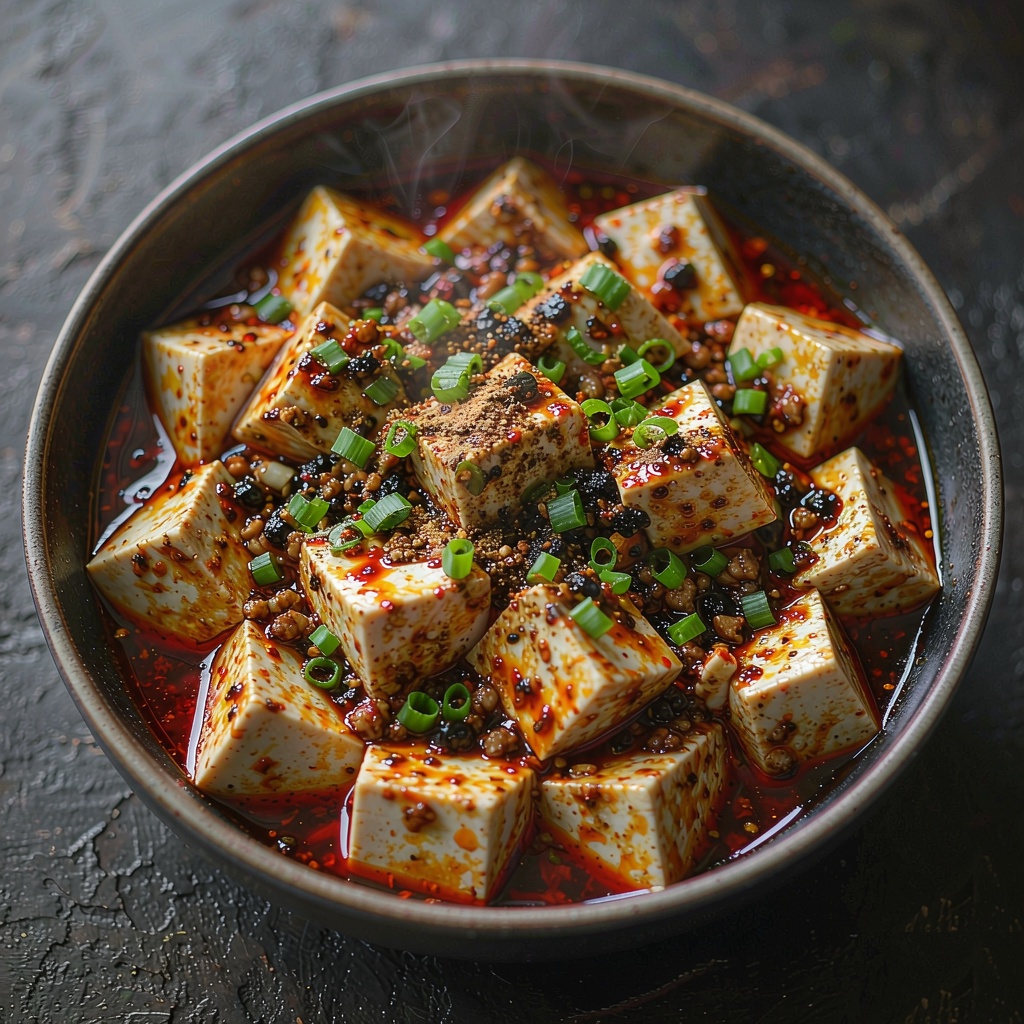
- Step 1 — Bloom the pepper. Toast the Sichuan peppercorns in a dry pan over medium heat for about 40 seconds, until they smell floral, then grind them to a powder. Set aside; you will use this only at the very end.
- Step 2 — Treat the tofu. Slide the tofu cubes into lightly salted hot water, turn off the heat, and let them sit for three minutes. This firms the outside, seasons the interior and stops them breaking later. Drain gently.
- Step 3 — Brown the meat. Heat a wok or wide pan over high heat with two tablespoons of oil. Add the ground meat and press it flat; let it brown undisturbed for a minute before breaking it up. You want small, crisp, well-browned bits, not grey mince.
- Step 4 — Fry the paste. Push the meat to one side, lower the heat to medium, and add the doubanjiang, douchi, garlic and ginger into the oil. Fry for 60–90 seconds until the oil turns deep red and smells roasted. This step is where the dish is won or lost; undercooked paste tastes raw.
- Step 5 — Deglaze. Splash in the Shaoxing wine, let it hiss for a few seconds, then add the stock and soy sauce and bring to a gentle simmer.
- Step 6 — Braise the tofu. Slide the drained tofu in and push it gently with the back of a spoon rather than stirring. Simmer for four to five minutes so the cubes soak up the sauce without disintegrating.
- Step 7 — Thicken in stages. Stir the cornstarch slurry, then add it in two or three small pours, swirling the pan between each. Stop when the sauce coats the tofu in a glossy film. More slurry than this turns it gluey.
- Step 8 — Finish off the heat. Kill the flame, scatter the scallion greens, add a few drops of sesame oil, and dust the reserved ground peppercorn generously over the top. Serve immediately with plain rice — the dish goes flat if it waits.
Mistakes I Made So You Don’t Have To
The first mapo tofu I cooked was a soup. I had used firm tofu straight from the packet, no cornstarch, and far too much stock, and the result was pale cubes floating in red water. The second mistake was the opposite: I over-thickened it into a paste and the tofu shattered when I stirred. The fix for both is the same — thicken gradually and stop early.
Two smaller traps are worth knowing. First, do not stir; a spoon pushed gently from the edge moves everything without breaking cubes. Second, grind your peppercorn fresh, and add it after the heat is off. Cooked peppercorn loses the tingle that makes the dish worth eating.
Regional Variations Worth Knowing
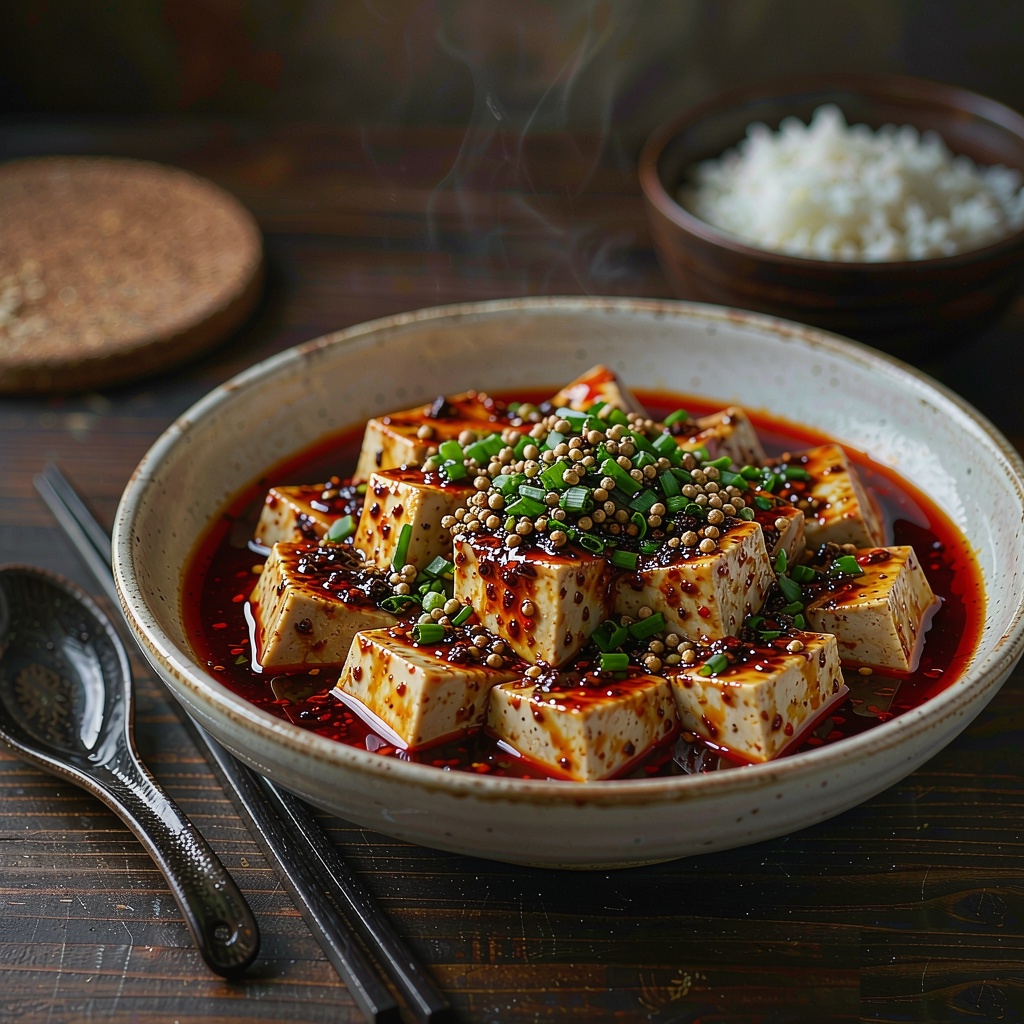
The Chengdu original uses ground beef and a restrained hand with chili. Move east toward Chongqing and the dish gets brasher — more oil, more heat, sometimes a heavier scoop of doubanjiang. Along the Yangtze and in the north, cooks often reach for pork instead, and in Sichuan’s vegetarian kitchens the meat gives way to minced shiitake or walnut, with fermented bean paste doing the heavy lifting. Order it in any of those places and you will taste the same idea wearing different clothes.
Seen against the eight great regional cuisines of China, mapo tofu is a neat summary of what makes Sichuan cooking distinctive: it is peasant food that never pretended to be grand, and it refuses to compromise on intensity. If you ever find yourself eating your way around Chengdu, order a bowl at the plainest place you can find, ask for rice, and eat it while it is still ticking. That is the whole experience, and it costs almost nothing.
Cook it once badly, then cook it again. By the third attempt the two-wave heat stops being a novelty and becomes something you crave on a cold evening — and that, more than any recipe, is how a foreign dish becomes yours.