

There are more Buddhists in China than in any other country, and the country responds by hiding its best temples in places that have no business being tourist sites — a cliff in Shanxi, a valley outside Lijiang, a hillside an hour from an industrial city. We have walked this route for six years and it keeps improving, because the government has poured money into temple restoration while the tourist map still points people at the same four places.
This is a China Buddhist temple route guide for people who want more than a photograph of a golden Buddha. It is for travellers who will stand in front of an 11th-century timber pagoda and want to know why the brackets matter, or who want to sleep in a monastery and eat what the monks eat.
The thread that joins everything below is Chan — the meditation school that Chinese Buddhism developed into and that then carried east into Japan and Korea. The Chan tradition is the fastest way to understand why so many of these sites look the way they do: plain halls, tea, and an enormous amount of silence.
Choosing which route to run
There are three versions of this trip and you should pick one before you book anything.
The classic loop — Beijing → Datong → Taiyuan → Xi’an → Hangzhou. Four cities, five or six headline temples, all rail-connected. Good for first-timers with ten days.
The northwest route — Xi’an → Dunhuang → the cave temples of Gansu. Older, rougher, and the closest you get to the Buddhist art that came west along the Silk Road.
The mountain route — Putuo, Emei and Huangshan. Three sacred mountains, all with cable cars, all crowded on weekends, all unforgettable when the cloud clears.
We build the classic loop for most people and the northwest for anyone who has already seen a decent museum collection of Buddhist sculpture. Both are described below; the day-by-day plan covers the classic.
The northwest alternative
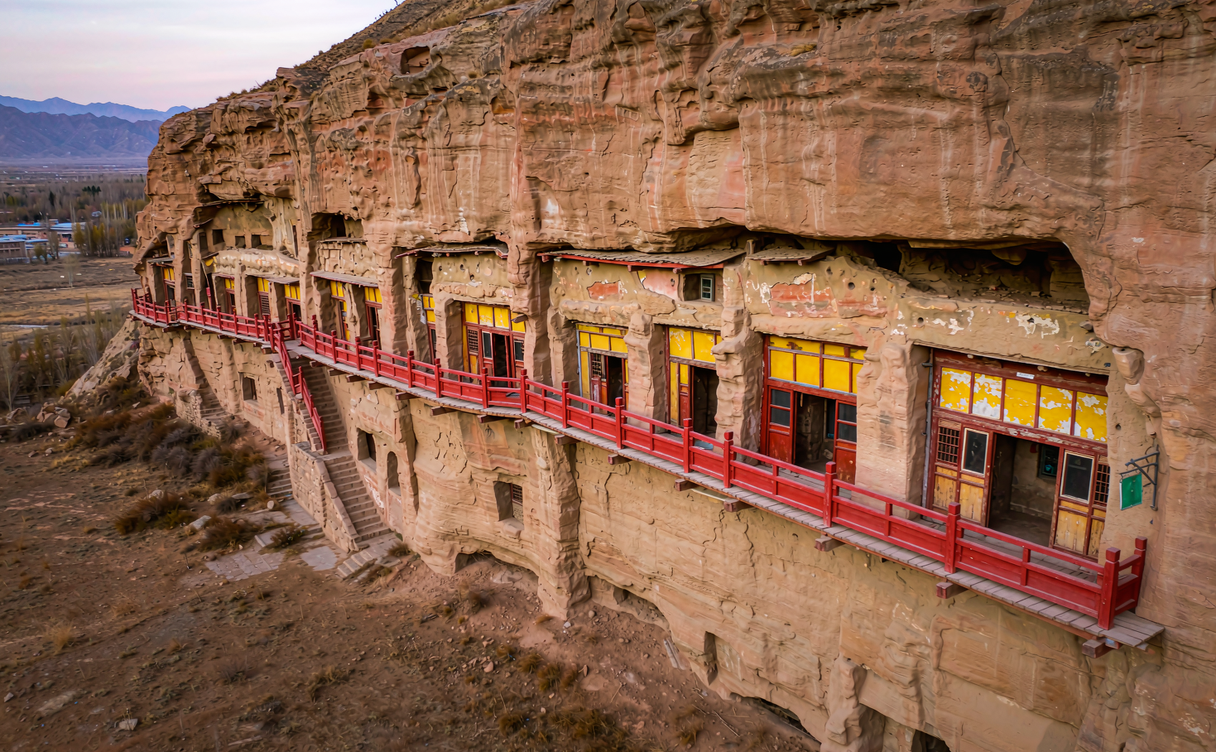
Start Xi’an, take the high-speed line north to Lanzhou, then the slow train west to Dunhuang, where the Mogao Caves hold 45,000 square metres of painted cave wall continuous from the 4th century to the 14th. Entry is ¥238 in peak season for the eight-cave tour, and the tour is a fixed route with a guide and no photography — which is frustrating for the first twenty minutes and then quietly transformative.
Beyond Dunhuang, the route thins out honestly. There are smaller cave complexes at 榆林窟 and the cliff temples of the Gansu corridor, and they are visited by a handful of people a day. Whatever you do, do not build a northwest trip around the assumption that you will reach the far western grottoes; most travellers run out of time at Dunhuang and that is the correct outcome.
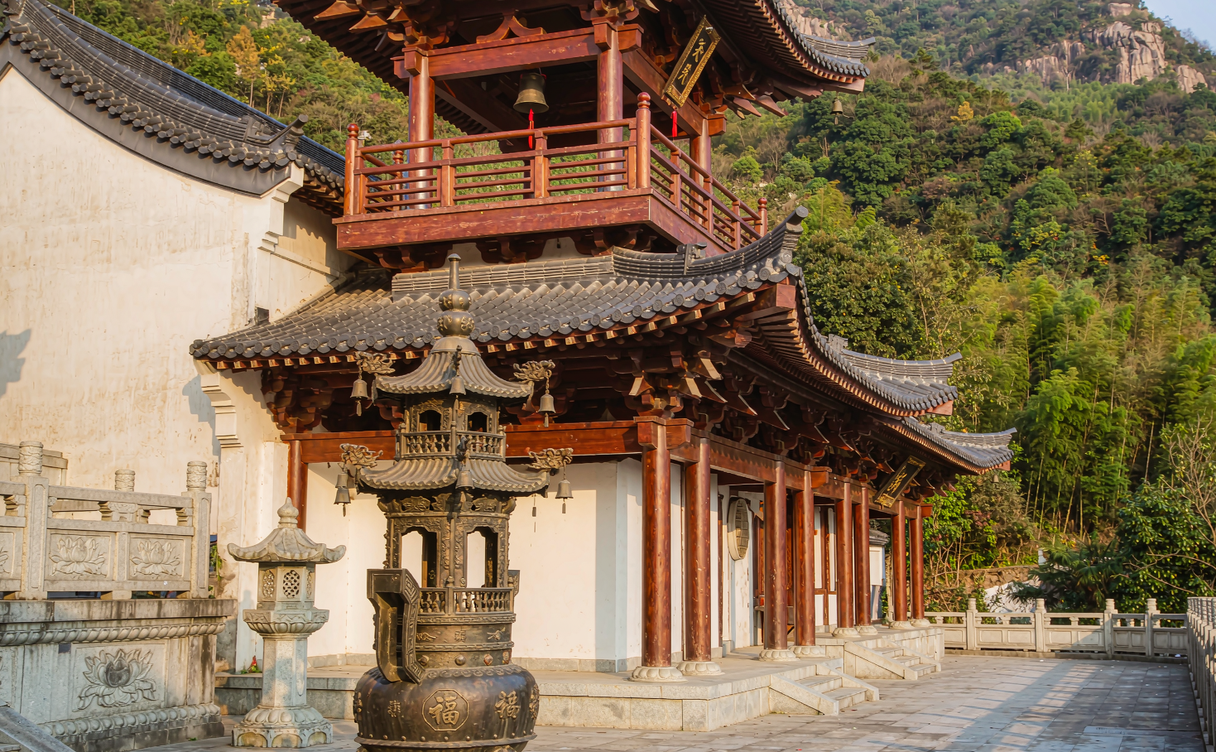
The classic route, day by day
Day 1–2, Beijing. Yunju Temple (云居寺) in the western hills holds 1,400 stone tablets carved with sutras, some of them cut as early as the 7th century — a Buddhist library buried in a mountainside. Go on day two and get there before 8 a.m. In the city itself, the Lama Temple is Tibetan Buddhist rather than Han and makes a good contrast; the Yonghegong Lama Temple ticket is ¥45 and the temple runs a 45-minute vegetarian lunch for ¥50 that is genuinely good.
Add Yunju Temple to your Beijing days even if you think you have seen enough temples — the sutra tablets are the only thing in the capital that is more than eight hundred years old and it takes two hours.
Day 3, Datong and Yungang. The Yungang Grottoes (云冈石窟) outside Datong are the oldest large cave complex in China, cut from 460 CE under the Northern Wei. Fifty-three caves, and the early ones have a distinctly Central Asian facial look that surprises people. Entry ¥120 with the shuttle, and the best light is the first hour. Datong also keeps the Hanging Temple and the Wooden Pagoda if you have a spare day — see the Shanxi route notes.
Day 4, Taiyuan and Jinci. Not strictly a Buddhist site, but Jinci anchors the old temples of the province and the Shanxi Museum next door explains the belt of cave temples that runs through the loess hills.
Day 5–6, Xi’an. Two places. The Big Wild Goose Pagoda (大雁塔) is a 652 CE structure that Xuanzang — the monk whose journey to India gave China its knowledge of Buddhist doctrine — helped build; climb it and the brickwork is hand-cut. The Small Wild Goose Pagoda nearby is smaller, older-looking and half the crowd. Then the Forest of Steles, where Buddhist commissioners had their donations carved in granite; it is a two-hour stop and it rhymes with the steles of Yungang. A taxi to the 大雁塔 North Square at dusk puts you in front of the fountain show with a million people, which is its own kind of experience.
Day 7, the long rail hop. Xi’an to Hangzhou is about 6 hours on the high-speed line, second class ¥520–¥580. Book the morning train.
Day 8–9, Hangzhou. Lingyin Temple (灵隐寺) is the oldest Buddhist temple in the province, founded in 328 CE, and it sits inside a wooded fold of the hills with the Feilai rock carvings at the back gate. Go early, walk the 飞来峰 grottoes, and have the ¥30 set breakfast inside the grounds. Then the Five Old Moon Terraces hill behind it, and the Yongfu Temple sub-temple on the way down, which almost no foreign tourists climb.
Day 10, Putuo Mountain. A 45-minute train to Ningbo plus a ferry to Zhoushan, and you are on one of the four sacred Buddhist mountains of China, with Guanyin at its centre. Doors open at 6 and the uphill walk to the 慧济寺 peak starts before dawn if you want the sunrise over the sea. This is a long day; take it as your last and fly out of Ningbo or Hangzhou.
How to visit a working temple
This is the part nobody tells you. Most of the sites above are not monuments that happen to have monks in them. They are working monasteries, and you are a guest.
Dress is the first thing. Shoulders and knees covered, no shorts at any of these sites, no sleeveless tops at Lingyin or Putuo.
Photography rules change site to site. At Yungang you may photograph the exterior but not the caves — flash damages pigment and the staff will stop you. At Lingyin and Jinci, photographing inside the main halls is widely tolerated but frowned on during morning prayer.
Offerings. Small amounts of money in the donation boxes are normal and welcome; we advise ¥5 to ¥20 and no more, and never photograph a monk lighting incense for you without asking. The incense at Putuo is deliberately heavy — it is a sensory shock the first time and worth knowing about.
And the one that gets people confused: bowing. Two hands together, palms up, at eye level, is the gesture. Western tourists who shake hands with a monk are being rude in a way no sign will warn them about.
Staying inside a temple
It is possible and we recommend it once per trip. The China temple stay guide covers the practical mechanics in detail — which monasteries take foreigners, what a bed costs, and the etiquette around the early morning chant, which starts around 4:30 and is not optional if you are the guest in the room next to it.
What we can tell you here is the honest version of the experience. A dorm room at a working monastery runs ¥60–¥120 a night, a private room ¥180–¥400, vegetarian meals ¥15–¥40, and the tap water is not drinkable. You will wake at 5 a.m. to a gong, you will eat whatever is in the bowl, and if you are not prepared for that, book a hotel and visit the temple by day.
When to go, and what it costs
March to late November works. April and October are ideal and busy. July and August bring crowds and the monsoons in the south — Lingyin gets genuinely difficult on a wet weekend. Winter is the quietest and the most atmospheric in the north: Yungang in December is empty and the light on the sandstone is close to gold.
Buddhist holidays shift the calendar entirely. The Buddha’s birthday in the fourth lunar month (usually May) puts tens of thousands of pilgrims at Putuo and Lingyin, and the price of a nearby hotel triples. If you want the atmosphere, go for the Ullambana (Yulanpen) festival in the seventh lunar month; if you want photographs, avoid both.
Budget-wise: Yungang ¥120, Lingyin ¥45 plus ¥35 for the Feilai grottoes, Putuo ¥140 including the bus, temple hotels ¥180–¥400, rail as above. Meals ¥30–¥60. A realistic per-person day on this route lands at ¥350–¥550 without accommodation, and the whole classic loop costs about ¥5,000–¥7,000 per person for ten days excluding international flights.
If you are assembling a longer trip, our China UNESCO World Heritage guide is where we list which of these temples are inscribed and which are not — the answer is that Yungang, the Datong area sites and Mount Putuo all are, and Lingyin is a good walk away from inscription.
For the transport plumbing, our China high-speed train guide for foreigners explains the booking window, and our best time to visit China piece sorts out which months suit which stretch of this route.
Take the first train you can on Day 7 and sleep in Hangzhou rather than arriving late — Lingyin at 7 a.m., before the buses, is one of the few moments on any China itinerary that still feels like the 9th century.
What we would leave out
The big outdoor Buddha statues that are mostly photo stops, and any temple whose ticket office sells a “cultural show” package. We also now skip the 雍和宫 evening light show in Beijing and the commercial Xiaozhongsi in Lijiang, both of which we used to recommend and no longer do.
What we add instead is small: a half day at the 岩山寺 (Yanshan) murals in Datong, a morning sitting in the tea room at 龙井村, and one evening at a temple’s vegetarian canteen where the queue order is by age and the food is the best value meal of the trip.
Build the route around three temples you really want to stand in rather than eight you might photograph — the silence at a working monastery is the thing people talk about a year later.