

Leshan is a city that lives in the shadow of its own landmark. At the confluence of the Min, Dadu, and Qingyi rivers, workers in the Tang dynasty cut a 71-metre seated Buddha into the cliff face and then, over the following centuries, built a town around the viewing platforms. The result is a destination where the headline sight is enormous and everything else is quiet by comparison — which, in our opinion, makes Leshan Sichuan hotels one of the more underrated things to book in Sichuan.
We keep sending readers here as a two-night add-on to Chengdu rather than as a stand-alone trip. That is changing, though. The high-speed line arrived, the food scene got serious, and once you have eaten 跷脚牛肉 for two consecutive mornings you understand why people stay longer.
Why stay here rather than day-tripping from Chengdu
The maths used to favour Chengdu. It still sort of does — but not by much. The Chengdu–Leshan intercity line runs roughly 40–55 minutes from Chengdu West or Chengdu South to Leshan station, with second class around ¥45–¥55. That is an easy morning.
Yet day-tripping costs you the two things worth having: the early light on the Buddha from the water, and the evening when the crowds are gone. Staying also lets you do Mount Emei (峨眉山) properly instead of attempting it at pace from an hour away. For most of our readers we now recommend two nights in Leshan and then a night on the mountain or back in Chengdu.
Where to stay in Leshan: three bases
Near the Giant Buddha scenic area (景区门口) is the classic choice for first-timers. You walk or take a five-minute shuttle to the gate, and you can be on the platform at 07:30 when the light rakes across the face. The downside is that this strip is touristy, with a lot of identical mid-range blocks.
The old city (市中区, around 嘉定坊 and the west of the Min river) is where we personally prefer to sleep. It is 15–20 minutes by taxi from the Buddha, full of small restaurants, and the evening is walkable. This is where the good food is.
Emeishan City (峨眉山市), 40 minutes west, is a separate town with its own budget hotels and the gateway bus station for the mountain. Choose it only if Mount Emei is the main event.
Best luxury and upper-mid hotels in Leshan
The top end in Leshan is not vast. You are looking at a handful of four- and five-star properties, mostly along the riverside and in the new district north of the old city. In 2026 we have seen the following bands hold steady:
- Riverside four/five-star, high season (April–October): ¥480–¥900 for a king with a Min River or cliff-facing window.
- Riverside, low season (November–March): ¥280–¥520.
- Boutique courtyard properties in the old city: ¥260–¥500, often with a tea terrace and a small pool.
What you should insist on is a high floor facing the water, and a room away from the road. Leshan’s riverside road gets busy with evening traffic, and the older buildings are single-glazed.
If you are travelling as a family or a group of four, the upper-mid options in the old city frequently work out cheaper than two rooms in a chain, because several have suites with a sofa bed and a kitchenette.
Riverside hotels Leshan visitors pick again and again
A specific note on the river rooms. The Min and Dadu meet right below the Buddha, so the stretch of hotel frontage between the scenic gate and the old bridge is prime real estate. Book at least two weeks ahead in October, when the Sichuan autumn calendar fills.
You do not get a Buddha view from most rooms — the cliff is a kilometre away and completely hidden by buildings. Do not pay extra for “city view” or “grand view” descriptions that mean a car park. Ask instead for the top floor with a balcony, and go up to it at dusk, when the lights come on across the confluence.
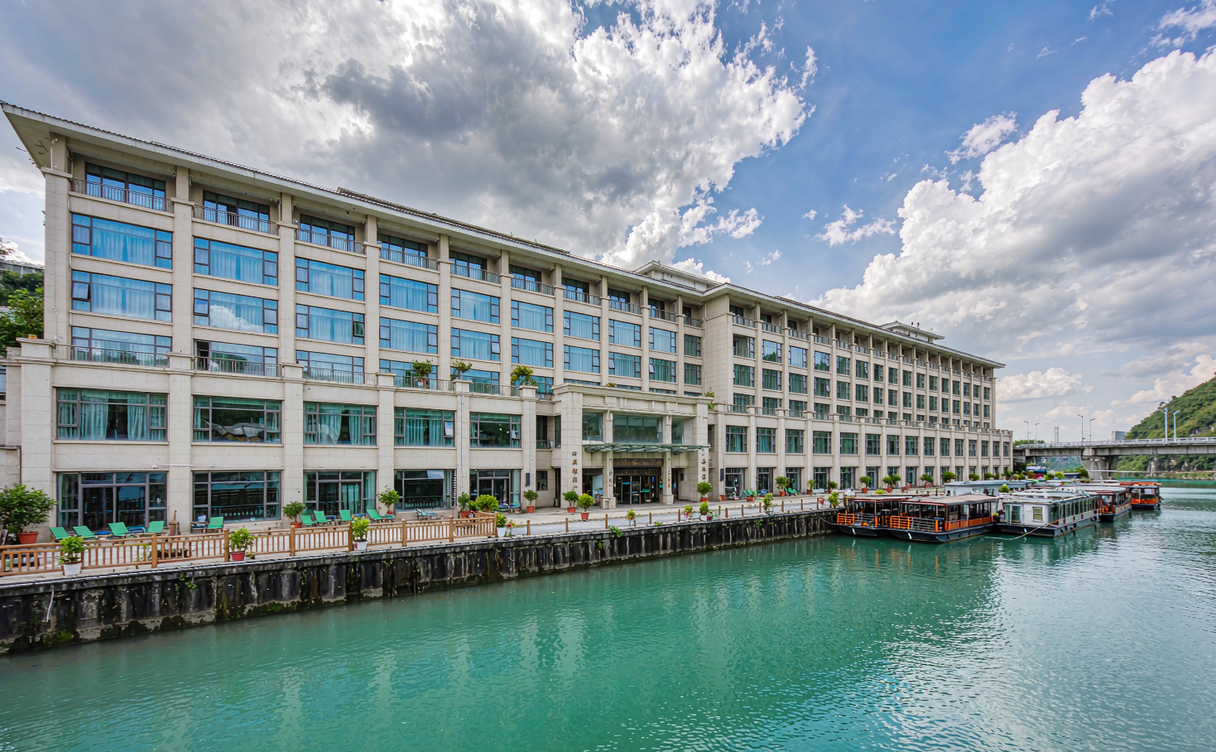
Where to stay Leshan on a mid-range budget
The ¥180–¥320 band covers most independent hotels, business hotels, and the better local guesthouses. Standards in Sichuan at this price are high — hard mattresses that are actually firm, decent showers, and air conditioning that works in August, which matters here because Leshan summers sit at 33–38°C with humidex in the high 30s.
We have booked this bracket for cycling groups, for families with a seven-year-old, and for two photographers on a tight schedule. Nobody has had a bad night. The one thing to check is parking if you have a car — the old city lanes are narrow, and several hotels on the east bank cannot take an SUV.
Cheap sleeps and the reality of the price spread
Backpacker-scale rooms run ¥100–¥180 in the old city and near the train station, though these are diminishing in number as the city renews its older blocks. Near the scenic area, the gate area has a cluster of hostels at ¥70–¥160 per bed in shared rooms during the week.
Leshan Giant Buddha accommodation at the very top is genuinely limited. We would rather you spent the money on a mid-range room with a good location than on the single most expensive suite in town, because you will spend your daylight outside the hotel anyway.
Getting to Leshan and getting around
Two trains an hour in the peak of the day from Chengdu. Leshan station is about 10 minutes from the old city by taxi (¥15–¥25) and 20 minutes from the Buddha gate by the number 3 bus or a ¥40–¥60 taxi.
To Mount Emei: a direct coach from Leshan’s passenger terminal takes about 1 hour 40 minutes to the mountain foot, and the tourist shuttle climbs from there. For the rail logic on a Sichuan loop, our China high-speed train guide for foreigners explains how to piece together Chengdu, Leshan, and Emeishan without backtracking.
Eating well from your hotel door
Leshan eats better than its profile suggests. 跷脚牛肉 (Qiaojiao beef, a clear beef-and-bone broth with tripe,¥20–¥40 a bowl) is the city’s signature and the reason to stay in the old city. 甜皮鸭 (sweet-marinated duck) is sold by the half from shops that open at 06:00. 钵钵鸡 (cold chicken in chili oil, skewered and counted by the stick) is a cafeteria game played at every street corner from 16:00. Add 豆腐脑 (silken tofu brain), 烧烤 (Sichuan skewered grill), and 麻辣烫 (mala hot pot in a bowl) and a couple can eat for ¥45–¥80 a head.
Tell your hotel staff you want a breakfast place within 200 metres, not the hotel buffet once. The buffet is fine; the noodle shop is the point.
Book a room within walking distance of the old city market rather than next to the scenic gate — you will save fifteen minutes every morning and eat dramatically better in the evenings.
The one night that justifies a splurge
If you are going to spend above ¥700 once, do it on the night you arrive, not the night you leave. Coming in from Chengdu on the late afternoon train, checking into a riverside room with the windows open, and walking down to the confluence before dinner is the version of this trip we would repeat ourselves. Book the refundable rate and move to the cheap old-city room on the second night if you change your mind.
Split your stay — one night riverside near the gate, one night in the old city — so you get the early Buddha light and the late-night food stalls without paying premium rates for both.
Best time to book, and when the rates hurt
March to April and late September to mid-November are the sweet spots: cool (14–24°C), clear views across the confluence, and rates that have not peaked. July and August are hot, humid, and busy. December to February is foggy, cheap, and atmospheric — the Buddha in winter rain is a genuinely fine photograph.
Avoid May Day (early May) and National Week (1–7 October) if you can. During those windows room rates in Leshan climb 50–80% and the Buddha staircase becomes a queue of a hundred people wide. Our best time to visit China guide maps the national calendar so you can slot Leshan into the gaps.
Combining Leshan with Chengdu
The standard shape we recommend: two nights Leshan, two nights Chengdu, then one night up on Mount Emei if you want sunrise at Jinding (3,077 m). That ordering saves you backtracking and puts the highest-altitude night last, which is easier on the body before a flight home.
If you are building the Chengdu leg properly first, our Chengdu travel guide covers the city, and our best hotels in Chengdu guide gives the full price bands for the provincial capital. The encyclopaedia entry on the Leshan Giant Buddha is worth reading before you go: knowing that the carving took about 90 years and was completed in 803 gives you a completely different view of the cliff.
Practical notes from our own trips
Buy the Buddha ticket online the night before — the entrance turnstiles queue badly after 09:00. Wear shoes with grip: the descent beside the Buddha is steep, wet, and in places only 30 cm wide, and there are roughly 900 steps down. Carry water; the shaded part ends halfway. And take a taxi back up rather than walking, which most visitors underestimate by an hour.
One short walk most people miss: the east gate lookouts on the far bank of the Dadu, where the full 71-metre silhouette finally appears all at once. It is free, it is ten minutes from the old city, and in the late afternoon it is the best photograph in Leshan.
Final thoughts
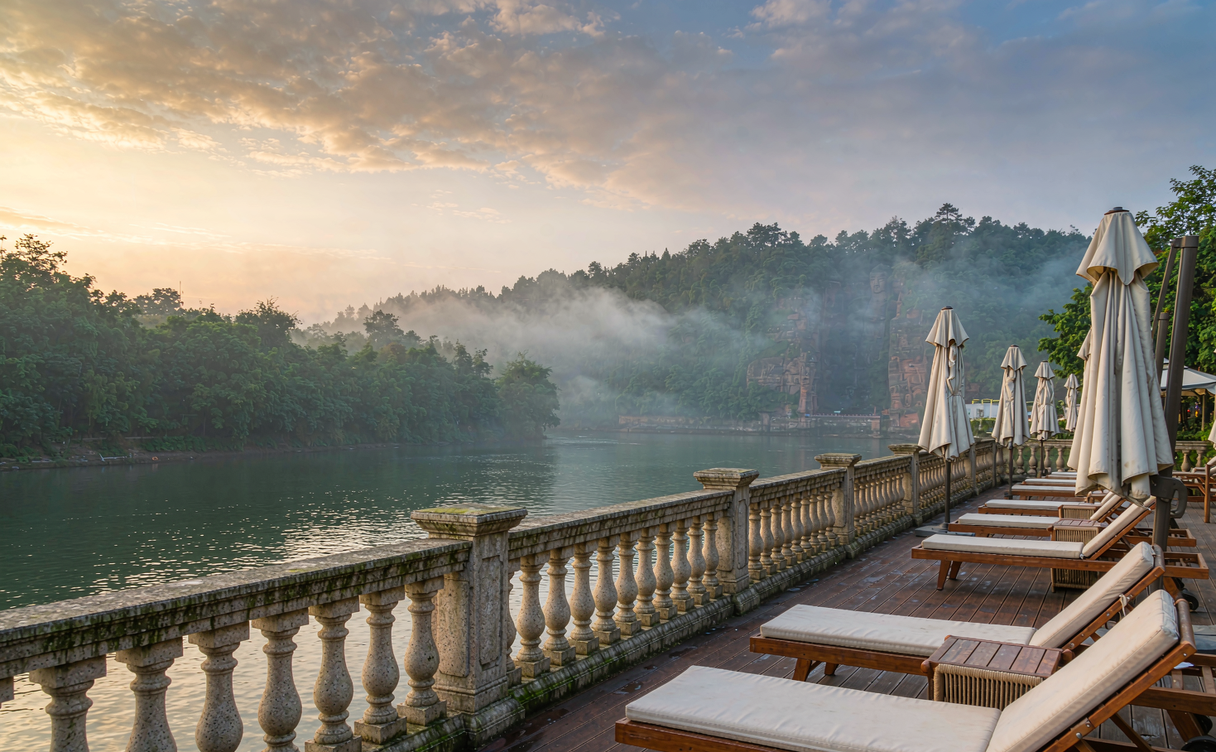
Leshan rewards a modest hotel in the right street far more than a grand one in the wrong one. The sight is outside, the food is outside, and the city goes quiet at 22:00 in a way that the bigger Sichuan cities no longer do. We would book the old city, book it in shoulder season, and go down to the river every evening to watch the lights come on under the cliff.
Give Leshan two nights instead of one and take the morning train up to Mount Emei from the city terminal — the mountain is close enough that a rushed afternoon will genuinely cost you the sunrise.
For the rest of the shortlist, our best things to do in China roundup places Leshan alongside the panda centres and the water towns, and our China travel guide for first-timers handles the transport and payment basics.