

In the rolling farmland of Lanxi, a county-level city administered by Jinhua in central Zhejiang, a walled village spreads across the plain in a pattern you will not find on any ordinary map. Zhuge Bagua Village is laid out according to the Bagua, the eight-trigram symbol at the heart of classical Chinese cosmology. Its alleys radiate from a central pond in a deliberate maze, a design attributed to descendants of Zhuge Liang, the Shu-Han chancellor of the Three Kingdoms era, who is claimed as the clan’s founding ancestor. More than 300 of the original Ming and Qing dwellings survive, making this both a living community and one of the best-preserved examples of traditional settlement planning in the south.
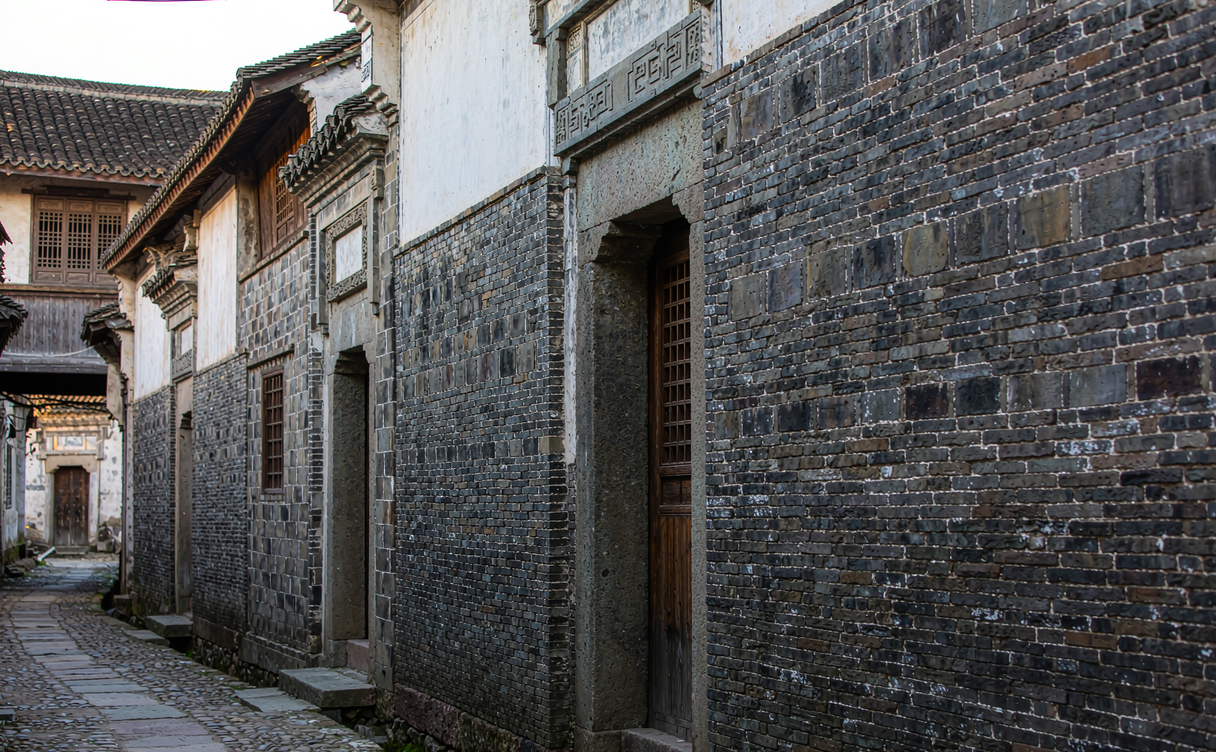
We’ve sent travelers to Zhuge eight trigram village as a detour between Hangzhou and Wuyi, and the reaction is consistent: people get happily lost. On our last visit, a group of four spent 20 minutes trying to find the same teahouse twice because the trigram alleys loop back on themselves by design — which is exactly the point of the layout, built to confuse outsiders and protect the clan.
Why the Bagua shape
The village plan centers on the Zhong Chi, or Bell Pond, which from above reads as a rough yin-yang symbol. Eight main alleys spread from it like the trigrams, and within those, a finer web of lanes branches and doubles back. The effect, according to local tradition, was defensive: invaders could not navigate the interior, while residents knew the short cuts. Whether or not that is the true origin, the result is a pedestrian maze where every turn reveals a carved stone gateway, a horse-ankle wall, or a scholar’s tablet. The clan produced a striking number of imperial exam graduates, and their success is memorialized in the Daciyao ancestral hall, one of the largest wooden structures of its kind in the region.
Things to do at Zhuge Bagua Village
Things to do at Zhuge Bagua Village are about slow wandering rather than ticking sights. Start at the Bell Pond and let the alleys pull you; we discourage maps for the first hour because getting lost is the experience. The Zhuge Dashi (Great Teacher) Hall and the prime minister’s shrine hold the clan’s genealogy and a few genuine Ming carvings. A small Zhuge Liang memorial hall explains the claimed lineage with a modest, slightly hagiographic display that we found more charming than convincing.
Local life continues around you: elders play cards in the shade, and a few family workshops still press the village’s signature herbal medicine — the Zhuge clan were renowned physicians, and the “Tian Shui” herbal tradition is sold at the gate. We always budget time for the riverside path outside the wall, where the Lanxi countryside opens up and the maze falls away.
Best time to visit Zhuge Bagua Village
The best time to visit Zhuge Bagua Village is spring (March–May) and autumn (September–November), when the village lanes are comfortable and the surrounding fields are green or golden. Spring brings rapeseed blooms in the surrounding paddies; autumn gives clear light for the tiled rooftops. We avoid the height of summer, when Zhejiang’s humidity is heavy and the narrow alleys trap heat, and the Spring Festival period, when the clan reunion crowds the small spaces. For season-by-season planning across the country, our guide to the best time to visit China is the place to start.
How to get to Zhuge Bagua Village
Figuring out how to get to Zhuge Bagua Village is the main logistic hurdle, because the village is rural. From Jinhua, take a regional bus or ride-hail to Lanxi (about 40 minutes, RMB 15–25 / USD 2–4), then a local bus or taxi the remaining 30 minutes to Zhuge town at the village gate (RMB 20–35 / USD 3–5). The whole trip from Jinhua is roughly 90 minutes. If you are on a Zhejiang rail route, Jinhua is on the high-speed line from Hangzhou to Wenzhou, so the village fits a day-trip loop; our China high-speed train guide for foreigners explains how to read the regional schedules. We usually arrange a private car for clients who want to combine Zhuge with the Xitang water town on the same route, though that makes for a long day. We remind clients that rural buses in Lanxi run on loose schedules, so a private car removes the uncertainty and lets you stop at the riverside dike for photos.
Tickets and costs
Admission is RMB 90 (about USD 13) including the main halls, with a combined ticket covering the medicine workshop at RMB 100 (USD 14). Hours are 08:00–17:00. A local guide at the gate runs RMB 80–120 (USD 11–17) for a 90-minute walk, and we recommend it here more than at most sites because the trigram logic is easier to feel with someone explaining the sightlines. Budget half a day; a full day lets you linger over tea.
The village sits within the wider Jinhua region, which our Jinhua travel guide covers alongside nearby Wuyi hot springs and Lanxi’s caves.
Food and local craft
Inside the gate, family restaurants serve Lanxi-style noodles and sticky rice cakes for RMB 25–45 (USD 4–6). The sticky rice cakes are pressed with dates and steamed in bamboo, a nice change from the fried snacks at bigger sites. The herbal-medicine shops sell dried tisanes; we buy the mild “refreshing” blend as gifts. For the broader regional table, our Zhejiang cuisine guide explains the province’s sweet-sour coastal dishes versus the heartier inland cooking you’ll find around Jinhua.
Staying overnight
Unlike many heritage villages that empty after dark, Zhuge Bagua Village keeps a handful of guesthouses inside the wall, and we sometimes book one so clients can photograph the alleys at first light before the day-trippers. A basic room runs RMB 150–260 (USD 21–37) including a simple breakfast of congee and pickles. The quiet after 18:00, when only the pond fountain and a few lanterns remain, is the village at its most atmospheric, and it is the one thing a rushed day trip cannot give you.
Photography notes
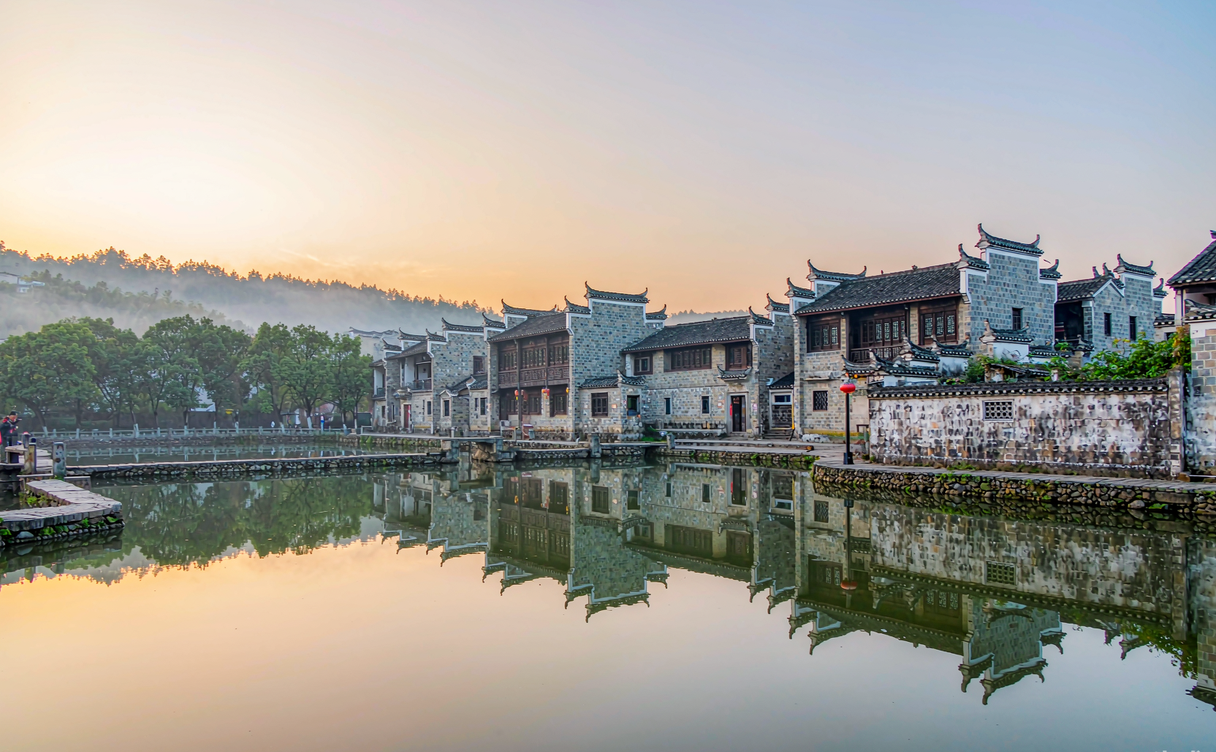
The yin-yang pond is best shot from the small bridge on its south side at 09:00, before the tour groups arrive; a wide lens captures the full symbol, while a 35mm frames the lane reflections in the water. The alleys are dark in places, so we shoot at ISO 800–1600 rather than using flash, which the clan elders dislike. Drones are banned inside the wall, and we respect that — the maze is best understood from the ground anyway. The tiled rooftops glow at sunset from the eastern field path, where the defensive logic of the plan becomes obvious from above.
Who should go
Zhuge Bagua Village Lanxi suits travelers who like architecture, genealogy, and the pleasure of being slightly disoriented. It is not a spectacle site; it rewards patience. Photographers will want the early light on the tile roofs before tour groups from the cities arrive around 10:00. The village’s planning heritage is summarized by the provincial authority on the Zhejiang government page.