

Fifteen kilometers west of Suzhou’s classical gardens, where the canal country gives way to the low hills that fence the shore of Taihu, Tianping Mountain Suzhou rises a modest 201 meters. Modest in height, perhaps, but for a few weeks each autumn it is the most celebrated red-maple site in the Yangtze delta. The mountain has been famous for its maples since the Ming dynasty, when the Fan family — descendants of the Song statesman Fan Zhongyan — planted the first trees around their ancestral tomb. Today more than 400 old maples, some centuries old, turn the slopes into a layered wash of crimson, amber, and deep green that reflects in the mountain’s spring-fed ponds.
We’ve sent travelers to Suzhou Tianping Mountain on autumn photography trips, and the pond reflections are the reason. On our last visit, a retired couple from Canada spent an hour crouched at the water’s edge waiting for the wind to drop; when it did, the mirror image of the red canopy was, in their words, “better than the postcards.” The trick is arriving before the 08:00 gate rush.
Three wonders in one small mountain
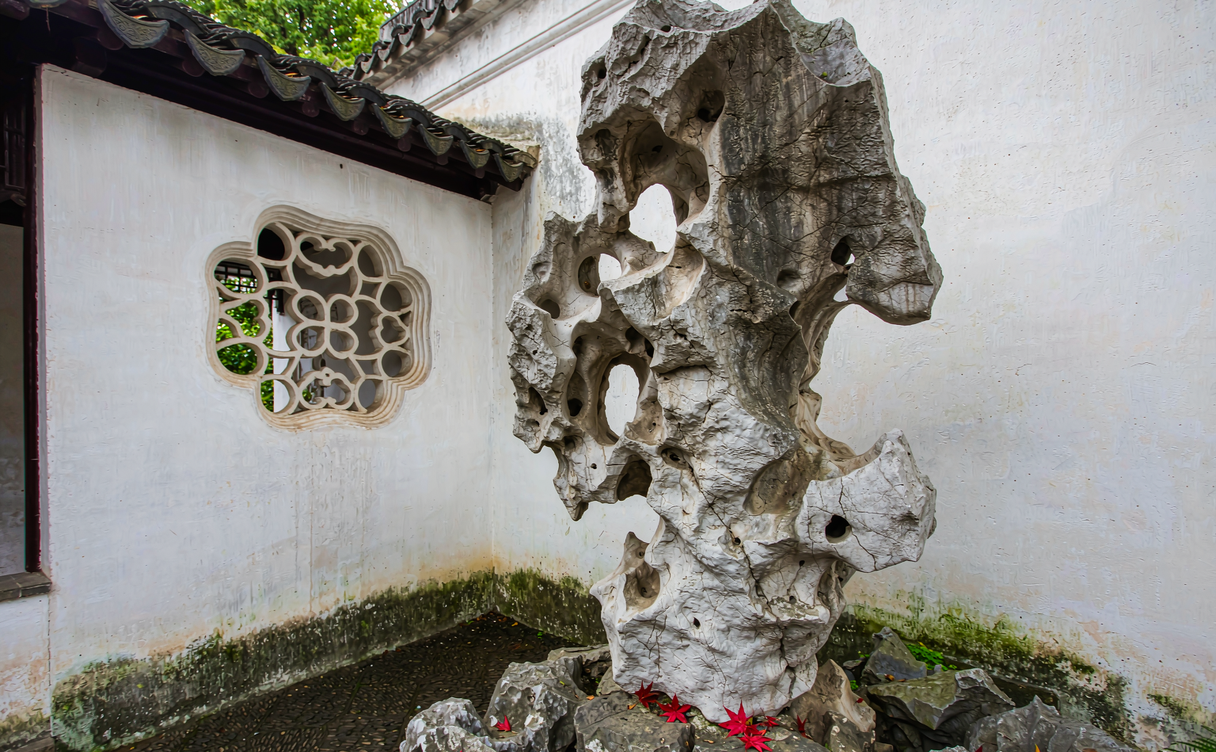
Local tradition counts three features that make Tianping special. First, the maples — the old “cinnabar” varieties planted by the Fan clan that redden earlier and deeper than the roadside kinds. Second, the rocks: the mountain is a jumble of weathered limestone outcrops, the most famous being the “One-Line Sky” cleft and the flat “Cloud Terrace” slab that gives Tianping (“Level Balance”) its name. Third, the springs and streams that feed the ponds, cool and clear even in late autumn. Together they make a compact hike that feels wilder than Suzhou’s manicured gardens, yet sits only 40 minutes from them.
The Fan Zhongyan connection
Tianping Mountain is also a place of remembrance. Fan Zhongyan (989–1052), the Song-dynasty reformer and author of the line “be the first to worry, the last to enjoy,” is buried on the eastern slope, and the Fan family temple beside the tomb still holds spring and autumn rites. The tomb path is shaded and quiet, a good counterpoint to the busy maple viewing areas, and we often walk clients there when the color crowds get heavy. It is a reminder that this mountain is a working heritage site, not just a leaf-peeping park.
Things to do at Tianping Mountain
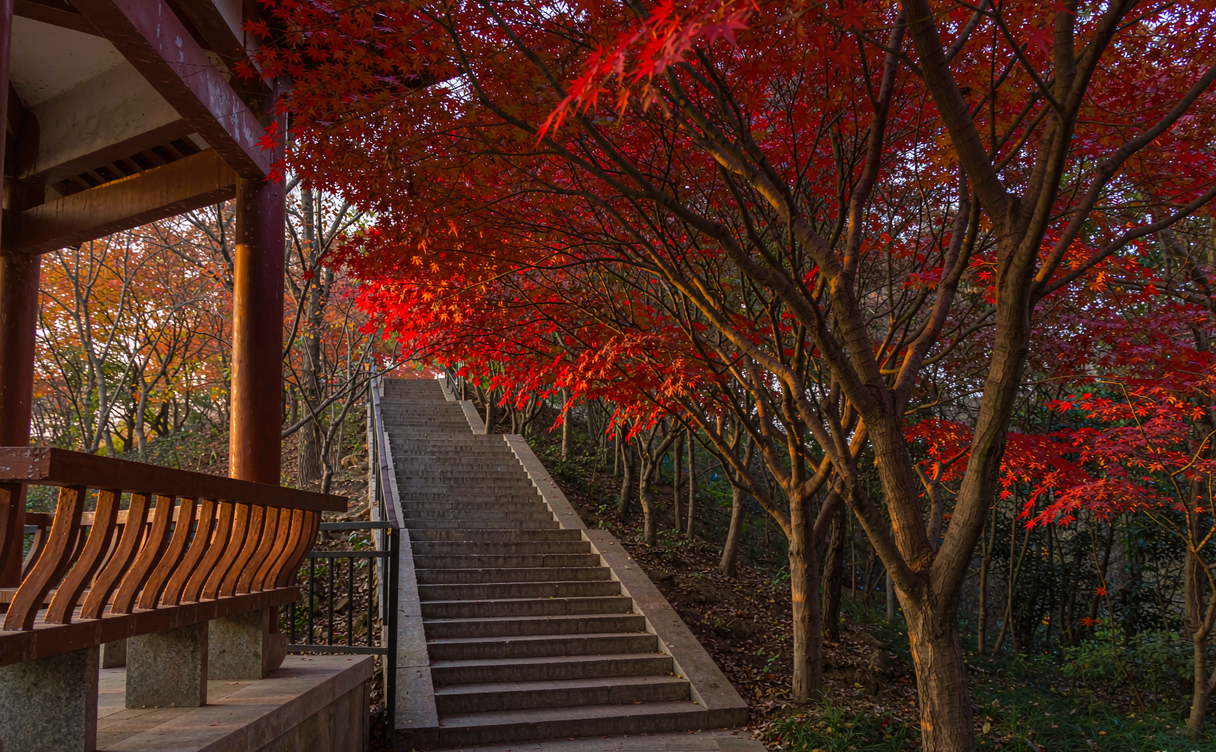
Things to do at Tianping Mountain fit a relaxed half-day. The core loop climbs from the north gate past the Fan temple and tomb to the Cloud Terrace rock, then descends through the maple grove to the reflection pond — about 90 minutes at an easy pace. The higher “Hundred-Step Stair” gives a telescopic view toward Taihu on clear days; we time this for late morning when the lake haze burns off. Below, the pond-side teahouse rents mats and sells pumpkin cakes, and the small bonsai courtyard near the gate is worth five minutes even out of season.
Best time to visit Tianping Mountain
The best time to visit Tianping Mountain for color is mid-November to early December, typically peaking around the last week of November. The Tianping Mountain maples are the headline draw, but the limestone rocks and spring-fed ponds are the reason we send travelers back in the off-season. Suzhou’s maples redden a few days after those in Nanjing because it sits slightly warmer inland, so we sometimes route clients Nanjing-to-Suzhou to chase the front. Spring (March–April) is the gentle alternative, with new leaves and fewer people, and the rock formations are pleasant to climb in cool weather. Summer is green but humid; winter is bare. For a regional ranking of peak weeks, see our guide to the best autumn destinations in China.
How to get to Tianping Mountain
Figuring out how to get to Tianping Mountain is straightforward from Suzhou. From the city center, take tourist bus 4 (you’ll see it marked for Tianping Mountain) from the Suzhou Railway Station area, or ride-hail directly for about RMB 50–70 (USD 7–10), a 35–50 minute trip depending on traffic. If you come from Shanghai by bullet train, you’ll arrive at Suzhou North or Suzhou station; from either, a taxi is simplest. Our China high-speed train guide for foreigners covers the Shanghai–Suzhou hop in detail, since it is one of the busiest short rail segments in the world.
Tickets and costs
Admission is RMB 30 (about USD 4) in the off-season and rises to RMB 35–40 (USD 5–6) during the maple festival, when timed entry controls crowding. Hours are 08:00–17:00. We budget half a day including transit, or a full day if you add a garden afterward. An English leaflet at the gate costs RMB 10 (USD 1.5) and maps the Fan clan sites.
A natural plan pairs the mountain with the city’s gardens; our Suzhou travel guide connects the two, and many visitors follow the maples with the Humble Administrator’s Garden, a 40-minute drive east and a complete change of scenery from the wild hillside.
Food and a Suzhou day
Near the gate, small restaurants serve Suzhou-style noodles (a sweet, soy-rich broth) for RMB 20–35 (USD 3–5) and seasonal maple treats in November. For a deeper dive into the local table, our Huaiyang cuisine guide covers the sweet-savory Suzhou palate and how to order it. We usually send travelers back to the canals for dinner after the mountain, since the light over the water at dusk is its own reward.
Combining Tianping with Taihu
Because the mountain sits on the eastern lip of Taihu, we often extend a visit with an afternoon at the lake shore 20 minutes west, where the fishing towns serve freshwater shrimp and a famous whitebait. On our last trip we added a Taihu sunset boat for a group of four at RMB 60 (USD 9) per person through the dock cooperative — simple, unguided, and far cheaper than the city tour versions. It is an easy half-day add-on if your schedule allows, and a nice counterweight to a morning of climbing.
A practical half-day timeline
A schedule we use: leave Suzhou by 08:00, reach the north gate at 08:40, climb to the Fan tomb by 09:30, photograph the pond at 10:00, and descend through the maple grove by 11:00 for noodles at the gate. That leaves the early afternoon free for the Humble Administrator’s Garden, whose crowds peak later in the day. Reversing the order — gardens first, mountain at 15:00 — also works if you prefer afternoon light on the water, though you will share the pond with more people.
Photography and comfort
The reflection pond is best at 08:00–09:00 and again 16:00–17:00. The Cloud Terrace rock needs a modest scramble; we warn clients with bad knees to skip it. Wear grippy shoes — the limestone is slick after rain. The site has clean toilets at both gates and a small cafe by the pond. A telephoto lens helps isolate single red leaves against the gray limestone, and a circular polarizer deepens the pond’s reflection, so we pack both for clients who shoot seriously. The mountain’s place in Suzhou’s landscape is described by the local authority on the Suzhou municipal government page.