

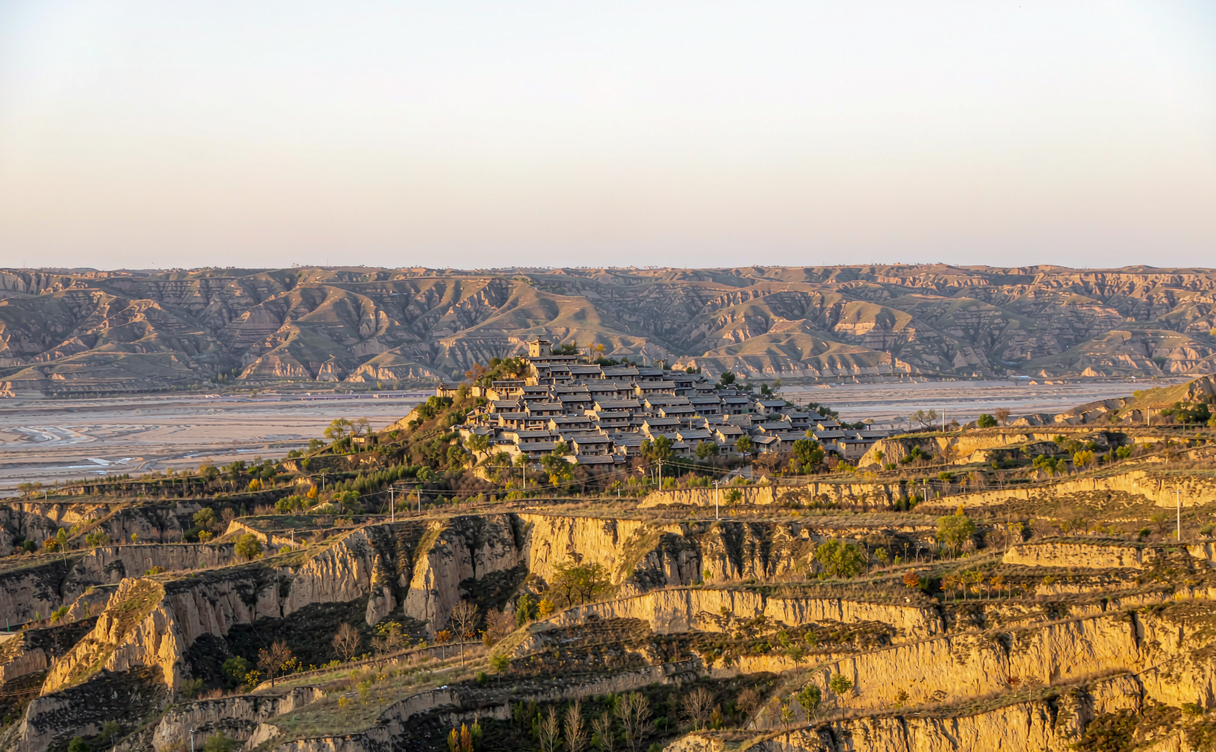
On the northern Loess Plateau, a few kilometers from the Yellow River where Shaanxi meets Shanxi across the water, a walled village has stood largely unchanged for four centuries. Dangjia Village Hancheng — formally Dangjia Village Shaanxi — is one of the most complete surviving examples of a Ming–Qing northern settlement, ringed by defensive walls and watchtowers, its lanes of gray-brick courtyard houses still occupied by descendants of the original Dang and Jia clans. Scholars call it a “living fossil” of traditional village planning, and heritage lists have noted its integrity. What you feel on the ground, though, is simpler: a fortified homeland where every gate, beam, and stone post tells you the residents once took security seriously.
We’ve sent travelers to Hancheng Dangjia Village as a counterpoint to the busy tourism of Pingyao, and the difference is the quiet. On our last visit, a couple from Australia had the main lane almost to themselves at 09:00, and the only sound was a villager sweeping the threshold of a 300-year-old courtyard. That stillness is the village’s best asset, and it is why we route travelers here who have already done the famous towns and want the unperforming version.
Why a village needed walls
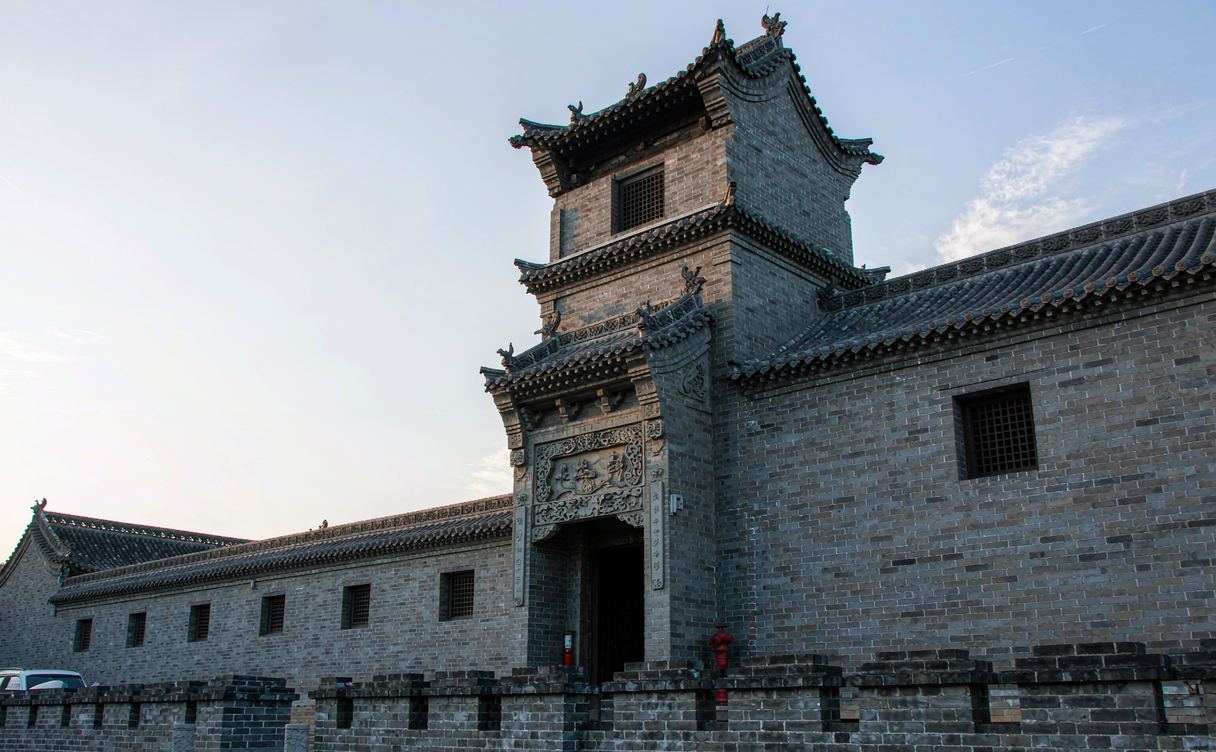
Northern Shaanxi sat on contested ground for centuries, and prosperous clan villages built defensively. Dangjia’s double wall, corner watchtowers, and a single controlled gate reflect that reality. Inside, the layout is a tidy grid of siheyuan-style courtyards — not the sprawling compounds of the south, but compact, north-facing rectangles built to hold heat in harsh winters. Look up and you’ll see carved wood brackets and stone door saddles; look down and you’ll notice the drainage channels, still functional, that the clan engineered to keep the loess from washing the foundations away.
Things to do at Dangjia Village
Things to do at Dangjia Village are about reading the details. The horse-tethering stones (shuanma shi) lining the lanes are small carved posts where mounted visitors tied their animals — hundreds survive, each slightly different, and they make a wonderful photographic study. The clan ancestral hall holds old registers and a few Qing-era tablets; the “Filial Piety” memorial arch is the village’s most photographed structure. We always point travelers to the eastern watchtower, which you can climb for a rooftop view of the whole fortified grid, and to the small museum in a restored courtyard that explains the Dang and Jia genealogy without overexplaining.
Best time to visit Dangjia Village
The best time to visit Dangjia Village is spring (April–May) and autumn (September–October), when the plateau is temperate and the light is flat and photographic. Spring brings wind but green wheat; autumn gives harvest gold and the clearest skies. We steer clients away from high summer, when northern Shaanxi bakes above 35°C and the lanes radiate heat, and from deep winter, when temperatures drop below freezing and some guesthouses close. For a national overview of when to travel, our guide to the best time to visit China lays out the regional swings.
How to get to Dangjia Village
Knowing how to get to Dangjia Village matters, because Hancheng is off the main tourist rail. From Xi’an, take a high-speed train to Hancheng (about 1.5–2 hours, frequent departures) or a long-distance bus (3–4 hours). From Hancheng station, a taxi or local bus reaches Dangjia Village in 20–30 minutes (RMB 25–40 / USD 4–6). We usually pre-book the village transfer for clients so they are not negotiating at the station. Hancheng itself is worth a stop — its old town and the nearby Sima Qian shrine are real, ungentrified sights. Our China high-speed train guide for foreigners covers the Xi’an–Hancheng segment and how to buy seats without a Chinese ID headache. Many travelers combine the village with the Xi’an travel guide circuit, since Xi’an is the natural gateway.
Tickets and costs
Admission is RMB 60 (about USD 9), with a combined ticket including the watchtower climb at RMB 70 (USD 10). Hours are 08:00–17:30. A local guide at the gate runs RMB 80 (USD 11) for 90 minutes and is worthwhile for the clan stories. Budget half a day; a full day lets you also walk the fields outside the wall. Guesthouses in the village run RMB 180–300 (USD 25–42) with breakfast.
Food and the northern table
Hancheng eats like the north: hand-pulled noodles, biangbiang noodles with chili oil, steamed buns, and vinegar-forward dishes. A bowl of noodles costs RMB 12–25 (USD 2–4). For the wider regional palate, our Shanxi noodles and vinegar guide explains the noodle styles and the cult of aged vinegar you’ll meet just across the river in Shanxi — useful context even here in Shaanxi, where the two provinces’ kitchens overlap. The chili oil here is made from local peppers and is hotter than the Shanxi versions across the river, so order “little spicy” if your palate is timid.
Staying and photographing
Because the village empties after the day-trippers leave around 16:00, we sometimes book an in-village guesthouse so clients can shoot the lanes at blue hour, when the watchtower silhouette and the warm courtyard lamps make the best frames. A basic room runs RMB 180–300 (USD 25–42) including breakfast of congee and pickles. The loess paths outside the wall are uneven, so we lend clients a walking stick from the guesthouse — a small touch that saves ankles at blue hour. The defensive wall from outside, lit by the low evening sun, is the one wide shot the compact interior cannot give you, so we send photographers to the eastern field path at around 17:30.
Reading the courtyard houses
The courtyards reward a slow eye. Each siheyuan is built on a north-south axis, with the main hall facing south to catch winter sun, and side wings for storage and the women’s quarters. Above the gates, carved brick panels show scholars, cranes, and pomegranates (for many sons) — a visual CV of the family inside. We tell travelers to look at the door saddles: the more elaborate the carving, the higher the clan’s standing. A few courtyards are open as mini-museums, and the best preserved show the original elm beams, still straight after 400 years.
A walking route we use
A route that works: enter through the main south gate, turn left to the horse-tethering stones, climb the eastern watchtower for the aerial grid, drop down to the ancestral hall, then loop the western lanes to the memorial arch before exiting. That is about 90 minutes and covers every signature sight without backtracking. We save the fields outside the wall for late afternoon, when the light rakes the loess and the village reads as what it is — a working farm community, not a stage set.
Pairing with Pingyao and Huashan
Dangjia sits roughly between two famous names, and we often use it as the quiet middle stop. The Pingyao ancient town guide covers the more famous walled town to the north, and seeing both lets travelers compare a polished tourism product with a working village. South of Hancheng, the Huashan mountain guide describes the sacred, vertigo-inducing peak that makes a thrilling bookend to a plateau trip — though we schedule Huashan on a fresh day, not right after village walking. The village’s preservation status is summarized by the provincial authority on the Shaanxi government page.