

Yongchuan sits at the far western edge of Chongqing Municipality, about 60 kilometres from the city centre and roughly one hour by high-speed rail. It is the greenest corner of Chongqing: 1,570 square kilometres of low hills, terraced tea bushes and moso bamboo, a population near 1.1 million, and no vertical skyline to break the horizon. Tea has been picked on these slopes for well over a thousand years, and the bamboo has been cut and regrown on the same hillsides for a century.
That is the reason this Yongchuan travel guide is worth reading. Most visitors step off the morning train expecting a half-day outing and end up staying two nights, because the countryside west of Chongqing keeps its own clock.
Building a longer route through the basin? Read our Chongqing travel guide first, then detour out here for forest air and tea instead of another crowd scene. Yongchuan works as well on a weekday as it does at a weekend, and it pairs cleanly with a Chengdu leg on the same rail corridor.
Yongchuan to Chongqing City Transport
Yongchuan to Chongqing city transport could not be simpler. The Chengdu–Chongqing high-speed line, opened at the end of 2015, calls at Yongchuan East station on the eastern edge of the district. Fast trains run to Chongqing North in 20 to 30 minutes and to Chongqing West in 25 to 35, so a day trip out of the centre is entirely realistic.
Three options cover the rest of the picture:
- Rail. Yongchuan East also takes direct services north to Chengdu East, around one hour twenty on the fastest trains. That single fact makes a Yongchuan–Chengdu two-stop loop possible inside one trip.
- Coach. Long-distance buses leave Chongqing from the Four-Way Bridge passenger hub for Yongchuan roughly every 20 to 30 minutes through the day. The ride takes 90 to 110 minutes on the expressway and costs a fraction of the rail fare — slower, but cheap.
- Car. The expressway link puts central Chongqing within about 70 minutes, which is why so many residents drive out on Friday evenings carrying a bag of food and a thermos.
When you want the evening and night side of Chongqing as well, our Jiefangbei guide covers where the riverfront, the pedestrian streets and the cableway all sit.
Things to Do in Yongchuan
The list of things to do in Yongchuan is short, and that is the point. The district rewards a slow pace rather than a checklist of sights.
The Yongchuan Tea Mountain Clouds
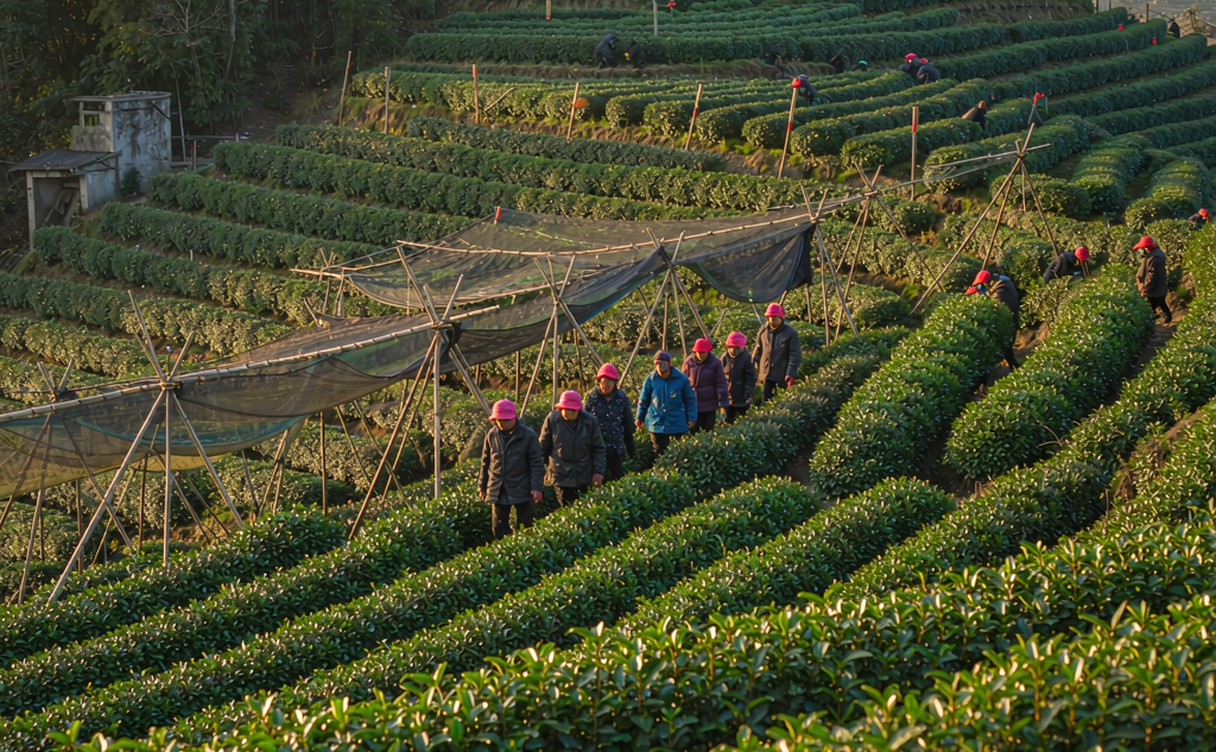
The terraces climb the Yunwu Hills in the north-west of the district, and the reason people drive up before sunrise is the mist. In the cooler months the valleys below the tea rows fill with cloud that does not burn off until late morning, so the bushes appear as dark green strips floating on white. This is the Yongchuan tea mountain clouds effect at its best, and the best time to visit Yongchuan for it is honestly any week from October to April following a wet night.
The bushes feed Yongchuan Xiuma, a flat, bud-tipped green tea that has taken national quality awards since the 1950s and remains the one tea carrying Yongchuan in its name. Family plots pick fine buds in late February and March; the July second flush makes a rounder cup. A handful of village tea rooms on the terraces will brew a pot for a small fee, and a local guide can walk you through hand-finishing — degreening, rolling, pan-roasting — in about two hours.
The method behind that cup is not a local secret. UNESCO’s intangible cultural heritage listing for traditional Chinese tea techniques explains why the leaf tastes the way it does, and Yongchuan’s own finishing belongs to the same family of practice. If tea is your reason for coming, our China tea tour guide maps the other growing regions you could pair it with.
For anyone short on days, this is the move: train out from Chongqing North on the first service, walk the terraces by eight, be inside the bamboo by ten, and take the late afternoon back. It fits a single day and still leaves you wanting a second one, which is the honest test of a good Yongchuan travel guide.
The Yongchuan Bamboo Forest Walk
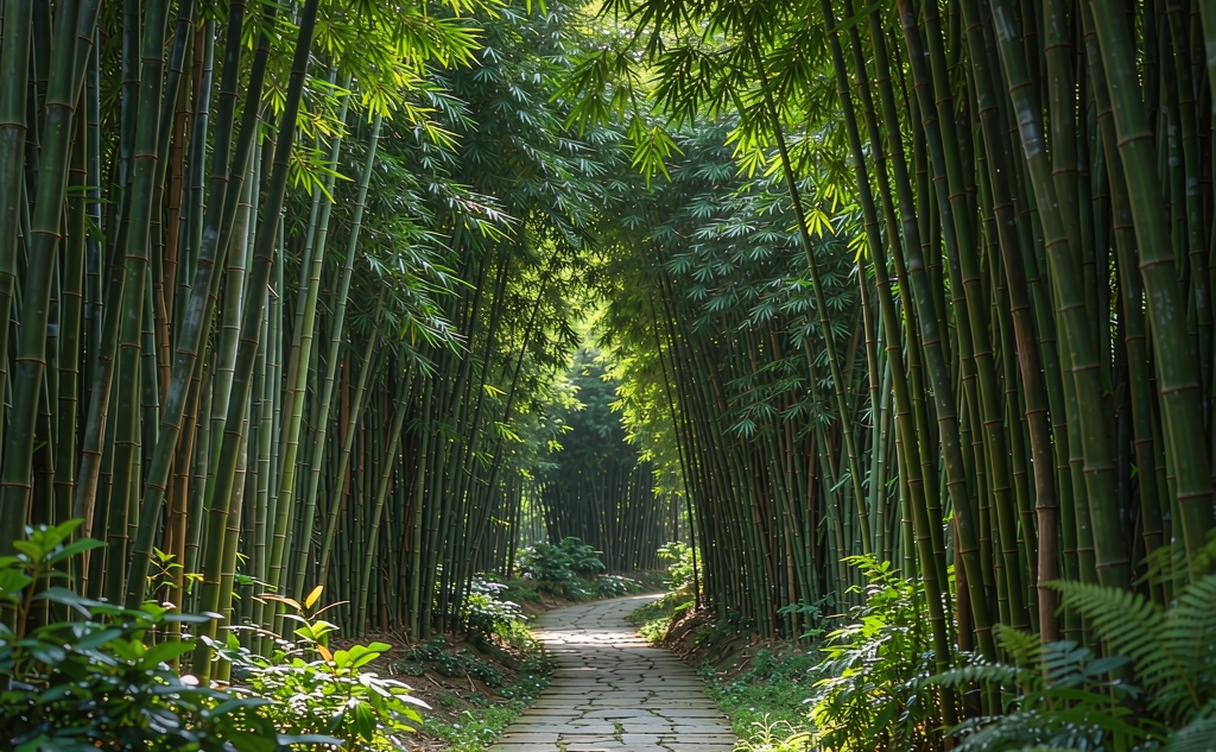
Behind the tea grounds the ground drops into the bamboo. Yongchuan Bamboo Sea is a national forest park covering roughly 500 hectares of standing moso, much of it on the shallow ridges between the tea terraces. The park’s plank trail runs about six kilometres there and back, mostly flat, with four viewing platforms, a stone stair or two, and long sections where the canopy is so tight that midday looks like evening.
The Yongchuan bamboo forest walk is the single activity here that works in any weather. Rain makes it better, not worse: the path turns the colour of wet stone, the bamboo hums, and you will rarely meet another person on the upper loop. Allow three hours for the full route with a stop at the pavilion halfway, where the wind comes through the culms like a distant train.
Entry to the park is modest — expect something in the region of 50 to 70 yuan per adult, with a shuttle bus from the car park to the trailhead. Bamboo shoots, woven bamboo products and a small bamboo-craft workshop sit near the entrance if you want a souvenir that did not come from a gift shop.
Best Time to Visit Yongchuan
Subtropical, humid, and summer-hot like the rest of Chongqing. April to October carries 70 to 80 percent of the rain, and July and August regularly push past 38 degrees in the valley floors.
- October to November. Clearer air, tea still on the bushes, cool mornings on the ridges. This is the window most locals would pick.
- March to April. Cloud on the terraces, new growth on the bamboo, and the wettest shoulder of spring. Bring a shell.
- May to September. Hot and humid, but the bamboo is at full density and the shade is genuinely cool. Summer evenings in the forest run five or six degrees under the city.
- December to February. Fogs, low sun and almost no tourists. The tea mountain clouds peak here, and the great thing is that you will have the terraces to yourself.
Local transport and small guesthouses are cheapest in winter; the shuttle buses, the plank trail and the tea rooms all run year round.
Eating and Staying in Yongchuan
The food is the quiet highlight. Start with Yongchuan douchi, the salted fermented black soybean that Chongqing kitchens use in every bowl of noodles and every stir-fry of greens; the district is one of China’s named origins for it. Then look for bamboo shoot dishes — braised, sour, or stir-fried with cured pork — which you will not find in the city proper.
Rice noodles with a sesame-chilli dressing, bowl noodles with the fermented bean, a plate of fried bamboo shoots, and a pot of Xiuma brewed weak enough to drink all afternoon. That is a full day here without leaving the district.
For sleeping, two bases work. The Yongchuan downtown area around Shennv Lake puts you near the trains, the supermarkets and a decent selection of mid-range hotels. The tea-terrace side of the district has village guesthouses — simple, cheap, with rooms that open onto the rows and mist at dawn. Book the terrace room for one night, not the whole trip.
A Two- and Three-Day Plan
Day one. First train from Chongqing North, arrive before eight, walk the cool part of the terraces while the mist is still sitting in the valleys, brew tea at a village room after lunch, then the bamboo plank trail in the late afternoon when the light falls through the canopy. Sleep out here if you can.
Day two. Morning on the bamboo forest walk start-to-finish, midday in town for noodles and douchi, then the afternoon for the wider countryside — the reservoir roads and the small bamboo-weaving workshops where families still split culms by hand.
Day three. A relaxed train into Chongqing with a bag of tea bought at the source, then straight to the river for an evening you did not plan. If your route continues, our Chengdu travel guide picks up where this line ends.
Short on weekends but not on appetite? This district is exactly what a China weekend getaways guide should feel like — one hour from a megacity, cheap, green, and done properly in forty-eight hours. Keep a second night if you can; the tea is better on the Monday.
Practical Notes
Tickets for the bamboo park and the tea terraces are sold at separate gates, so budget both. The high-speed station is Yongchuan East, which is roughly 10 kilometres from the bamboo park gate and 20 from the tea terraces — budget 40 to 60 minutes by road from the station to either. English is uncommon outside the hotels and the newer tea rooms; a phone screenshot of your destination name solves most of it.
Three days covers this properly, two days is workable, one is a sprint. If you want the wider country of it afterwards, our best things to do in China is the place to plan the rest from.