

Rongcheng is a county-level city on the northern shoulder of the Shandong Peninsula, and it holds the easternmost ground in mainland China. At roughly 122 degrees east, the coastline here is the first place in the country where the sun clears the horizon, and the towns inland of it still run on fishing calendars rather than tourist seasons. This Rongcheng travel guide covers what actually earns a stop: a headland called the end of the sky, a wetland that fills with whooper swans from November, and working harbours where kelp is still dried on open ground.
Most visitors arrive as a day trip from Weihai, which is a shame. Rongcheng rewards a full 48 hours, and the difference between a rushed afternoon and a slow weekend is the difference between seeing a headland and understanding a coast.
Why Rongcheng sits at the end of everything
The Shandong Peninsula juts east into the Yellow Sea like a fist, and Rongcheng closes that fist. Its coastline runs about 199 kilometres, more than most prefecture-level cities in the province, and the terrain is a low granite shelf punctuated by low peat hills — nothing that rises dramatically, but enough to catch fog and wind off the water.
That geography does three things. It puts Rongcheng within swimming distance of Japan and Korea. It makes the weather colder than Weihai’s, because the cold Yellow Sea winter wind arrives here without a single landmass to break it. And it creates the sheltered shallow bays that turn into swan feeding grounds each winter.
One reference worth knowing before you book: the UNESCO World Heritage listing for China’s sites, which includes the province’s Mount Taishan, is a useful yardstick for what else Shandong holds Mount Taishan on the UNESCO World Heritage list.
Getting oriented early saves frustration.ting oriented early saves frustration. Rongcheng is not a single compact old town. It is a string of coastal districts — Chengshan in the northeast, Shidao in the southeast, Naxianghai and the city centre along the northern coast — strung along a road that follows the shoreline. Each has its own handful of guesthouses, its own seafood stalls, and its own reason to stay.
If Rongcheng is one stop on a longer Shandong loop, pair it with the coastal cities north and south of it. Our Weihai travel guide covers the cruise terminals and Liugong Island in detail, and the Shandong seven day itinerary stitches Rongcheng into a proper north-coast route.
Chengshantou: the cliff where China meets the sea
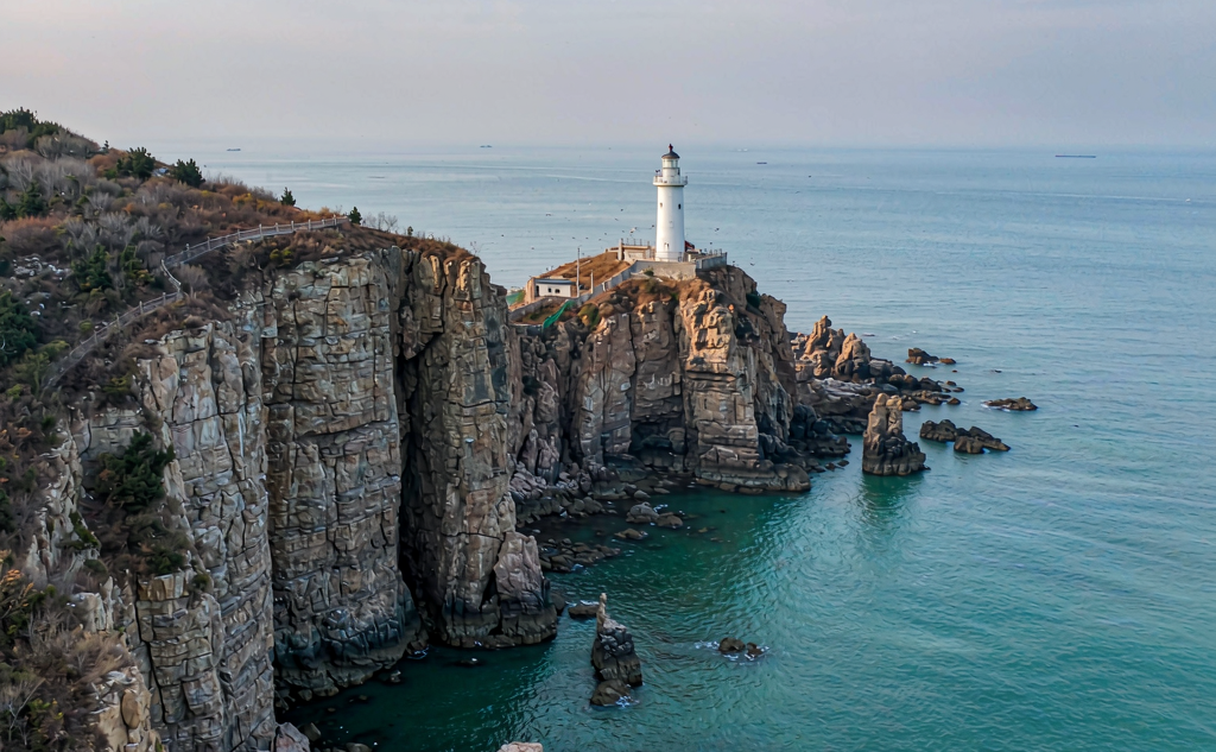
The headline sight is Chengshantou Scenic Area, a national-level park at the peninsula’s tip where a 200-metre granite headland drops straight into the water. A carved stone reading 天尽头 — “the end of the sky” — sits at the summit path, and on a clear morning the swell below it is the most dramatic thing on the Shandong coast.
Walk the ramp down to the sea-view platform and the whole bay opens up. Locals come here for the New Year first sunrise; the rocks stay crowded from roughly 05:30 on 1 January. In summer the same cliff carries a different mood — fog rolls in around 06:00, burns off by nine, and leaves the granite wet and green.
The Rongcheng coastal cliff walk along the park’s eastern flank is the part most visitors miss. It is an unmarked stretch of tarmac and concrete steps between the scenic gate and the fishing hamlets of DaZhousi, with viewpoints nobody staffs and almost nobody uses. Bring a windbreaker: the exposed edge takes the full force of the north wind.
Rongcheng swan lake winter
From late November to early March, the shallow brackish waters around the Chengshan wetland — known locally as 天鹅湖, the Swan Lake — fill with whooper swans wintering from Siberia. Peak counts run past 1,300 birds, making this one of the largest concentrations in East Asia outside Russia.
The rhythm is fixed and worth planning around. Birds move in at dusk and leave at first light, feeding in the shallows through the morning. By 09:30 most have drifted to the far bank. Photographers who arrive at the gate for the 07:40 opening get still water, low golden light and a bird in the frame; everyone else gets a distant white smear across a field of ice.
Go in the middle of a cold snap rather than a thaw. Ice on the water’s edge means the birds concentrate close to the viewing path, and February mornings regularly hit minus 12 with a wind chill near minus 20. The Rongcheng swan lake winter season is short, and the sharpest weeks are usually the last two of February.
Chishan, Shidao and the kelp racks
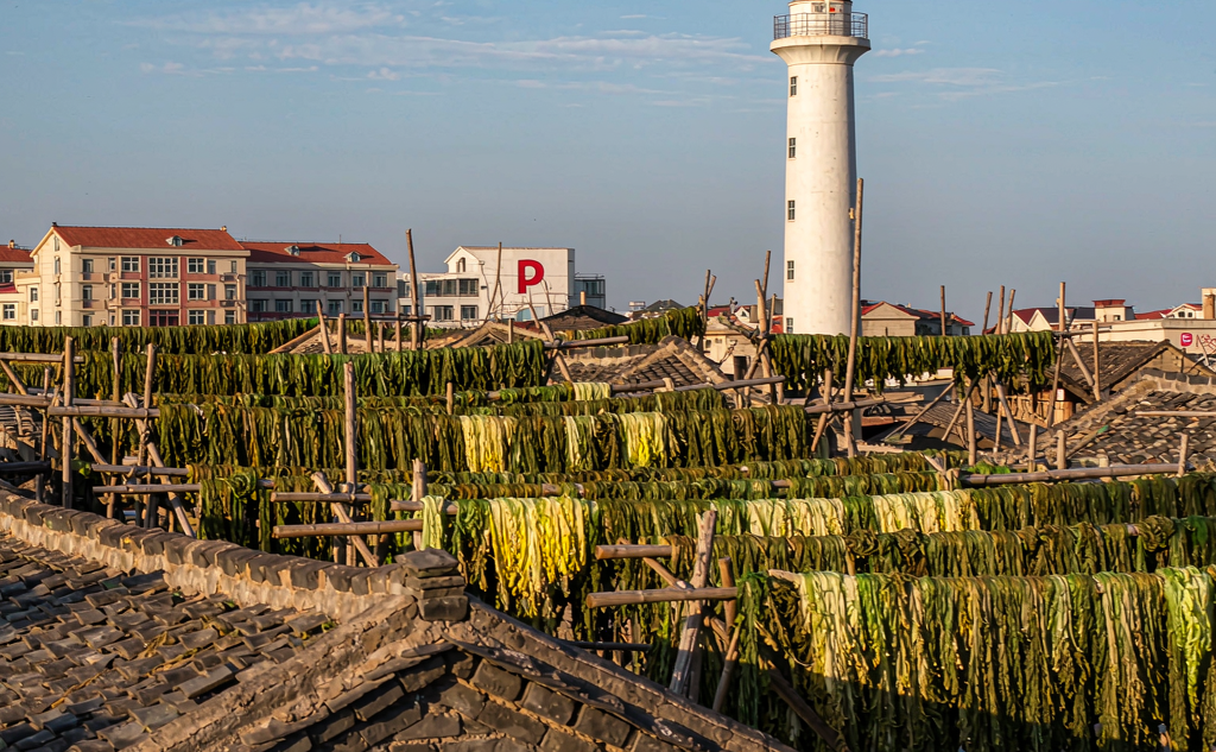
South of Chengshan, the Shidao peninsula holds a different Rongcheng. Shidao Fishing Port is among the ten largest in northern China, and the sorting sheds along its quay work through the night in season. Wander ten minutes inland from the harbour and the lanes narrow into stone courtyards where drying racks are stacked ceiling to floor.
Rongcheng calls itself China’s kelp capital, and the claim is measurable. Kelp is cut from May, and through June the whole coast dries: ropes strung between poles, racks on rooftops, piles on any flat concrete available. It smells faintly of the sea and lasts all year in the pot.
Chishan Scenic Area sits above the port and is worth the uphill walk for its cliffside temple and the view back across the bay to the eastern tip. Less polished than Chengshantou, which is exactly the point.
Eating in Rongcheng
Seafood here is not a special occasion, it is the grocery bill. Sea urchin, abalone, shrimp, and the local delicacy 海肠 — a fat grey worm-like shellfish that turns sweet and crisp when stir-fried with pepper — show up in every small restaurant off the harbour road.
Two rules help. Eat where the boats unload, and order whatever came in that morning rather than a fixed menu. And try the kelp: Rongcheng steamed kelp with pork, or kelp noodles, are cheaper than any vegetable dish on the table.
Winter is the urchin season, and the stalls near Shidao keep plastic basins of live sea urchins in cold water. Lightly steamed and eaten with garlic vinegar, they are worth the price that makes tourists flinch.
Rongcheng to Weihai transport
The intercity rail is the good news. Rongcheng station sits on the Qingdao–Rongcheng line, and Rongcheng to Weihai transport runs at roughly 40 minutes by D-train, with departures from about 06:00 through 21:00. Fares run a few yuan, and the winter trains fill with swan watchers, cameras stored on overhead racks.
Weihai airport and its railway station are the practical entry points, both under an hour from Rongcheng. Qingdao is about two hours south on the same line. Buses from Weihai’s terminal take a similar route but drop you at the city bus station, which is a 20-minute taxi from the swan lake gate.
Driving is easier than it looks and gives you the coastal road between Chengshan and Shidao, which no train serves. For broader planning, our best things to do in China page groups Rongcheng with the peninsula highlights.
Best time to visit Rongcheng
The Rongcheng travel guide answer depends on what you came for. December to February brings the swans and the empty coastline; January and February are cold enough that you will spend most daylight hours inside a car or a warm tea house, so treat swan mornings as short, focused trips rather than full days.
May to October is gentler: kelp drying through June, warm shallow water from July, and the whole coast busy again. Autumn — late September to November — has the best light and the cheapest rooms, though the sea still bites.
If you only have one window, come in late February. You get most of the swan season, slightly less brutal wind, and the kelp yards in Shidao still out with racks.
What to pack, and when to shoot
The wind is the story. Winter gusts along the east coast reach 8 on the Beaufort scale, so a wool layer under a hardshell beats a big puffer for the cliff walk. Goggles or a buff matter more than another sweater. Footwear should be non-slip: the granite at Chengshantou grows a glassy film of salt and seaweed in winter and it is genuinely slippery.
Photographically, the swan lake is best at 07:30–09:00 when birds feed in the shallow channel and the light rakes across the ice. A 200mm minimum, 400mm if you own it. On the headland, shoot the sunset rather than the sunrise unless you are there for the New Year crowd — the western rock face holds colour longest, and the fishing boats between the two headlands make clean silhouettes.
Rongcheng fits naturally into a Shandong loop that starts on the coast and moves inland. Our Yantai travel guide and the Penglai Pavilion guide cover the north shore, while Qingdao adds the beer, the old town and the beaches.
A workable two days
Night one in Chengshan, so the swan lake opening at 07:40 is a five-minute drive and not a dark coastal bus ride. Day two: cliff walk in the morning, drive south to Shidao for lunch off the harbour, Chishan in the afternoon, then the rail back to Weihai late afternoon.
If time stretches to three, add the Naxianghai seaside resort on the northern coast for hot springs and a quieter beach, and take the train down toward Qingdao. Rongcheng is small enough that a full day feels long, and short enough that the extra night changes the trip entirely.